Kirjojen hintavertailu – 12 859 828 kirjaa ja 27 kauppaa

Kirjailija

Dorothy West

Kirjat ja teokset yhdessä paikassa: 11 kirjaa, julkaisuja vuosilta 1996–2026, suosituimpiin kuuluu Where the Wild Grape Grows. Vertaile teosten hintoja ja tarkista saatavuus suomalaisista kirjakaupoista.

11 kirjaa

Kirjojen julkaisuvuodet: 1996–2026.

Where the Wild Grape Grows

Where the Wild Grape Grows

Dorothy West

UNIVERSITY OF MASSACHUSETTS PRESS
2026
sidottu
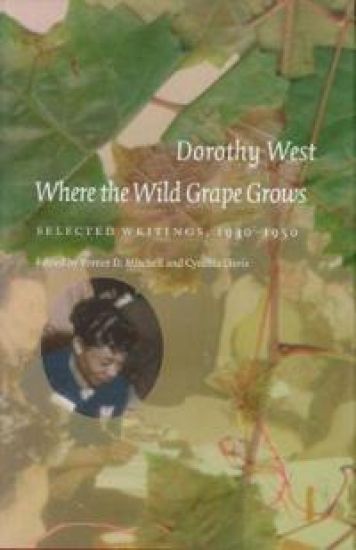
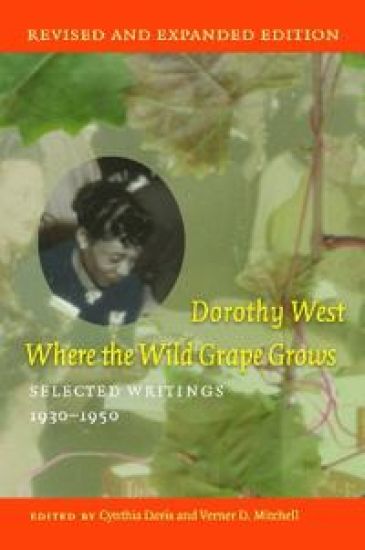
When Where the Wild Grape Grows was published in 2005 by the University of Massachusetts Press, it was the first book-length critical study of Dorothy West. Since then, the publication of more volumes on West and her circle testify to popular and academic interest in under-represented artists of the Harlem Renaissance, many of whom appeared first in West’s literary magazine, Challenge (1934-1937). Challenge included poems by West’s cousin Helene Johnson as well as by her friends Lucia Mae Pitts, Waring Cuney, Pauli Murray, Grace Walker, Mae Cowdery, Marcia Prendergast, and Bessie Calhoun Bird. West also published work by her romantic partner Marian Minus and by Juanita DeShields (the first Black Canadian graduate of McGill University) and the Trinidadian author Alfred Mendes. She included artwork by Mildred Jones and journalism by Eslanda Robeson and Dorothy Peterson. In addition to her editorial activities, West corresponded with important African American musicians including Maud Cuney Hare, Alberta Hunter, and Henry T. Burleigh, and with sculptors Augusta Savage and Richmond BarthÉ. Just as West mentored others, she was encouraged by such academic luminaries as Columbia Professors Blanche Colton Williams and Dorothy Scarborough, and by the controversial novelist Erskine Caldwell. The new Introduction to Wild Grape will include fresh research on these individuals, many of whom formed part of West’s social and artistic circle. Lucia Pitts, for example, was a poet who served in the famous WAC (Women’s Army Corps) 6888th Battalion. The work of Marian Minus and Mae Cowdery has received critical attention recently and they also merit closer investigation. The Boston writer and musicologist Maud Cuney Hare was an artistic mentor to West; her cousin Waring Cuney was a close friend: both will receive more attention in the paperback edition. The artist Mildred Jones accompanied West and twenty other young African Americans to Russia in 1932 as participants in an ultimately aborted propaganda film on race relations in America; Jones studied with the important Russian Modernist painter Aleksandr Deyneka. The original edition of Wild Grape cites two stories about West’s Russian experiences (penned under the pseudonym Mary Christopher in 1934), “Room in Red Square” and “Russian Correspondence,” but the volume does not include the actual stories. The stories are interesting because they shed light on West’s unrequited romance with Langston Hughes and her relationships with other members of the group, and they offer a unique perspective on daily life in the U. S. S. R. Both stories will be published in the new edition, along with a detailed discussion of new research about West’s visit to Russia. A third uncollected story, “Cook” (1934), written by West under the pseudonym Jane Isaac will also be included. This story is extremely important to West’s oeuvre and her artistic development; it includes characters, themes, tropes, and plot lines that she expanded and developed in her two novels, The Living Is Easy (1948) and The Wedding (1995). Since 2005, new material has been added to the West archive in Harvard’s Schlesinger Library. The section of Wild Grape devoted to West’s correspondence will include additional unpublished letters which underscore West’s dedication to African American art and culture. The book includes the Benson-West family tree in Appendix II. Several scholars have expressed appreciation for this information which has not been published elsewhere; the chart will be updated to include the birth of several of West’s descendants.
Where the Wild Grape Grows

Where the Wild Grape Grows

Dorothy West

UNIVERSITY OF MASSACHUSETTS PRESS
2026
nidottu
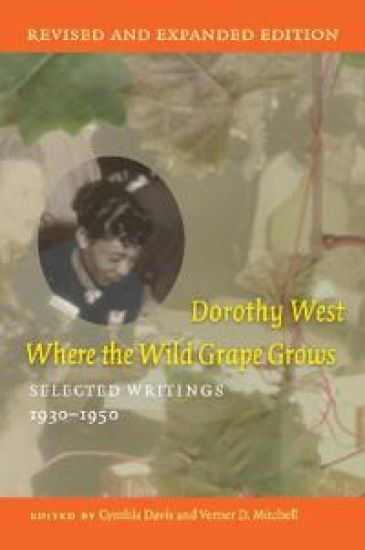
The first book-length study of Dorothy West, now with new writings and insights Originally published in 2005, Where the Wild Grape Grows: Selected Writings, 1930–1950 was the first book-length study of Dorothy West's work, providing a rich and insightful profile of one of the last surviving members of the Harlem Renaissance. Although West (1907–1998) is often remembered for her novels of Boston's African American community and her lifelong ties to Martha's Vineyard, her career was also shaped by her formative years in New York, where she moved among the era's most influential writers, artists, and political figures, including Langston Hughes, Zora Neale Hurston, Richard Wright, and many others. Cynthia Davis and Verner D. Mitchell document these early decades with care, recovering out-of-print, little-known, and unpublished works, alongside evocative family photographs, to illuminate West's distinctive voice and vision. This expanded second edition includes three important pieces not featured in the first edition: West's story "Cook," which foreshadows tropes of racial and gendered double consciousness and geographic mobility later developed in her novels; and her two Russian texts, "Room in Red Square" and "Russian Correspondence." This new edition situates West's writings within the larger history of African American artists' fascination with and ambivalence toward the U. S. S. R. The editors also extend their analysis beyond West's early life to consider her final three decades, a period of renewed creativity and recognition. With a revised, enhanced introduction and a richer selection of West's writings, this updated second edition is an indispensable resource for understanding the full scope of Dorothy West's life, art, and enduring legacy.
The Wedding

The Wedding

Dorothy West

Little, Brown Book Group
2026
nidottu

Halvin toimitettuna 20,90 €

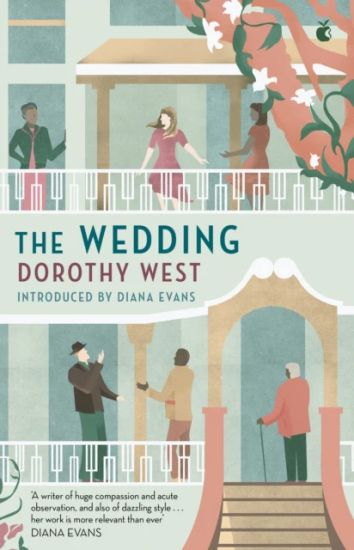
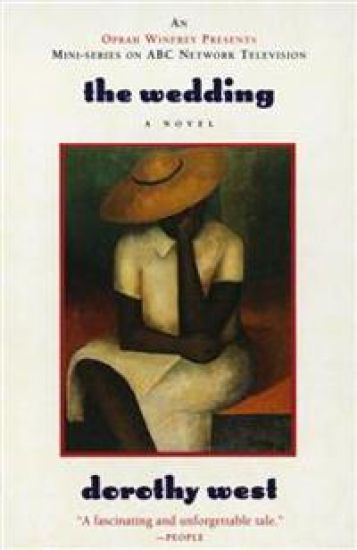
With a new introduction by DIANA EVANS'A writer of huge compassion and acute observation, and also of dazzling style . . . Her work is more relevant than ever' Diana Evans'Timelessly cinematic, with painterly visual descriptions and pitch-perfect dialogue that ranges across class, region, race, age, and gender' Emma Garman, Paris ReviewSet on a bucolic Martha's Vineyard in the 1950s, The Wedding tells the story of life in the Oval, a proud, insular community made up of the best and brightest of the East Coast's black bourgeoisie. Within this inner circle of 'blue-vein society', we witness the prominent Coles family gather for the wedding of their loveliest daughter, Shelby, who could have chosen from 'a whole area of eligible men of the right colors and the right professions.' Instead, she has fallen in love with and is about to be married to Mead Wyler, a white jazz musician from New York. A shock wave breaks over the Oval as its longtime members grapple with the changing face of its community. Not just the story of one wedding, but of many, this compelling story offers insights into issues of race, prejudice and identity while maintaining its firm belief in the compensatory power of love. Through a delicate interweaving of past and present, North and South, black and white, The Wedding unfolds outward from a single isolated time and place until it embraces five generations of an extraordinary American family. It is an audacious accomplishment, a monumental history of the rise of a black middle class, written by a writer who lived it. Wise, heartfelt, and shattering, it is Dorothy West's crowning achievement.
The Living Is Easy

The Living Is Easy

Dorothy West; Adelaide M. Cromwell; Morgan Jenkins

Feminist Press at The City University of New York
2020
nidottu
The first novel by Dorothy West--author of The Wedding and the youngest writer associated with the Harlem Renaissance--was one of only a handful to be published by black women during the 1940s. The Living Is Easy tells the story of Cleo Judson, daughter of Southern sharecroppers, determined to integrate into Boston's black elite. Married to the "Black Banana King" Bart Judson, Cleo maneuvers her three sisters and their children--but not their husbands--into living with her, attempting to recreate her original family in a Bostonian mansion. Written in elegant and piercing prose, The Living Is Easy is a classic of American literature by a groundbreaking African American woman writer whose work deserves widespread and enduring recognition.
The Wedding

The Wedding

Dorothy West

Virago Press Ltd
2019
pokkari
With a new introduction by DIANA EVANS'Timelessly cinematic, with painterly visual descriptions and pitch-perfect dialogue that ranges across class, region, race, age, and gender' Emma Garman, Paris ReviewSet on a bucolic Martha's Vineyard in the 1950s, THE WEDDING tells the story of life in the Oval, a proud, insular community made up of the best and brightest of the East Coast's black bourgeoisie. Within this inner circle of 'blue-vein society', we witness the prominent Coles family gather for the wedding of their loveliest daughter, Shelby, who could have chosen from 'a whole area of eligible men of the right colors and the right professions.' Instead, she has fallen in love with and is about to be married to Mead Wyler, a white jazz musician from New York. A shock wave breaks over the Oval as its longtime members grapple with the changing face of its community. Not just the story of one wedding, but of many, this compelling story offers insights into issues of race, prejudice and identity while maintaining its firm belief in the compensatory power of love. Through a delicate interweaving of past and present, North and South, black and white, THE WEDDING unfolds outward from a single isolated time and place until it embraces five generations of an extraordinary American family. It is an audacious accomplishment, a monumental history of the rise of a black middle class, written by a writer who lived it. Wise, heartfelt, and shattering, it is Dorothy West's crowning achievement.
The Richer, The Poorer

The Richer, The Poorer

Dorothy West

Virago Press Ltd
2019
nidottu
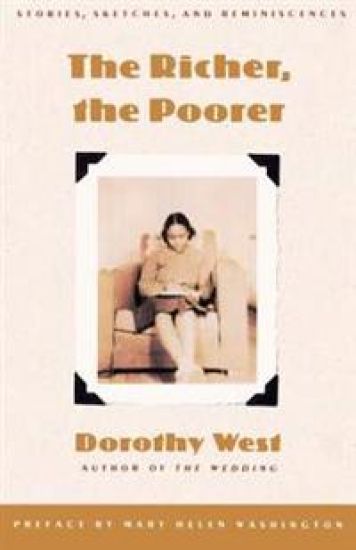
'A writer of huge compassion and acute observation, and also of dazzling style . . . Her work is more relevant than ever' DIANA EVANSAn incredible collection of writing - both essays and short stories - spanning the long career of Dorothy West. Includes a new introduction by Diana Evans.'West's work is timelessly cinematic, with painterly visual descriptions and pitch-perfect dialogue that ranges across class, region, race, age, and gender' Emma Garman, Paris Review The stories contained here are as American as jazz, and as wise and multifaceted as their writer. Dorothy West's metier is the unique crucible in which America places its black middle class, but her themes are universal: the daily misunderstandings between young and old, men and women, rich and poor that can lead to tragedy; and the ways in which bonds of family and community can bring us together, and tear us asunder. Dorothy West's autobiographical essays explore the poles of her remarkable life - from growing up black and middle-class in Boston to her near-mythic trip to Moscow in 1933 with Langston Hughes and other Harlem Renaissance writers to life on her beloved Martha's Vineyard. They cohere into a beautiful and poignant memoir of a singular American life, a memoir that communicates with her short stories in a host of fertile ways. Taken as a whole, The Richer, The Poorer is a triumphant celebration of the long life and work of one of America's genuine treasures.
Where the Wild Grape Grows

Where the Wild Grape Grows

Dorothy West

University of Massachusetts Press
2004
sidottu
Despite her strong associations with Massachusetts - her upbringing in Roxbury, her lifelong connection with Martha's Vineyard, and two novels documenting the Great Migration and the rise and decline of Boston's African American community - Dorothy West (1907-1998) is perhaps best known as a member of the Harlem Renaissance. Between 1927 and 1947, West and her cousin, the poet Helen Johnson, lived in New York City, where West attended Columbia University, worked as a welfare investigator, wrote for the WPA, traveled to Russia, and established a literary magazine for young black writers. During these years, West and Johnson knew virtually everyone in New York's artistic, intellectual, and political circles. Their friends included Langston Hughes, Zora Neale Hurston, Carl Van Vechten, Richard Wright, Arna Bontemps, Claude McKay, and many others. West moved easily between the bohemian milieu of her artistic soul mates and the respectable bourgeois soirees of prominent social and political figures. In this book, Professors Mitchell and Davis provide a carefully researched profile of West and her circle that serves as an introduction to a well edited, representative collection of her out of print, little known, or unpublished writings, supplemented by many family photographs. The editors document West's ""womanist"" upbringing and her relationships with her mother, Rachel Benson West, and other strong-minded women, including her longtime companion, Marian Minus. The volume includes examples of West's probing social criticism in the form of WPA essays and stories, as well as her interviews with southern migrants. A centerpiece of the book is her unpublished novella, Where the Wild Grape Grows, which explores with grace and gentle irony the complex relationship of three retired women living on Martha's Vineyard. Several of West's exquisitely observed nature pieces, published over a span of twenty years in the Vineyard Gazette, are also reprinted.
The Messenger Reader

The Messenger Reader

Paul Robeson; Zora Neale Hurston; Wallace Thurman; Dorothy West

Modern Library Inc
2000
pokkari
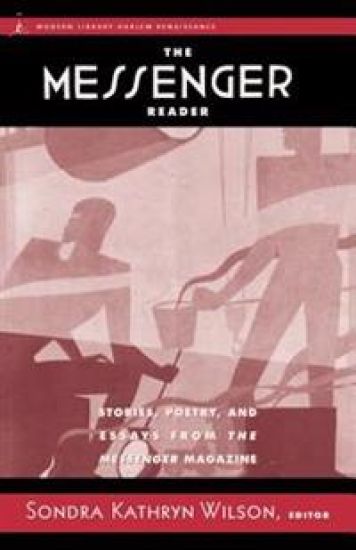
The Messenger was the third most popular magazine of the Harlem Renaissance after The Crisis andOpportunity. Unlike the other two magazines, The Messenger was not tied to a civil rights organization. Labor activist A. Philip Randolph and economist Chandler Owen started the magazine in 1917 to advance the cause of socialism to the black masses. They believed that a socialist society was the only one that would be free from racism. The socialist ideology of The Messenger "the only magazine of scientific radicalism in the world published by Negroes," was reflected in the pieces and authors published in its pages. The Messenger Reader contains poetry, stories, and essays from Paul Robeson, Zora Neale Hurston, Wallace Thurman, and Dorothy West. The Messenger Reader, will be a welcome addition to the critically acclaimed Modern Library Harlem Renaissance series.
The Wedding

The Wedding

Dorothy West

Anchor Books
1998
nidottu
The publication of The Wedding by Dorothy West, the last surviving member of the Harlem Renaissance, was not only a landmark literary event, but a commercial success as well. Readers across America responded to West's delicat weaving of North and South, black and white, past and present in this "fascinating and engrossing tale" (People) of race and class set in Martha's Vineyard. In her first novel in forty-seven years, West offers a window into the rise of the black middle class as she lived it. Wise, heartfelt, and shattering, The Wedding is Dorothy West's crowning achievement, and one of the last books edited for Doubleday by the late Jacqueline Kennedy Onassis.
The Richer, the Poorer

The Richer, the Poorer

Dorothy West

Anchor Books
1996
nidottu
On the heels of the bestseller success of her novel The Wedding, Dorothy West, the last surviving member of the Harlem Renaissance, presents a collection of essays and stories that explore both the realism of everyday life, and the fantastical, extraordinary circumstances of one woman's life in a mythic time. Traversing the universal themes and conflicts between poverty and prosperity, men and women, and young and old, and compiling writing that spans almost seventy years, The Richer, The Poorer not only affords an unparalleled window into the African-American middle class, but also delves into the richness of experience of "one of the finest writers produced in this country during the Roaring Twenties"(Book Page). "West writes like a social historian, capturing significant moments that seem to alter lives forever or change nothing at all."--Los Angeles Times"Unforced perfection . . . beautifully cadenced. West has shown the power of what is left unspoken."--Chicago Tribune"Dorothy West is an epic storyteller."--Quarterly Black Review of Books