Kirjojen hintavertailu – 12 859 819 kirjaa ja 27 kauppaa
Kirjailija
Dorothy Wordsworth
Kirjat ja teokset yhdessä paikassa: 35 kirjaa, julkaisuja vuosilta 1978–2026, suosituimpiin kuuluu Recollections of a Tour Made in Scotland A.D. 1803 ... Edited by J. C. Shairp.. Vertaile teosten hintoja ja tarkista saatavuus suomalaisista kirjakaupoista.
Recollections of a tour made in Scotland - A. D. 1803 is an unchanged, high-quality reprint of the original edition of 1894. Hansebooks is editor of the literature on different topic areas such as research and science, travel and expeditions, cooking and nutrition, medicine, and other genres. As a publisher we focus on the preservation of historical literature. Many works of historical writers and scientists are available today as antiques only. Hansebooks newly publishes these books and contributes to the preservation of literature which has become rare and historical knowledge for the future.
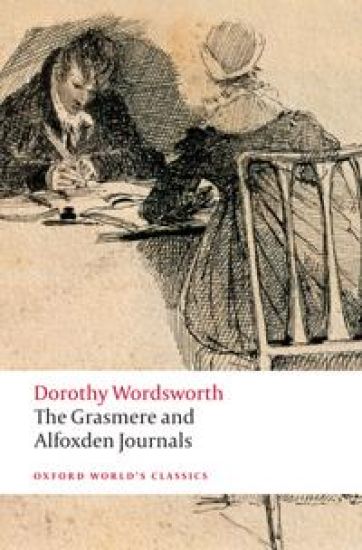
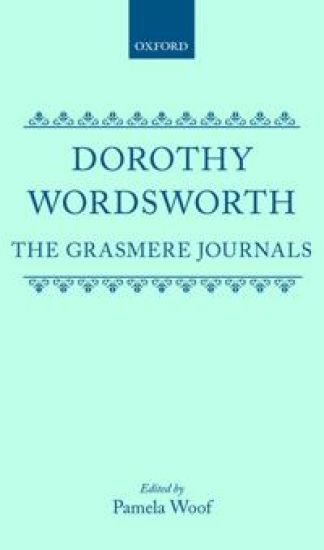
'I went & sat with W & walked backwards & forwards in the Orchard till dinner time - he read me his poem. I broiled Beefsteaks.' Dorothy Wordsworth's journals are a unique record of her life with her brother William, at the time when he was at the height of his poetic powers. Invaluable for the insight they give into the daily life of the poet and his friendship with Coleridge, they are also remarkable for their spontaneity and immediacy, and for the vivid descriptions of people, places, and incidents that inspired some of Wordsworth's best-loved poems. The Grasmere Journal was begun at Dove Cottage in May 1800 and kept for three years. Dorothy notes the walks and the weather, the friends, country neighbours and beggars on the roads; she sets down accounts of the garden, of Wordsworth's marriage, their concern for Coleridge, the composition of poetry. The earlier Alfoxden Journal was written during 1797-8, when the Wordsworths lived near Coleridge in Somerset . Not intended for publication, but to 'give Wm Pleasure by it', both journals have a quality recognized by Wordsworth when he wrote of Dorothy that 'she gave me eyes, she gave me ears'. This edition brings the reader closer to the hurried flow of Dorothy's writing and includes rich explanatory notes about the places and people described in the journals. ABOUT THE SERIES: For over 100 years Oxford World's Classics has made available the widest range of literature from around the globe. Each affordable volume reflects Oxford's commitment to scholarship, providing the most accurate text plus a wealth of other valuable features, including expert introductions by leading authorities, helpful notes to clarify the text, up-to-date bibliographies for further study, and much more.
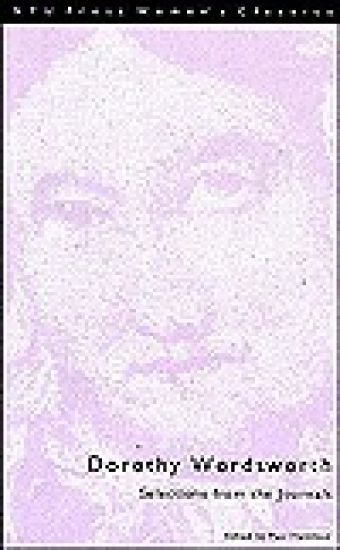
Dorothy Wordsworth (1771-1885) published nothing in her lifetime, save short extracts from her journals and letters which her brother, William, included in his Guide to the Lakes. She spent most of her life caring for her brother and his family, working, traveling and studying with him and his friends who include de Quincey and Coleridge. This selection for the first time presents her writings as a discrete text, giving her a separate authorial voice from that of her brother and bringing her to a new generation of students, scholars and enthusiasts. Wordsworth's journals, analyzed and set into context by Paul Hamilton's insightful introduction, chronicle the hardships and indispositions, the comings and goings, the windfalls and losses of those around her, both at home and during her many travels, revealing a relish for the experiences of others distinctly free from Romantic egoism. Most significantly, in her Grasmere Journal, she tells her own story, imposing her own narrative structure on events and discovering the plot of her own life.
This new edition of perhaps the best-loved of all journals is based on a fresh examination of the original manuscripts. There is an enormously expanded commentary full of new information on every aspect of the people, places and books mentioned. The journal is intimately and vividly written and still a compelling read. Dorothy Wordsworth began it in 1800 to give her poet-brother pleasure, and for three years she noted the walks and weathers, the friends, the country neighbours, the beggars on the Grasmere roads. The Journal has many stories: of Wordsworth's marriage, of the concern the Wordsworths felt for Coleridge, and of the composition of poetry. It is an excellent source of information about Wordsworth, his circle and methods of writing. This new edition yields new readings of mis-read or undeciphered words, and restores Dorothy's hasty punctuation. It brings us closer to her as a writer than ever before: her first thoughts, her crossings-out, her after-thoughts, the hurried flow of her expression.
A continuous text made up of extracts from Dorothy Wordsworth's Journal and a selection of her brother's poems. Dorothy Wordsworth kept her Journal 'because I shall give William pleasure by it'. In doing so, she never dreamt that she was giving future readers not only the chance to enjoy her fresh and sensitive delight in the beauties that surrounded her at Grasmere but also a rare opportunity to observe 'the progress of a poet's mind'. Colette Clark's skilful and perceptive arrangement of Dorothy's entries alongside William's poems throws a unique light on his creative process, and shows how the interdependence of brother and sister was a vital part in the writing of many of his great poems. By reading these poems in relation to the Journal it is possible to trace the processes by which they were committed to paper and so achieve a fuller understanding of them. A writer in her own right, Dorothy kept her Journal sparse in personal and emotional detail. Yet there is, nevertheless, a deep emotional undercurrent running beneath the surface which only falters when William marries Mary Hutchinson. Never again was Dorothy to achieve the freedom, spontaneity and the limpidly beautiful prose with which she infused and irradiated the Grasmere Journals.