Kirjojen hintavertailu – 12 859 829 kirjaa ja 27 kauppaa

Kirjailija

Dorte Verner

Kirjat ja teokset yhdessä paikassa: 5 kirjaa, julkaisuja vuosilta 2010–2022, suosituimpiin kuuluu Insect and Hydroponic Farming in Africa. Vertaile teosten hintoja ja tarkista saatavuus suomalaisista kirjakaupoista.

5 kirjaa

Kirjojen julkaisuvuodet: 2010–2022.

Insect and Hydroponic Farming in Africa

Insect and Hydroponic Farming in Africa

Dorte Verner; Nanna Roos; Afton Halloran; Glenn Surabian; Edinaldo Tebaldi; Maximillian Ashwill; Saleema Vellani; Yasuo Konishi

WORLD BANK PUBLICATIONS
2022
nidottu
This book presents an inclusive, and resilient solution to Africa'ss wide-ranging food security challenges, particularly in fragility, conflict, and violence-affected countries. It assesses the costs and benefits of using two frontier agriculture technologies, insect farming and plant hydroponics, to create a circular food economy in Africa.
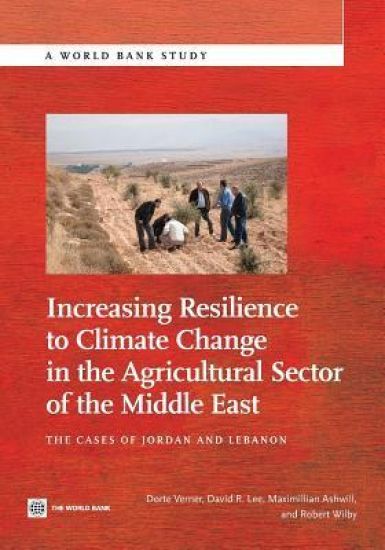
Increasing Resilience to Climate Change in the Agricultural Sector of the Middle East

Increasing Resilience to Climate Change in the Agricultural Sector of the Middle East

Dorte Verner; David Lee; Maximillian Ashwill; Robert Wilby

World Bank Publications
2013
nidottu
This publication aims to assist countries in understanding the specific challenges and opportunities posed by climate change in the agricultural sector in order to increase climate resilience and adapt to climate change. The report presents local-level priorities, informed by stakeholder input, to build agricultural resilience in both countries. The objectives of this study are threefold: 1. To improve the understanding of climate change projections and impacts on rural communities and livelihoods in selected regions of Jordan and Lebanon, specifically the Jordan River Valley and Lebanon's Bekaa Valley.2. To engage local communities, farmers, local experts, and local and national government representatives in a participatory fashion in helping craft agricultural adaptation options to climate change. 3. To develop local and regional climate change action plans that formulate recommendations for investment strategies and strategic interventions in local agricultural systems. Therefore, this publication may serve as the analytical underpinning for ongoing discussions taking place within the governments, including the Ministries of Agriculture and Environment, on how to best move forward in building agricultural resilience to climate change.
Tunisia in a Changing Climate

Tunisia in a Changing Climate

Dorte Verner

World Bank Publications
2013
nidottu
Tunisia in a Changing Climate: Assessment and Actions for Increased Resilience and Development is part of the World Bank Studies series. These papers are published to communicate the results of the Bank's ongoing research and to stimulate public discussion. This book provides an assessment of climate risks, as well as opportunities and possible actions for addressing climate change, in Tunisia. It recognises that the Tunisian revolution of January 14th, 2011, created significant change in the country, resulting in new challenges and opportunities for addressing further change. Following the revolution, improvements in access to information, institutional capacity, and accountability have enhanced the governance and transparency that are essential for effective climate change responses. However, political uncertainty has affected both foreign direct investment and tourism, which have further impacted already high rates of poverty and unemployment.
Economics of Climate Change in the Arab World

Economics of Climate Change in the Arab World

Dorte Verner; Clemens Breisinger; Manfred Wiebelt; Perrihan Al-Riffai; Olivier Ecker

World Bank Publications
2013
nidottu
This book takes both a global as well as a local perspective in assessing the impacts of climate change on the economy, agricultural sector, and households in three of the MENA countries; Syria, Tunisia and Yemen. The major channels of impact for global climate change are through changing world food (and energy) prices, especially since all the countries under analysis are or have become net importers of oil and petroleum products and many food commodities in recent years. The impacts of local climate change decrease crop yields in the longer run and through them, productivity in the agricultural sector and all the implications this may have on both, the livelihoods of those dependent on the sector as well as the rest of the economy. The analysis also covered what happens when both global and local climate changes work simultaneously for each country. Findings show that in all three countries the effects of climate change are negative for people and the economy—GDP falls and livelihoods suffer. Furthermore, the prevalence of extreme variations in climate—such as the droughts affecting Syria and the floods impacting Yemen—draws attention to the potentially significant drawbacks that are likely to not only affect any strides towards economic growth and development, but may also reverse such strides if appropriate policies are not in place to weather this storm. The analyses in this book apply CGE models.
The Invisible Poor

The Invisible Poor

Gabriel Demombynes; Dorte Verner

World Bank Publications
2010
nidottu
The Invisible Poor seeks to raise the profile of the rural poor in Argentina, promote dialogue on rural poverty issues, provide the best currently available information about rural poverty, and offer a basis for discussions on how to expand household survey data collection to rural areas. Most previous work has been based on case studies or one-time surveys in a few provinces and consequently has been of limited use for drawing conclusions about rural conditions overall in Argentina. Largely because of data limitations, profound gaps exist in the understanding of rural poverty in Argentina. As a result, the rural poor have sometimes been neglected in policy discussions. This study does not directly address policy responses. Rather it seeks to provide an analytical basis for understanding the conditions of rural life, with the ultimate goal of helping policy makers improve the welfare of Argentina's rural poor through evidence-based policy.