Kirjojen hintavertailu – 12 859 829 kirjaa ja 27 kauppaa
Kirjailija
Doug McAdam
Kirjat ja teokset yhdessä paikassa: 12 kirjaa, julkaisuja vuosilta 1990–2021, suosituimpiin kuuluu Silence and Voice in the Study of Contentious Politics. Vertaile teosten hintoja ja tarkista saatavuus suomalaisista kirjakaupoista.
The aim of this book is to highlight and begin to give ‘voice’ to some of the notable ‘silences’ evident in recent years in the study of contentious politics. The seven co-authors take up seven specific topics in the volume: the relationship between emotions and contention; temporality in the study of contention; the spatial dimensions of contention; leadership in contention; the role of threat in contention; religion and contention; and contention in the context of demographic and life-course processes. The seven spent three years involved in an ongoing project designed to take stock, and attempt a partial synthesis, of various literatures that have grown up around the study of non-routine or contentious politics. As such, it is likely to be viewed as a groundbreaking volume that not only undermines conventional disciplinary understanding of contentious politics, but also lays out a number of provocative new research agendas.
The aim of this book is to highlight and begin to give 'voice' to some of the notable 'silences' evident in recent years in the study of contentious politics. The seven co-authors take up seven specific topics in the volume: the relationship between emotions and contention; temporality in the study of contention; the spatial dimensions of contention; leadership in contention; the role of threat in contention; religion and contention; and contention in the context of demographic and life-course processes. The seven spent three years involved in an ongoing project designed to take stock, and attempt a partial synthesis, of various literatures that have grown up around the study of non-routine or contentious politics. As such, it is likely to be viewed as a groundbreaking volume that not only undermines conventional disciplinary understanding of contentious politics, but also lays out a number of provocative new research agendas.
By many measures--commonsensical or statistical--the United States has not been more divided politically or economically in the last hundred years than it is now. How have we gone from the striking bipartisan cooperation and relative economic equality of the war years and post-war period to the extreme inequality and savage partisan divisions of today? In this sweeping look at American politics from the Depression to the present, Doug McAdam and Karina Kloos argue that party politics alone is not responsible for the mess we find ourselves in. Instead, it was the ongoing interaction of social movements and parties that, over time, pushed Democrats and Republicans toward their ideological margins, undermining the post-war consensus in the process. The Civil Rights struggle and the white backlash it provoked reintroduced the centrifugal force of social movements into American politics, ushering in an especially active and sustained period of movement/party dynamism, culminating in today's tug of war between the Tea Party and Republican establishment for control of the GOP. In Deeply Divided, McAdam and Kloos depart from established explanations of the conservative turn in the United States and trace the roots of political polarization and economic inequality back to the shifting racial geography of American politics in the 1960s. Angered by Lyndon Johnson's more aggressive embrace of civil rights reform in 1964, Southern Dixiecrats abandoned the Democrats for the first time in history, setting in motion a sustained regional realignment that would, in time, serve as the electoral foundation for a resurgent and increasingly more conservative Republican Party.
Finding ways to understand the nature of social change and social order-from political movements to market meltdowns-is one of the enduring problems of social science. A Theory of Fields draws together far-ranging insights from social movement theory, organizational theory, and economic and political sociology to construct a general theory of social organization and strategic action. In a work of remarkable synthesis, imagination, and analysis, Neil Fligstein and Doug McAdam propose that social change and social order can be understood through what they call strategic action fields. They posit that these fields are the general building blocks of political and economic life, civil society, and the state, and the fundamental form of order in our world today. Similar to Russian dolls, they are nested and connected in a broader environment of almost countless proximate and overlapping fields. Fields are mutually dependent; change in one often triggers change in another. At the core of the theory is an account of how social actors fashion and maintain order in a given field. This sociological theory of action, what they call "social skill," helps explain what individuals do in strategic action fields to gain cooperation or engage in competition. To demonstrate the breadth of the theory, Fligstein and McAdam make its abstract principles concrete through extended case studies of the Civil Rights Movement and the rise and fall of the market for mortgages in the U. S. since the 1960s. The book also provides a "how-to" guide to help others implement the approach and discusses methodological issues. With a bold new approach, A Theory of Fields offers both a rigorous and practically applicable way of thinking through and making sense of social order and change-and how one emerges from the other-in modern, complex societies.
The United States is now more starkly divided in political terms than at any time since the end of Reconstruction and more unequal in material terms than on the eve of the Great Depression. How did we go from the bipartisan cooperation and relative economic equality of the war and postwar years to today's inequality and partisan divisions? In Deeply Divided, sociologists Doug McAdam and Karina Kloos argue that to represent contemporary political polarization and economic inequality as byproducts of party politics alone is to distort the complex origins of the mess in which we find ourselves today. Rather, it is social movements, from the Civil Rights movement to today's Tea Party, that have pushed Republicans and Democrats toward the fringes. Owing in large part to WWII and then to the Cold War and McCarthyism, the period from 1940 to 1960 was uniquely devoid of social movement activity. Spared these pressures, both parties were able to hew to the ideological middle, creating opportunities for bipartisan cooperation and conditions for relative material equality. Social movements re-emerged as a significant force in the 1960s, moving the Democrats and Republicans sharply left and right respectively over the course of the decade. The movements most responsible were two linked struggles: the civil rights movement and the nationwide "white backlash" that developed in response. Over the past half-century social movements have continued to challenge parties as the dominant mobilizing force in American politics. This is especially true today on the right, where the Republican Party and the policies of its House delegation largely reflect the views of its mobilized movement wing. McAdam and Kloos stress that a reversal of these trends is possible-if only we are able to understand the challenges involved in overcoming political and economic divisions.
Finding ways to understand the nature of social change and social order-from political movements to market meltdowns-is one of the enduring problems of social science. A Theory of Fields draws together far-ranging insights from social movement theory, organizational theory, and economic and political sociology to construct a general theory of social organization and strategic action. In a work of remarkable synthesis, imagination, and analysis, Neil Fligstein and Doug McAdam propose that social change and social order can be understood through what they call strategic action fields. They posit that these fields are the general building blocks of political and economic life, civil society, and the state, and the fundamental form of order in our world today. Similar to Russian dolls, they are nested and connected in a broader environment of almost countless proximate and overlapping fields. Fields are mutually dependent; change in one often triggers change in another. At the core of the theory is an account of how social actors fashion and maintain order in a given field. This sociological theory of action, what they call "social skill," helps explain what individuals do in strategic action fields to gain cooperation or engage in competition. To demonstrate the breadth of the theory, Fligstein and McAdam make its abstract principles concrete through extended case studies of the Civil Rights Movement and the rise and fall of the market for mortgages in the U. S. since the 1960s. The book also provides a "how-to" guide to help others implement the approach and discusses methodological issues. With a bold new approach, A Theory of Fields offers both a rigorous and practically applicable way of thinking through and making sense of social order and change-and how one emerges from the other-in modern, complex societies. 'In this bold and sweeping new work, Fligstein and McAdam make the first global contribution to sociological field theory since Bourdieu's Distinction. Finding order and turbulence not only in the semi-autonomous fields that others have investigated, but also in the complex interplay of social movements and the state, Fligstein and McAdam produce a vision that is theoretically insightful, empirically generative and will re-energize the quest for a fundamental grasp of the dynamics of large-scale social interaction.' -John Levi Martin, University of Chicago 'In this much-anticipated book, Neil Fligstein and Doug McAdam bring their rich and influential strands of scholarly work together to develop a provocative account of how skilled individuals upset established routines and build new political and organizational fields. The core of their argument emphasizes on how people deploy resources, build connections, and forge new practices. In so doing, they place agency in a new and analytically tractable light. This signal accomplishment will be essential reading to all political and organizational scholars.' -Walter W. Powell, Stanford University 'In A Theory of Fields, Neil Fligstein and Doug McAdam provide a powerful synthetic approach to the analysis of interconnected "strategic action fields" that anchor interaction and meaningful membership. This conceptual language breaches distinctions among political, economic, and other sociologies to advance a compelling general approach to the most basic sociological questions of order and change. Fligstein and McAdam have accomplished the difficult task of grappling with fundamental issues of social theory while advancing a program of social research that should both engage advanced scholars and inspire those earlier in their careers.' -Elisabeth S. Clemens, University of Chicago
The field of social movement studies has expanded dramatically over the past three decades. But as it has done so, its focus has become increasingly narrow and 'movement-centric'. When combined with the tendency to select successful struggles for study, the conceptual and methodological conventions of the field conduce to a decidedly Ptolemaic view of social movements: one that exaggerates the frequency and causal significance of movements as a form of politics. This book reports the results of a comparative study, not of movements, but of communities earmarked for environmentally risky energy projects. In stark contrast to the central thrust of the social movement literature, the authors find that the overall level of emergent opposition to the projects has been very low, and they seek to explain that variation and the impact, if any, it had on the ultimate fate of the proposed projects.
The field of social movement studies has expanded dramatically over the past three decades. But as it has done so, its focus has become increasingly narrow and 'movement-centric'. When combined with the tendency to select successful struggles for study, the conceptual and methodological conventions of the field conduce to a decidedly Ptolemaic view of social movements: one that exaggerates the frequency and causal significance of movements as a form of politics. This book reports the results of a comparative study, not of movements, but of communities earmarked for environmentally risky energy projects. In stark contrast to the central thrust of the social movement literature, the authors find that the overall level of emergent opposition to the projects has been very low, and they seek to explain that variation and the impact, if any, it had on the ultimate fate of the proposed projects.
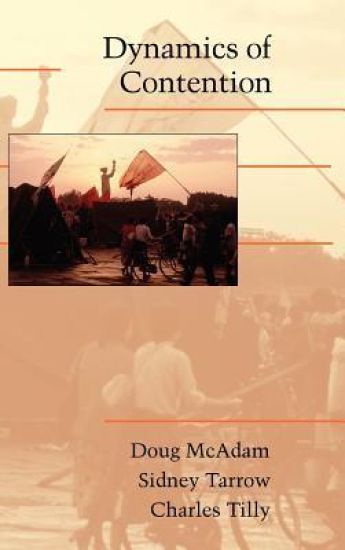
In recent decades the study of social movements, revolution, democratization and other non-routine politics has flourished. And yet research on the topic remains highly fragmented, reflecting the influence of at least three traditional divisions. The first of these reflects the view that various forms of contention are distinct and should be studied independent of others. Separate literatures have developed around the study of social movements, revolutions and industrial conflict. A second approach to the study of political contention denies the possibility of general theory in deference to a grounding in the temporal and spatial particulars of any given episode of contention. The study of contentious politics are left to 'area specialists' and/or historians with a thorough knowledge of the time and place in question. Finally, overlaid on these two divisions are stylized theoretical traditions - structuralist, culturalist, and rationalist - that have developed largely in isolation from one another. This book was first published in 2001.
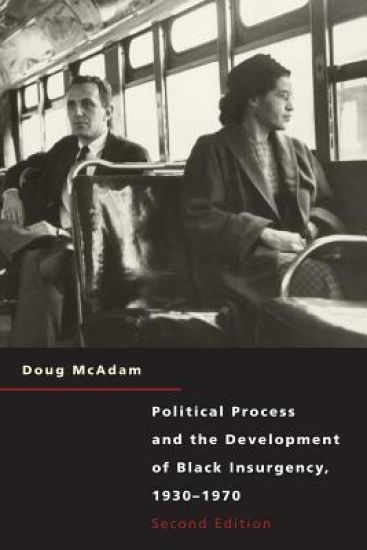
In this sociological work, Doug McAdam presents a political-process model that explains the rise and decline of the black protest movement in the United States. Moving from theoretical concerns to empirical analysis, he focuses on the crucial role of three institutions that foster protest: black churches, black colleges and Southern chapters of the NAACP. He concludes that political opportunities, a heightened sense of political efficacy, and the development of these three institutions played a central role in shaping the civil rights movement. In his introduction, McAdam revisits the civil rights struggle in light of recent scholarship on social movement origins and collective action.
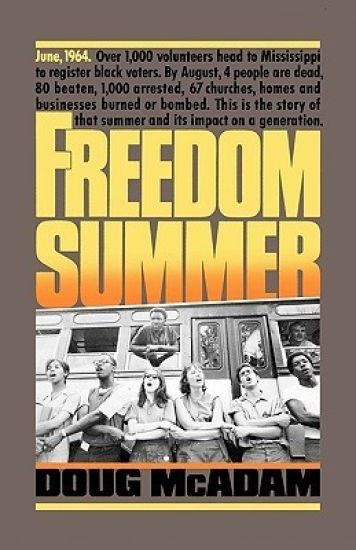
In June 1964, over 1,000 volunteers - most of them white, northern college students - arrived in Mississippi to campaign for black enfranchisement and teach at `freedom schools' as part of the Freedom Summer campaign organized by the Student Non-Violent Coordinating Committee. Within 10 days, three were murdered; by summer's end, another had died and hundreds more had endured bombings, beatings, and arrests. This is the first book to gauge the impact of Freedom Summer on the project volunteers and the period we now call the `turbulent 60s'.