Kirjailija
Douglas A. Irwin
Kirjat ja teokset yhdessä paikassa: 17 kirjaa, julkaisuja vuosilta 1998–2025, suosituimpiin kuuluu Clashing Over Commerce. Vertaile teosten hintoja ja tarkista saatavuus suomalaisista kirjakaupoista.
17 kirjaa
Kirjojen julkaisuvuodet: 1998–2025.
Understanding the globalized world economy is more important than ever before. This book provides a clear, concise, and up-to-date look at the economic foundations of international finance. The authors explain the principal concepts in an engaging and accessible manner open to students from any discipline, incorporating contemporary finance data through full-colour diagrams and graphs. Throughout, economic models are discussed in the context of recent and current international finance issues, to ensure students gain a concrete understanding and see how the field impacts the real world. Written for upper undergraduate courses, the book includes feature boxes that marry theory and economics in practice to show models applied, a featured real-world application for every chapter, and over 140 end-of-chapter questions help students fully engage with and consolidate their learning. Online resources for instructors include a solutions manual, lecture slides and the book figures as JPEGs.
The globalized world economy is more important than ever before. This book provides a clear and up-to-date look at the economic foundations of international economics. Through accessible language and attractive presentation with abundant full-colour diagrams and graphs incorporating contemporary trade data, the authors explain the principal concepts in an engaging manner open to students from any discipline. Throughout, economic models are discussed in the context of recent and current international trade issues to ensure students gain a concrete understanding and see how the field impacts the real world. Written for upper undergraduate courses, the book includes feature boxes that marry theory and economics in practice to show models applied, a featured real-world application for every chapter, and over 240 end of chapter questions help students fully engage with and consolidate their learning. Online resources for instructors include a solutions manual, lecture slides and the book figures as jpgs.
Understanding the globalized world economy is more important than ever before. This book provides a clear, concise, and up-to-date look at the economic foundations of international finance. The authors explain the principal concepts in an engaging and accessible manner open to students from any discipline, incorporating contemporary finance data through full-colour diagrams and graphs. Throughout, economic models are discussed in the context of recent and current international finance issues, to ensure students gain a concrete understanding and see how the field impacts the real world. Written for upper undergraduate courses, the book includes feature boxes that marry theory and economics in practice to show models applied, a featured real-world application for every chapter, and over 140 end-of-chapter questions help students fully engage with and consolidate their learning. Online resources for instructors include a solutions manual, lecture slides and the book figures as JPEGs.
Understanding the globalized world economy is more important than ever before. This book provides a clear, concise, and up-to-date look at the economic foundations of international trade. The authors explain the principal concepts in an engaging and accessible manner open to students from any discipline, incorporating contemporary trade data through full-colour diagrams and graphs. Throughout, economic models are discussed in the context of recent and current international trade issues, to ensure students gain a concrete understanding and see how the field impacts the real world. Written for upper undergraduate courses, the book includes feature boxes that marry theory and economics in practice to show models applied, a featured real-world application for every chapter, and over 100 end-of-chapter questions help students fully engage with and consolidate their learning. Online resources for instructors include a solutions manual, lecture slides and the book figures as JPEGs.
The globalized world economy is more important than ever before. This book provides a clear and up-to-date look at the economic foundations of international economics. Through accessible language and attractive presentation with abundant full-colour diagrams and graphs incorporating contemporary trade data, the authors explain the principal concepts in an engaging manner open to students from any discipline. Throughout, economic models are discussed in the context of recent and current international trade issues to ensure students gain a concrete understanding and see how the field impacts the real world. Written for upper undergraduate courses, the book includes feature boxes that marry theory and economics in practice to show models applied, a featured real-world application for every chapter, and over 240 end of chapter questions help students fully engage with and consolidate their learning. Online resources for instructors include a solutions manual, lecture slides and the book figures as jpgs.
The extreme protectionism that contributed to a collapse of world trade in the 1930s is examined in light of the recent economic crisis. The recent economic crisis--with the plunge in the stock market, numerous bank failures and widespread financial distress, declining output and rising unemployment--has been reminiscent of the Great Depression. The Depression of the 1930s was marked by the spread of protectionist trade policies, which contributed to a collapse in world trade. Although policymakers today claim that they will resist the protectionist temptation, recessions are breeding grounds for economic nationalism, and countries may yet consider imposing higher trade barriers. In Trade Policy Disaster, Douglas Irwin examines what we know about trade policy during the traumatic decade of the 1930s and considers what we can learn from the policy missteps of the time. Irwin argues that the extreme protectionism of the 1930s emerged as a consequence of policymakers' reluctance to abandon the gold standard and allow their currencies to depreciate. By ruling out exchange rate changes as an adjustment mechanism, policymakers turned instead to higher tariffs and other means of restricting imports. He offers a clear and concise exposition of such topics as the effect of higher trade barriers on the implosion of world trade; the impact of the Smoot-Hawley tariff of 1930; the reasons some countries adopted draconian trade restrictions (including exchange controls and import quotas) but others did not; the effect of preferential trade arrangements and bilateral clearing agreements on the multilateral system of world trade; and lessons for avoiding future trade wars.
An updated look at global trade and why it remains as controversial as everFree trade is always under attack, more than ever in recent years. The imposition of numerous U. S. tariffs in 2018, and the retaliation those tariffs have drawn, has thrust trade issues to the top of the policy agenda. Critics contend that free trade brings economic pain, including plant closings and worker layoffs, and that trade agreements serve corporate interests, undercut domestic environmental regulations, and erode national sovereignty. Why are global trade and agreements such as the Trans-Pacific Partnership so controversial? Does free trade deserve its bad reputation? In Free Trade under Fire, Douglas Irwin sweeps aside the misconceptions that run rampant in the debate over trade and gives readers a clear understanding of the issues involved. In its fifth edition, the book has been updated to address the sweeping new policy developments under the Trump administration and the latest research on the impact of trade.
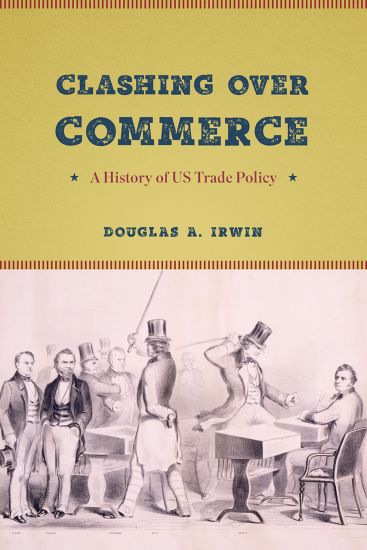
Clashing Over Commerce
Douglas A. Irwin
University of Chicago Press
2019
pokkari
Halvin toimitettuna 34,50 €
Should the United States be open to commerce with other countries, or should it protect domestic industries from foreign competition? This question has been the source of bitter political conflict throughout American history. Such conflict was inevitable, James Madison argued in The Federalist Papers, because trade policy involves clashing economic interests. The struggle between the winners and losers from trade has always been fierce because dollars and jobs are at stake: depending on what policy is chosen, some industries, farmers, and workers will prosper, while others will suffer. Douglas A. Irwin's Clashing over Commerce is the most authoritative and comprehensive history of US trade policy to date, offering a clear picture of the various economic and political forces that have shaped it. From the start, trade policy divided the nation--first when Thomas Jefferson declared an embargo on all foreign trade and then when South Carolina threatened to secede from the Union over excessive taxes on imports. The Civil War saw a shift toward protectionism, which then came under constant political attack. Then, controversy over the Smoot-Hawley tariff during the Great Depression led to a policy shift toward freer trade, involving trade agreements that eventually produced the World Trade Organization. Irwin makes sense of this turbulent history by showing how different economic interests tend to be grouped geographically, meaning that every proposed policy change found ready champions and opponents in Congress. As the Trump administration considers making major changes to US trade policy, Irwin's sweeping historical perspective helps illuminate the current debate. Deeply researched and rich with insight and detail, Clashing over Commerce provides valuable and enduring insights into US trade policy past and present.
Should the United States be open to commerce with other countries, or should it protect domestic industries from foreign competition? This question has been the source of bitter political conflict throughout American history. Such conflict was inevitable, James Madison argued in The Federalist Papers, because trade policy involves clashing economic interests. The struggle between the winners and losers from trade has always been fierce because dollars and jobs are at stake: depending on what policy is chosen, some industries, farmers, and workers will prosper, while others will suffer. Douglas A. Irwin's Clashing over Commerce is the most authoritative and comprehensive history of US trade policy to date, offering a clear picture of the various economic and political forces that have shaped it. From the start, trade policy divided the nation first when Thomas Jefferson declare an embargo on all foreign trade and then when South Carolina threatened to secede from the Union over excessive taxes on imports. The Civil War saw a shift toward protectionism, which then came under constant political attack. Then, controversy over the Smoot-Hawley tariff during the Great Depression led to a policy shift toward freer trade, involving trade agreements that eventually produced the World Trade Organization. Irwin makes sense of this turbulent history by showing how different economic interests tend to be grouped geographically, meaning that every proposed policy change found ready champions and opponents in Congress. As the Trump administration considers making major changes to US trade policy, Irwin's sweeping historical perspective helps illuminate the current debate. Deeply researched and rich with insight and detail, Clashing over Commerce provides valuable and enduring insights into US trade policy past and present.
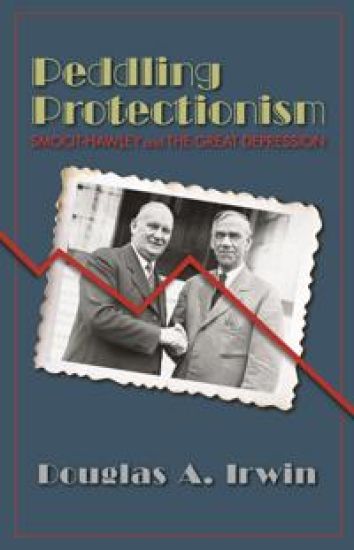
Peddling Protectionism
Douglas A. Irwin
Princeton University Press
2017
pokkari
Halvin toimitettuna 31,00 €
The Smoot-Hawley tariff of 1930, which raised U. S. duties on hundreds of imported goods to record levels, is America's most infamous trade law. It is often associated with--and sometimes blamed for--the onset of the Great Depression, the collapse of world trade, and the global spread of protectionism in the 1930s. Even today, the ghosts of congressmen Reed Smoot and Willis Hawley haunt anyone arguing for higher trade barriers; almost single-handedly, they made protectionism an insult rather than a compliment. In Peddling Protectionism, Douglas Irwin provides the first comprehensive history of the causes and effects of this notorious measure, explaining why it largely deserves its reputation for combining bad politics and bad economics and harming the U. S. and world economies during the Depression. In four brief, clear chapters, Irwin presents an authoritative account of the politics behind Smoot-Hawley, its economic consequences, the foreign reaction it provoked, and its aftermath and legacy. Starting as a Republican ploy to win the farm vote in the 1928 election by increasing duties on agricultural imports, the tariff quickly grew into a logrolling, pork barrel free-for-all in which duties were increased all around, regardless of the interests of consumers and exporters. After Herbert Hoover signed the bill, U. S. imports fell sharply and other countries retaliated by increasing tariffs on American goods, leading U. S. exports to shrivel as well. While Smoot-Hawley was hardly responsible for the Great Depression, Irwin argues, it contributed to a decline in world trade and provoked discrimination against U. S. exports that lasted decades. Featuring a new preface by the author, Peddling Protectionism tells a fascinating story filled with valuable lessons for trade policy today.
Growing international trade has helped lift living standards around the world, and yet free trade is always under attack. Critics complain that trade forces painful economic adjustments, such as plant closings and layoffs of workers, and charge that the World Trade Organization serves the interests of corporations, undercuts domestic environmental regulations, and erodes America's sovereignty. Why has global trade--and trade agreements such as NAFTA--become so controversial? Does free trade deserve its bad reputation? In Free Trade under Fire, Douglas Irwin sweeps aside the misconceptions that litter the debate over trade and gives the reader a clear understanding of the issues involved. This fourth edition has been thoroughly updated to include the most recent policy developments and the latest research findings on the impact of trade.
The Smoot-Hawley tariff of 1930, which raised U. S. duties on hundreds of imported goods to record levels, is America's most infamous trade law. It is often associated with--and sometimes blamed for--the onset of the Great Depression, the collapse of world trade, and the global spread of protectionism in the 1930s. Even today, the ghosts of congressmen Reed Smoot and Willis Hawley haunt anyone arguing for higher trade barriers; almost single-handedly, they made protectionism an insult rather than a compliment. In Peddling Protectionism, Douglas Irwin provides the first comprehensive history of the causes and effects of this notorious measure, explaining why it largely deserves its reputation for combining bad politics and bad economics and harming the U. S. and world economies during the Depression. In four brief, clear chapters, Irwin presents an authoritative account of the politics behind Smoot-Hawley, its economic consequences, the foreign reaction it provoked, and its aftermath and legacy. Starting as a Republican ploy to win the farm vote in the 1928 election by increasing duties on agricultural imports, the tariff quickly grew into a logrolling, pork barrel free-for-all in which duties were increased all around, regardless of the interests of consumers and exporters. After Herbert Hoover signed the bill, U. S. imports fell sharply and other countries retaliated by increasing tariffs on American goods, leading U. S. exports to shrivel as well. While Smoot-Hawley was hardly responsible for the Great Depression, Irwin argues, it contributed to a decline in world trade and provoked discrimination against U. S. exports that lasted decades. Peddling Protectionism tells a fascinating story filled with valuable lessons for trade policy today.
The Genesis of the GATT
Douglas A. Irwin; Petros C. Mavroidis; Alan O. Sykes
Cambridge University Press
2009
pokkari
This book is part of a wider project on the economic logic behind the General Agreement on Tariffs and Trade (GATT). This volume asks: What does the historical record indicate about the aims and objectives of the framers of the GATT? Where did the provisions of the GATT come from and how did they evolve through various international meetings and drafts? To what extent does the historical record provide support for one or more of the economic rationales for the GATT? This book examines the motivations and contributions of the two main framers of the GATT, the United States and the United Kingdom, as well as the smaller role of other countries. The framers desired a commercial agreement on trade practices as well as negotiated reductions in trade barriers. Both were sought as a way to expand international trade to promote world prosperity, restrict the use of discriminatory policies to reduce conflict over trade, and thereby establish economic foundations for maintaining world peace.
The Genesis of the GATT
Douglas A. Irwin; Petros C. Mavroidis; Alan O. Sykes
Cambridge University Press
2008
sidottu
This book is part of a wider project on the economic logic behind the General Agreement on Tariffs and Trade (GATT). This volume asks: What does the historical record indicate about the aims and objectives of the framers of the GATT? Where did the provisions of the GATT come from and how did they evolve through various international meetings and drafts? To what extent does the historical record provide support for one or more of the economic rationales for the GATT? This book examines the motivations and contributions of the two main framers of the GATT, the United States and the United Kingdom, as well as the smaller role of other countries. The framers desired a commercial agreement on trade practices as well as negotiated reductions in trade barriers. Both were sought as a way to expand international trade to promote world prosperity, restrict the use of discriminatory policies to reduce conflict over trade, and thereby establish economic foundations for maintaining world peace.
The author argues that a tax on imports commensurately creates a tax on exports, and that trade imbalances reflect capital flows between countries.
About two hundred years ago, largely as a result of Adam Smith's Wealth of Nations, free trade achieved an intellectual status unrivaled by any other doctrine in the field of economics. What accounts for the success of free trade against then prevailing mercantilist doctrines? And how well has free trade withstood various theoretical attacks that have challenged it since Adam Smith's time? In this readable intellectual history, Douglas Irwin explains how the idea of free trade has endured against the tide of the abundant criticisms that have been leveled against it from the ancient world and Adam Smith's day to the present. An accessible, nontechnical look at one of the most important concepts in the field of economics, Against the Tide will allow the reader to put the ever new guises of protectionist thinking into the context of the past and discover why the idea of free trade has so successfully prevailed over time. Irwin traces the origins of the free trade doctrine from premercantilist times up to Adam Smith and the classical economists. In lucid and careful terms he shows how Smith's compelling arguments in favor of free trade overthrew mercantilist views that domestic industries should be protected from import competition. Once a presumption about the economic benefits of free trade was established, various objections to free trade arose in the form of major arguments for protectionism, such as those relating to the terms of trade, infant industries, increasing returns, wage distortions, income distribution, unemployment, and strategic trade policy. Discussing the contentious historical controversies surrounding each of these arguments, Irwin reveals the serious analytical and practical weaknesses of each, and in the process shows why free trade remains among the most durable and robust propositions that economics has to offer for the conduct of economic policy.