
Kirjailija
Douglas A. Sweeney
Kirjat ja teokset yhdessä paikassa: 13 kirjaa, julkaisuja vuosilta 2002–2023, suosituimpiin kuuluu The New England Theology. Vertaile teosten hintoja ja tarkista saatavuus suomalaisista kirjakaupoista.
Nimi esiintyy myös muodoissa: Douglas a Sweeney
13 kirjaa
Kirjojen julkaisuvuodet: 2002–2023.

Christianity Today 2024 Award of Merit (Academic Theology)Doctrine is central to Christian discipleship and maturity. Unfortunately, it is often sidelined in churches' teaching ministry as irrelevant or impractical. Countering this, leading church historian Douglas Sweeney defines doctrine as church teaching intended for the shaping of daily faith and practice. The Substance of Our Faith addresses introductory issues in the study and application of historical doctrine, incorporating a unique global and catholic perspective. It addresses the Spirit's role in the rise of doctrine in the early church, the authority of Scripture and tradition in the development of doctrine, the challenges of doing global historical theology, the nature and purpose of doctrine, and implications for teaching the faith today. Specifically, Sweeney advocates that those who teach the Christian faith in all churches do so in communion with the saints who have come before. A future volume by the author will narrate the actual history of doctrinal teaching around the world.

Baptists in the nineteenth century grew from a small, struggling denomination to the second-largest Protestant denomination in America. They constructed conventions, schools, churches, and benevolent works. American Baptists transformed from cultural outsiders to insiders. Despite this growth in size, organization, and influence, there is surprisingly few attempts to understand them historically. This is even more true for Northern Baptists as opposed to their Southern counterparts, despite the fact that Northern Baptists, in many respects, were the theological leaders of the denomination. This raises questions about what their theology was, what it was rooted in, and how well it could handle the surplus of challenges that nineteenth-century religion threw at it. Chief among these were the challenges toward biblical and theological authority. Perhaps the brightest star of the Northern Baptist constellation, and doubtless the most well-connected, was Alvah Hovey from Newton Theological Institute in Newton Centre, Massachusetts. This book, the first book-length treatment of this Baptist giant since Hovey's son published a biography in 1929, chronicles Hovey's life and career focusing on how he coped with the challenges of biblical criticism and a rapidly changing theological context. Hovey produced a theology he understood as thoughtful Christianity.
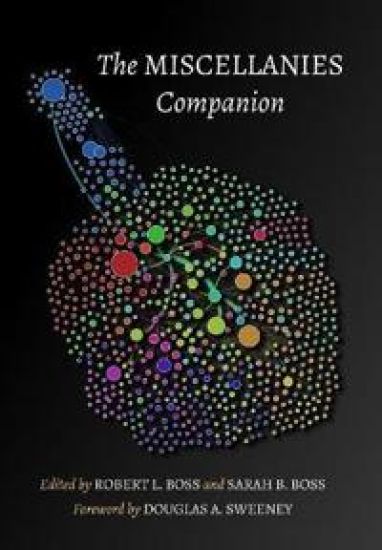
The Miscellanies Companion is a product of JESociety's "Miscellanies Project." Essays were contributed by an international body of scholars hailing from East Asia, Europe, the UK, and North America. The contributions canvas a wide range of topics contained in Edwards' "Miscellanies," including Trinitarianism, Millennialism, Reason and Revelation, Evangelism, Happiness, Salvation, and more." The Miscellanies Project" and the Companion are part of the Visual Edwards created by Robert L. Boss. A unique contribution to Jonathan Edwards studies, the Visual Edwards is a software project that maps Edwards' writings, volumes 1-26 of the Yale critical edition, and provides a new view of America's theologian. The Visual Edwards is, as it were, an advanced computational material which can be stretched, bent, and zoomed to direct the scholar to areas of interest. As a cartographic tool, it grants the reader visual access to Edwards in his own words. A team-oriented project to visually unlock Edwards' notebooks, and map intricate connections in his thought, "The Miscellanies Project" and the print Companion are first steps toward the Himalayan task of visualizing Jonathan Edwards -- an ongoing project seemingly without end. To echo Edwards' sentiment in "Types," "there is room for persons to be learning more and more ... to the end of the world without discovering all."
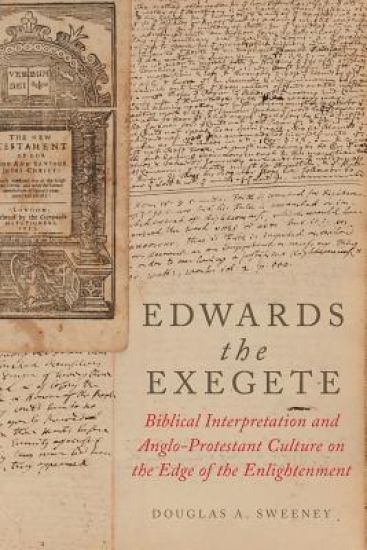
Scholars have long recognized that Jonathan Edwards loved the Bible, but preoccupation with his roles in Western "public" life and letters has eclipsed the significance of his biblical exegesis. In Edwards the Exegete, Douglas A. Sweeney fills this lacuna, exploring Edwards' exegesis and its significance for Christian thought and intellectual history. As Sweeney shows, throughout Edwards' life the lion's share of his time was spent wrestling with the words of holy writ. After reconstructing Edwards' lost exegetical world and describing his place within it, Sweeney summarizes his four main approaches to the Bible-canonical, Christological, redemptive-historical, and pedagogical-and analyzes his work on selected biblical themes that illustrate these four approaches, focusing on material emblematic of Edwards' larger interests as a scholar. Sweeney compares Edwards' work to that of his most frequent interlocutors and places it in the context of the history of exegesis, challenging commonly held notions about the state of Christianity in the age of the Enlightenment. Edwards the Exegete offers a novel guide to the theologian's exegetical work, clearing a path that other specialists are sure to follow. Sweeney's significant reassessment of Edwards' place in the Enlightenment makes a major contribution to Edwards studies, eighteenth-century studies, the history of exegesis, the theological interpretation of Scripture, and homiletics.
Scholars have long recognized that Jonathan Edwards loved the Bible. But preoccupation with his roles in Western "public" life and letters has led to a failure to see the significance of his biblical exegesis. The lion's share of his time during every week of his life was spent wrestling with the words of holy writ. In Edwards the Exegete, Douglas A. Sweeney fills this lacuna by exploring his exegesis and its significance for Christian thought and intellectual history. After reconstructing Edwards' lost exegetical world and describing his place within it, Sweeney summarizes his four main approaches to the Bible (canonical, Christological, redemptive-historical, and pedagogical) and analyzes his work on selected biblical themes that illustrate these four approaches-focusing on material that is emblematic of Edwards' larger interests as a scholar. Sweeney compares his work to that of his most frequent interlocutors and places it in the context of the history of exegesis, challenging preconceived notions about the state of Christianity in the age of the Enlightenment. In doing so, Sweeney offers others a helpful guide to Edwards' exegetical work and clears a path for later specialists to follow. This book makes a major contribution to Edwards studies, eighteenth-century studies, the history of exegesis, the theological interpretation of Scripture, and homiletics.
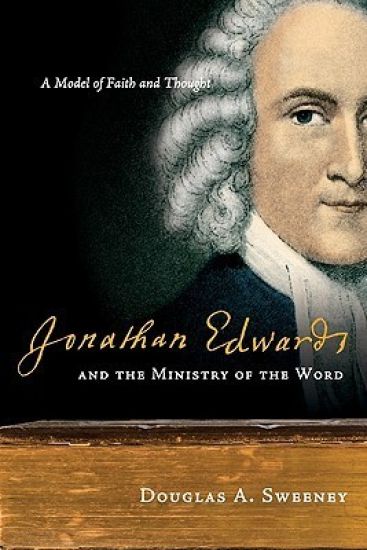
Jonathan Edwards and the Ministry of the Word
Douglas A. Sweeney
Inter-Varsity Press,US
2009
pokkari
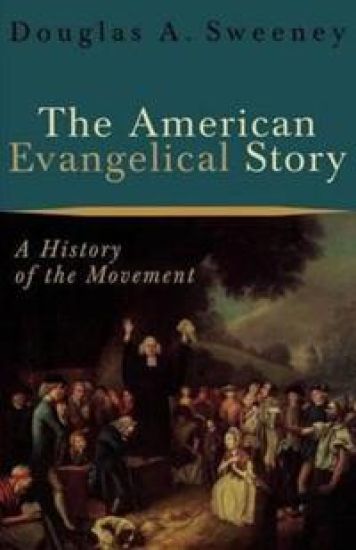
The American Evangelical Story – A History of the Movement
Douglas A. Sweeney
Baker Academic, Div of Baker Publishing Group
2005
nidottu
The American Evangelical Story surveys the role American evangelicalism has had in the shaping of global evangelical history. Author Douglas Sweeney begins with a brief outline of the key features that define evangelicals and then explores the roots of the movement in English Pietism and the Great Awakening of the eighteenth century. He goes on to consider the importance of missions in the development of evangelicalism and the continuing emphasis placed on evangelism. Sweeney next examines the different subgroups of American evangelicals and the current challenges faced by the movement, concluding with reflections on the future of evangelicalism. Combining a narrative style with historical detail and insight, this accessible, illustrated book will appeal to readers interested in the history of the movement, as well as students of church history.
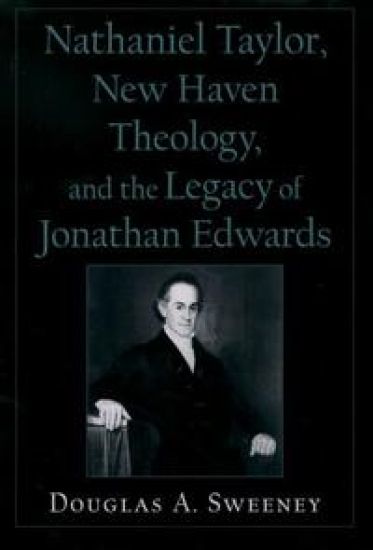
Nathaniel Taylor, New Haven Theology, and the Legacy of Jonathan Edwards
Douglas A. Sweeney
Oxford University Press Inc
2002
sidottu
Nathaniel Taylor was arguably the most influential and the most frequently misrepresented American theologian of his generation. While he claimed to be an Edwardsian Calvinist, very few people believed him. This book attempts to understand how Taylor and his associates could have counted themselves Edwardsians. In the process, it explores what it meant to be an Edwardsian minister and intellectual in the 19th century.