Kirjojen hintavertailu – 12 859 826 kirjaa ja 27 kauppaa
Kirjailija
Douglas Fisher
Kirjat ja teokset yhdessä paikassa: 156 kirjaa, julkaisuja vuosilta 1968–2026, suosituimpiin kuuluu Your Students, My Students, Our Students. Vertaile teosten hintoja ja tarkista saatavuus suomalaisista kirjakaupoista.
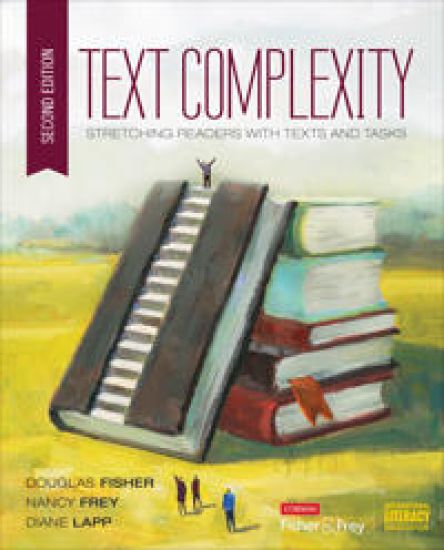
Guides teachers on how to craft instruction pitched to students’ comprehension capacities, curriculum themes, and teachers’ own assessments on what students need next. Updates to this new edition include and a rubric for analysing text complexity and new ideas on close, small group reading, and independent reading.
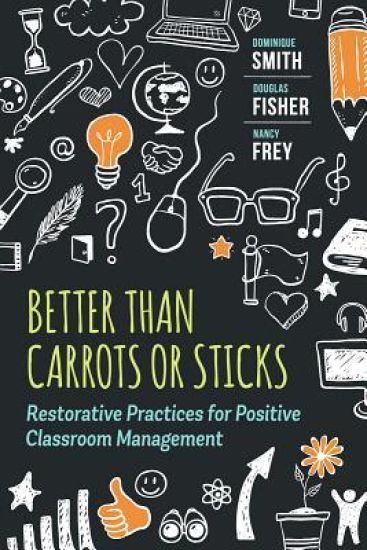
Classroom management is traditionally a matter of encouraging good behavior and discouraging bad by doling out rewards and punishments. But studies show that when educators empower students to address and correct misbehavior among themselves, positive results are longer lasting and more wide reaching. In Better Than Carrots or Sticks, longtime educators and best-selling authors Dominique Smith, Douglas Fisher, and Nancy Frey provide a practical blueprint for creating a cooperative and respectful classroom climate in which students and teachers work through behavioral issues together. After a comprehensive overview of the roots of the restorative practices movement in schools, the authors explain how to:Establish procedures and expectations for student behavior that encourage the development of positive interpersonal skills. Develop a nonconfrontational rapport with even the most challenging students. Implement conflict resolution strategies that prioritize relationship building and mutual understanding over finger-pointing and retribution. Rewards and punishments may help to maintain order in the short term, but they're at best superficially effective and at worst counterproductive. This book will prepare teachers at all levels to ensure that their classrooms are welcoming, enriching, and constructive environments built on collective respect and focused on student achievement.
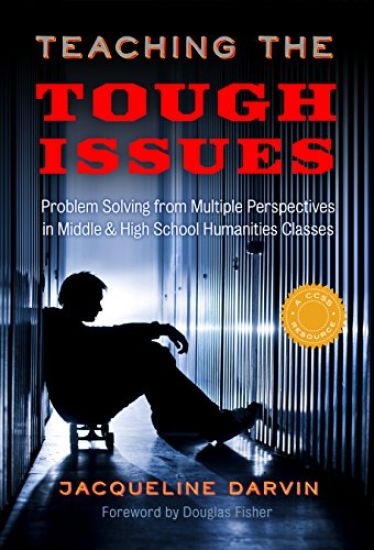
This book introduces a groundbreaking teaching method intended to help English, social studies, and humanities teachers address difficult or controversial topics in their secondary classrooms. Because these issues are rarely addressed in teacher preparation programs, few teachers feel confident facilitating conversations around culturally and politically sensitive issues in ways that honor their diverse students’ voices and lead to critical, transformative thinking. The author describes a four-step method to help teachers structure discussions and written assignments while concurrently assisting them in addressing Common Core State Standards. Designed to aid students in both developing their own viewpoints on contentious issues and in actively critiquing those of their teachers and peers, these practices will enhance any humanities curriculum.
This book introduces a groundbreaking teaching method intended to help English, social studies, and humanities teachers address difficult or controversial topics in their secondary classrooms. Because these issues are rarely addressed in teacher preparation programs, few teachers feel confident facilitating conversations around culturally and politically sensitive issues in ways that honor their diverse students’ voices and lead to critical, transformative thinking. The author describes a four-step method to help teachers structure discussions and written assignments while concurrently assisting them in addressing Common Core State Standards. Designed to aid students in both developing their own viewpoints on contentious issues and in actively critiquing those of their teachers and peers, these practices will enhance any humanities curriculum.
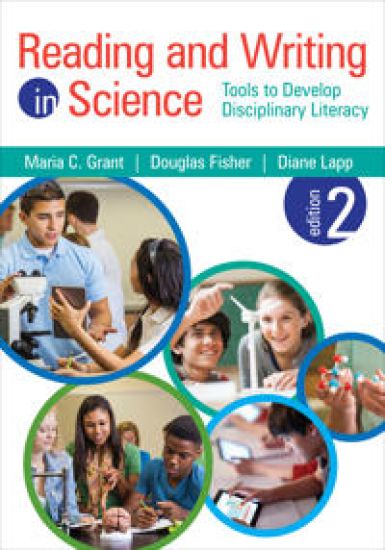
This book offers science teachers a collection of research-based literacy strategies that can be implemented to help students develop science vocabulary, comprehend science textbooks and other reading materials, and engage in writing assignments that lead to better understanding of science content. Co-authored by a science educator and a literacy expert, the focus throughout is on using these strategies to enhance and deepen science content learning. The authors illustrate use of the strategies with science-specific examples. The authors include structures for scaffolding textbook access, ways for teachers to expand literacy in the classroom through the use of trade books, and strategies for assessing student learning.
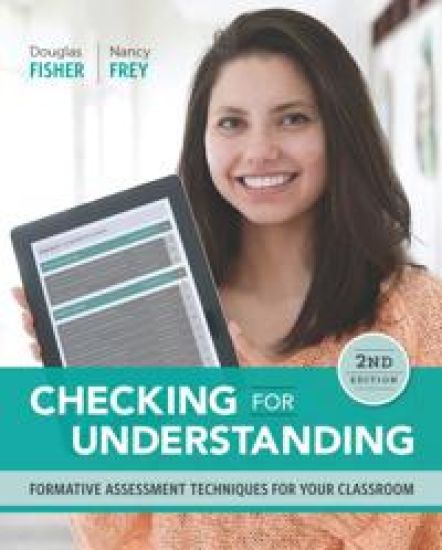
A teacher presents a lesson, and at the end asks students if they understand the material. The students nod and say they get it. Later, the teacher is dismayed when many of the students fail a test on the material. Why aren't students getting it? And, just as important, why didn't the teacher recognize the problem? In Checking for Understanding, Douglas Fisher and Nancy Frey show how to increase students' understanding with the help of creative formative assessments. When used regularly, formative assessments enable every teacher to determine what students know and what they still need to learn. Fisher and Frey explore a variety of engaging activities that check for and increase understanding, including interactive writing, portfolios, multimedia presentations, audience response systems, and much more. This new 2nd edition of Checking for Understanding has been updated to reflect the latest thinking in formative assessment and to show how the concepts apply in the context of Fisher and Frey's work on gradual release of responsibility, guided instruction, formative assessment systems, data analysis, and quality instruction.
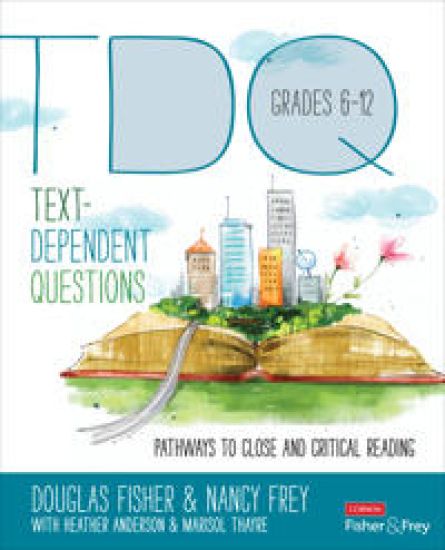
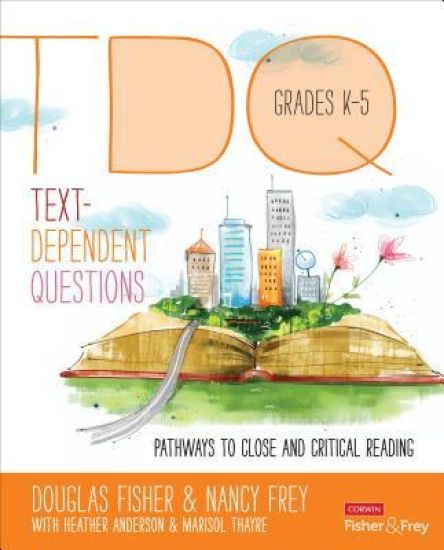
Fisher & Frey’s answer to close and critical reading Learn the best ways to use text-dependent questions as scaffolds during close reading and the big understandings they yield. But that’s just for starters. Fisher and Frey also include illustrative video, texts and questions, cross-curricular examples, and an online facilitator’s guide—making the two volumes of TDQ a potent professional development tool across all of K–12. The genius of TDQ is the way Fisher and Frey break down the process into four cognitive pathways: What does the text say? How does the text work? What does the text mean? What does the text inspire you to do?
Fisher & Frey’s answer to close and critical reading Learn the best ways to use text-dependent questions as scaffolds during close reading and the big understandings they yield. But that’s just for starters. Fisher and Frey also include illustrative video, texts and questions, cross-curricular examples, and an online facilitator’s guide—making the two volumes of TDQ a potent professional development tool across all of K–12. The genius of TDQ is the way Fisher and Frey break down the process into four cognitive pathways: What does the text say? How does the text work? What does the text mean? What does the text inspire you to do?
50 Instructional Routines to Develop Content Literacy, 3/e helps adolescents read more and read better. Middle and high school teachers can immediately put to use its practical information and classroom examples from science, social studies, English, math, the visual and performing arts, and core electives to improve students’ reading, writing, and oral language development. Going above and beyond basic classroom strategies, the instructional routines recommend simple changes to teachers’ everyday procedures that foster student comprehension, such as thinking aloud, using question-answer relationships, and teaching with word walls.
Bestselling authors Douglas B. Fisher and Nancy Frey show how teachers can help students develop stronger learning skills by ensuring that their literacy instruction moves from modeling and guided practice (situations where the teacher has most of the responsibility) to collaborative learning and, finally, to independent tasks. The 2-book series is based on the authors' groundbreaking ASCD book, Better Learning Through Structured Teaching: A Framework for the Gradual Release of Responsibility (2008), but tailored to the English language arts and aligned with the ELA common core state standards.
Legal Reasoning in Environmental Law provides a comprehensive review and analysis of the range of legal reasoning processes to support the understanding, interpretation and application of international, regional and national rules of environmental law. The book considers how rules for environmental governance are designed to accommodate the various competing interests within each of the private and public sectors and also between the two sectors. The author then examines how decisions in particular cases reflect the sources of these rules together with their form, structure and language. He exposes the ways in which reliance upon an extensive range of legal reasoning processes are used to justify the particular decision by interpreting and applying these rules to the case in question. Much has been written about legal reasoning and about environmental law but relatively little about the relationship between the two. This book will strongly appeal to legal scholars for its analysis of intellectual processes, and to legal practitioners for its exposition of how decisions are made.
The Common Core State Standards represents a call for all teachers to focus on the literacy learning of their students. Together, these skills reading, writing, speaking, listening, and viewing comprise the literacies that students must develop if they are to master content and be successful in college or the workplace. This book will assist content-area teachers in understanding the Common Core State Standards that apply to their various courses. Standards in history, social studies, science, and technical subjects are explained in detail, including examples of lessons designed to ensure that students master each Standard.
Data. Does the word make you cringe? Does it evoke feelings of guilt? Are you unsure how to distill it and use it effectively? Grab this book and learn how to empower yourself and your school community with information gleaned from your school's data. Experienced educators and authors offer simple instructions that can help focus school improvement efforts and result in increasing teacher expertise—a factor that positively affects the quality of life for students long after they have left the classroom. Accepting responsibility for such far-reaching influence requires educators to adopt instructional improvement as a standard by which a school needs to operate and as a means to collaborate and interact with one another. More than that, though, instructional improvement is an important component of successful schools.
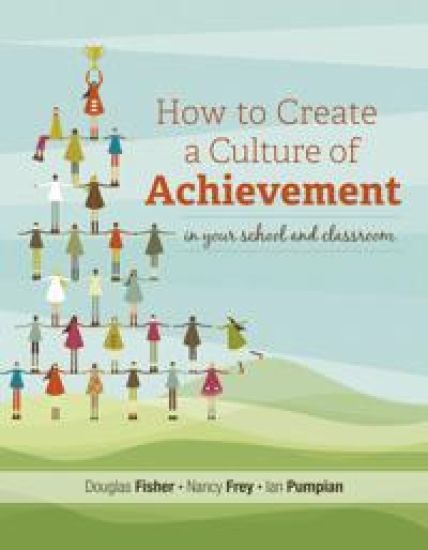
What does it feel like to walk into your school? Is it a welcoming place, where everyone feels valued? Most school improvement efforts focus on academic goals, instructional models, curriculum, and assessments. But sometimes what can make or break your learning community are the intangibles--the relationships, identity, and connections that make up its culture. Authors Fisher, Frey, and Pumpian believe that no school improvement effort will be effective unless school culture is addressed. They identify five pillars that are critical to building a culture of achievement:1. Welcome: Imagine if all staff members in your school considered it their job to make every student, parent, and visitor feel noticed, welcomed, and valued.2. Do no harm: Your school rules should be tools for teaching students to become the moral and ethical citizens you expect them to be.3. Choice words: When the language students hear helps them tell a story about themselves that is one of possibility and potential, students perform in ways that are consistent with that belief.>4. It's never too late to learn: Can you push students to go beyond the minimum needed to get by, to discover what they are capable of achieving?.5. Best school in the universe: Is your school the best place to teach and learn? The best place to work? Drawing on their years of experience in the classroom, the authors explain how these pillars support good teaching and learning. In addition, they provide 19 action research tools that will help you create a culture of achievement, so that your school or classroom is the best it can be. After reading this book, you'll see why culture makes the difference between a school that enables success for all students and a school that merely houses those students during the school day.
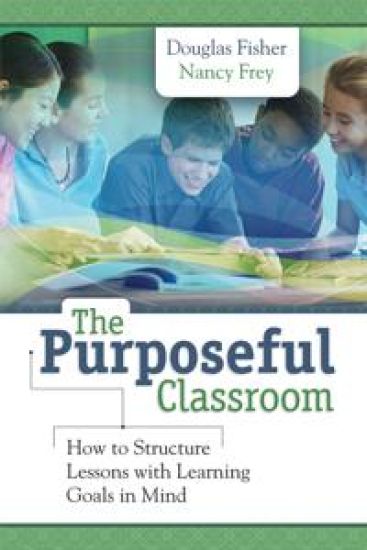
How can teachers guarantee that what they teach results in students learning what they really need to know? In The Purposeful Classroom: How to Structure Lessons with Learning Goals in Mind, Douglas Fisher and Nancy Frey present a variety of strategies that teachers at all levels can use to ensure that students clearly understand the purpose behind every lesson. They provide step-by-step guidance to help teachers:Understand the difference between standards, objectives, and purpose statements, and craft the latter in terms that students can easily grasp. Involve students in understanding and ""owning"" the purpose of every lesson. Motivate students by conveying the relevance of content to students' lives. Develop classroom activities and assessments that allow students to demonstrate both their mastery of lesson content and their understanding of the lesson's core purpose. From initiating lesson plans to evaluating student work, all aspects of lesson development and implementation are discussed in this lively and practical book. Filled with specific examples of effective purpose statements, assignments, and tests across grade levels and content areas, The Purposeful Classroom is essential reading for all teachers who want their students to truly understand what they are learning and why.
Join Nancy Frey and Douglas Fisher as they outline a clear-cut, realistic, and rewarding approach to formative assessment. They explain how four discrete steps work in tandem to create a seamless, comprehensive formative assessment system—one that has no beginning and no end. This ongoing approach enhances an active give-and-take relationship between teachers and students to promote learning. Where am I going? Step 1: Feed-up ensures that students understand the purpose of an assignment, task, or lesson, including how they will be assessed. Where am I now? Step 2: Checking for understanding guides instruction and helps determine if students are making progress toward their goals. How am I doing? Step 3: Feedback provides students with valuable and constructive information about their successes and needs. Where am I going next? Step 4: Feed-forward builds on the feedback from step 3 and uses performance data to facilitate student achievement. Dozens of real-life scenarios demonstrate how to apply these steps in your classroom, always focusing on the presence or absence of student learning to guide the action. By enabling teachers and students alike to see more clearly what they need to do for learning to be successful, this approach builds students' competence, confidence, and understanding. No matter what grade level you teach, The Formative Assessment Action Plan will help you make better use of assessment data so you can more quickly adjust instruction to keep every student on the path to success.
Are we missing the opportunity to reach struggling learners from the very beginning? Are we hastily—and unnecessarily— referring students to intervention programs that substitute for high-quality core instruction? What if we could eliminate the need for intervention programs in the first place? Response to Intervention (RTI) programs are only as powerful and effective as the core instruction on which they're built. High-quality instruction, then, is the key ingredient that helps all students excel, and it's at the heart of Douglas Fisher and Nancy Frey's unique approach to the RTI model — Response to Instruction and Intervention, or RTI2. In Enhancing RTI, the authors argue that students learn best when classroom instruction and supplemental intervention mirror each other in both content and purpose. This book provides K-12 teachers with the knowledge and tools they need to implement a cohesive RTI2 system that helps all children learn by proactively addressing their needs. To this end, you will learn how to:Integrate and align core instruction and supplemental intervention. Assess your own classroom instruction, in addition to your students' responses to it. Strengthen existing school improvement efforts within an RTI2 framework. Utilize systematic feedback to raise student achievement. Fisher and Frey maintain that the RTI2 model not only promotes active student learning, but it also, when done right, promotes a culture of hardwired excellence at all levels of instruction.
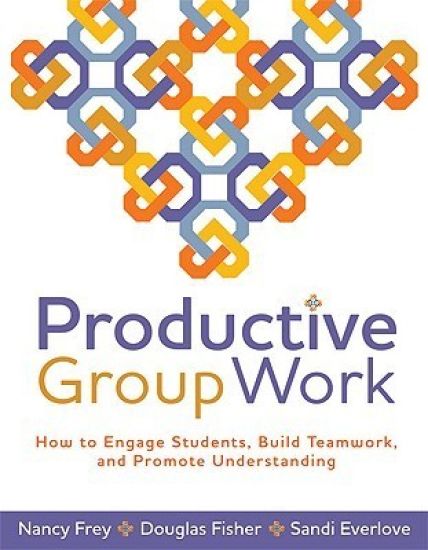
The benefits of collaborative learning are well documented—and yet, almost every teacher knows how group work can go wrong: restless students, unequal workloads, lack of accountability, and too little learning for all the effort involved. In this book, educators Nancy Frey, Douglas Fisher, and Sandi Everlove show you how to make all group work productive group work: with all students engaged in the academic content and with each other, building valuable social skills, consolidating and extending their knowledge, and increasing their readiness for independent learning. The key to getting the most out of group work is to match research-based principles of group work with practical action. Classroom examples across grade levels and disciplines illustrate how to:Create interdependence and positive interaction. Model and guide group work. Design challenging and engaging group tasks. Ensure group and individual accountability. Assess and monitor students' developing understanding (and show them how to do the same). Foster essential interpersonal skills, such as thinking with clarity, listening, giving useful feedback, and considering different points of view. The authors also address the most frequently asked questions about group work, including the best ways to form groups, accommodate mixed readiness levels, and introduce collaborative learning routines into the classroom. Throughout, they build a case that productive group work is both an essential part of a gradual release of responsibility instructional model and a necessary part of good teaching practice.
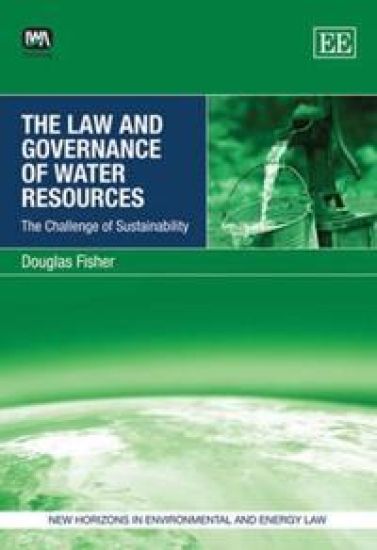
This path-breaking book focuses on the law and legal doctrine within the wider policy context of water resources and analyses the concept of sustainability. To achieve the sustainable use and development of water resources is a daunting challenge for both global and local communities. It requires commitments from all groups within international, national and local communities from their own particular, possibly conflicting, perspectives. Without a set of coherent legal arrangements designed to ensure effective governance of water resources, their sustainable use and development is unlikely to be achieved. Douglas Fisher considers how legal arrangements for managing water resources have evolved across the continents over hundreds of years. He explores their relevance for contemporary society; how the norms of current international and national legal regimes are responding; and, most importantly, how legal rights and duties should be structured so as to achieve sustainability in the future. This detailed textual and linguistic analysis of legal doctrines and instruments in relation to water resources will be invaluable for international and national water resources policy analysts, water resource managers and water resource lawyers. Students of water resource management, sustainable development and sustainability will also find this book of great interest to them.
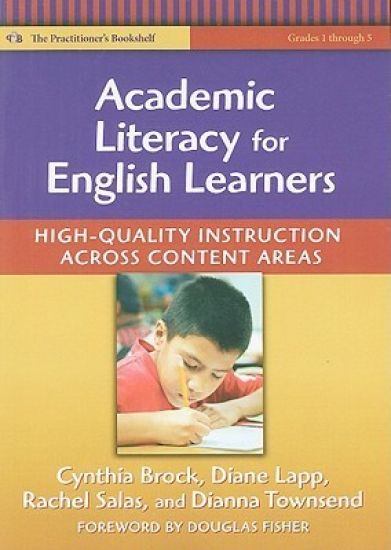
This concise resource provides innovative new strategies for supporting English learners in elementary classrooms. The authors delve into the social, cultural, and linguistic backgrounds of English learners in American schools, and describe how to teach to each student's strengths and background knowledge. Each chapter provides examples from real classrooms where first, third, and fifth grade teachers are working to serve students from a wide variety of backgrounds. Guided by up-to-date research on disciplinary literacy, these expert authors provide a meaningful guide to integrating best-practices for English learners across content areas - science, mathematics, and social studies - while fostering high levels of academic proficiency.