Kirjojen hintavertailu – 12 859 826 kirjaa ja 27 kauppaa

Kirjailija

Douglas Hedley

Kirjat ja teokset yhdessä paikassa: 13 kirjaa, julkaisuja vuosilta 2000–2023, suosituimpiin kuuluu The Iconic Imagination. Vertaile teosten hintoja ja tarkista saatavuus suomalaisista kirjakaupoista.

13 kirjaa

Kirjojen julkaisuvuodet: 2000–2023.

Space God

Space God

Jd Lyonhart; Douglas Hedley

Cascade Books
2023
pokkari
Henry More had an odd idea. Thinking about space, he realized it was invisible, for we see things in space but not space itself. It's also immaterial, for matter exists in space but space is not itself material--try to grab it and it slips through your fingers. Space was also infinite and transcendent yet nonetheless omnipresent, for we cannot go anywhere except in and through space. But this was exactly how More saw God; God is invisible, immaterial, infinite, and transcendent, yet also omnipresent above, beyond, and within us. If God was somehow linked to space, he could be truly present while remaining immaterial, upholding the creator-creature distinction. He'd be near to us but would not be identical with us, just as space is distinct from the objects occupying it while remaining intimately close to those objects. What if space was, in some sense, divine? Odder still, Newton soon erected his new physics upon More's idea. Indeed, there's real evidence that the modern scientific world was unwittingly grounded upon this theistic metaphysic. Of course, modern physics shed these underpinnings in the nineteenth century, and was itself relativized by Einstein in the twentieth. Yet this book seeks to reappraise More's odd idea. Is divine space theologically orthodox? Can it provide a new argument for the existence of God? And does it have any philosophical merit for us post-Einstein--a Space God for a Space Age?
Space God

Space God

Jd Lyonhart; Douglas Hedley

Cascade Books
2023
sidottu
Henry More had an odd idea. Thinking about space, he realized it was invisible, for we see things in space but not space itself. It's also immaterial, for matter exists in space but space is not itself material--try to grab it and it slips through your fingers. Space was also infinite and transcendent yet nonetheless omnipresent, for we cannot go anywhere except in and through space. But this was exactly how More saw God; God is invisible, immaterial, infinite, and transcendent, yet also omnipresent above, beyond, and within us. If God was somehow linked to space, he could be truly present while remaining immaterial, upholding the creator-creature distinction. He'd be near to us but would not be identical with us, just as space is distinct from the objects occupying it while remaining intimately close to those objects. What if space was, in some sense, divine? Odder still, Newton soon erected his new physics upon More's idea. Indeed, there's real evidence that the modern scientific world was unwittingly grounded upon this theistic metaphysic. Of course, modern physics shed these underpinnings in the nineteenth century, and was itself relativized by Einstein in the twentieth. Yet this book seeks to reappraise More's odd idea. Is divine space theologically orthodox? Can it provide a new argument for the existence of God? And does it have any philosophical merit for us post-Einstein--a Space God for a Space Age?
The History of Evil in the Eighteenth and Nineteenth Centuries
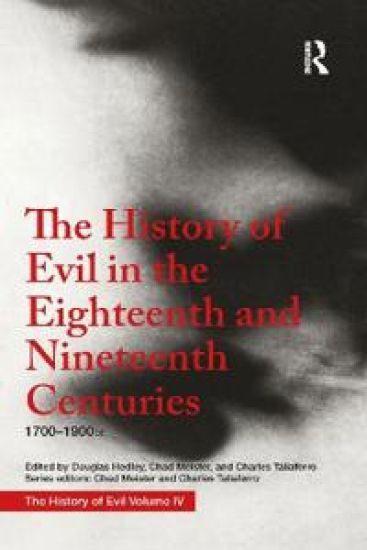
The fourth volume of The History of Evil explores the key thinkers and themes relating to the question of evil in eighteenth and nineteenth centuries. The very idea of "evil" is highly contentious in modern thought and this period was one in which the concept was intensely debated and criticized. The persistence of the idea of evil is a testament to the abiding significance of theology in the period, not least in Germany. Comprising twenty-two chapters by international scholars, some of the topics explored include: Berkeley on evil, Voltaire and the Philosophes, John Wesley on the origins of evil, Immanuel Kant on evil, autonomy and grace, the deliverance of evil: utopia and evil, utilitarianism and evil, evil in Schelling and Schopenhauer, Friedrich Nietzsche and the genealogy of evil, and evil and the nineteenth-century idealists. This volume also explores a number of other key thinkers and topics within the period. This outstanding treatment of the history of evil at the crucial and determinative inception of its key concepts will appeal to those with particular interests in the ideas of evil and good.
The Iconic Imagination

The Iconic Imagination

Douglas Hedley

Continuum Publishing Corporation
2016
nidottu
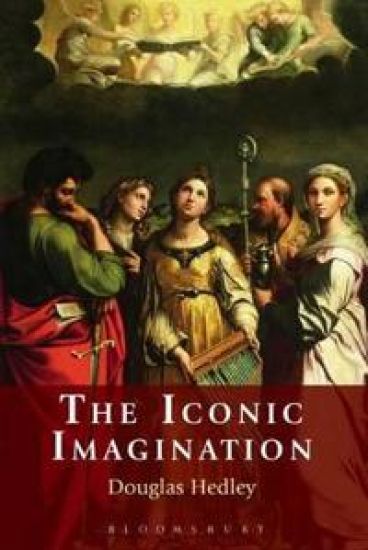
Is it merely an accident of English etymology that ‘imagination’ is cognate with ‘image’? Despite the iconoclasm shared to a greater or lesser extent by all Abrahamic faiths, theism tends to assert a link between beauty, goodness and truth, all of which are viewed as Divine attributes. Douglas Hedley argues that religious ideas can be presented in a sensory form, especially in aesthetic works. Drawing explicitly on a Platonic metaphysics of the image as a bearer of transcendence, The Iconic Imagination shows the singular capacity and power of images to represent the transcendent in the traditions of Christianity, Judaism, Hinduism and Islam. In opposition to cold abstraction and narrow asceticism, Hedley shows that the image furnishes a vision of the eternal through the visible and temporal.
The Iconic Imagination

The Iconic Imagination

Douglas Hedley

Continuum Publishing Corporation
2016
sidottu
Is it merely an accident of English etymology that ‘imagination’ is cognate with ‘image’? Despite the iconoclasm shared to a greater or lesser extent by all Abrahamic faiths, theism tends to assert a link between beauty, goodness and truth, all of which are viewed as Divine attributes. Douglas Hedley argues that religious ideas can be presented in a sensory form, especially in aesthetic works. Drawing explicitly on a Platonic metaphysics of the image as a bearer of transcendence, The Iconic Imagination shows the singular capacity and power of images to represent the transcendent in the traditions of Christianity, Judaism, Hinduism and Islam. In opposition to cold abstraction and narrow asceticism, Hedley shows that the image furnishes a vision of the eternal through the visible and temporal.
Sacrifice Imagined

Sacrifice Imagined

Douglas Hedley

Continuum Publishing Corporation
2011
nidottu
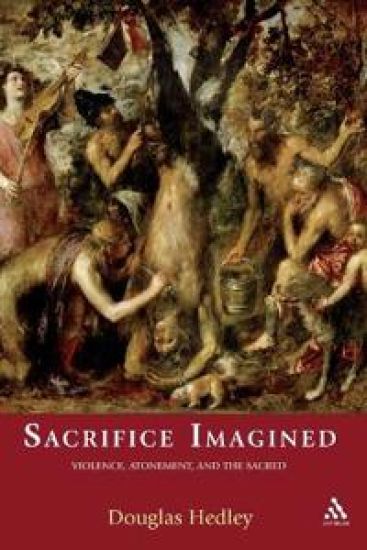
This book is an original exploration of the idea of sacrifice by one of the world's pre-eminent philosophers of religion. "Sacrifice Imagined" is an original exploration of the idea of sacrifice by one of the world's preeminent philosophers of religion. Despisers of religion have poured scorn upon the idea of sacrifice as an index of the irrational and wicked in religious practice. Nor does its secularised form seem much more appealing. One need only think of the appalling cult of sacrifice in numerous totalitarian regimes of the twentieth century. Yet sacrifice remains a part of our cultural and intellectual 'imaginary'. Hedley proposes good reasons to think that issues of global conflict and the ecological crisis highlight the continuing relevance of the topic of sacrifice for contemporary culture. The subject of sacrifice has been decisively influenced by two books: Girard's "The Violence and the Sacred" and Burkert's "Homo Necans". Both of these are theories of sacrifice as violence. Hedley's book challenges both of these highly influential theories and presents a theory of sacrifice as renunciation of the will. His guiding influences in this are the much misunderstood Joseph de Maistre and the Cambridge Platonists.
Sacrifice Imagined

Sacrifice Imagined

Douglas Hedley

Continuum Publishing Corporation
2011
sidottu
Sacrifice Imagined is an original exploration of the idea of sacrifice by one of the world's preeminent philosophers of religion. Despisers of religion have poured scorn upon the idea of sacrifice as an index of the irrational and wicked in religious practice. Nor does its secularised form seem much more appealing. One need only think of the appalling cult of sacrifice in numerous totalitarian regimes of the twentieth century. Yet sacrifice remains a part of our cultural and intellectual imaginary'. Hedley proposes good reasons to think that issues of global conflict and the ecological crisis highlight the continuing relevance of the topic of sacrifice for contemporary culture. The subject of sacrifice has been decisively influenced by two books: Girard's The Violence and the Sacred and Burkert's Homo Necans. Both of these are theories of sacrifice as violence. Hedley's book challenges both of these highly influential theories and presents a theory of sacrifice as renunciation of the will. His guiding influences in this are the much misunderstood Joseph de Maistre and the Cambridge Platonists.
Plato's Parmenides

Plato's Parmenides

Arnold Hermann; Douglas Hedley

Parmenides Publishing
2010
nidottu
This translation is the result of a collaboration between Arnold Hermann and Dr. Sylvana Chrysakopoulou. Heeding the challenge of balancing intelligibility with faithfulness—while maintaining sufficient consistency to allow the discernment of technical terms—great pains have been taken to secure both accuracy and accessibility. In his Foreword, Douglas Hedley gives an insightful account of the way the Parmenides was received by different cultures and philosophical schools throughout the centuries to the present day. Hermann’s Introduction, aimed at first time readers and professional interpreters alike, offers an overview of the most noted philosophical problems addressed in the dialogue, and of its historical background. In view of the fact that certain individual issues have been exhaustively explored by generations of scholars, Hermann chooses to focus also on subjects that have at times been passed over, or trivialized: the debt the dialogue may owe to the works of earlier thinkers, or whether it constitutes a response to certain critics of the Theory of Forms; as for the Theory itself, whether it is bolstered or superseded by the dialogue’s conclusions, or whether there is such a thing as a “simple,” unparticipated Form, and if there is, why it cannot be the subject of an account; also, the issue of the “interweaving of Forms,” (the Sophist) is discussed, in light of its possible relevance to the Second Part of the Parmenides. Finally, Hermann provides an overview with a listing and summaries of the individual conclusions to each of the eight central arguments of the dialgoue’s Second Part (plus Coda).
Coleridge, Philosophy and Religion

Coleridge, Philosophy and Religion

Douglas Hedley

Cambridge University Press
2009
pokkari
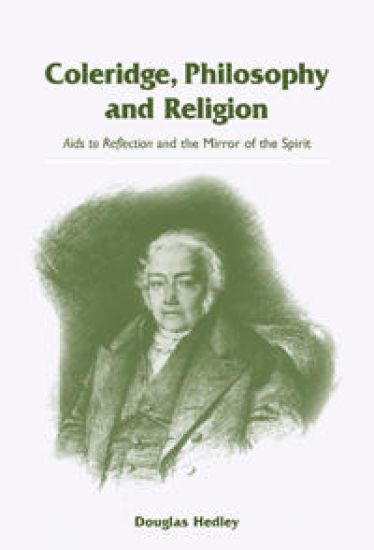
Coleridge's relation to his German contemporaries constitutes the toughest problem in assessing his standing as a thinker. For the last half-century this relationship has been described, ultimately, as parasitic. As a result, Coleridge's contribution to religious thought has been seen primarily in terms of his poetic genius. This book revives and deepens the evaluation of Coleridge as a philosophical theologian in his own right. Coleridge had a critical and creative relation to, and kinship with, German Idealism. Moreover, the principal impulse behind his engagement with that philosophy is traced to the more immediate context of English Unitarian-Trinitarian controversy of the eighteenth and nineteenth centuries. The book re-establishes Coleridge as a philosopher of religion and as a vital source for contemporary theological reflection.
Living Forms of the Imagination

Living Forms of the Imagination

Douglas Hedley

T. T.Clark Ltd
2008
nidottu
"This book is essential reading for those interested in the imagination, epistemology, naturalism, and the philosophy of religion." - Charles Taliaferro, Professor of Philosophy, St. Olaf College, Minnesota The role of imagination in psychology, ethics and aesthetics provides a good analogy for thinking about the imagination in religious belief. in dealing with the inner lives of other human beings, moral values or aesthetic qualities we need to employ the imagination: to suppose, form hypotheses, empathize or imaginatively engage with alien people or worlds in order to understand. Just as we use the imagination to relate to other minds, appreciate beauty and understand goodness, we need imagination to engage with God's action in the world.
The Human Person In God's World

The Human Person In God's World

Brian Hebblethwaite; Douglas Hedley

SCM Press
2006
nidottu
Austin Farrer's important contribution to philosophical and theological anthropology is discussed here by the six main contributors to the Austin Farrer Centenary Conference held at Oriel College in 2004. After an Introductory survey by Basil Mitchell, Nancy Murphy provides an in-depth study of Farrer's defence of the freedom of the will, Edward Henderson brings out the key notion of double agency in Farrer's conception of the way God acts in and through the human person. Brian Hebblethwaite explores Farrer's writings for the light they throw on creation and evolution, with special reference to the problems of providence and evil. David Brown extends Farrer's insights on the role of images in biblical revelation to their role in natural religion, and Douglas Hedley shows how Farrer's ' and Mitchell's ' work on the imagination enriches our understanding of the relation between faith and reason. The Centenary Conference sermon by the Bishop of Oxford is also appended.
Coleridge, Philosophy and Religion

Coleridge, Philosophy and Religion

Douglas Hedley

Cambridge University Press
2000
sidottu
Coleridge’s relation to his German contemporaries constitutes the toughest problem in assessing his standing as a thinker. For the last half-century this relationship has been described, ultimately, as parasitic. As a result, Coleridge’s contribution to religious thought has been seen primarily in terms of his poetic genius. This book revives and deepens the evaluation of Coleridge as a philosophical theologian in his own right. Coleridge had a critical and creative relation to, and kinship with, German thought. Moreover, the principal impulse behind his engagement with that philosophy is traced to the more immediate context of the English Unitarian-Trinitarian controversy of the eighteenth and nineteenth centuries. The book re-establishes Coleridge as a philosopher of religion and as a vital source for contemporary theological reflection.