Kirjojen hintavertailu – 12 859 818 kirjaa ja 27 kauppaa
Kirjailija
Douglas John Hall
Kirjat ja teokset yhdessä paikassa: 20 kirjaa, julkaisuja vuosilta 1998–2022, suosituimpiin kuuluu Christian Theology After Christendom. Vertaile teosten hintoja ja tarkista saatavuus suomalaisista kirjakaupoista.
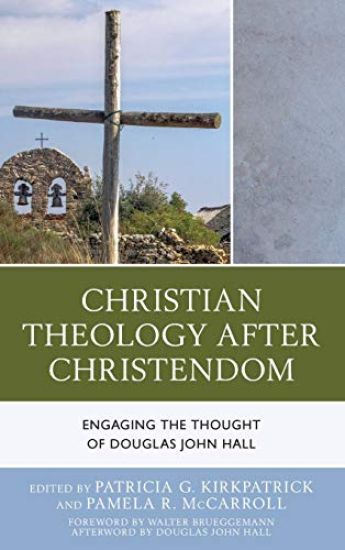
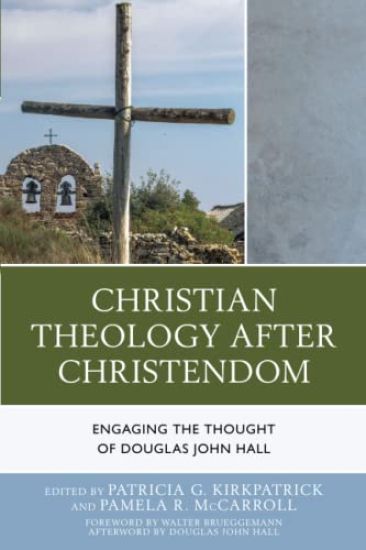
Christian Theology after Christendom: Engaging the Thought of Douglas John Hall brings together contemporary thinkers to engage and build upon Douglas John Hall’s work—and to take up his challenge to reclaim a contextual and de-colonizing theology of the cross as a means to speak to the realities of life and faith today. With a focus on contemporary issues, this edited collection critically analyzes and deconstructs the centuries-old colonial triumphalism of Christian theology and the church in the West. This book seeks to frame present day crises in ways that honor a deeply rooted theologia crucis that does not colonize the “other.” It explores constructive decolonizing possibilities for Christian theology at the end of Christendom.
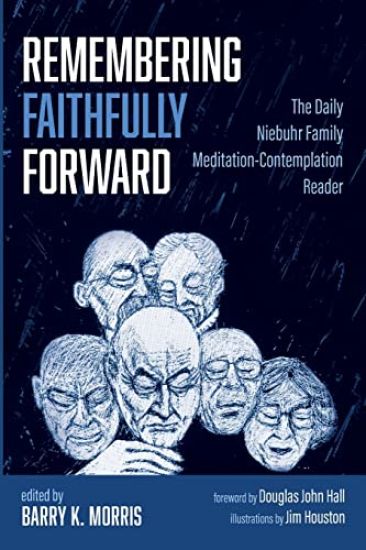
Daily Meditation readers abound; some, thankfully, endure. Rare are spiritually grounded and contemplative invitations that feature four generations of earnest family teachers, preachers, activists, journalists, and controversial prophets. In various life conditions, threatening and challenged by sickness and despair, herein are eight Niebuhrs' faithful wrestlings. They bequeath bristling morsels and compelling insights, creatively compacted into more than four hundred entries and reference leads for further consideration. Thus, deeply influenced by the patriarch and matriarch, Gustav Sr. and Lydia, arise Reinhold's steadfast reflections on grace-grounded justice and its principles; the caringly layered meanings of the love of neighbor and God from his brother, H. Richard; the dedication to render the faith intelligible to postmoderns held by his son, Richard Reinhold; and the decisive and insightful journalism by, in turn, his son, Gustav Jr., on Lincoln being duly lobbied for mercy to indigenous peoples. And that's not all--the indispensable reminiscences of Reinhold's educator sister, Hulda, and his wife, Ursula, as well as the unearthed grace-based Serenity Prayer of his daughter Elisabeth, corporately express rare gleanings of the Niebuhr clan's virtual school of warm contemplative action.
Christian Theology after Christendom: Engaging the Thought of Douglas John Hall brings together contemporary thinkers to engage and build upon Douglas John Hall’s work—and to take up his challenge to reclaim a contextual and de-colonizing theology of the cross as a means to speak of the realities of life and faith today. With a focus on contemporary issues, this collection of essays critically analyzes and deconstructs the centuries-old colonial triumphalism of Christian theology and the church in the West. This edited collection seeks to frame present day crises in ways that honor a deeply rooted theologia crucis that does not colonize the “other.” It explores constructive decolonizing possibilities for Christian theology at the end of Christendom.
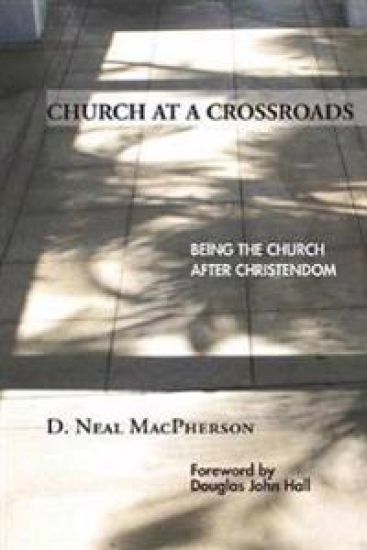
Facing the uncertainty of their present life and ministry, the American and Canadian churches of mainline Protestantism are, for the most part, responding in one of two ways. Some are simply choosing to ignore the process of their disestablishment. They continue to carry on with their church life as though nothing were happening, as though they were still occupying a place at the center of society. Others, knowing that they are being moved to the periphery of social and political life, are seeking to regain their past power and influence by adopting one or another program of church growth, many of which are being promoted by the newly emerging megachurches of the Christian right. Based upon the history and experience of a particular congregation, Church of the Crossroads in Honolulu, Hawaii, this book suggests a third option for the churches of mainline Protestantism: to embrace their ongoing disestablishment and to see it not as a burden or as something to be either ignored or reversed, but as an opportunity to envision a new way of being in the world. Readers of Neal MacPherson's book will find both encouragement and practical help in his depiction of this remarkable congregation. --Douglas John Hall, CM, Emeritus Professor of Christian Theology, McGill University, Montreal, Canada. ""As Christendom dies, real Christianity, which, as Chesterton said, has been 'so little tried, ' looks for a way into the future. And wherever Christians are serious enough to let go of the tired old forms their religion has assumed in its long and established past, they are discovering the courage and imagination necessary to put the good wine of the gospel into new ecclesiastical wineskins. Some of these wineskins will no doubt burst. Some already have. But some will survive and will prove sources of energy, wisdom, and human hope for the century ahead. The Church of the Crossroads, in my belief, is one of the latter."" --from the foreword For the past nineteen years, D. Neal MacPherson has been the pastor of Church of the Crossroads United Church of Christ in Honolulu, Hawaii. This is his first book.
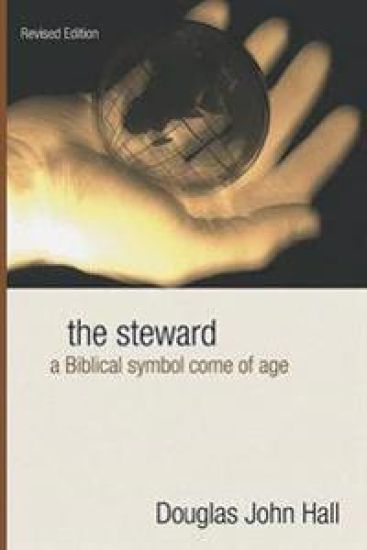
The biblical image of the steward is highly provocative and even revolutionary. In recent years, environmentalists and peace marchers have been discovering the radical potential of the stewardship motif, while the church, sadly, has muffled this symbol's power in ecclesiastical wrappings. So writes Douglas John Hall in the first edition of 'The Steward' (1982). This provocative book has been so much in demand all over the world that Hall has completely rewritten, revised, and expanded his work, adding new material and deleting dated references. Yet Hall has kept his original book's basic format the same in this new and improved edition. In short, Hall aims to recapture the most basic meaning of the biblical metaphor of the 'steward' and to apply that meaning to our social context, one in which human beings are confused and ambivalent about their place and vocation in a threatened world. Working from numerous angles - biblical, historical, sociological, theological, and ecclesiastical - Hall explores the rich meaning and implications of stewardship. Scripture portrays the steward as a caretaker and servant. Hall compares scriptural teaching on stewardship - concentrated in Jesus' parables - with the role of stewardship in the church's history, maintaining that ever since the fourth century, the church's understanding and practice of stewardship have been distorted by its alliance with institutional power. Hall also puts forth apocalyptic warnings about the fate of the earth unless we heed the call to be stewards of the creation, work for world peace and justice, and nurture life in its many forms. The church around the world, says Hall, urgently needs to live as 'steward' - it is a matter of death and life.
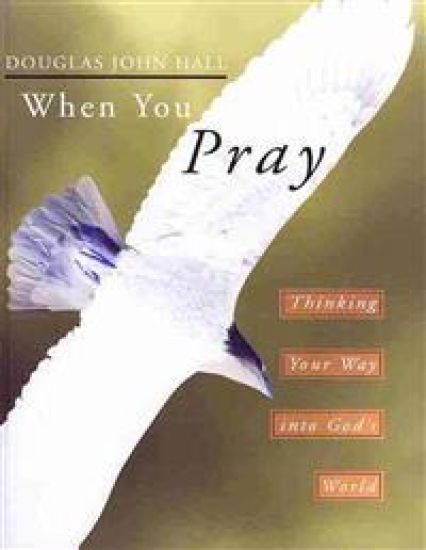
When life becomes complicated with problems too painful to face, we seek refuge -- we turn to God as a way of turning off the world. For Dr. Hall, prayer is more than a shield from trouble or a source of comfort. He calls Christians to experience exciting prayer possibilities that lift us out of our self-concern into a vital worldly stewardship in harmony with the purpose of the gospel. Rather than a "how to" guide, this thoughtful study asks two significant questions: "What is prayer?" and "What should we be doing when we pray?" Exploring the nature of prayer and the relationship between prayer, thought, and action, Hall observes, "Love for God and love for the world are not alternatives; they are part of the same seamless robe." Through prayer, "God separates us from the world in order to send us back into the world with renewed spirits..." These Bible-based perspectives challenge believers to develop more disciplined, thought-directed prayer. This is the kind of prayer that leads us to act in obedience to Christ -- to love, comfort, and forgive others; to liberate those suffering oppression much greater than our own; and to mature in discipleship to the world.
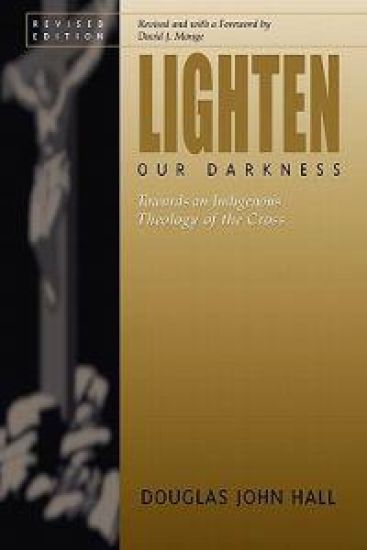
-------------------------------------------------------------------------------- Revised and with a Foreword by David J. Monge In this great classic, Douglas John Hall analyzes the inadequacies and dangers of the officially optimistic society of North America and its officially optimistic religion. He then appeals to the thin tradition of Luther and Kierkegaard within Christian history as a way into the darkness of our time. He eloquently appeals to this theology of the cross as not only pointing toward a new image of human nature for Christians today but also affording us a glimmer of true light. Students, laypersons, clergy, and many others will find here a gripping critique of modern Western culture and a way toward genuine Christian faith in challenging times. Mind-shaking and spirit-shaking. -- John C. Bennett One of the best and most constructive theological critiques of culture and religion to come along in a good while. -- Larry Rasmussen I believe this is an important book. I know that it is stimulating and provocative--almost maddeningly so. . . . Thoughtful Christians need to reckon with the ideas contained in this book. -- Edgar M. Carlson, The Lutheran Quarterly Douglas John Hall, one of the most respected of North American theologians, is Professor Emeritus of Theology at McGill University, Montreal. Among his many books is the trilogy Christian Theology in a North American Context, which consists of Thinking the Faith, Professing the Faith, and Confessing the Faith. His popular Why Christian? For Those on the Edge of Faith was published in 1998.
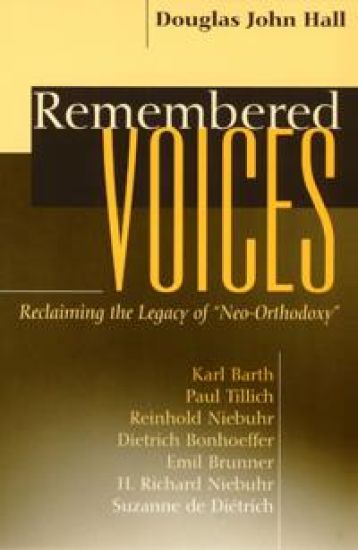
Douglas John Hall demonstrates the continuing relevance of several of the twentieth century's greatest theologians--Karl Barth, Paul Tillich, Reinhold Niebuhr, H. Richard Niebuhr, Dietrich Bonhoeffer, Emil Brunner, and Suzanne de Dietrich--suggesting that their neo-orthodox roots have much more in common than is traditionally acknowledged. Suitable for classroom use and individual study, Remembered Voices is a highly accessible introduction to twentieth-century theologians.