Kirjojen hintavertailu – 12 859 828 kirjaa ja 27 kauppaa

Kirjailija

Douglas L. Medin

Kirjat ja teokset yhdessä paikassa: 4 kirjaa, julkaisuja vuosilta 1981–2014, suosituimpiin kuuluu Who's Asking?. Vertaile teosten hintoja ja tarkista saatavuus suomalaisista kirjakaupoista.

Nimi esiintyy myös muodoissa: Douglas L Medin

4 kirjaa

Kirjojen julkaisuvuodet: 1981–2014.

Who's Asking?

Who's Asking?

Douglas L. Medin; Megan Bang

MIT Press
2014
sidottu
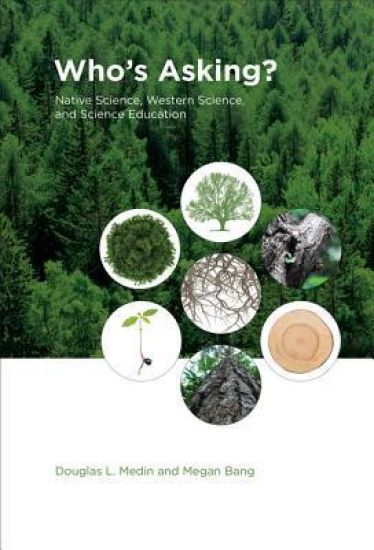
Analysis and case studies show that including different orientations toward the natural world makes for more effective scientific practice and science education. The answers to scientific questions depend on who's asking, because the questions asked and the answers sought reflect the cultural values and orientations of the questioner. These values and orientations are most often those of Western science. In Who's Asking?, Douglas Medin and Megan Bang argue that despite the widely held view that science is objective, value-neutral, and acultural, scientists do not shed their cultures at the laboratory or classroom door; their practices reflect their values, belief systems, and worldviews. Medin and Bang argue further that scientist diversity-the participation of researchers and educators with different cultural orientations-provides new perspectives and leads to more effective science and better science education. Medin and Bang compare Native American and European American orientations toward the natural world and apply these findings to science education. The European American model, they find, sees humans as separated from nature; the Native American model sees humans as part of a natural ecosystem. Medin and Bang then report on the development of ecologically oriented and community-based science education programs on the Menominee reservation in Wisconsin and at the American Indian Center of Chicago. Medin and Bang's novel argument for scientist diversity also has important implications for questions of minority underrepresentation in science.
The Native Mind and the Cultural Construction of Nature

The Native Mind and the Cultural Construction of Nature

Scott Atran; Douglas L. Medin

Bradford Books
2010
pokkari
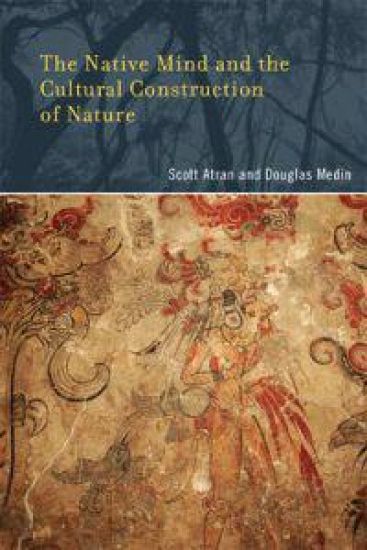
An analysis of the cognitive consequences of diminished contact with nature examines the relationship between how people think about the natural world and how they act on it, and how these are affected by cultural differences. Surveys show that our growing concern over protecting the environment is accompanied by a diminishing sense of human contact with nature. Many people have little commonsense knowledge about nature-are unable, for example, to identify local plants and trees or describe how these plants and animals interact. Researchers report dwindling knowledge of nature even in smaller, nonindustrialized societies. In The Native Mind and the Cultural Construction of Nature, Scott Atran and Douglas Medin trace the cognitive consequences of this loss of knowledge. Drawing on nearly two decades of cross-cultural and developmental research, they examine the relationship between how people think about the natural world and how they act on it and how these are affected by cultural differences. These studies, which involve a series of targeted comparisons among cultural groups living in the same environment and engaged in the same activities, reveal critical universal aspects of mind as well as equally critical cultural differences. Atran and Medin find that, despite a base of universal processes, the cultural differences in understandings of nature are associated with significant differences in environmental decision making as well as intergroup conflict and stereotyping stemming from these differences. The book includes two intensive case studies, one focusing on agro-forestry among Maya Indians and Spanish speakers in Mexico and Guatemala and the other on resource conflict between Native-American and European-American fishermen in Wisconsin. The Native Mind and the Cultural Construction of Nature offers new perspectives on general theories of human categorization, reasoning, decision making, and cognitive development.
Culture and Resource Conflict

Culture and Resource Conflict

Douglas L Medin; Norbert O Ross; Douglas G Cox

Russell Sage Foundation
2006
sidottu
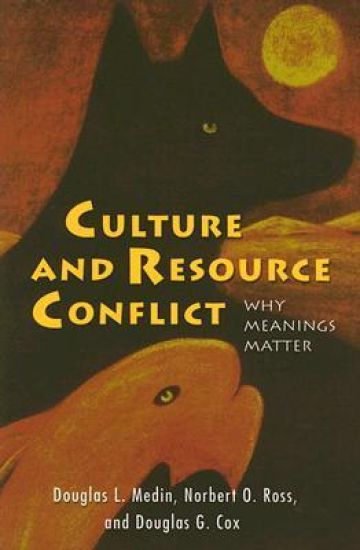
In a multi-cultural society, differing worldviews among groups can lead to conflict over competing values and behaviors. Nowhere is this tension more concrete than in the wilderness, where people of different cultures hunt and fish for the same animals. White Americans tend to see nature as something external which they have some responsibility to care for. In contrast, Native Americans are more likely to see themselves as one with nature. In Culture and Resource Conflict, authors Douglas Medin, Norbert Ross, and Douglas Cox investigate the discord between whites and Menominee American Indians over hunting and fishing, and in the process, contribute to our understanding of how and why cultures so often collide. Based on detailed ethnographic and experimental research, Culture and Resource Conflict finds that Native American and European American hunters and fishermen have differing approaches--or mental models--with respect to fish and game, and that these differences lead to misunderstanding, stereotyping, and conflict. Menominee look at the practice of hunting and fishing for sport as a sign of a lack of respect for nature. Whites, on the other hand, define respect for nature more on grounds of resource management and conservation. Some whites believe--contrary to fact--that Native Americans are depleting animal populations with excessive hunting and fishing, while the Menominee protest that they only hunt what they need and make extensive use of their catch. Yet the authors find that, despite these differences, the two groups share the fundamental underlying goal of preserving fish and game for future generations, and both groups see hunting and fishing as deeply meaningful activities. At its core, the conflict between these two groups is more about mistrust and stereotyping than actual disagreement over values. Combining the strengths of psychology and anthropology, Culture and Resource Conflict shows how misunderstandings about the motives of others can lead to hostility and conflict. As debates over natural resources rage worldwide, this unique book demonstrates the obstacles that must be overcome for different groups to reach consensus over environmental policy.