Kirjojen hintavertailu – 12 859 819 kirjaa ja 27 kauppaa

Kirjailija

Douglas M. Jesseph

Kirjat ja teokset yhdessä paikassa: 7 kirjaa, julkaisuja vuosilta 1993–2024, suosituimpiin kuuluu Berkeley's Philosophy of Mathematics. Vertaile teosten hintoja ja tarkista saatavuus suomalaisista kirjakaupoista.

7 kirjaa

Kirjojen julkaisuvuodet: 1993–2024.

Historical Dictionary of Descartes and Cartesian Philosophy

Historical Dictionary of Descartes and Cartesian Philosophy

Roger Ariew; Douglas M. Jesseph; Tad M. Schmaltz; Theo Verbeek

BLOOMSBURY PUBLISHING PLC
2024
sidottu
The Historical Dictionary of Descartes and Cartesian Philosophy, Third Edition, centers on Descartes’ philosophy (considered broadly to include his science and mathematics) in the context of 17th-century thought, with attention being paid to its reception. This is done through a chronology, an introduction, and an extensive bibliography. The dictionary section has more than 400 cross-referenced entries on various concepts in Descartes’ philosophy, science, and mathematics, as well as biographical entries about the intellectual setting for Descartes’ philosophy and its reception, both with Cartesians and anti-Cartesians. This book is an excellent resource for students, researchers, and anyone wanting to know more about Descartes philosophy.
Historical Dictionary of Descartes and Cartesian Philosophy

Historical Dictionary of Descartes and Cartesian Philosophy

Roger Ariew; Dennis Des Chene; Douglas M. Jesseph; Tad M. Schmaltz; Theo Verbeek

Rowman Littlefield
2015
sidottu
Descartes is perhaps most closely associated with the title, “the Father of Modern Philosophy.” Generations of students have been introduced to the study of philosophy through a consideration of his Meditations on First Philosophy. His contributions to natural science is shown by the fact that his physics, as promulgated by the Cartesians, played a central role in the debates after his death over Isaac Newton’s theory of gravitation. Descartes also made major contributions to the field of analytic geometry; we still speak today of “Cartesian coordinates” and the “Cartesian product.” This second edition of Historical Dictionary of Descartes and Cartesian Philosophy covers the history through a chronology, an introductory essay, and an extensive bibliography. The dictionary section has over 300 cross-referenced entries on various concepts in Descartes’ philosophy, science, and mathematics, as well as biographical entries about the intellectual setting for Descartes’ philosophy and its reception, both with Cartesians and anti-Cartesians. This book is an excellent access point for students, researchers, and anyone wanting to know more about Descartes.
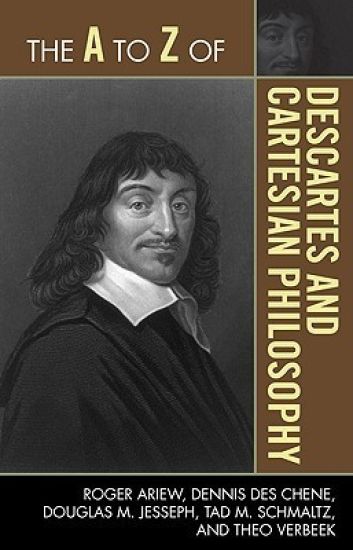
The A to Z of Descartes and Cartesian Philosophy

The A to Z of Descartes and Cartesian Philosophy

Roger Ariew; Dennis Des Chene; Douglas M. Jesseph; Tad M. Schmaltz; Theo Verbeek

Scarecrow Press
2010
nidottu
The A to Z of Descartes and Cartesian Philosophy includes many entries on Descartes's writings, concepts, and findings. Since it is historical, there are other entries on those who supported him, those who criticized him, those who corrected him, and those who together formed one of the major movements in philosophy, Cartesianism. To better understand the period, the authors drew up a brief chronology, and to see how Descartes and Cartesianism fit into the general picture, they have written an introduction and a biography. Since everything cannot be summed up in one volume, a bibliography directs readers to numerous other sources on issues of particular interest.
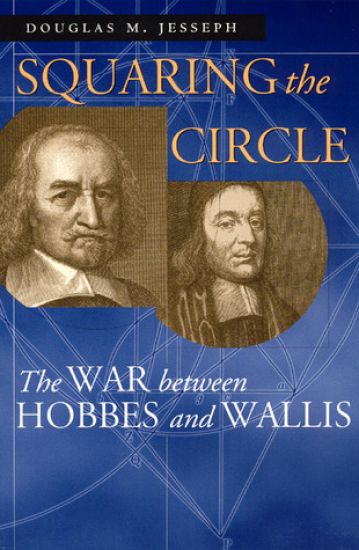
Squaring the Circle

Squaring the Circle

Douglas M. Jesseph

University of Chicago Press
2000
nidottu
In 1655, the philosopher Thomas Hobbes claimed he had solved the centuries-old problem of "squaring of the circle" (constructing a square equal in area to a given circle). With a scathing rebuttal to Hobbes's claims, the mathematician John Wallis began one of the longest and most intense intellectual disputes of all time. This book presents an account of the controversy, from the core mathematics to the broader philosophical, political and religious issues at stake. Hobbes believed that by recasting geometry in a materialist mold, he could solve any geometric problem and thereby demonstrate the power of his materialist metaphysics. Wallis, a prominent Presbyterian divine as well as an eminent mathematician, refuted Hobbes's geometry as a means of discrediting his philosophy, which Wallis saw as a dangerous mix of atheism and pernicious political theory. Hobbes and Wallis's "battle of the books" illuminates the intimate relationship between science and crucial 17th-century debates over the limits of sovereign power and the existence of God.
Squaring the Circle

Squaring the Circle

Douglas M. Jesseph

University of Chicago Press
2000
sidottu
In 1655, the philosopher Thomas Hobbes claimed he had solved the centuries-old problem of "squaring of the circle" (constructing a square equal in area to a given circle). With a scathing rebuttal to Hobbes's claims, the mathematician John Wallis began one of the longest and most intense intellectual disputes of all time. This book presents an account of the controversy, from the core mathematics to the broader philosophical, political and religious issues at stake. Hobbes believed that by recasting geometry in a materialist mold, he could solve any geometric problem and thereby demonstrate the power of his materialist metaphysics. Wallis, a prominent Presbyterian divine as well as an eminent mathematician, refuted Hobbes's geometry as a means of discrediting his philosophy, which Wallis saw as a dangerous mix of atheism and pernicious political theory. Hobbes and Wallis's "battle of the books" illuminates the intimate relationship between science and crucial 17th-century debates over the limits of sovereign power and the existence of God.
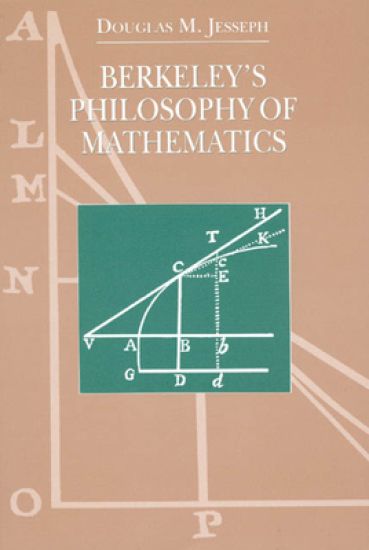
Berkeley's Philosophy of Mathematics

Berkeley's Philosophy of Mathematics

Douglas M. Jesseph

University of Chicago Press
1993
sidottu
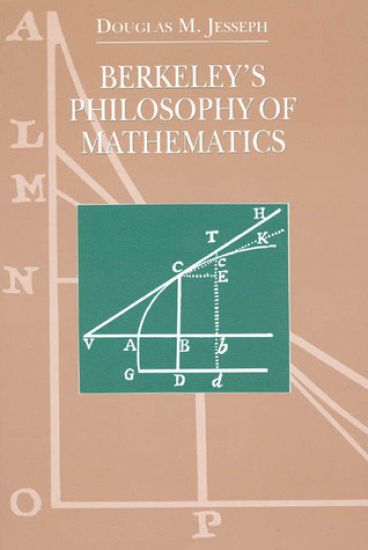
In this first modern, critical assessment of the place of mathematics in Berkeley's philosophy and Berkeley's place in the history of mathematics, Douglas M. Jesseph provides a bold reinterpretation of Berkeley's work. Jesseph challenges the prevailing view that Berkeley's mathematical writings are peripheral to his philosophy and argues that mathematics is in fact central to his thought, developing out of his critique of abstraction. Jesseph's argument situates Berkeley's ideas within the larger historical and intellectual context of the Scientific Revolution. Jesseph begins with Berkeley's radical opposition to the received view of mathematics in the philosophy of the late seventeenth and early eighteenth centuries, when mathematics was considered a "science of abstractions." Since this view seriously conflicted with Berkeley's critique of abstract ideas, Jesseph contends that he was forced to come up with a nonabstract philosophy of mathematics. Jesseph examines Berkeley's unique treatments of geometry and arithmetic and his famous critique of the calculus in The Analyst. By putting Berkeley's mathematical writings in the perspective of his larger philosophical project and examining their impact on eighteenth-century British mathematics, Jesseph makes a major contribution to philosophy and to the history and philosophy of science.
Berkeley's Philosophy of Mathematics

Berkeley's Philosophy of Mathematics

Douglas M. Jesseph

University of Chicago Press
1993
nidottu
In this first modern, critical assessment of the place of mathematics in Berkeley's philosophy and Berkeley's place in the history of mathematics, Douglas M. Jesseph provides a bold reinterpretation of Berkeley's work. Jesseph challenges the prevailing view that Berkeley's mathematical writings are peripheral to his philosophy and argues that mathematics is in fact central to his thought, developing out of his critique of abstraction. Jesseph's argument situates Berkeley's ideas within the larger historical and intellectual context of the Scientific Revolution. Jesseph begins with Berkeley's radical opposition to the received view of mathematics in the philosophy of the late seventeenth and early eighteenth centuries, when mathematics was considered a "science of abstractions." Since this view seriously conflicted with Berkeley's critique of abstract ideas, Jesseph contends that he was forced to come up with a nonabstract philosophy of mathematics. Jesseph examines Berkeley's unique treatments of geometry and arithmetic and his famous critique of the calculus in The Analyst. By putting Berkeley's mathematical writings in the perspective of his larger philosophical project and examining their impact on eighteenth-century British mathematics, Jesseph makes a major contribution to philosophy and to the history and philosophy of science.