Kirjojen hintavertailu – 12 903 725 kirjaa ja 27 kauppaa

Kirjailija

Douglas R. Anderson

Kirjat ja teokset yhdessä paikassa: 11 kirjaa, julkaisuja vuosilta 1988–2022, suosituimpiin kuuluu Boundedly Controlled Topology. Vertaile teosten hintoja ja tarkista saatavuus suomalaisista kirjakaupoista.

11 kirjaa

Kirjojen julkaisuvuodet: 1988–2022.

Conformable Dynamic Equations on Time Scales

Conformable Dynamic Equations on Time Scales

Douglas R. Anderson; Svetlin G. Georgiev

CRC Press
2022
nidottu
The concept of derivatives of non-integer order, known as fractional derivatives, first appeared in the letter between L’Hopital and Leibniz in which the question of a half-order derivative was posed. Since then, many formulations of fractional derivatives have appeared. Recently, a new definition of fractional derivative, called the "fractional conformable derivative," has been introduced. This new fractional derivative is compatible with the classical derivative and it has attracted attention in areas as diverse as mechanics, electronics, and anomalous diffusion. Conformable Dynamic Equations on Time Scales is devoted to the qualitative theory of conformable dynamic equations on time scales. This book summarizes the most recent contributions in this area, and vastly expands on them to conceive of a comprehensive theory developed exclusively for this book. Except for a few sections in Chapter 1, the results here are presented for the first time. As a result, the book is intended for researchers who work on dynamic calculus on time scales and its applications. Features Can be used as a textbook at the graduate level as well as a reference book for several disciplines Suitable for an audience of specialists such as mathematicians, physicists, engineers, and biologists Contains a new definition of fractional derivativeAbout the AuthorsDouglas R. Anderson is professor and chair of the mathematics department at Concordia College, Moorhead. His research areas of interest include dynamic equations on time scales and Ulam-type stability of difference and dynamic equations. He is also active in investigating the existence of solutions for boundary value problems. Svetlin G. Georgiev is currently professor at Sorbonne University, Paris, France and works in various areas of mathematics. He currently focuses on harmonic analysis, partial differential equations, ordinary differential equations, Clifford and quaternion analysis, dynamic calculus on time scales, and integral equations.

Conformable Dynamic Equations on Time Scales

Conformable Dynamic Equations on Time Scales

Douglas R. Anderson; Svetlin G. Georgiev

CRC Press
2020
sidottu
The concept of derivatives of non-integer order, known as fractional derivatives, first appeared in the letter between L’Hopital and Leibniz in which the question of a half-order derivative was posed. Since then, many formulations of fractional derivatives have appeared. Recently, a new definition of fractional derivative, called the "fractional conformable derivative," has been introduced. This new fractional derivative is compatible with the classical derivative and it has attracted attention in areas as diverse as mechanics, electronics, and anomalous diffusion. Conformable Dynamic Equations on Time Scales is devoted to the qualitative theory of conformable dynamic equations on time scales. This book summarizes the most recent contributions in this area, and vastly expands on them to conceive of a comprehensive theory developed exclusively for this book. Except for a few sections in Chapter 1, the results here are presented for the first time. As a result, the book is intended for researchers who work on dynamic calculus on time scales and its applications. Features Can be used as a textbook at the graduate level as well as a reference book for several disciplines Suitable for an audience of specialists such as mathematicians, physicists, engineers, and biologists Contains a new definition of fractional derivativeAbout the AuthorsDouglas R. Anderson is professor and chair of the mathematics department at Concordia College, Moorhead. His research areas of interest include dynamic equations on time scales and Ulam-type stability of difference and dynamic equations. He is also active in investigating the existence of solutions for boundary value problems. Svetlin G. Georgiev is currently professor at Sorbonne University, Paris, France and works in various areas of mathematics. He currently focuses on harmonic analysis, partial differential equations, ordinary differential equations, Clifford and quaternion analysis, dynamic calculus on time scales, and integral equations.
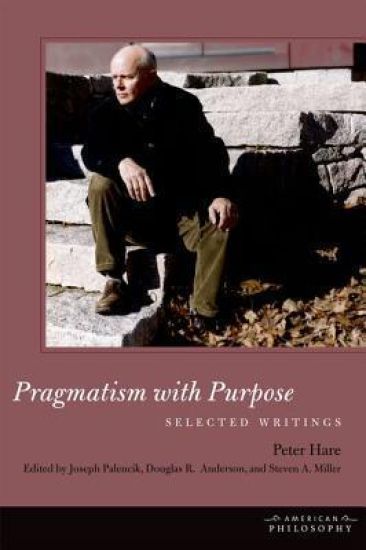
Pragmatism with Purpose

Pragmatism with Purpose

Peter Hare; Douglas R. Anderson; Steven A. Miller

Fordham University Press
2015
sidottu
Pragmatism with Purpose collects essays by the late Peter Hare, a leading proponent of the American philosophical tradition. The volume includes essays on “holistic pragmatism” that Hare developed in conversation with Morton White, as well as historical articles on William James and C. S. Peirce and commentaries on the profession.
Conversations on Peirce

Conversations on Peirce

Douglas R. Anderson; Carl R. Hausman

Fordham University Press
2012
sidottu
The essays in this book have grown out of conversations between the authors—and their colleagues and students—over the past decade and a half. Their germinal question concerned the ways in which Charles Sanders Peirce was and was not both an idealist and a realist. The dialogue began as an exploration of Peirce's explicit uses of these ideas and then turned to consider the way in which answers to the initial question shed light on other dimensions of Peirce's architectonic. The essays explore the nature of semiotic interpretation, perception, and inquiry. Moreover, considering the roles of idealism and realism in Peirce's thought led to considerations of Peirce's place in the historical development of pragmatism. The authors find his realism turning sharply against the nominalistic conceptions of science endorsed both explicitly and implicitly by his nonpragmatist contemporaries. And they find his version of pragmatism holding a middle ground between the thought of John Dewey and that of Josiah Royce. The essays aims to invite others to consider the import of these central themes of Peircean thought.
Conversations on Peirce

Conversations on Peirce

Douglas R. Anderson; Carl R. Hausman

Fordham University Press
2012
pokkari
The essays in this book have grown out of conversations between the authors—and their colleagues and students—over the past decade and a half. Their germinal question concerned the ways in which Charles Sanders Peirce was and was not both an idealist and a realist. The dialogue began as an exploration of Peirce's explicit uses of these ideas and then turned to consider the way in which answers to the initial question shed light on other dimensions of Peirce's architectonic. The essays explore the nature of semiotic interpretation, perception, and inquiry. Moreover, considering the roles of idealism and realism in Peirce's thought led to considerations of Peirce's place in the historical development of pragmatism. The authors find his realism turning sharply against the nominalistic conceptions of science endorsed both explicitly and implicitly by his nonpragmatist contemporaries. And they find his version of pragmatism holding a middle ground between the thought of John Dewey and that of Josiah Royce. The essays aims to invite others to consider the import of these central themes of Peircean thought.
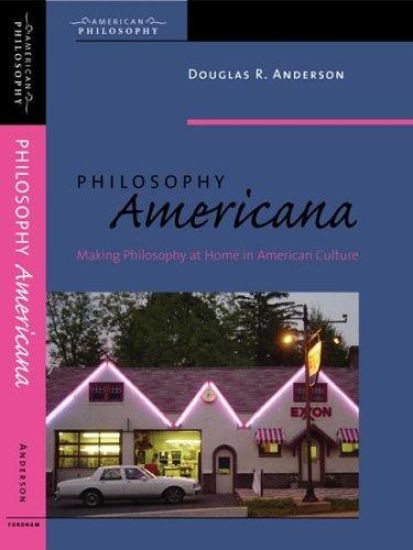
Philosophy Americana

Philosophy Americana

Douglas R. Anderson

Fordham University Press
2006
pokkari
In this engaging book, Douglas Anderson begins with the assumption that philosophy—the Greek love of wisdom—is alive and well in American culture. At the same time, professional philosophy remains relatively invisible. Anderson traverses American life to find places in the wider culture where professional philosophy in the distinctively American tradition can strike up a conversation. How might American philosophers talk to us about our religious experience, or political engagement, or literature—or even, popular music? Anderson's second aim is to find places where philosophy happens in nonprofessional guises—cultural places such as country music, rock'n roll, and Beat literature. He not only enlarges the tradition of American philosophers such as John Dewey and William James by examining lesser-known figures such as Henry Bugbee and Thomas Davidson, but finds the theme and ideas of American philosophy in some unexpected places, such as the music of Hank Williams, Tammy Wynette, and Bruce Springsteen, and the writings of Jack Kerouac. The idea of "philosophy Americana" trades on the emergent genre of "music Americana," rooted in traditional themes and styles yet engaging our present experiences. The music is "popular" but not thoroughly driven by economic considerations, and Anderson seeks out an analogous role for philosophical practice, where philosophy and popular culture are co-adventurers in the life of ideas. Philosophy Americana takes seriously Emerson's quest for the extraordinary in the ordinary and James's belief that popular philosophy can still be philosophy. Philosophy Americana: Making Philosophy at Home in American Culture is available from the publisher on an open-access basis.
Philosophy Americana

Philosophy Americana

Douglas R. Anderson

Fordham University Press
2006
sidottu
In this engaging book, Douglas Anderson begins with the assumption that philosophy—the Greek love of wisdom—is alive and well in American culture. At the same time, professional philosophy remains relatively invisible. Anderson traverses American life to find places in the wider culture where professional philosophy in the distinctively American tradition can strike up a conversation. How might American philosophers talk to us about our religious experience, or political engagement, or literature—or even, popular music? Anderson's second aim is to find places where philosophy happens in nonprofessional guises—cultural places such as country music, rock'n roll, and Beat literature. He not only enlarges the tradition of American philosophers such as John Dewey and William James by examining lesser-known figures such as Henry Bugbee and Thomas Davidson, but finds the theme and ideas of American philosophy in some unexpected places, such as the music of Hank Williams, Tammy Wynette, and Bruce Springsteen, and the writings of Jack Kerouac. The idea of "philosophy Americana" trades on the emergent genre of "music Americana," rooted in traditional themes and styles yet engaging our present experiences. The music is "popular" but not thoroughly driven by economic considerations, and Anderson seeks out an analogous role for philosophical practice, where philosophy and popular culture are co-adventurers in the life of ideas. Philosophy Americana takes seriously Emerson's quest for the extraordinary in the ordinary and James's belief that popular philosophy can still be philosophy. Philosophy Americana: Making Philosophy at Home in American Culture is available from the publisher on an open-access basis.
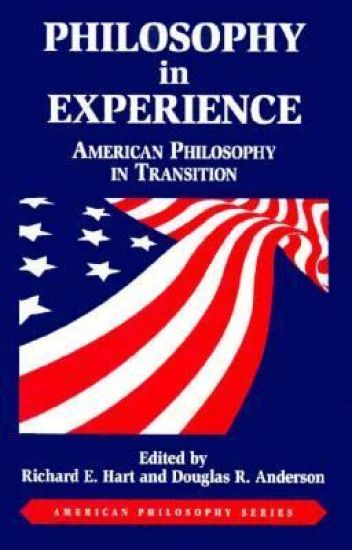
Philosophy in Experience

Philosophy in Experience

Richard E. Hart; Douglas R. Anderson

Fordham University Press
1996
pokkari
This collection of essays aims to mark a place for American philosophy as it moves into the twenty-first century. Taking their cue from the work of Peirce, James, Santayana, Dewey, Mead, Buchler, and others, the contributors assess and employ philosophy as an activity taking place within experience and culture. Within the broad background of the American tradition, the essays reveal a variety of approaches to the transition in which American philosophy is currently engaged. Some of the pieces argue from an historical dialogue with the tradition, some are more polemically involved with American philosophy's current status among the contemporary philosophical "schools," and still others seek to reveal the possibilities for the future of American philosophy. In thus addressing past, present, and future, the pieces, taken together, outline a trajectory for American philosophy that reinvents its importance from a new angle of vision.
Philosophy in Experience

Philosophy in Experience

Richard E. Hart; Douglas R. Anderson

Fordham University Press
1996
sidottu
This collection of essays aims to mark a place for American philosophy as it moves into the twenty-first century. Taking their cue from the work of Peirce, James, Santayana, Dewey, Mead, Buchler, and others, the contributors assess and employ philosophy as an activity taking place within experience and culture. Within the broad background of the American tradition, the essays reveal a variety of approaches to the transition in which American philosophy is currently engaged. Some of the pieces argue from an historical dialogue with the tradition, some are more polemically involved with American philosophy's current status among the contemporary philosophical "schools," and still others seek to reveal the possibilities for the future of American philosophy. In thus addressing past, present, and future, the pieces, taken together, outline a trajectory for American philosophy that reinvents its importance from a new angle of vision.
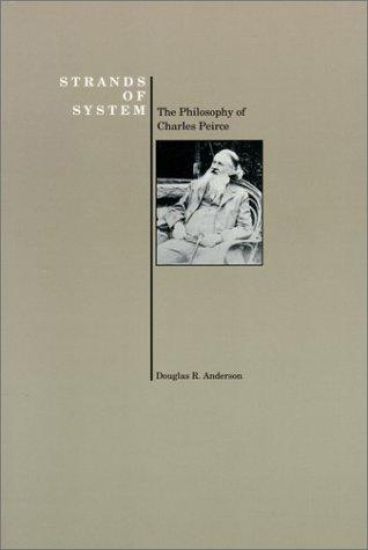
Strands of System

Strands of System

Douglas R. Anderson

Purdue University Press
1995
nidottu
The American thinker Charles Sanders Peirce, best known as the founder of pragmatism, has been influential not only in the pragmatic tradition but more recently in the philosophy of science and the study of semiotics, or sign theory. Strands of System provides an accessible overview of Peirce's systematic philosophy for those who are beginning to explore his thinking and its import for more recent trends in philosophy.
Boundedly Controlled Topology

Boundedly Controlled Topology

Douglas R. Anderson; Hans J. Munkholm

Springer-Verlag Berlin and Heidelberg GmbH Co. K
1988
nidottu
Several recent investigations have focused attention on spaces and manifolds which are non-compact but where the problems studied have some kind of "control near infinity". This monograph introduces the category of spaces that are "boundedly controlled" over the (usually non-compact) metric space Z. It sets out to develop the algebraic and geometric tools needed to formulate and to prove boundedly controlled analogues of many of the standard results of algebraic topology and simple homotopy theory. One of the themes of the book is to show that in many cases the proof of a standard result can be easily adapted to prove the boundedly controlled analogue and to provide the details, often omitted in other treatments, of this adaptation. For this reason, the book does not require of the reader an extensive background. In the last chapter it is shown that special cases of the boundedly controlled Whitehead group are strongly related to lower K-theoretic groups, and the boundedly controlled theory is compared to Siebenmann's proper simple homotopy theory when Z = IR or IR2.