

Kirjojen hintavertailu – 12 903 725 kirjaa ja 27 kauppaa

Kirjailija

Douglas Rae

Kirjat ja teokset yhdessä paikassa: 2 kirjaa, julkaisuja vuosilta 1983–2013, suosituimpiin kuuluu The Plan for New Haven. Vertaile teosten hintoja ja tarkista saatavuus suomalaisista kirjakaupoista.

2 kirjaa

Kirjojen julkaisuvuodet: 1983–2013.

The Plan for New Haven

The Plan for New Haven

Frederick Law Olmsted; Cass Gilbert; Douglas Rae

Trinity University Press,U.S.
2013
pokkari
Long before cities were scrambling to go green and eco-conscious commuters were sensibly strapping on their bike helmets, New Haven, Connecticut, was envisioning a plan for its growth taken from the challenging ideas of the City Beautiful Movement and its call for civic monumentality. In a 1910 plan commissioned from legendary landscape architect Frederick Law Olmsted and prominent architect Cass Gilbert, New Haven's leaders charted new ground by incorporating revolutionary models for studying social and demographic data and using that information to help guide the physical plan for the city's growth. The visionary result is a gem of American urban planning history that became a benchmark in discussions about the shape the new American city would take in the twentieth century. This facsimile edition of the 1910 Plan for New Haven, available to general readers for the first time, includes a critical contemporary review of the century-old plan. Architectural scholar Alan Plattus and urban economist Douglas Rae contribute modern perspectives on the plan's importance to the development of both New Haven and American urbanism in the current rediscovery of urban livability and sustainability. The lessons of master urban planners like Cass and Gilbert have never been more valuable and can guide an exploration of how American urbanism has evolved and where it is going in the twenty-first century.
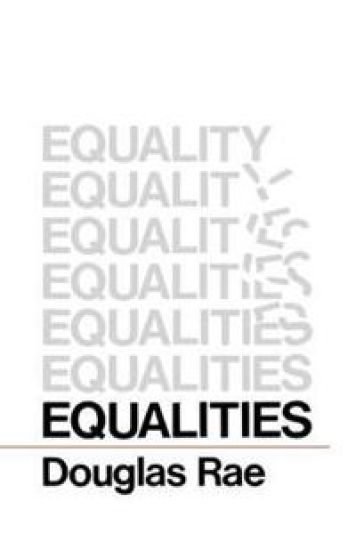
Equalities

Equalities

Douglas Rae

Harvard University Press
1983
nidottu
Equality has always been the most powerful political idea in America, and it is becoming the most powerful idea in the world. Observers from Alexis de Tocqueville to the most recent social critics have commented upon the idea's great force. Yet, for all its influence upon popular ideology, the idea of equality becomes a bundle of contradictory impulses once it is applied to public policy and social institutions. As the title of this lively book suggests, equality becomes equalities. Once inequality is established, there is a deep difference between equal policies and policies that lead to equality. Once people have different needs, there is a sharp difference between treating them equally and treating them in ways that serve them equally. Once people have unequal (or unequally developed) talents, then equal opportunity cannot mean both equal opportunity and an equal prospect of success. Once society is cleaved by differences of race, sex, income, and so on, there is an intense difference between policies and reforms that reduce racial, sexual, and economic inequality and policies that diminish equality among persons. Douglas Rae and his colleagues develop an ingenious “grammar of equality” to explain and explicate the main ways in which equality turns into equalities as it passes from the realm of ideas to the realm of practice. The book's exciting new method of analysis, based on logic and theories of political economy and political science, is a valuable contribution. Equalities helps us answer such questions as: “Is equality possible?” “How, after so long a period of ostensible egalitarianism, can inequality still dominate so much of the social landscape?” The responses are bound to stir controversy among all those interested in political theory or in social policy or in the attainment of equality.