
Kirjojen hintavertailu – 12 903 725 kirjaa ja 27 kauppaa

Kirjailija

Douglas V. Johnson II

Kirjat ja teokset yhdessä paikassa: 3 kirjaa, julkaisuja vuosilta 1990–2014, suosituimpiin kuuluu Soissons, 1918. Vertaile teosten hintoja ja tarkista saatavuus suomalaisista kirjakaupoista.

3 kirjaa

Kirjojen julkaisuvuodet: 1990–2014.

Asymmetry and U.S. Military Strategy: Definition, Background, and Strategic Concepts
In war, there are always differences between the opponents. At times these are insignificant, passing disparities with no bearing on the outcome. At other times, the differences between opponents are important, placing one in a position of advantage, the other at a disadvantage. This is a very simple observation, but from it flows one of the pressing issues faced by the United States today: strategic asymmetry. Strategic asymmetry is the use of some sort of difference to gain an advantage over an adversary. It is an idea as old as warfare itself, appearing under a number of guises. Among strategic theorists, Sun Tzu placed great stock in psychological and informational asymmetry, writing that: All warfare is based on deception. When confronted with an enemy one should offer the enemy a bait to lure him; feign disorder and strike him. When he concentrates, prepare against him; where he is strong. avoid him.
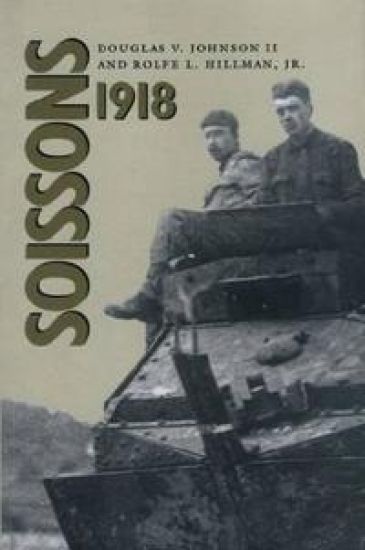
Soissons, 1918

Soissons, 1918

Douglas V. Johnson II; Rolfe L. Hillman Jr.

Texas A M University Press
1999
sidottu
It is the last five percent of possible exertion that often wins the battle." Brigadier Gen. Hanson Ely's statement best exemplifies the efforts of his troops as part of the allied contingent at the Battle of Soissons, July 18–22, 1918. At a cost of more than twelve thousand soldiers and marines dead, wounded, and missing, American troops struck the Germans with such force that the Germans lost the initiative for the remainder of the war. Soissons, 1918 provides an intricately detailed account of this pivotal battle in which partly trained, inexperienced American soldiers and marines literally turned the tide of the war. Despite strange French command methods, alien equipment (such as masses of tanks), immature American staff work, and difficulties in communicating with advancing troops, American enthusiasm and willingness "to finish the job" briefly shattered German defenses, caused panic, and ultimately unhinged the Germans' carefully prepared strategic plans. Authors Douglas V. Johnson II and Rolfe L. Hillman, Jr., provide a strategic overview of the war to the point of American involvement in combat operations. Following the long accepted Leavenworth method of analyzing operations, they thoroughly describe the enemy situation, the terrain, and the friendly situation. Subsequent chapters describe in detail each of the four days of intense combat using French, German, and American sources and American personal accounts. The depth of the authors' coverage spans not only technical aspects of the battle but human dimensions as well. Plans matter, and so too do personalities, from sergeants and lieutenants to commanding generals. Diagrams of attack plans, maps, and photographs effectively illustrate both the intent and reality of the battle, beneath which runs a bloody narrative. A captivating account of real-life triumph in the face of adversity, at a time when triumph was worth the cost, Soissons, 1918 is a valuable addition to the library of anyone interested in the history and strategy of this awful war.