Kirjojen hintavertailu – 12 903 725 kirjaa ja 27 kauppaa

Kirjailija

Duncan Garrow

Kirjat ja teokset yhdessä paikassa: 5 kirjaa, julkaisuja vuosilta 2006–2027, suosituimpiin kuuluu Islands of Stone and Wood. Vertaile teosten hintoja ja tarkista saatavuus suomalaisista kirjakaupoista.

5 kirjaa

Kirjojen julkaisuvuodet: 2006–2027.

Islands of Stone and Wood

Islands of Stone and Wood

Stephanie Blankshein; Duncan Garrow; Fraser Sturt

Casemate Publishers
2027
nidottu
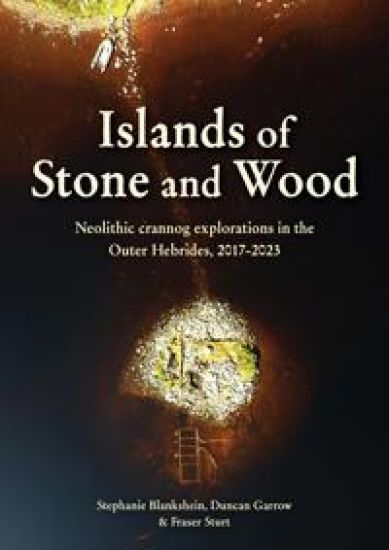
This book presents the results of cutting-edge research into a newly recognised type of site – Neolithic crannogs – across the Outer Hebrides. It documents underwater and terrestrial excavation at three sites in the Isle of Lewis, as well as extensive new surveys of 30 other crannogs across the island chain. The project explores a wide range of innovative digital methods and scientific techniques, from the use of artificial intelligence and uncrewed aerial vehicles, to photogrammetry, sedimentary DNA, lipid and biomarker analysis. This research helps rewrite our understanding of this critical period of prehistory, and more broadly how we approach these fascinating sites and their rich environments. Crannogs are an evocative category of archaeological site, found widely across Scotland and Ireland. Generally they have been considered to date anywhere between the Late Bronze Age and post-medieval periods. Over 550 ‘archaeological islands’ are recorded in Scotland; the Outer Hebrides represent a particular hotspot, with over 170 recorded sites. The vast majority of these are completely undated, and the notion that all crannogs are likely to have Bronze/Iron Age origins remains unproven. There have been indications for some time that the story of crannogs may extend further back in time than widely imagined. In the late 1980s, the supposedly Iron Age crannog was Eilean Domhnuill, North Uist was shown to have Neolithic origins. It was broadly considered to be an unparalleled oddity until 2012 when a combination of desk- and diver-based work identified a range of Neolithic crannog sites in Lewis associated with extensive assemblages of Neolithic pottery. The Islands of Stone project (2017–2023) was developed to address this clear gap in our knowledge about the origins of these sites. Combining underwater, aerial and ground based survey with excavation, it investigated three islets on the Isle of Lewis in detail. This work confirmed that they were constructed during the Neolithic, and revealed exceptional organic preservation of timber architecture along with highly unusual practices of deposition of material culture into the lochs. Extensive survey of 30 sites across North and South Uist and Benbecula identified a further three Neolithic crannogs, also providing significant insights into 27 others. We now have widespread, compelling evidence for much earlier artificial islet construction and use in the Outer Hebrides, belonging to the first farming communities in the region. Neolithic crannogs represent a new site type for the European Neolithic. The discovery and excavation of the remarkable sites explored here pose fundamental questions about the earliest construction of crannogs, and the nature and extent of Neolithic waterside settlement and ceremony. This book sheds important new light on this most intriguing of site types.
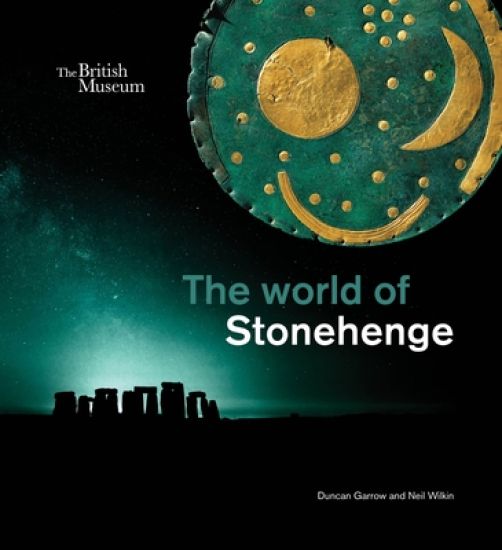
The world of Stonehenge

The world of Stonehenge

Duncan Garrow; Neil Wilkin

BRITISH MUSEUM PRESS
2022
sidottu
‘A simply outstanding book’ ‘Astonishing’ ‘[A] rich treasure-trove of photographs of objects’ ‘The book truly is a delight, and is a ‘book of the ancestors’ in a very real sense.’ ‘Highly recommended.’ - Sacred Hoop Magazine, March 2022 Stonehenge is one of the best known, but most misunderstood, monuments in the world. Contrary to common belief, it was not a static, unchanging structure built by shadowy figures or druids. Rather it represents the cumulative achievement of numerous generations who were woven into a complex and widespread network of cultural interactions, environmental change and belief systems. This publication, which accompanies the first exhibition about Stonehenge ever staged in London, uses the monument as a gateway to explore the communities and civilisations active at the time of its construction and beyond, between 4,000 and 1,000 BCE. Recent archaeological findings regarding the origin of Stonehenge’s striking ‘bluestones’ have reignited interest in this ancient wonder, the people who built it and the beliefs they held. Through the ‘iconic’ structure, spectacular objects of precious and exotic material and more humble, personal objects, authors Duncan Garrow and Neil Wilkin examine the dramatic cultural and societal shifts that characterised the world of Stonehenge, including the introduction of farming and development of metalworking. Covering a period of thousands of years, the publication traces the appearance of the first monuments in the landscape of Britain around 4,000 BCE, the arrival of the bluestones from the Preseli Hills in Pembrokeshire 1,000 years later, all the way up to a remarkable era of cross-Channel connectivity and trade between 1,500 and 800 BCE. Through a new study of the enigmatic and beautiful objects made and circulated during the age of Stonehenge, connections are charted in the shared religious practices and beliefs of communities from across Britain, Ireland and continental Europe. The presence of other stone and wooden circles hundreds of miles from Salisbury Plain – including Seahenge, discovered on a beach in Norfolk in 1998 – is further evidence of these shared ways of thinking. At a critical moment in the narrative of Stonehenge, around 2,500 BCE, the significance of the cosmos and the heavens expressed through the construction of stone circles and megalithic passage tombs began to wane and portable objects gained increasing importance. This key transformation is demonstrated by a highlight object from Germany: the Nebra Sky Disc, a bronze disc inlaid with gold symbols believed to represent the sun, a crescent moon and the Pleiades constellation. More modest items found in tombs, burials and settlements are no less important in shedding light on the development of ideas relating to identity, religious practices, and relationships between the living and dead. Monuments such as Stonehenge cannot be understood in isolation. Stonehenge was not always a static, monolithic structure: over generations it was adapted and added to by communities that changed and developed the landscape on which it still stands today.
Grave Goods

Grave Goods

Anwen Cooper; Duncan Garrow; Catriona Gibson; Melanie Giles; Neil Wilkin

Oxbow Books
2021
sidottu
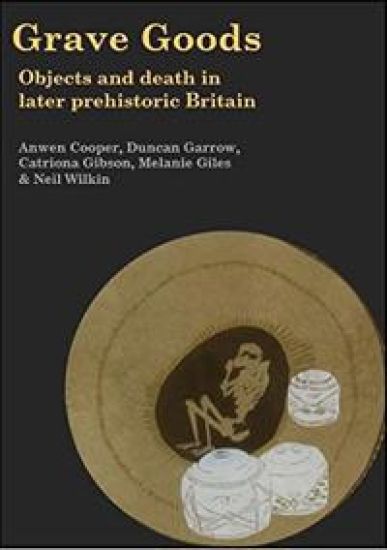
Britain is internationally renowned for the high quality and exquisite crafting of its later prehistoric grave goods (c. 4000 BC to AD 43). Many of prehistoric Britain's most impressive artefacts have come from graves. Interred with both inhumations and cremations, they provide some of the most durable and well-preserved insights into personal identity and the prehistoric life-course, yet they also speak of the care shown to the dead by the living, and of people's relationships with 'things'. Objects matter. This book's title is an intentional play on words. These are objects in burials; but they are also goods, material culture, that must be taken seriously. Within it, we outline the results of the first long-term, large-scale investigation into grave goods during this period, which enables a new level of understanding of mortuary practice and material culture throughout this major period of technological innovation and social transformation. Analysis is structured at a series of different scales, ranging from macro-scale patterning across Britain, to regional explorations of continuity and change, to site-specific histories of practice, to micro-scale analysis of specific graves and the individual objects (and people) within them. We bring these different scales of analysis together in the first ever book focusing specifically on objects and death in later prehistoric Britain. Focusing on six key case study regions, the book innovatively synthesises antiquarian reports, research projects and developer funded excavations. At the same time, it also engages with, and develops, a number of recent theoretical trends within archaeology, including personhood, object biography and materiality, ensuring that it will be of relevance right across the discipline. Its subject matter will also resonate with those working in anthropology, sociology, museology and other areas where death, burial and the role of material culture in people's lives are key contemporary issues.
Technologies of Enchantment?

Technologies of Enchantment?

Duncan Garrow; Chris Gosden

Oxford University Press
2012
sidottu
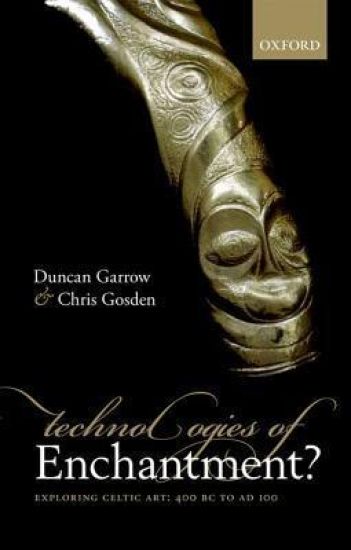
While Celtic art includes some of the most famous archaeological artefacts in the British Isles, such as the Battersea shield or the gold torcs from Snettisham, it has often been considered from an art historical point of view. Technologies of Enchantment? Exploring Celtic Art attempts to connect Celtic art to its archaeological context, looking at how it was made, used, and deposited. Based on the first comprehensive database of Celtic art, it brings together current theories concerning the links between people and artefacts found in many areas of the social sciences. The authors argue that Celtic art was deliberately complex and ambiguous so that it could be used to negotiate social position and relations in an inherently unstable Iron Age world, especially in developing new forms of identity with the coming of the Romans. Placing the decorated metalwork of the later Iron Age in a long-term perspective of metal objects from the Bronze Age onwards, the volume pays special attention to the nature of deposition and focuses on settlements, hoards, and burials -- including Celtic art objects' links with other artefact classes, such as iron objects and coins. A unique feature of the book is that it pursues trends beyond the Roman invasion, highlighting stylistic continuities and differences in the nature and use of fine metalwork.