Kirjojen hintavertailu – 12 903 725 kirjaa ja 27 kauppaa

Kirjailija

Dusan Babac

Kirjat ja teokset yhdessä paikassa: 5 kirjaa, julkaisuja vuosilta 2001–2025, suosituimpiin kuuluu The Serbian Army in the Wars for Independence against Turkey, 1876-1878. Vertaile teosten hintoja ja tarkista saatavuus suomalaisista kirjakaupoista.

5 kirjaa

Kirjojen julkaisuvuodet: 2001–2025.

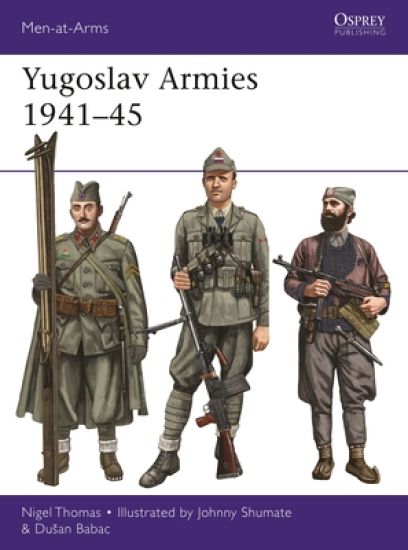
Yugoslav Armies 1941–45

Yugoslav Armies 1941–45

Nigel Thomas; Dusan Babac

Osprey Publishing
2022
nidottu

Halvin toimitettuna 18,10 €

In March 1941, an anti-German coup in the Kingdom of Yugoslavia prompted Hitler to order an invasion using allied Italian, Hungarian, Bulgarian and Romanian forces. Operation Marita was an invasion of Yugoslavia and simultaneously Greece. At the same time, the constituent region of Croatia broke away from Yugoslavia and joined the Axis powers. Royal Yugoslav armed forces, despite advancing against the Italians in Albania were forced to surrender after 11 days' fighting and some 1,000 soldiers, airmen and sailors escaped to British-occupied Egypt to form Free Yugoslav units. From there, guerrilla resistance to the Axis occupiers broke out and continued with increasing strength until the end of the war under Mihailovic’s royalist 'Chetniks' and Tito's Communist 'Partisans' (both supported by Britain). However, hostilities between the two movements eventually led to the Chetniks entering into local agreements with Italian occupation forces and Britain switching its support entirely to the Partisans. The advance of the Red Army increased Partisan strength and, during 1944–45, they created what could be described as a lightly equipped conventional army. Using meticulously-drawn illustrations of different insignia, uniforms and equipment from each faction to bring the conflict alive, this volume describes, in detail, both the political and military implications of the war and how it was fought, setting the scene for the subsequent rise of Tito to power within Yugoslavia.
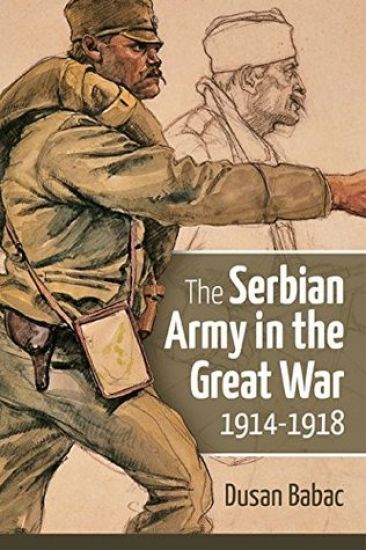
The Serbian Army in the Great War, 1914-1918
The Kingdom of Serbia waged war against Austria-Hungary and the other Central Powers from 28 July 1914 when the Austro-Hungarian government declared war, until the capitulation of Austria-Hungary. In the first two years of the war, Serbia defeated the Austro-Hungarian Balkan Army. The following year, her army was faced with the Axis invasion. Unwilling to surrender, the Serbian Army retreated through Albania and evacuated to Corfu where it rested, rearmed and reorganised. From there the army transferred to the Salonika Front, where it recorded successes by 1916. After a long lull, the struggle to penetrate the Front began in September 1918. Serbian and other Allied forces broke through the Front and Bulgaria was soon forced to surrender. The Serbian Army advanced rapidly and on 1 November 1918 Belgrade was liberated. Thanks to the Serbian military victories and diplomatic efforts, the Kingdom of Serbs, Croats and Slovenes (later Yugoslavia) was created. Serbia paid for her victory in the Great War in a disproportionately exorbitant manner: it is estimated that she lost close to one million inhabitants, of whom about 400,000 were conscripts and the rest civilians, which accounted for nearly a third of the total population, or close to 60% of the male population. No other country that participated in the Great War paid so dearly for its freedom. The Serbian Army in the Great War, 1914–1918 offers readers a very thorough analysis of the Serbian Army of the period, including its organisation, participation in military operations, weapons, equipment, uniforms, and system of orders and medals. This book is a synthesis of all available literature and periodicals, appearing for the first time in the English language. The book is well supported by around 500 illustrations, out of which more than 300 are contemporary photographs and other documents, while this is complemented by dozens of colour plates of uniform reconstructions and colour photographs of the preserved pieces of uniform, equipment and weapons. A special emphasis has been placed on the colours of Serbian uniforms from the period. The book is the result of two decades of research and will enable readers to gain a clearer picture of this subject.
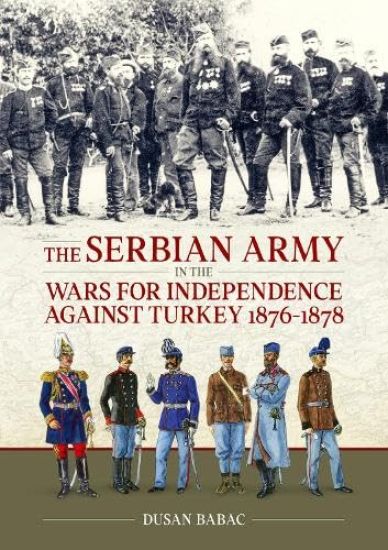
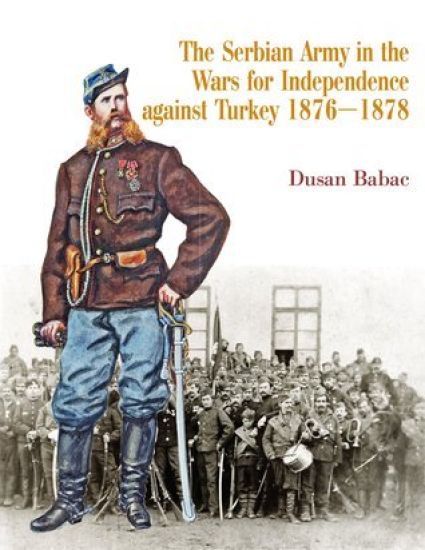
The Serbian Army in the Wars for Independence against Turkey, 1876-1878
The Wars for Independence, also called the First and the Second Serbo-Turkish Wars 1876-1878, were the first military conflicts in the modern history of the Serbian state, after which the Principality of Serbia gained full independence at the Berlin Congress., There are many written sources concerning the wars of 1876-78. Some of them date from between 1877 to the lull between two world wars, and some many years later. Nevertheless, the fact is that today this bright period of Serbian history is almost forgotten. This book offers to a very thorough analysis of the Serbian Army of the period, its organization, participation in military operations, weapons, equipment, uniforms, and the system of orders and medals that had just been introduced. It is a synthesis of all available literature, published for the first time in the English language, and contains extensive visual material and photographs, including colour uniform plates, contemporary paintings, portraits and photographs and many colour photographs of preserved artifacts and documents. A special emphasis is placed on the colourful aspects of Serbian uniforms from the epoch. After the Crimean War, when photographers were reporting from the field of military conflict for the first time, coverage of the American Civil War and Franco-Prussian War followed, as did the Balkan wars of 1876-78. This book offers remarkable photographs of the time, showing all manner of aspects of the Serbian campaigns, including uniforms, military formations, artillery, telegraphs, liberated towns, and wounded soldiers. It is up to readers to open the book, and enter into this unknown and unexpected territory. The book is the result of two decades of research and will enable readers to gain a clearer picture on this fascinating subject.

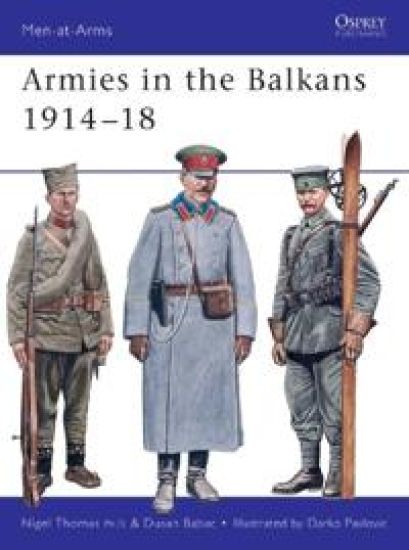
Armies in the Balkans 1914–18

Armies in the Balkans 1914–18

Nigel Thomas; Dusan Babac

Osprey Publishing
2001
nidottu
It was the Balkan flashpoint which set off World War I, yet the fighting there is curiously neglected, although it was an inportant 'second front' cutting the Central Powers in two and preventing direct German/Turkish co-operation. The campaigns in the Balkans in 1915-18 involved the British, French, Russian and Italian armies, together with the local Serbian, Montenegrin, Greek and Rumanian forces, fighting German, Austrian and Bulgarian troops. This concise but comprehensive account identifies, describes and illustrates all these forces. The text is illustrated with rare photographs never before seen in the West, and with full orders-of-battle and insignia charts.