Kirjojen hintavertailu – 12 903 725 kirjaa ja 27 kauppaa

Kirjailija

Dwaipayan Banerjee

Kirjat ja teokset yhdessä paikassa: 5 kirjaa, julkaisuja vuosilta 2019–2026, suosituimpiin kuuluu Computing in the Age of Decolonization. Vertaile teosten hintoja ja tarkista saatavuus suomalaisista kirjakaupoista.

5 kirjaa

Kirjojen julkaisuvuodet: 2019–2026.

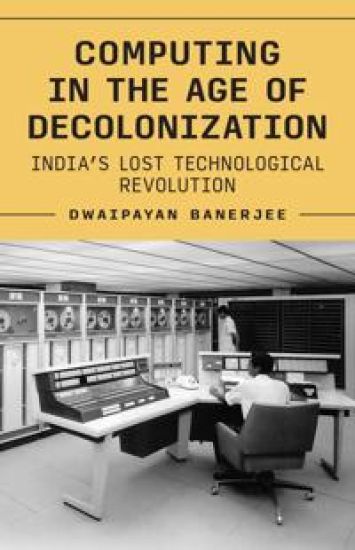
Computing in the Age of Decolonization

Computing in the Age of Decolonization

Dwaipayan Banerjee

PRINCETON UNIVERSITY PRESS
2026
sidottu
How Cold War geopolitics and domestic capitalism changed the trajectory of India’s computing industry India today is widely recognized for producing world-class tech talent and Silicon Valley leaders, yet captures only a fraction of the global tech industry’s profits, primarily providing skilled but inexpensive labor for Western corporations. Computing in the Age of Decolonization uncovers the overlooked history behind this paradox, tracing India's ambitious but ultimately thwarted drive to build a self-reliant computing industry from the 1950s to the 1980s. After independence in 1947, Indian scientists and policymakers at institutions such as the Tata Institute of Fundamental Research saw computing as central to national sovereignty, economic growth, and scientific advancement. Through projects such as the groundbreaking TIFRAC computer and the decisive expulsion of IBM, they aimed for technological independence. But almost immediately, these initiatives faced powerful political and economic headwinds. Indian computer scientists grappled with Cold War politics, international trade imbalances, US corporate monopolies, and strategic decisions by India's technocratic elite, who favored profitable technical services over costly investments in research and manufacturing. In narrating this lost future, Computing in the Age of Decolonization shows that genuine technological independence requires more than technical expertise—it demands addressing enduring political and social structures rooted in colonial legacies. As global struggles over technology intensify, this book reveals how historical pathways continue to shape contemporary battles for technological and economic sovereignty.
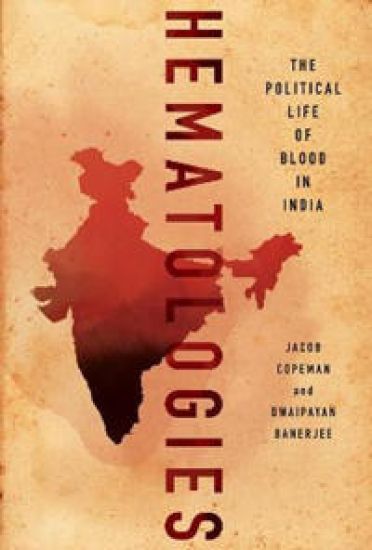
Hematologies

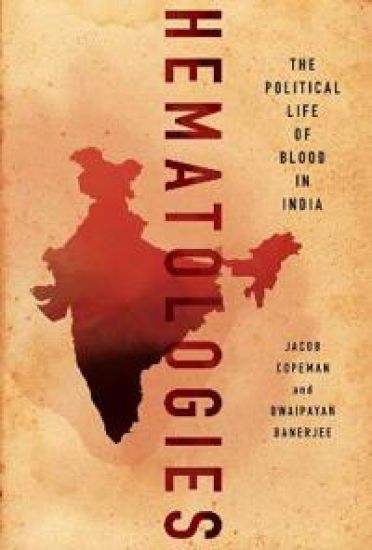
Hematologies

Jacob Copeman; Dwaipayan Banerjee

Cornell University Press
2021
pokkari
In this ground-breaking account of the political economy and cultural meaning of blood in contemporary India, Jacob Copeman and Dwaipayan Banerjee examine how the giving and receiving of blood has shaped social and political life. Hematologies traces how the substance congeals political ideologies, biomedical rationalities, and activist practices. Using examples from anti-colonial appeals to blood sacrifice as a political philosophy to contemporary portraits of political leaders drawn with blood, from the use of the substance by Bhopali children as a material of activism to biomedical anxieties and aporias about the excess and lack of donation, Hematologies broaches how political life in India has been shaped through the use of blood and through contestations about blood. As such, the authors offer new entryways into thinking about politics and economy through a "bloodscape of difference": different sovereignties; different proportionalities; and different temporalities. These entryways allow the authors to explore the relation between blood's utopic flows and political clottings as it moves through time and space, conjuring new kinds of social collectivities while reanimating older forms, and always in a reflexive relation to norms that guide its proper flow.
Enduring Cancer

Enduring Cancer

Dwaipayan Banerjee

Duke University Press
2020
sidottu
In Enduring Cancer Dwaipayan Banerjee explores the efforts of Delhi's urban poor to create a livable life with cancer as patients and families negotiate an overextended health system unequipped to respond to the disease. Owing to long wait times, most urban poor cancer patients do not receive a diagnosis until it is too late to treat the disease effectively. Drawing on ethnographic fieldwork in the city's largest cancer care NGO and at India's premier public health hospital, Banerjee describes how, for these patients, a cancer diagnosis is often the latest and most serious in a long series of infrastructural failures. In the wake of these failures, Banerjee tracks how the disease then distributes itself across networks of social relations, testing these networks for strength and vulnerability. Banerjee demonstrates how living with and alongside cancer is to be newly awakened to the fragility of social ties, some already made brittle by past histories, and others that are retested for their capacity to support.
Enduring Cancer

Enduring Cancer

Dwaipayan Banerjee

Duke University Press
2020
pokkari
In Enduring Cancer Dwaipayan Banerjee explores the efforts of Delhi's urban poor to create a livable life with cancer as patients and families negotiate an overextended health system unequipped to respond to the disease. Owing to long wait times, most urban poor cancer patients do not receive a diagnosis until it is too late to treat the disease effectively. Drawing on ethnographic fieldwork in the city's largest cancer care NGO and at India's premier public health hospital, Banerjee describes how, for these patients, a cancer diagnosis is often the latest and most serious in a long series of infrastructural failures. In the wake of these failures, Banerjee tracks how the disease then distributes itself across networks of social relations, testing these networks for strength and vulnerability. Banerjee demonstrates how living with and alongside cancer is to be newly awakened to the fragility of social ties, some already made brittle by past histories, and others that are retested for their capacity to support.
Hematologies

Hematologies

Jacob Copeman; Dwaipayan Banerjee

Cornell University Press
2019
sidottu
In this ground-breaking account of the political economy and cultural meaning of blood in contemporary India, Jacob Copeman and Dwaipayan Banerjee examine how the giving and receiving of blood has shaped social and political life. Hematologies traces how the substance congeals political ideologies, biomedical rationalities, and activist practices. Using examples from anti-colonial appeals to blood sacrifice as a political philosophy to contemporary portraits of political leaders drawn with blood, from the use of the substance by Bhopali children as a material of activism to biomedical anxieties and aporias about the excess and lack of donation, Hematologies broaches how political life in India has been shaped through the use of blood and through contestations about blood. As such, the authors offer new entryways into thinking about politics and economy through a "bloodscape of difference": different sovereignties; different proportionalities; and different temporalities. These entryways allow the authors to explore the relation between blood's utopic flows and political clottings as it moves through time and space, conjuring new kinds of social collectivities while reanimating older forms, and always in a reflexive relation to norms that guide its proper flow.