Kirjojen hintavertailu – 12 876 096 kirjaa ja 26 kauppaa

Kirjailija

E. A. Wrigley

Kirjat ja teokset yhdessä paikassa: 19 kirjaa, julkaisuja vuosilta 1986–2016, suosituimpiin kuuluu The Industrial Revolution in Britain I, Volume 2. Vertaile teosten hintoja ja tarkista saatavuus suomalaisista kirjakaupoista.

Nimi esiintyy myös muodoissa: E A Wrigley

19 kirjaa

Kirjojen julkaisuvuodet: 1986–2016.

The Industrial Revolution in Britain I, Volume 2

The Industrial Revolution in Britain I, Volume 2

Julian Hoppit; E. A. Wrigley

Blackwell Publishers
1994
sidottu
Volumes 2 and 3 of the Industrial Revolutionseleven part set (Industrial Revolution in Britain vol I and II) present over thirty of the articles which have best illuminated Britain's Industrial revolution, and cover four main areas: the concept of the Industrial Revolution, and the central themes of land, labour and capital. They provide a way of exploring historians' changing approaches to the first Industrial Revolution. A substantial introduction sets the articles into their conceptual, evidential and histiographical context and directs readers to recent work.
The Path to Sustained Growth

The Path to Sustained Growth

E. A. Wrigley

Cambridge University Press
2016
pokkari
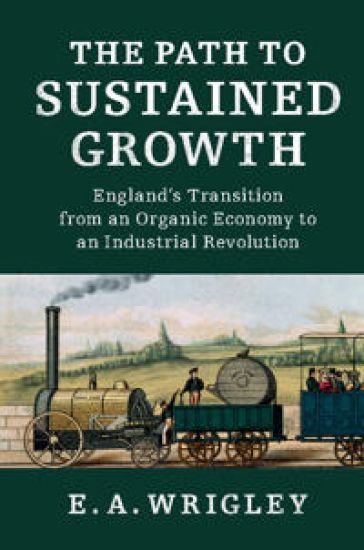
Before the industrial revolution prolonged economic growth was unachievable. All economies were organic, dependent on plant photosynthesis to provide food, raw materials, and energy. This was true both of heat energy, derived from burning wood, and mechanical energy provided chiefly by human and animal muscle. The flow of energy from the sun captured by plant photosynthesis was the basis of all production and consumption. Britain began to escape the old restrictions by making increasing use of the vast stock of energy contained in coal measures, initially as a source of heat energy but eventually also of mechanical energy, thus making possible the industrial revolution. In this concise and accessible account of change between the reigns of Elizabeth I and Victoria, Wrigley describes how during this period Britain moved from the economic periphery of Europe to becoming briefly the world's leading economy, forging a path rapidly emulated by its competitors.
The Path to Sustained Growth

The Path to Sustained Growth

E. A. Wrigley

Cambridge University Press
2016
sidottu
Before the industrial revolution prolonged economic growth was unachievable. All economies were organic, dependent on plant photosynthesis to provide food, raw materials, and energy. This was true both of heat energy, derived from burning wood, and mechanical energy provided chiefly by human and animal muscle. The flow of energy from the sun captured by plant photosynthesis was the basis of all production and consumption. Britain began to escape the old restrictions by making increasing use of the vast stock of energy contained in coal measures, initially as a source of heat energy but eventually also of mechanical energy, thus making possible the industrial revolution. In this concise and accessible account of change between the reigns of Elizabeth I and Victoria, Wrigley describes how during this period Britain moved from the economic periphery of Europe to becoming briefly the world's leading economy, forging a path rapidly emulated by its competitors.
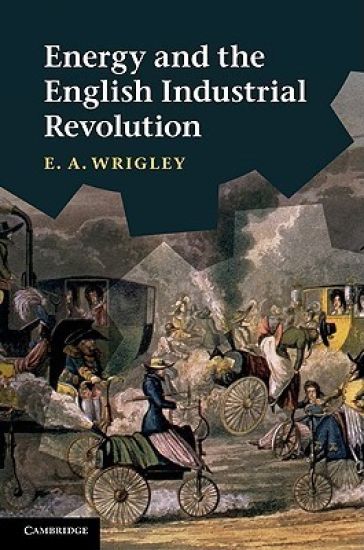
Energy and the English Industrial Revolution

Energy and the English Industrial Revolution

E. A. Wrigley

Cambridge University Press
2010
sidottu
The industrial revolution transformed the productive power of societies. It did so by vastly increasing the individual productivity, thus delivering whole populations from poverty. In this new account by one of the world's acknowledged authorities the central issue is not simply how the revolution began but still more why it did not quickly end. The answer lay in the use of a new source of energy. Pre-industrial societies had access only to very limited energy supplies. As long as mechanical energy came principally from human or animal muscle and heat energy from wood, the maximum attainable level of productivity was bound to be low. Exploitation of a new source of energy in the form of coal provided an escape route from the constraints of an organic economy but also brought novel dangers. Since this happened first in England, its experience has a special fascination, though other countries rapidly followed suit.
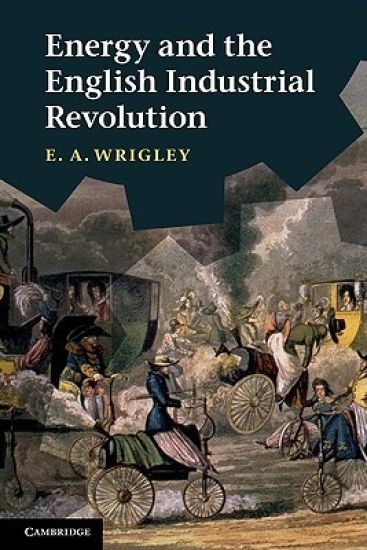
Energy and the English Industrial Revolution

Energy and the English Industrial Revolution

E. A. Wrigley

Cambridge University Press
2010
pokkari
The industrial revolution transformed the productive power of societies. It did so by vastly increasing the individual productivity, thus delivering whole populations from poverty. In this new account by one of the world's acknowledged authorities the central issue is not simply how the revolution began but still more why it did not quickly end. The answer lay in the use of a new source of energy. Pre-industrial societies had access only to very limited energy supplies. As long as mechanical energy came principally from human or animal muscle and heat energy from wood, the maximum attainable level of productivity was bound to be low. Exploitation of a new source of energy in the form of coal provided an escape route from the constraints of an organic economy but also brought novel dangers. Since this happened first in England, its experience has a special fascination, though other countries rapidly followed suit.
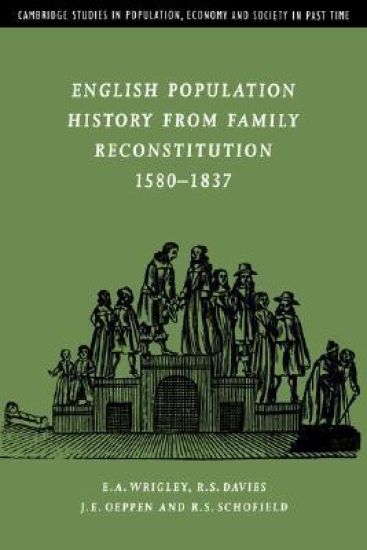
English Population History from Family Reconstitution 1580–1837

English Population History from Family Reconstitution 1580–1837

E. A. Wrigley; R. S. Davies; J. E. Oeppen; R. S. Schofield

Cambridge University Press
2005
pokkari
English Population History from Family Reconstitution 1580–1837 is the most important single contribution to English historical demography since Wrigley and Schofield's Population History of England. It represents the culmination of work carried out at the Cambridge Group for the History of Population and Social Structure over the past quarter-century. This work demonstrates the value of the technique of family reconstitution as a means of obtaining accurate and detailed information about fertility, morality, and nuptiality in the past. Indeed, more is now known about many aspects of English demography in the parish register period than about the post-1837 period when the Registrar-General collected and published information. Using data from 26 parishes, the authors show clearly that their results are representative not only of the demographic situation of the parishes from which the data were drawn, but also of the country as a whole. Some very surprising features of the behaviour of past populations are brought to light for the first time.
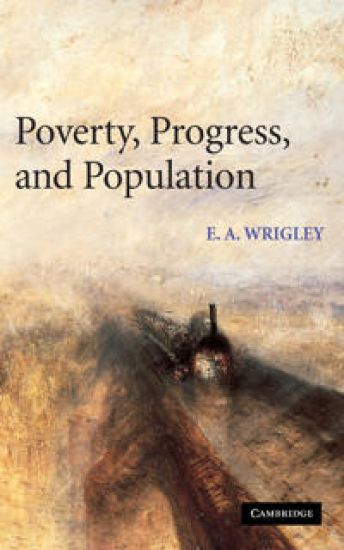
Poverty, Progress, and Population

Poverty, Progress, and Population

E. A. Wrigley

Cambridge University Press
2004
sidottu
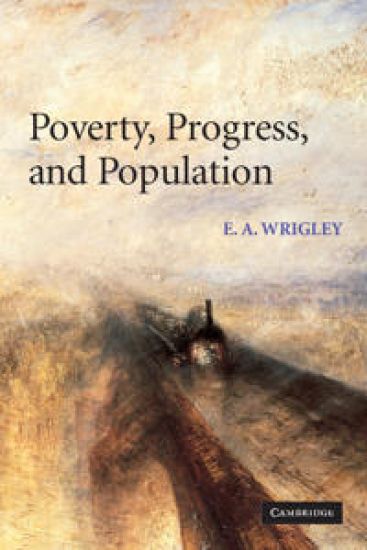
By the early nineteenth century England was very different economically from its continental neighbours. It was wealthier, growing more rapidly, more heavily urbanised, and far less dependent upon agriculture. A generation ago it was normal to attribute these differences to the 'industrial revolution' and to suppose that this was mainly the product of recent change, but no longer. Current estimates suggest only slow growth during the period from 1760–1840. This implies that the economy was much larger and more advanced by 1760 than had previously been supposed and suggests that growth in the preceding century or two must have been decisive in bringing about the 'divergence' of England. Sir E. A. Wrigley, the leading historian of industrial Britain, here examines the issues which arise in this connection from three viewpoints: economic growth; the transformation of the urban-rural balance; and demographic change in the seventeenth and eighteenth centuries.
Poverty, Progress, and Population

Poverty, Progress, and Population

E. A. Wrigley

Cambridge University Press
2004
pokkari
By the early nineteenth century England was very different economically from its continental neighbours. It was wealthier, growing more rapidly, more heavily urbanised, and far less dependent upon agriculture. A generation ago it was normal to attribute these differences to the 'industrial revolution' and to suppose that this was mainly the product of recent change, but no longer. Current estimates suggest only slow growth during the period from 1760–1840. This implies that the economy was much larger and more advanced by 1760 than had previously been supposed and suggests that growth in the preceding century or two must have been decisive in bringing about the 'divergence' of England. Sir E. A. Wrigley, the leading historian of industrial Britain, here examines the issues which arise in this connection from three viewpoints: economic growth; the transformation of the urban-rural balance; and demographic change in the seventeenth and eighteenth centuries.
English Population History from Family Reconstitution 1580–1837

English Population History from Family Reconstitution 1580–1837

E. A. Wrigley; R. S. Davies; J. E. Oeppen; R. S. Schofield

Cambridge University Press
1997
sidottu
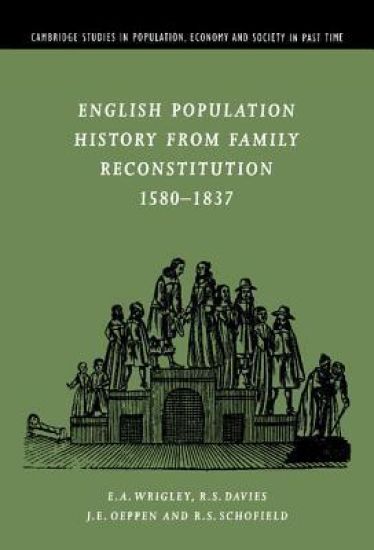
English Population History from Family Reconstitution 1580–1837 is the most important single contribution to English historical demography since Wrigley and Schofield's Population History of England. It represents the culmination of work carried out at the Cambridge Group for the History of Population and Social Structure over the past quarter-century. This work demonstrates the value of the technique of family reconstitution as a means of obtaining accurate and detailed information about fertility, morality, and nuptiality in the past. Indeed, more is now known about many aspects of English demography in the parish register period than about the post-1837 period when the Registrar-General collected and published information. Using data from 26 parishes, the authors show clearly that their results are representative not only of the demographic situation of the parishes from which the data were drawn, but also of the country as a whole. Some very surprising features of the behaviour of past populations are brought to light for the first time.
The Industrial Revolution in Britain II, Volume 3

The Industrial Revolution in Britain II, Volume 3

Julian Hoppit; E. A. Wrigley

Blackwell Publishers
1994
sidottu
Volumes 2 and 3 of the Industrial Revolutions eleven part set, (Industrial Revolution in Britain Vol I and II) present over thirty of the articles which have best illuminated Britain's Industrial revolution, and cover four main areas: the concept of the Industrial Revolution, and the central themes of land, labour and capital. They provide a way of exploring historians' changing approaches to the first Industrial Revolution. A substantial introduction sets the articles into their conceptual, evidential and histiographical context and directs readers to recent work.
The Works of Thomas Robert Malthus

The Works of Thomas Robert Malthus

E A Wrigley

Pickering Chatto (Publishers) Ltd
1986
muu
A collection of eight volumes of books which contain all the known published writings and variant readings of Thomas Malthus. Malthus is most famous as the inventor of a simple equation between population and food supply and his work is seen as the foundation for population studies.
The Works of Thomas Robert Malthus Vol 8

The Works of Thomas Robert Malthus Vol 8

E A Wrigley; David Souden

Routledge
1986
sidottu
A collection of eight volumes of books which contain all the known published writings and variant readings of Thomas Malthus. Malthus is most famous as the inventor of a simple equation between population and food supply and his work is seen as the foundation for population studies.
The Works of Thomas Robert Malthus Vol 7

The Works of Thomas Robert Malthus Vol 7

E A Wrigley; David Souden

Routledge
1986
sidottu
A collection of eight volumes of books which contain all the known published writings and variant readings of Thomas Malthus. Malthus is most famous as the inventor of a simple equation between population and food supply and his work is seen as the foundation for population studies.
The Works of Thomas Robert Malthus Vol 2

The Works of Thomas Robert Malthus Vol 2

E A Wrigley; David Souden

Routledge
1986
sidottu
A collection of eight volumes of books which contain all the known published writings and variant readings of Thomas Malthus. Malthus is most famous as the inventor of a simple equation between population and food supply and his work is seen as the foundation for population studies.
The Works of Thomas Robert Malthus Vol 1

The Works of Thomas Robert Malthus Vol 1

E A Wrigley; David Souden

Routledge
1986
sidottu
A collection of eight volumes of books which contain all the known published writings and variant readings of Thomas Malthus. Malthus is most famous as the inventor of a simple equation between population and food supply and his work is seen as the foundation for population studies.
The Works of Thomas Robert Malthus Vol 6

The Works of Thomas Robert Malthus Vol 6

E A Wrigley; David Souden

Routledge
1986
sidottu
A collection of eight volumes of books which contain all the known published writings and variant readings of Thomas Malthus. Malthus is most famous as the inventor of a simple equation between population and food supply and his work is seen as the foundation for population studies.
The Works of Thomas Robert Malthus Vol 5

The Works of Thomas Robert Malthus Vol 5

E A Wrigley; David Souden

Routledge
1986
sidottu
A collection of eight volumes of books which contain all the known published writings and variant readings of Thomas Malthus. Malthus is most famous as the inventor of a simple equation between population and food supply and his work is seen as the foundation for population studies.
The Works of Thomas Robert Malthus Vol 4

The Works of Thomas Robert Malthus Vol 4

E A Wrigley; David Souden

Routledge
1986
sidottu
A collection of eight volumes of books which contain all the known published writings and variant readings of Thomas Malthus. Malthus is most famous as the inventor of a simple equation between population and food supply and his work is seen as the foundation for population studies.
The Works of Thomas Robert Malthus Vol 3

The Works of Thomas Robert Malthus Vol 3

E A Wrigley; David Souden

Routledge
1986
sidottu
A collection of eight volumes of books which contain all the known published writings and variant readings of Thomas Malthus. Malthus is most famous as the inventor of a simple equation between population and food supply and his work is seen as the foundation for population studies.