Kirjojen hintavertailu – 12 903 725 kirjaa ja 27 kauppaa

Kirjailija

E. Digby Baltzell

Kirjat ja teokset yhdessä paikassa: 17 kirjaa, julkaisuja vuosilta 1983–2020, suosituimpiin kuuluu Puritan Boston and Quaker Philadelphia. Vertaile teosten hintoja ja tarkista saatavuus suomalaisista kirjakaupoista.

17 kirjaa

Kirjojen julkaisuvuodet: 1983–2020.

State of Black America - 1986

State of Black America - 1986

E. Digby Baltzell; James Williams

Routledge
2020
sidottu
First published in 1986. A collection of studies on Black America from 1985 to 1986 inclsuing the economic status, classes, political policies, housing, education and civil rights. Includes a population chart of American Blacks from 1980 to 1984.
Judgment and Sensibility

Judgment and Sensibility

E. Digby Baltzell

Routledge
2018
nidottu
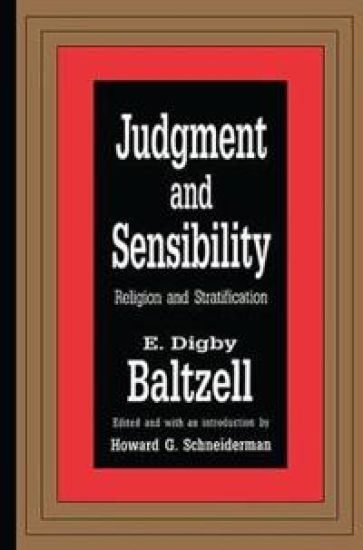
Judgment and Sensibility is the second volume of the collected essays of E. Digby Baltzell, one of the keenest observers and analysts of America's upper classes since Thorstein Veblen. Spanning four decades of writing, these essays cover a wide range of topics, including contemporary politics, democratic elitism, Puritanism, Judaism, higher education, urbanization, and the U. S. Supreme Court, among others.
Puritan Boston and Quaker Philadelphia

Puritan Boston and Quaker Philadelphia

E. Digby Baltzell

Routledge
2017
sidottu
Based on the biographies of some three hundred people in each city, this book shows how such distinguished Boston families as the Adamses, Cabots, Lowells, and Peabodys have produced many generations of men and women who have made major contributions to the intellectual, educational, and political life of their state and nation. At the same time, comparable Philadelphia families such as the Biddles, Cadwaladers, Ingersolls, and Drexels have contributed far fewer leaders to their state and nation. From the days of Benjamin Franklin and Stephen Girard down to the present, what leadership there has been in Philadelphia has largely been provided by self-made men, often, like Franklin, born outside Pennsylvania. Baltzell traces the differences in class authority and leadership in these two cites to the contrasting values of the Puritan founders of the Bay Colony and the Quaker founders of the City of Brotherly Love. While Puritans placed great value on the "calling" or devotion to one's chosen vocation, Quakers have always placed more emphasis on being a good person than on being a good judge or statesman. Puritan Boston and Quaker Philadelphia presents a provocative view of two contrasting upper classes and also reflects the author's larger concern with the conflicting values of hierarchy and egalitarianism in American history.
Sporting Gentlemen

Sporting Gentlemen

E. Digby Baltzell

Routledge
2017
sidottu
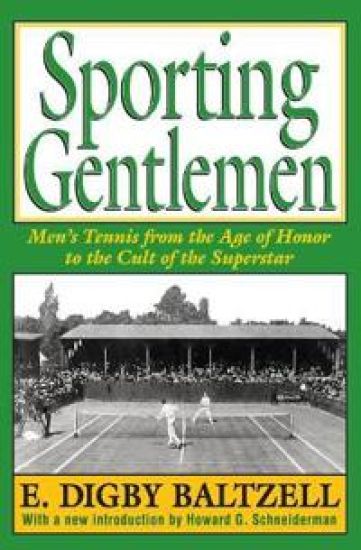
Tennis is a high-stakes game, played by prodigies identified early and coached by professionals in hopes of high rankings and endorsements. This commercial world is far removed from the origins of the sport. Before 1968 when Wimbledon invited professional players to compete for the first time tennis was part of a sportsmanship tradition that emphasized character over money. It produced well-rounded gentlemen who expressed a code of honor, not commerce. In this authoritative and affectionate history of men's tennis, distinguished sociologist E. Digby Baltzell recovers the glory of the age. From its aristocratic origins in the late ninteenth century, to the Tilden years, and through a succession of newcomers, the amateur era and its virtues survived a century of democratization and conflict. Sporting Gentlemen examines the greatest players and matches in the history of tennis. Baltzell explores the tennis code of honor and its roots in the cricket code of the late-nineteenth-century Anglo-American upper class. This code of honor remained in spite of the later democratization of tennis. Thus, the court manners of the Renshaw twins and Doherty brothers at the Old Wimbledon were upheld to the letter by Don Budge and Jack Kramer as well as Rod Laver, John Newcombe, and Arthur Ashe. Baltzell's final chapter on the Open Era is a blistering attack on the decline of honor and the obliteration of class distinctions, leaving only those based on money. For all who love the game of tennis, Sporting Gentlemen is both fascinating history and a badly needed analysis of what has made the sport great.
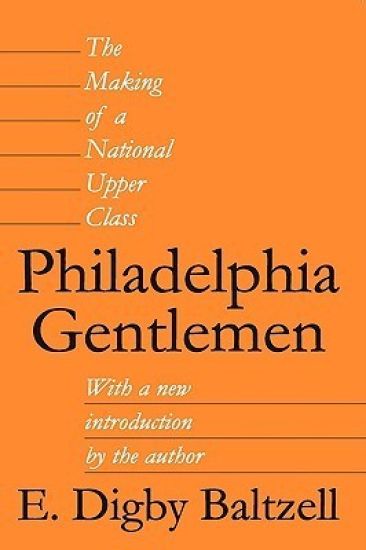
Philadelphia Gentlemen

Philadelphia Gentlemen

Roger L. Geiger; E. Digby Baltzell

Routledge
2017
sidottu
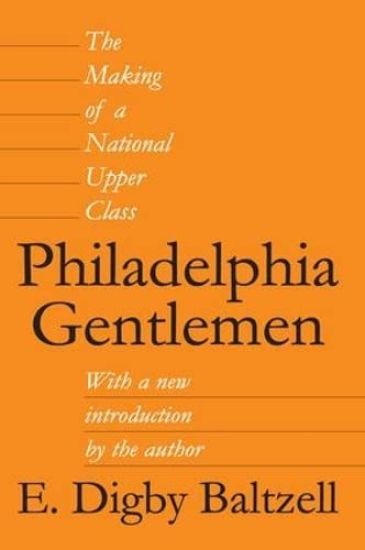
This proper Philadelphia story starts with the city's golden age at the close of the eighteenth century. It is a classic study of an American business aristocracy of colonial stock with Protestant affiliations as well as an analysis of how fabulously wealthy nineteenth-century family founders in Boston, New York, and Philadelphia, supported various exclusive institutions that in the course of the twentieth century produced a national upper-class way of life. But as that way of life became an end of itself, instead of an effort to consolidate power and control, the upper-class outlived its function; this, argues Baltzell, is precisely what took place in the Philadelphia class system. Philadelphia Gentlemen emphasizes that class is largely a matter of family, whereas an elite is largely a matter of individual achievement. The emphasis in Philadelphia on old classes, in contrast to the emphasis in New York and Boston on individual achievement and elite striving, helps to explain the dramatically different outcomes of ruling class domination in major centers of the Eastern Establishment. In emphasizing class membership or family prestige, the dynamics of industrial and urban life passed by rather than through Philadelphia. As a result in the race for urban preeminence, Philadelphia lost precious time and eventually lost the struggle for ruling preeminence as such. When the book initially appeared, it was hailed by The New York Times as "a very, very important book." Writing in the pages of the American Sociological Review, Seymour Martin Lipset noted that "Philadelphia Gentlemen says important things about class and power in America, and says them in ways that will interest and fascinate both sociologists and laymen." And in the American Historical Review, Baltzell's book was identified simply as "a gold mine of information." In short, for sociologists, historians, and those concerned with issues of culture and the economy, this is indeed a classic of modern social science.
Philadelphia Gentlemen

Philadelphia Gentlemen

E. Digby Baltzell

AldineTransaction
2014
nidottu
This is a classic study of Philadelphia’s business aristocracy of colonial stock with Protestant affiliations. It is also an analysis of how fabulously wealthy nineteenth-century family founders produced a national upper-class way of life. But as that way of life came to an end, the upper-class outlived its function; this, argues E. Digby Baltzell, is precisely what took place in the Philadelphia class system. For sociologists, historians, and those concerned with issues of culture and the economy, this is indeed a classic of modern social science.
Sporting Gentlemen

Sporting Gentlemen

E. Digby Baltzell

AldineTransaction
2013
nidottu
Tennis is a high-stakes game, played by prodigies identified early and coached by professionals in hopes of high rankings and endorsements. This commercial world is far removed from the origins of the sport. Before 1968—when Wimbledon invited professional players to compete for the first time—tennis was part of a sportsmanship tradition that emphasized character over money. It produced well-rounded gentlemen who expressed a code of honor, not commerce. In this authoritative and affectionate history of men's tennis, distinguished sociologist E. Digby Baltzell recovers the glory of the age. From its aristocratic origins in the late ninteenth century, to the Tilden years, and through a succession of newcomers, the amateur era and its virtues survived a century of democratization and conflict. Sporting Gentlemen examines the greatest players and matches in the history of tennis. Baltzell explores the tennis code of honor and its roots in the cricket code of the late-nineteenth-century Anglo-American upper class. This code of honor remained in spite of the later democratization of tennis. Thus, the court manners of the Renshaw twins and Doherty brothers at the Old Wimbledon were upheld to the letter by Don Budge and Jack Kramer as well as Rod Laver, John Newcombe, and Arthur Ashe. Baltzell's final chapter on the Open Era is a blistering attack on the decline of honor and the obliteration of class distinctions, leaving only those based on money. For all who love the game of tennis, Sporting Gentlemen is both fascinating history and a badly needed analysis of what has made the sport great.
Philadelphia Gentleman: The Making of a National Upper Class

Philadelphia Gentleman: The Making of a National Upper Class

E. Digby Baltzell

Literary Licensing, LLC
2011
sidottu
""Philadelphia Gentleman: The Making Of A National Upper Class"" by E. Digby Baltzell is a comprehensive study of the emergence of the American upper class in the late 19th and early 20th centuries. Focusing on the city of Philadelphia, Baltzell explores the social, cultural, and economic factors that contributed to the rise of a new elite, and provides a detailed analysis of the values, attitudes, and lifestyles of this group. Drawing on extensive research and interviews with members of the Philadelphia upper class, Baltzell traces the evolution of this group from its origins in the old aristocracy of the East Coast to its emergence as a national elite in the post-World War II era. He examines the role of education, religion, and social clubs in shaping the values and identity of the upper class, and explores the ways in which this group has maintained its status and influence over time. Throughout the book, Baltzell provides vivid portraits of the individuals and families who make up the Philadelphia upper class, and offers insights into their motivations, aspirations, and challenges. He also examines the relationship between the upper class and other social groups, including the middle class, working class, and minorities, and considers the implications of this relationship for American society as a whole.""Philadelphia Gentleman"" is a seminal work in the field of sociology, and continues to be widely read and cited today. It offers a fascinating glimpse into the inner workings of one of America's most influential social groups, and provides valuable insights into the dynamics of social class and power in modern society. This scarce antiquarian book is a facsimile reprint of the old original and may contain some imperfections such as library marks and notations. Because we believe this work is culturally important, we have made it available as part of our commitment for protecting, preserving, and promoting the world's literature in affordable, high quality, modern editions, that are true to their original work.

The Protestant Establishment Revisited

The Protestant Establishment Revisited

E. Digby Baltzell

Transaction Publishers
2000
nidottu
In the latter half of the twentieth century, The American upper class has become less like an aristocracy governing and guiding the nation and more like a caste, a privileged and closed body whose contribution to national leadership has steadily declined. This loss of power and authority has been the focus of the work of E. Digby Baltzell, whose 1964 work, The Protestant Establishment, analyzed the fate and function of a predominantly Anglo-Saxon and Protestant upper class in an ethnically and religiously heterogeneous democracy. After 27 years, Baltzell's theory of the structure and function of the establishment remains unique in the literature of class stratification and authority. Baltzell views an open and authoritative establishment as a necessary and desirable part of the process of securing responsible leaders in a democratic society. Such an establishment is the product of upper-class institutions that are open to talented individuals of varying ethnic and social backgrounds. The values of upper-class tradition include an aristocratic ethos emphasizing the duty to lead, as opposed to the snobbish ethos of caste that emphasizes only the right to privilege. Baltzell regards this as a protector of freedom in modern democratic societies, guaranteeing rules of fair play in contests of power and opinion. As Baltzell points out, historically, the alternatives to rule by establishments have been, rule by functionaries and demogogues, neither of which has proven satisfactory in protecting freedoms. As against Marxists, who see hegemony as a social evil, Baltzell, following Tocqueville, sees it as necessary to the well-being of society. Hegemonic establishments give coherence to the social spheres of greatest contest. They do not eliminate conflict, but prevent it from ripping society apart. Baltzell's work provides uncommon insight into the relationship of social class and personal power in contemporary America. This book will be of interest to sociologists, political scientists, historians of urban life, and American studies specialists.
Puritan Boston and Quaker Philadelphia

Puritan Boston and Quaker Philadelphia

E. Digby Baltzell

Transaction Publishers
1996
nidottu
Based on the biographies of some three hundred people in each city, this book shows how such distinguished Boston families as the Adamses, Cabots, Lowells, and Peabodys have produced many generations of men and women who have made major contributions to the intellectual, educational, and political life of their state and nation. At the same time, comparable Philadelphia families such as the Biddles, Cadwaladers, Ingersolls, and Drexels have contributed far fewer leaders to their state and nation. From the days of Benjamin Franklin and Stephen Girard down to the present, what leadership there has been in Philadelphia has largely been provided by self-made men, often, like Franklin, born outside Pennsylvania. Baltzell traces the differences in class authority and leadership in these two cites to the contrasting values of the Puritan founders of the Bay Colony and the Quaker founders of the City of Brotherly Love. While Puritans placed great value on the "calling" or devotion to one's chosen vocation, Quakers have always placed more emphasis on being a good person than on being a good judge or statesman. Puritan Boston and Quaker Philadelphia presents a provocative view of two contrasting upper classes and also reflects the author's larger concern with the conflicting values of hierarchy and egalitarianism in American history.
Judgment and Sensibility

Judgment and Sensibility

E. Digby Baltzell

Transaction Publishers
1994
sidottu
Judgment and Sensibility is the second volume of the collected essays of E. Digby Baltzell, one of the keenest observers and analysts of America's upper classes since Thorstein Veblen. Spanning four decades of writing, these essays cover a wide range of topics, including contemporary politics, democratic elitism, Puritanism, Judaism, higher education, urbanization, and the U. S. Supreme Court, among others.
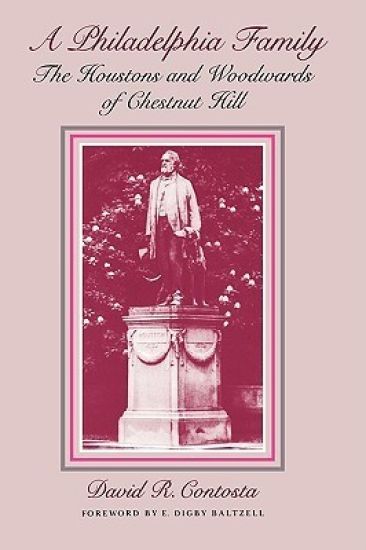
A Philadelphia Family

A Philadelphia Family

David R. Contosta; E. Digby Baltzell

University of Pennsylvania Press
1992
pokkari
Three generations of the Houston-Woodward family, one of the wealthiest and most influential in Philadelphia, have been leaders in politics, diplomacy, suburban planning, housing reform, land conservation, and historic preservation. In A Philadelphia Family, David Contosta analyzes the impact the Houstons and Woodwards have had economically, politically, and demographically on Philadelphia, a city known for its reserved and private leading families. The story of the Houston and Woodward families' continuing public service offers a unique perspective on Philadelphia history in the nineteenth and twentieth centuries. Family founder Henry Howard Houston (1820-1895) was one of America's greatest post-Civil War entrepreneurs, a top executive of the Pennsylvania Railroad as well as a leading speculator in oil, mining, and other railroad ventures. Houston created a unique, planned suburb in Chestnut Hill, which his son Samuel and son-in-law George Woodward maintained and expanded in the twentieth century. Woodward, in particular, became an energetic crusader for housing reform. Other family members have distinguished themselves in government service and charitable work. Stanley Woodward served in the Roosevelt and Truman administrations, George Woodward was a state senator for 30 years, and Lawrence M. C. Smith was founder and owner of a prominent classical music station in Philadelphia.
The Protestant Establishment Revisited

The Protestant Establishment Revisited

E. Digby Baltzell

Transaction Publishers
1991
sidottu
In the latter half of the twentieth century, The American upper class has become less like an aristocracy governing and guiding the nation and more like a caste, a privileged and closed body whose contribution to national leadership has steadily declined. This loss of power and authority has been the focus of the work of E. Digby Baltzell, whose 1964 work, The Protestant Establishment, analyzed the fate and function of a predominantly Anglo-Saxon and Protestant upper class in an ethnically and religiously heterogeneous democracy. After 27 years, Baltzell's theory of the structure and function of the establishment remains unique in the literature of class stratification and authority. Baltzell views an open and authoritative establishment as a necessary and desirable part of the process of securing responsible leaders in a democratic society. Such an establishment is the product of upper-class institutions that are open to talented individuals of varying ethnic and social backgrounds. The values of upper-class tradition include an aristocratic ethos emphasizing the duty to lead, as opposed to the snobbish ethos of caste that emphasizes only the right to privilege. Baltzell regards this as a protector of freedom in modern democratic societies, guaranteeing rules of fair play in contests of power and opinion. As Baltzell points out, historically, the alternatives to rule by establishments have been, rule by functionaries and demogogues, neither of which has proven satisfactory in protecting freedoms. As against Marxists, who see hegemony as a social evil, Baltzell, following Tocqueville, sees it as necessary to the well-being of society. Hegemonic establishments give coherence to the social spheres of greatest contest. They do not eliminate conflict, but prevent it from ripping society apart. Baltzell's work provides uncommon insight into the relationship of social class and personal power in contemporary America. This book will be of interest to sociologists, political scientists, historians of urban life, and American studies specialists.
Philadelphia Gentlemen

Philadelphia Gentlemen

Roger L. Geiger; E. Digby Baltzell

Transaction Publishers
1989
nidottu
This proper Philadelphia story starts with the city's golden age at the close of the eighteenth century. It is a classic study of an American business aristocracy of colonial stock with Protestant affiliations as well as an analysis of how fabulously wealthy nineteenth-century family founders in Boston, New York, and Philadelphia, supported various exclusive institutions that in the course of the twentieth century produced a national upper-class way of life. But as that way of life became an end of itself, instead of an effort to consolidate power and control, the upper-class outlived its function; this, argues Baltzell, is precisely what took place in the Philadelphia class system. Philadelphia Gentlemen emphasizes that class is largely a matter of family, whereas an elite is largely a matter of individual achievement. The emphasis in Philadelphia on old classes, in contrast to the emphasis in New York and Boston on individual achievement and elite striving, helps to explain the dramatically different outcomes of ruling class domination in major centers of the Eastern Establishment. In emphasizing class membership or family prestige, the dynamics of industrial and urban life passed by rather than through Philadelphia. As a result in the race for urban preeminence, Philadelphia lost precious time and eventually lost the struggle for ruling preeminence as such. When the book initially appeared, it was hailed by The New York Times as "a very, very important book." Writing in the pages of the American Sociological Review, Seymour Martin Lipset noted that "Philadelphia Gentlemen says important things about class and power in America, and says them in ways that will interest and fascinate both sociologists and laymen." And in the American Historical Review, Baltzell's book was identified simply as "a gold mine of information." In short, for sociologists, historians, and those concerned with issues of culture and the economy, this is indeed a classic of modern social science.
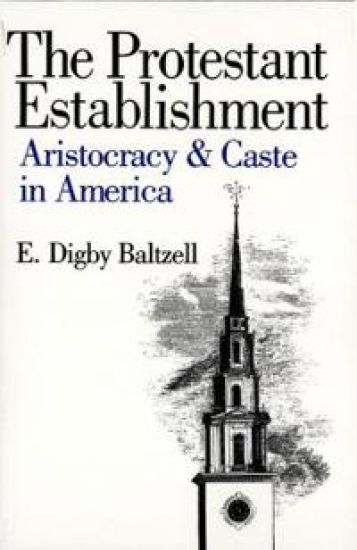
The Protestant Establishment

The Protestant Establishment

E. Digby Baltzell

Yale University Press
1987
pokkari
This classic account of the traditional upper class in America traces its origins, lifestyles, and political and social attitudes from the time of Theodore Roosevelt to that of John F. Kennedy. Sociologist E. Digby Baltzell describes the problems of exclusion and prejudice within the community of white Anglo-Saxon Protestants (or WASPs, an acronym he coined) and predicts with amazing accuracy what will happen when this inbred group is forced to share privilege and power with talented members of minority groups. “The book may actually hold more interest today than when it was first published. New generations of readers can resonate all the more to this masterly and beautifully written work that provides sociological understanding of its engrossing subject.”—Robert K. Merton, Columbia University “The documentation and illustration in the book make it valuable as social history, quite apart from any theoretical hypothesis. As such, it sketches the rise of the WASP penchant for country clubs, patriotic societies and genealogy. It traces the history of anti-Semitism in America. It describes the intellectual conflict between Social Darwinism and the environmental social science founded half a century ago by men like John Dewey, Charles A. Beard, Thorstein Veblen, Franz Boas and Frederick Jackson Turner. In short, The Protestant Establishment is a wide-ranging, intelligent and provocative book.”—Alvin Toffler, New York Times Book Review “The Protestant Establishment has many virtues that lift it above the level we have come to expect in works of contemporary social and cultural analysis. It is clearly and convincingly written.”—H. Stuart Hughes, New York Review of Books “What makes Baltzell’s analysis of the evolution of the American elite superior to the accounts of earlier writers . . . is that he exposes the connections between high social status and political and economic power.”—Dennis H. Wrong, Commentary
State of Black America - 1986

State of Black America - 1986

E. Digby Baltzell; James Williams

Transaction Publishers
1983
nidottu
First published in 1986. A collection of studies on Black America from 1985 to 1986 inclsuing the economic status,classes, political policies, housing, education andcivil rights. Includes a population chart of American Blacks from 1980 to 1984.