Kirjojen hintavertailu – 12 859 819 kirjaa ja 27 kauppaa

Kirjailija

E. Franklin Dukes

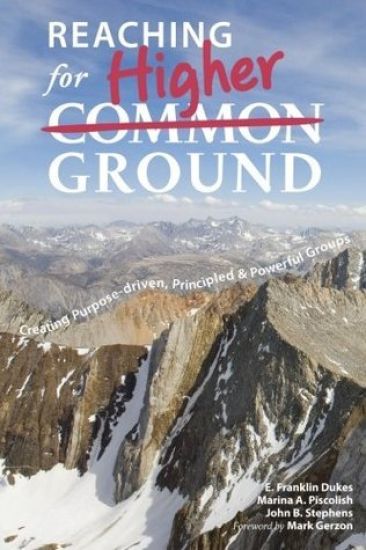
Kirjat ja teokset yhdessä paikassa: 4 kirjaa, julkaisuja vuosilta 2006–2014, suosituimpiin kuuluu Reaching for Higher Ground: Creating Purpose-driven, Principled, and Powerful Groups. Vertaile teosten hintoja ja tarkista saatavuus suomalaisista kirjakaupoista.

4 kirjaa

Kirjojen julkaisuvuodet: 2006–2014.

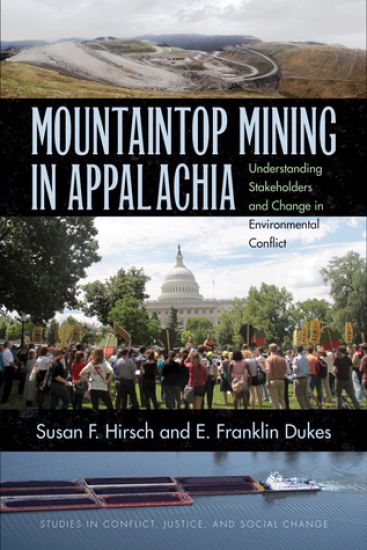
Mountaintop Mining in Appalachia

Mountaintop Mining in Appalachia

Susan F. Hirsch; E. Franklin Dukes

Ohio University Press
2014
sidottu
Residents of the Appalachian coalfields share a history and heritage, deep connections to the land, and pride in their own resilience. These same residents are also profoundly divided over the practice of mountaintop mining—that is, the removal and disposal in nearby valleys of soil and rock in order to reach underlying coal seams. Companies and some miners claim that the practice has reduced energy prices, earned income for shareholders, and provided needed jobs. Opponents of mountaintop mining argue that it poisons Appalachia's waters and devastates entire communities for the sake of short-term gains. This conflict is emblematic of many other environmental disputes in the United States and around the world, disputes whose intensity derives not only from economic and environmental stakes but also from competing claims to individual and community identity. Looking beyond the slogans and seemingly irreconcilable differences, however, can reveal deeper causes of conflict, such as flawed institutions, politics, and inequality or the strongly held values of parties for whom compromise is difficult to achieve. Mountaintop Mining in Appalachia focuses on the people of the region, the people who have the most at stake and have been the most active in trying to shift views and practices. By examining the experiences of these stakeholders and their efforts to effect change, Susan F. Hirsch and E. Franklin Dukes introduce key concepts and theories from the field of conflict analysis and resolution. They provide a compelling case study of how stakeholders challenge governance-as-usual, while offering insight into the causes of conflict over other environmental issues.
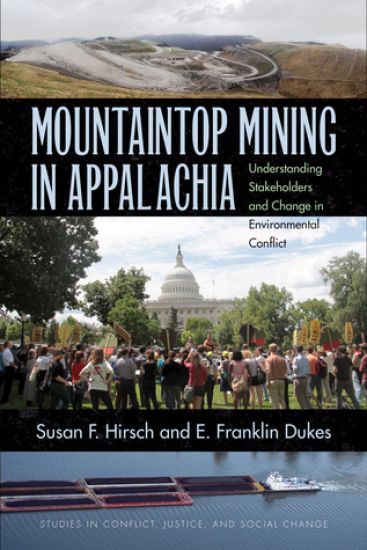
Mountaintop Mining in Appalachia

Mountaintop Mining in Appalachia

Susan F. Hirsch; E. Franklin Dukes

Ohio University Press
2014
pokkari
Residents of the Appalachian coalfields share a history and heritage, deep connections to the land, and pride in their own resilience. These same residents are also profoundly divided over the practice of mountaintop mining—that is, the removal and disposal in nearby valleys of soil and rock in order to reach underlying coal seams. Companies and some miners claim that the practice has reduced energy prices, earned income for shareholders, and provided needed jobs. Opponents of mountaintop mining argue that it poisons Appalachia's waters and devastates entire communities for the sake of short-term gains. This conflict is emblematic of many other environmental disputes in the United States and around the world, disputes whose intensity derives not only from economic and environmental stakes but also from competing claims to individual and community identity. Looking beyond the slogans and seemingly irreconcilable differences, however, can reveal deeper causes of conflict, such as flawed institutions, politics, and inequality or the strongly held values of parties for whom compromise is difficult to achieve. Mountaintop Mining in Appalachia focuses on the people of the region, the people who have the most at stake and have been the most active in trying to shift views and practices. By examining the experiences of these stakeholders and their efforts to effect change, Susan F. Hirsch and E. Franklin Dukes introduce key concepts and theories from the field of conflict analysis and resolution. They provide a compelling case study of how stakeholders challenge governance-as-usual, while offering insight into the causes of conflict over other environmental issues.
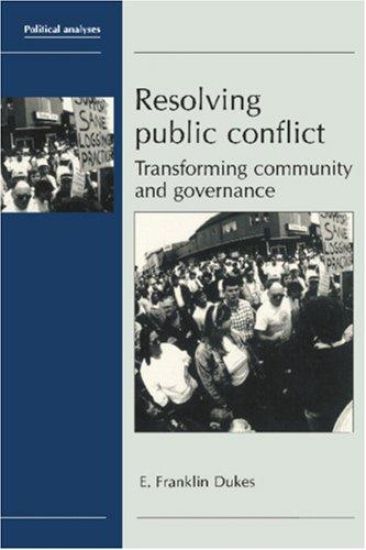
Resolving Public Conflict: Transforming Community and Governance
The book presents "ways of thinking about mediation and facilitation, about community and governance, and about the requirements of democratic society, which may have a real impact upon the public conflict resolution field" (p. ix). In doing so it identifies existing goals and function of PCR by providing a crucial analysis of the field, and offering credible direction as bridges between its practitioners, researchers, funders and participants, administrators, elected officials and community of people we serve. Key themes: -Inability of traditional institutions of governance to address problems of contemporary democratic society -Potential offered by practices of public conflict resolution -Dangers posed by emerging ideologies of management -The social crisis of governance and intended consumers of the product: authorities in the executive, legislative, and judicial branches -The importance of addressing public policy conflict