
Kirjojen hintavertailu – 12 903 725 kirjaa ja 27 kauppaa

Kirjailija

E. J. Lowe

Kirjat ja teokset yhdessä paikassa: 22 kirjaa, julkaisuja vuosilta 1996–2025, suosituimpiin kuuluu Truth and Truth-making. Vertaile teosten hintoja ja tarkista saatavuus suomalaisista kirjakaupoista.

Nimi esiintyy myös muodoissa: E J Lowe, E.J. Lowe

22 kirjaa

Kirjojen julkaisuvuodet: 1996–2025.

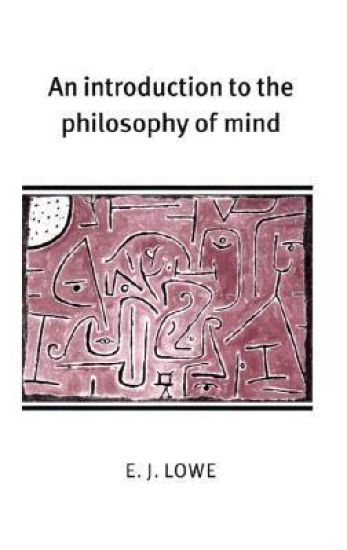
An Introduction to the Philosophy of Mind

An Introduction to the Philosophy of Mind

E. J. Lowe

Cambridge University Press
2000
nidottu
In this book Jonathan Lowe offers a lucid and wide-ranging introduction to the philosophy of mind. Using a problem-centred approach designed to stimulate as well as instruct, he begins with a general examination of the mind-body problem and moves on to detailed examination of more specific philosophical issues concerning sensation, perception, thought and language, rationality, artificial intelligence, action, personal identity and self-knowledge. His discussion is notably broad in scope, and distinctive in giving equal attention to deep metaphysical questions concerning the mind and to the discoveries and theories of modern scientific psychology. It will be of interest to any reader with a basic grounding in modern philosophy.
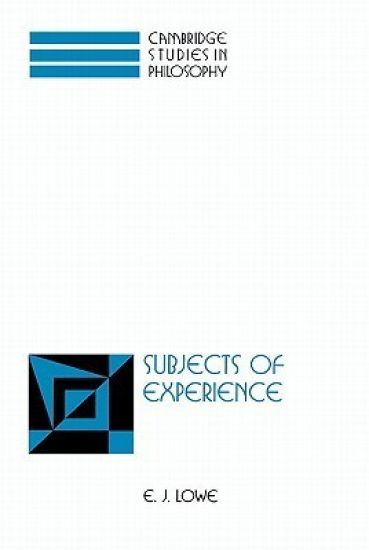
Subjects of Experience

Subjects of Experience

E. J. Lowe

Cambridge University Press
1996
sidottu
In this innovative study of the relationship between persons and their bodies, E. J. Lowe demonstrates the inadequacy of physicalism, even in its mildest, non-reductionist guises, as a basis for a scientifically and philosophically acceptable account of human beings as subjects of experience, thought and action. He defends a substantival theory of the self as an enduring and irreducible entity - a theory which is unashamedly committed to a distinctly non-Cartesian dualism of self and body. Taking up the physicalist challenge to any robust form of psychophysical interactionism, he shows how an attribution of independent causal powers to the mental states of human subjects is perfectly consistent with a thoroughly naturalistic world view. He concludes his study by examining in detail the role which conscious mental states play in the human subject’s exercise of its most central capacities for perception, action, thought and self-knowledge.