Kirjojen hintavertailu – 12 903 733 kirjaa ja 27 kauppaa

Kirjailija

E.O. Wilson

Kirjat ja teokset yhdessä paikassa: 4 kirjaa, julkaisuja vuosilta 2005–2026, suosituimpiin kuuluu Freshwater Mussels of Alabama and the Mobile Basin in Georgia, Mississippi, and Tennessee. Vertaile teosten hintoja ja tarkista saatavuus suomalaisista kirjakaupoista.

Nimi esiintyy myös muodoissa: E O Wilson, E. O. Wilson

4 kirjaa

Kirjojen julkaisuvuodet: 2005–2026.

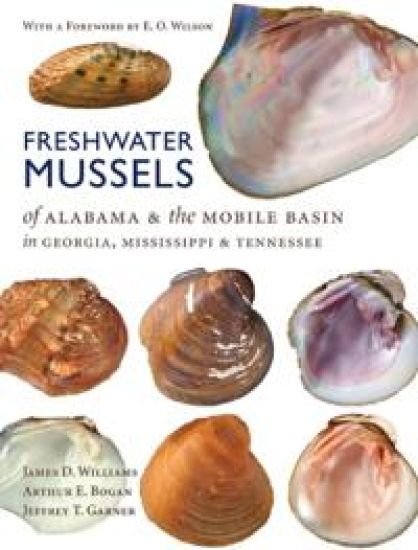
Freshwater Mussels of Alabama and the Mobile Basin in Georgia, Mississippi, and Tennessee

Freshwater Mussels of Alabama and the Mobile Basin in Georgia, Mississippi, and Tennessee

James D. Williams; Arthur E. Bogan; Jeffrey T. Garner; E.O. Wilson

The University of Alabama Press
2008
sidottu
This is a comprehensive accounting of the richest mussel fauna in the U. S. Alabama rivers and waterways are home to the largest and most diverse population of freshwater mussel species in the nation, roughly 60 per cent of U. S. mussel fauna. The Mobile River Basin, which drains portions of Tennessee, Georgia, and Mississippi waterways, also contains diverse mussel populations. However, many of these species have been significantly depleted in the last century due to habitat alteration (river damming, channelization, siltation), pollution, and invasive species, and many more are in imminent danger of extinction. The authors offer encyclopedic entries on each of the 178 mussel species currently identified in Alabama and the Mobile River Basin - the scientific and common names; a morphological description as well as color photographs of the shell appearance; analysis of the soft anatomy; information about ecology, biology, and conservation status; and, a color distribution map. With an extensive glossary of terms and full index, plus additional material on the archaeological record, a history of commercial uses of mussels, and the work of significant biologists studying these species, this volume is a long overdue and invaluable resource, not only for scholars of aquatic biology and zoology but also conservationists interested in the preservation of ecological diversity and protection of inland environments.
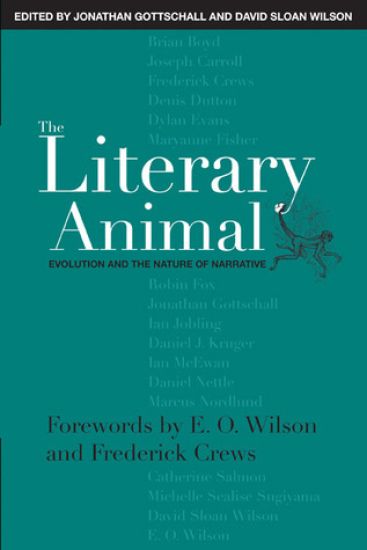
The Literary Animal

The Literary Animal

E.O. Wilson; Frederick C. Crews

Northwestern University Press
2005
nidottu
In recent years, articles in major periodicals from the New York Times Magazine to the Times Literary Supplement have heralded the arrival of a new school of literary studies that promises-or threatens-to profoundly shift the current paradigm. This revolutionary approach, known as Darwinian literary studies, is based on a few simple premises: evolution has produced a universal landscape of the human mind that can be scientifically mapped; these universal tendencies are reflected in the composition, reception, and interpretation of literary works; and an understanding of the evolutionary foundations of human behavior, psychology, and culture will enable literary scholars to gain powerful new perspectives on the elements, form, and nature of storytelling. The goal of this book is to overcome some of the widespread misunderstandings about the meaning of a Darwinian approach to the human mind generally, and literature specifically. The volume brings together scholars from the forefront of the new field of evolutionary literary analysis-both literary analysts who have made evolution their explanatory framework and evolutionist scientists who have taken a serious interest in literature-to show how the human propensity for literature and art can be properly framed as a true evolutionary problem. Their work is an important step toward the long-prophesied synthesis of the humanities and what Steven Pinker calls ""the new sciences of human nature.
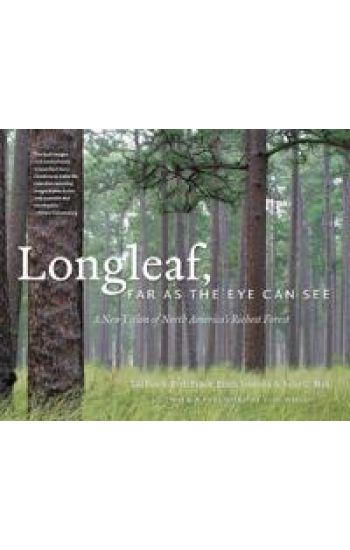
Longleaf, Far As the Eye Can See

Longleaf, Far As the Eye Can See

Bill Finch; Beth Finch; Rhett Johnson; John C. Hall; E. O. Wilson

THE UNIVERSITY OF NORTH CAROLINA PRESS
2026
pokkari
Longleaf forests once covered 92 million acres from Texas to Maryland to Florida. These grand old-growth pines were the “alpha tree” of the largest forest ecosystem in North America and have come to define the southern forest. But logging, suppression of fire, destruction by landowners, and a complex web of other factors reduced those forests so that longleaf is now found only on 3 million acres. Fortunately, the stately tree is enjoying a resurgence of interest, and longleaf forests are once again spreading across the South. Blending a compelling narrative by writers Bill Finch, Rhett Johnson, and John C. Hall with Beth Finch’s breathtaking photography, Longleaf, Far as the Eye Can See invites readers to experience the astounding beauty and significance of the majestic longleaf ecosystem. The authors explore the interactions of longleaf with other species, the development of longleaf forests prior to human contact, and the influence of the longleaf on southern culture, as well as ongoing efforts to restore these forests. Part natural history, part conservation advocacy, and part cultural exploration, this book highlights the special nature of longleaf forests and proposes ways to conserve and expand them.