
Kirjojen hintavertailu – 12 859 827 kirjaa ja 27 kauppaa

Kirjailija

E.W. Adams

Kirjat ja teokset yhdessä paikassa: 2 kirjaa, julkaisuja vuosilta 1975–2014, suosituimpiin kuuluu The Geometry of Electronics. Vertaile teosten hintoja ja tarkista saatavuus suomalaisista kirjakaupoista.

2 kirjaa

Kirjojen julkaisuvuodet: 1975–2014.

The Geometry of Electronics

The Geometry of Electronics

E.W. Adams; James F. Adams

Centre for the Study of Language Information
2014
sidottu
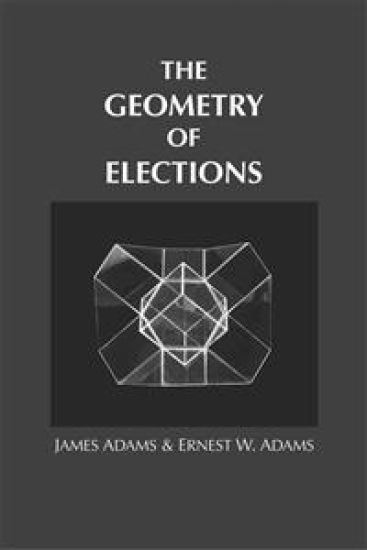
How can we ensure that the "right" person is elected to office? Voter turnout, balloting methods, candidates, and, in the case of the 2000 US presidential election, the courts all conspire to produce electoral results that are horrific to some, wonderful to others, and tolerable to most. The "Geometry of Elections" utilizes mathematical theories to analyze how people vote and explores possible voting systems that could minimize the likelihood of the "wrong" candidate being elected. The "Geometry of Elections" examines real-world elections held in the United States, Britain, and France and asks: What criteria do voters use to determine the "right" candidate or party, and if there is a "right" candidate, how can we design a more accurate voting system? Applying spatial modeling and insights from geometry to real-world political elections, the authors present an intriguing examination of how voters conceptualize and eventually vote for politicians and policy positions.
The Logic of Conditionals

The Logic of Conditionals

E.W. Adams

Kluwer Academic Publishers
1975
sidottu
Of the four chapters in this book, the first two discuss (albeit in consider­ ably modified form) matters previously discussed in my papers 'On the Logic of Conditionals' [1] and 'Probability and the Logic of Conditionals' [2], while the last two present essentially new material. Chapter I is relatively informal and roughly parallels the first of the above papers in discussing the basic ideas of a probabilistic approach to the logic of the indicative conditional, according to which these constructions do not have truth values, but they do have probabilities (equal to conditional probabilities), and the appropriate criterion of soundness for inferences involving them is that it should not be possible for all premises of the inference to be probable while the conclusion is improbable. Applying this criterion is shown to have radically different consequences from the orthodox 'material conditional' theory, not only in application to the standard 'fallacies' of the material conditional, but to many forms (e. g. , Contraposition) which have hitherto been regarded as above suspi­ cion. Many more applications are considered in Chapter I, as well as certain related theoretical matters. The chief of these, which is the most important new topic treated in Chapter I (i. e.