Kirjojen hintavertailu – 12 903 725 kirjaa ja 27 kauppaa

Kirjailija

Earl Smith

Kirjat ja teokset yhdessä paikassa: 23 kirjaa, julkaisuja vuosilta 2004–2026, suosituimpiin kuuluu After Dinner Conversation Magazine. Vertaile teosten hintoja ja tarkista saatavuus suomalaisista kirjakaupoista.

23 kirjaa

Kirjojen julkaisuvuodet: 2004–2026.

The Social Dynamics of Family Violence

The Social Dynamics of Family Violence

Angela J. Hattery; Earl Smith

TAYLOR FRANCIS LTD
2026
sidottu
The Social Dynamics of Family Violence explores family violence through the life course, from child abuse and neglect to intimate partner violence and elder abuse. Paying close and special attention to the social nature and institutional causes of family violence, authors Angela J. Hattery and Earl Smith draw readers' attention to the ways that social inequality, especially gender inequality, contribute to tensions and explosive tendencies in family settings. As awareness, perspectives, and issues around gender-based and family violence evolve, so does the field, and the revised fourth edition of this textbook exposes faculty, students, and future practitioners and researchers to cutting-edge debates and new approaches to addressing violence within the family. Students learn about individual preventative measures while also being invited to question the systems and structures that create the conditions under which family violence continues to remain highly prevalent. A new chapter in this edition focuses closely on the public health dimensions of family violence and discusses the different theoretical frames and prevention and intervention approaches emanating from this perspective. The authors discuss other new developments and areas of focus, including brain injury and sexual and domestic violence as well as abolitionist discourses and approaches to thinking about, and responding to, family violence. With these newer discussions complementing the text’s foundation in theory and methods and its notable coverage of violence within different families and intimate relationships, the fourth edition of The Social Dynamics of Family Violence is an essential reference for any course examining the sociology of family violence.

The Social Dynamics of Family Violence

The Social Dynamics of Family Violence

Angela J. Hattery; Earl Smith

TAYLOR FRANCIS LTD
2026
nidottu
The Social Dynamics of Family Violence explores family violence through the life course, from child abuse and neglect to intimate partner violence and elder abuse. Paying close and special attention to the social nature and institutional causes of family violence, authors Angela J. Hattery and Earl Smith draw readers' attention to the ways that social inequality, especially gender inequality, contribute to tensions and explosive tendencies in family settings. As awareness, perspectives, and issues around gender-based and family violence evolve, so does the field, and the revised fourth edition of this textbook exposes faculty, students, and future practitioners and researchers to cutting-edge debates and new approaches to addressing violence within the family. Students learn about individual preventative measures while also being invited to question the systems and structures that create the conditions under which family violence continues to remain highly prevalent. A new chapter in this edition focuses closely on the public health dimensions of family violence and discusses the different theoretical frames and prevention and intervention approaches emanating from this perspective. The authors discuss other new developments and areas of focus, including brain injury and sexual and domestic violence as well as abolitionist discourses and approaches to thinking about, and responding to, family violence. With these newer discussions complementing the text’s foundation in theory and methods and its notable coverage of violence within different families and intimate relationships, the fourth edition of The Social Dynamics of Family Violence is an essential reference for any course examining the sociology of family violence.

Way Down in the Hole

Way Down in the Hole

Angela J. Hattery; Earl Smith; Terry A. Kupers

RUTGERS UNIVERSITY PRESS
2022
nidottu
Based on ethnographic observations and interviews with prisoners, correctional officers, and civilian staff conducted in solitary confinement units, Way Down in the Hole explores the myriad ways in which daily, intimate interactions between those locked up twenty-four hours a day and the correctional officers charged with their care, custody, and control produce and reproduce hegemonic racial ideologies. Smith and Hattery explore the outcome of building prisons in rural, economically depressed communities, staffing them with white people who live in and around these communities, filling them with Black and brown bodies from urban areas and then designing the structure of solitary confinement units such that the most private, intimate daily bodily functions take place in very public ways. Under these conditions, it shouldn’t be surprising, but is rarely considered, that such daily interactions produce and reproduce white racial resentment among many correctional officers and fuel the racialized tensions that prisoners often describe as the worst forms of dehumanization. Way Down in the Hole concludes with recommendations for reducing the use of solitary confinement, reforming its use in a limited context, and most importantly, creating an environment in which prisoners and staff co-exist in ways that recognize their individual humanity and reduce rather than reproduce racial antagonisms and racial resentment. Way Down the Hole Video 1 (https://youtu.be/UuAB63fhge0)Way Down the Hole Video 2 (https://youtu.be/TwEuw1cTrcQ)Way Down the Hole Video 3 (https://youtu.be/bOcBv_UnHIs?)Way Down the Hole Video 4 (https://youtu.be/cx_l1S8D77c)
Way Down in the Hole

Way Down in the Hole

Angela J. Hattery; Earl Smith; Terry A. Kupers

RUTGERS UNIVERSITY PRESS
2022
sidottu
Based on ethnographic observations and interviews with prisoners, correctional officers, and civilian staff conducted in solitary confinement units, Way Down in the Hole explores the myriad ways in which daily, intimate interactions between those locked up twenty-four hours a day and the correctional officers charged with their care, custody, and control produce and reproduce hegemonic racial ideologies. Smith and Hattery explore the outcome of building prisons in rural, economically depressed communities, staffing them with white people who live in and around these communities, filling them with Black and brown bodies from urban areas and then designing the structure of solitary confinement units such that the most private, intimate daily bodily functions take place in very public ways. Under these conditions, it shouldn’t be surprising, but is rarely considered, that such daily interactions produce and reproduce white racial resentment among many correctional officers and fuel the racialized tensions that prisoners often describe as the worst forms of dehumanization. Way Down in the Hole concludes with recommendations for reducing the use of solitary confinement, reforming its use in a limited context, and most importantly, creating an environment in which prisoners and staff co-exist in ways that recognize their individual humanity and reduce rather than reproduce racial antagonisms and racial resentment. Way Down the Hole Video 1 (https://youtu.be/UuAB63fhge0)Way Down the Hole Video 2 (https://youtu.be/TwEuw1cTrcQ)Way Down the Hole Video 3 (https://youtu.be/bOcBv_UnHIs?)Way Down the Hole Video 4 (https://youtu.be/cx_l1S8D77c)
Police Use of Excessive Force against African Americans

Police Use of Excessive Force against African Americans

Ray Von Robertson; Cassandra D. Chaney; Earl Smith

Lexington Books
2021
nidottu
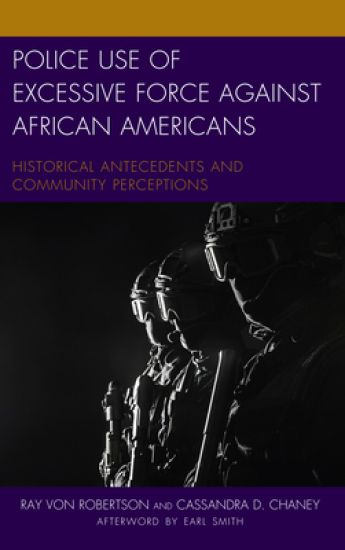
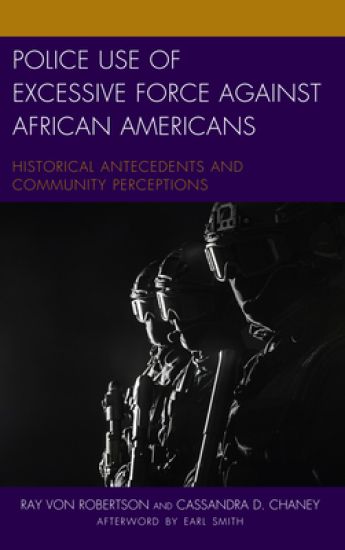
Robertson and Chaney examine how the early antecedents of police brutality like plantation overseers, the lynching of African American males, early race riots, the Rodney King incident, and the Los Angeles Rampart Scandal have directly impacted the current relationship between communities of color and police. Using a phenomenological framework, they analyze how African American college students perceive police to determine how race, gender, and education create different realities among a demographic. Based on their qualitative and quantitative findings, Robertson and Chaney offer recommended policies and strategies for police and communities to improve relationships and perceptions between the two.
Downeast Genius: From Earmuffs to Motor Cars, Maine Inventors Who Changed the World
The genius Thomas Edison once said all anyone needed in order to invent something was a good imagination and a pile of junk. Imagination and creativity have always been essential qualities for survival in Maine and the ingrained habits of "saving up" and "making do" inevitably led to heaps of junk. As a result Maine has produced some extraordinary inventors and inventions with many aimed at a simply making daily life, easier and more comfortable: from Joseph Peavey's self-named tool that dramatically improved log driving to Chester Greenwood's ear muffs to Charles Forster's toothpicks to Hiram Maxim's machine gun to the L. L. Bean Duck Boot.
The Social Dynamics of Family Violence

The Social Dynamics of Family Violence

Angela J. Hattery; Earl Smith

Routledge
2019
sidottu
The Social Dynamics of Family Violence explores family violence throughout the life course, from child abuse and neglect to intimate partner violence and elder abuse. Paying special attention to the social character and institutional causes of family violence, Hattery and Smith ask students to consider how social inequality, especially gender inequality, contributes to tensions and explosive tendencies in family settings. Students learn about individual preventative measures and are also invited to question the justice of our current social structure, with implications for social policy and reorganization. Hattery and Smith also examine violence against women globally and relate this to violence in the United States. Unique coverage of same-sex and multicultural couples, as well as of theory and methods, make this text an essential element of any course considering the sociology of family violence.

The Social Dynamics of Family Violence

The Social Dynamics of Family Violence

Angela J. Hattery; Earl Smith

Routledge
2019
nidottu
The Social Dynamics of Family Violence explores family violence throughout the life course, from child abuse and neglect to intimate partner violence and elder abuse. Paying special attention to the social character and institutional causes of family violence, Hattery and Smith ask students to consider how social inequality, especially gender inequality, contributes to tensions and explosive tendencies in family settings. Students learn about individual preventative measures and are also invited to question the justice of our current social structure, with implications for social policy and reorganization. Hattery and Smith also examine violence against women globally and relate this to violence in the United States. Unique coverage of same-sex and multicultural couples, as well as of theory and methods, make this text an essential element of any course considering the sociology of family violence.

Police Use of Excessive Force against African Americans

Police Use of Excessive Force against African Americans

Ray Von Robertson; Cassandra D. Chaney; Earl Smith

Lexington Books
2019
sidottu
Robertson and Chaney examine how the early antecedents of police brutality like plantation overseers, the lynching of African American males, early race riots, the Rodney King incident, and the Los Angeles Rampart Scandal have directly impacted the current relationship between communities of color and police. Using a phenomenological framework, they analyze how African American college students perceive police to determine how race, gender, and education create different realities among a demographic. Based on their qualitative and quantitative findings, Robertson and Chaney offer recommended policies and strategies for police and communities to improve relationships and perceptions between the two.
Gender, Power, and Violence

Gender, Power, and Violence

Angela J. Hattery; Earl Smith

Rowman Littlefield
2019
sidottu
What do the Catholic Church, college sports, Hollywood, prisons, the military, fraternities and politics have in common? All have extraordinarily high rates of sexual and intimate partner violence and child sexual abuse. Sexual and intimate partner violence is part of the landscape that women and children live with. Women and children are subjected to high levels of sexual and intimate partner violence and in the era of #metoo, Gender, Power and Violence provides a nuanced analysis of the ways in which the organizational structure of an institution, like a college campus or Hollywood, can create an environment ripe for sexual and intimate partner violence and even child sexual abuse. Gender, Power, and Violence looks at the problem of sexual and intimate partner violence through cases, observing the role that institutions play in facilitating and perpetuating gender based violence, and provides a more complex understanding about the ways in which institutional structures create an environment that facilitates and perpetuates gender based violence. Angela J. Hattery and Earl Smith touch on current events that have highlighted the pervasiveness of gender based violence across the institutions they interrogate throughout the book, but also in the entertainment industry, the government, and television journalism. Gender, Power, and Violence gives the reader a better understanding of what factors shape who will be perpetrators, who will be victims, and how organizations respond (or not) when sexual or intimate partner violence or child sexual abuse is reported. It also offers recommendations for transforming these institutions so that they are safe for women and children of all genders.
Policing Black Bodies

Policing Black Bodies

Angela J. Hattery; Earl Smith

Rowman Littlefield
2017
sidottu
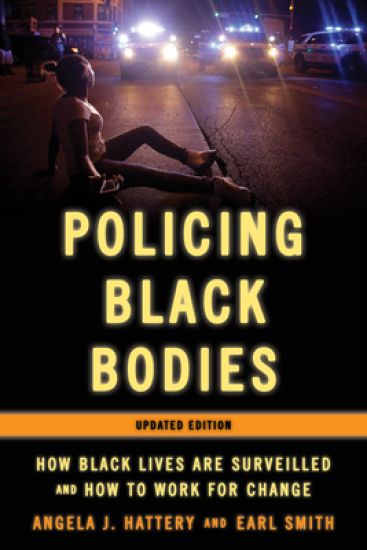
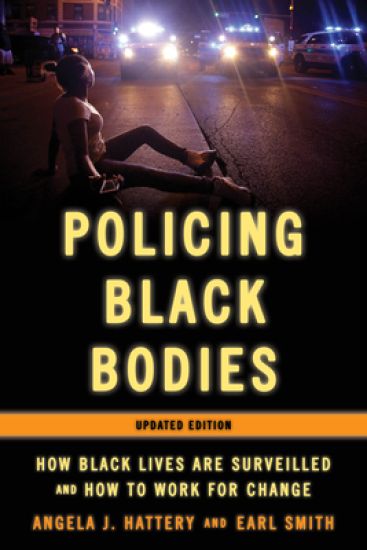
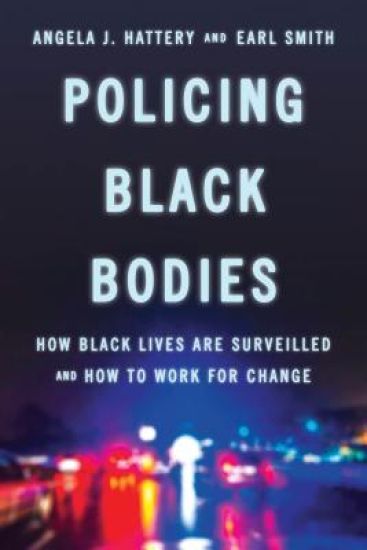
From Trayvon Martin to Freddie Gray, the stories of police violence against Black people are too often in the news. In Policing Black Bodies Angela J. Hattery and Earl Smith make a compelling case that the policing of Black bodies goes far beyond these individual stories of brutality. They connect the regulation of African American people in many settings, including the public education system and the criminal justice system, into a powerful narrative about the myriad ways Black bodies are policed. Policing Black Bodies goes beyond chronicling isolated incidents of injustice to look at the broader systems of inequality in our society—how they’re structured, how they harm Black people, and how we can work for positive change. The book discusses the school-to-prison pipeline, mass incarceration and the prison boom, the unique ways Black women and trans people are treated, wrongful convictions and the challenges of exoneration, and more. Each chapter of the book opens with a true story, explains the history and current state of the issue, and looks toward how we can work for change. The book calls attention to the ways class, race, and gender contribute to injustice, as well as the perils of colorblind racism—that by pretending not to see race we actually strengthen, rather than dismantle, racist social structures. Policing Black Bodies is a powerful call to acknowledge injustice and work for change.
Death Row Chaplain

Death Row Chaplain

Earl Smith; Mark Schlabach

SIMON SCHUSTER
2016
pokkari
From a former criminal and now chaplain for the San Francisco 49ers and the Golden State Warriors, comes a riveting, behind-the-bars look at one of America’s most feared prisons: San Quentin. Reverend Earl Smith shares the most important lessons he’s learned from years of helping inmates discover God’s plan for them. In 1983, twenty-seven-year-old Earl Smith arrived at San Quentin just like everyone thought he would. Labeled as a gang member and criminal from a young age, Smith was expected to do some time, but after a brush with death during a botched drug deal, Smith’s soul was saved and his life path was altered forever. From that moment on, Smith knew God had an unusual mission for him, and he became the minister to the lost souls sitting on death row. For twenty-three years, Smith played chess with Charles Manson, witnessed twelve executions, and negotiated truces between rival gangs. But most importantly, Smith helped the prisoners of San Quentin find redemption, hope, and understand that it is still possible to find God’s grace and mercy from behind bars. Edgy, insightful, and thought provoking, Death Row Chaplain teaches us that God’s grace can reach anyone—even the most desperate and lost—and that it’s never too late to turn our lives around.
A Formula for Eradicating Racism

A Formula for Eradicating Racism

Timothy McGettigan; Earl Smith

Palgrave Macmillan
2015
sidottu
In this book, Tim McGettigan and Earl Smith make the unprecedented argument that racism is a remediable form of suggestion-induced sadism. The authors explain in plain terms how societies like the USA construct racism, and put forward a practical plan to eradicate racism in the USA and all over the world.
African American Families Today

African American Families Today

Angela J. Hattery; Earl Smith

Rowman Littlefield Publishers
2015
nidottu
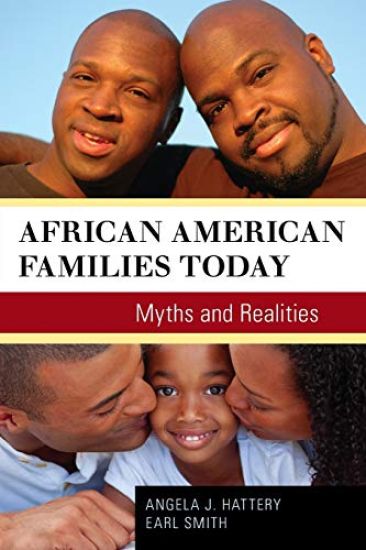
From teen pregnancy and single parenting to athletics and HIV/AIDS, myths about African American families abound. This provocative book by two acclaimed scholars of race and ethnicity debunks many common myths about black families in America, sharing stories and drawing on the latest research to show the realities. African American Families Today examines the wellbeing of African American families around topics including marriage, health, education, incarceration, wealth, and more. Authors Angela J. Hattery and Earl Smith show that even though the election of the first African American president, Barack Obama, has been symbolically important for African Americans, his presidency has not had a measurable impact on the daily lives of African American families. As the book shows, racial inequality persists—we’re clearly not in a “postracial” society.
African American Families Today

African American Families Today

Angela J. Hattery; Earl Smith

Rowman Littlefield Publishers
2012
sidottu
From teen pregnancy and single parenting to athletics and HIV/AIDS, myths about African American families abound. This provocative book by two acclaimed scholars of race and ethnicity debunks many common myths about black families in America, sharing stories and drawing on the latest research to show the realities. African American Families Today examines the wellbeing of African American families around topics including marriage, health, education, incarceration, wealth, and more. Authors Angela J. Hattery and Earl Smith show that even though the election of the first African American president, Barack Obama, has been symbolically important for African Americans, his presidency has not had a measurable impact on the daily lives of African American families. As the book shows, racial inequality persists—we’re clearly not in a “postracial” society.
Prisoner Reentry and Social Capital

Prisoner Reentry and Social Capital

Angela J. Hattery; Earl Smith

Lexington Books
2010
sidottu
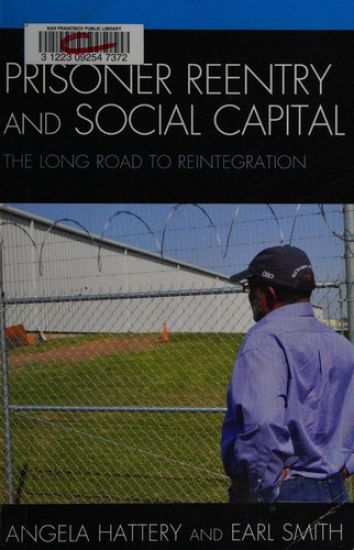
"If you do the crime you gotta do the time." This adage reflects the overall attitude most Americans have about crime and the criminal justice system. Implicit in this adage is the notion that once "the time" is done, the individual is free to re-enter society and resume a normal life. In Prisoner Re-entry and Social Capital, authors Earl Smith and Angela J. Hattery challenge this myth. Prisoner Re-entry and Social Capital takes as its starting point interviews with twenty-five men and women during the summer of 2008 about their experiences with re-entering the "free world" after a period of incarceration. By analyzing the experiences of these men and women, Smith and Hattery look in depth at the factors that inhibit successful re-entry and illustrate some successes and failures. The book examines individual characteristics that inhibit successful re-entry such as addiction and sex offender status as well as the unique challenges faced by women. Uniquely, Smith and Hattery focus on the role that social capital plays as one of the most important factors that shapes the re-entry experience. Today, one of the most pressing issues facing scholars, those who work in the criminal justice system, and the citizenry as a whole is the extraordinarily high rate of recidivism. These interviews and analyses provide a deeper and more precise understanding of the biases faced by re-entry felons in the labor market and work to address the key barriers to re-entry in hopes to aid in their elimination.
Prisoner Reentry and Social Capital

Prisoner Reentry and Social Capital

Angela J. Hattery; Earl Smith

Lexington Books
2010
nidottu
'If you do the crime you gotta do the time.' This adage reflects the overall attitude most Americans have about crime and the criminal justice system. Implicit in this adage is the notion that once 'the time' is done, the individual is free to re-enter society and resume a normal life. In Prisoner Re-entry and Social Capital, authors Earl Smith and Angela J. Hattery challenge this myth. Prisoner Re-entry and Social Capital takes as its starting point interviews with twenty-five men and women during the summer of 2008 about their experiences with re-entering the 'free world' after a period of incarceration. By analyzing the experiences of these men and women, Smith and Hattery look in depth at the factors that inhibit successful re-entry and illustrate some successes and failures. The book examines individual characteristics that inhibit successful re-entry such as addiction and sex offender status as well as the unique challenges faced by women. Uniquely, Smith and Hattery focus on the role that social capital plays as one of the most important factors that shapes the re-entry experience. Today, one of the most pressing issues facing scholars, those who work in the criminal justice system, and the citizenry as a whole is the extraordinarily high rate of recidivism. These interviews and analyses provide a deeper and more precise understanding of the biases faced by re-entry felons in the labor market and work to address the key barriers to re-entry in hopes to aid in their elimination.