

Kirjailija
Ebrahim Moosa
Kirjat ja teokset yhdessä paikassa: 8 kirjaa, julkaisuja vuosilta 2009–2026, suosituimpiin kuuluu Muslim Theological Encounters with Science. Vertaile teosten hintoja ja tarkista saatavuus suomalaisista kirjakaupoista.
8 kirjaa
Kirjojen julkaisuvuodet: 2009–2026.


Medicine and Shariah brings together experts from various fields, including clinicians, Islamic studies experts, and Muslim theologians, to analyze the interaction of the doctors and jurists who are forging the field of Islamic bioethics. Although much ink has been spilled in generating Islamic responses to bioethical questions and in analyzing fatwas, Islamic bioethics still remains an emerging field. How are Islamic bioethical norms to be generated? Are Islamic bioethical writings to be considered as part of the broader academic discourse in bioethics? What even is the scope of Islamic bioethics? Taking up these and related questions, the essays in Medicine and Shariah provide the groundwork for a more robust field. The volume begins by furnishing concepts and terms needed to map out the discourse. It concludes by offering a multidisciplinary model for ethical deliberation that accounts for the various disciplines needed to derive Islamic moral norms and to understand biomedical contexts. In between these bookends, contributors apply various analytic, empirical, and normative lenses to examine the interaction between biomedical knowledge (represented by physicians) and Islamic law (represented by jurists) in Islamic bioethical deliberation. By providing a multidisciplinary model for generating Islamic bioethics rulings, Medicine and Shariah provides the critical foundations for an Islamic bioethics that better attends to specific biomedical contexts and also accurately reflects the moral vision of Islam. The volume will be essential reading for bioethicists and scholars of Islam; for those interested in the dialectics of tradition, modernity, science, and religion; and more broadly for scholarly and professional communities that work at the intersection of the Islamic tradition and contemporary healthcare. Contributors: Ebrahim Moosa, Aasim I. Padela, Vardit Rispler-Chaim, Abul Fadl Mohsin Ebrahim, Muhammed Volkan Yildiran Stodolsky, Mohammed Amin Kholwadia, Hooman Keshavarzi, and Bilal Ali.

Medicine and Shariah brings together experts from various fields, including clinicians, Islamic studies experts, and Muslim theologians, to analyze the interaction of the doctors and jurists who are forging the field of Islamic bioethics. Although much ink has been spilled in generating Islamic responses to bioethical questions and in analyzing fatwas, Islamic bioethics still remains an emerging field. How are Islamic bioethical norms to be generated? Are Islamic bioethical writings to be considered as part of the broader academic discourse in bioethics? What even is the scope of Islamic bioethics? Taking up these and related questions, the essays in Medicine and Shariah provide the groundwork for a more robust field. The volume begins by furnishing concepts and terms needed to map out the discourse. It concludes by offering a multidisciplinary model for ethical deliberation that accounts for the various disciplines needed to derive Islamic moral norms and to understand biomedical contexts. In between these bookends, contributors apply various analytic, empirical, and normative lenses to examine the interaction between biomedical knowledge (represented by physicians) and Islamic law (represented by jurists) in Islamic bioethical deliberation. By providing a multidisciplinary model for generating Islamic bioethics rulings, Medicine and Shariah provides the critical foundations for an Islamic bioethics that better attends to specific biomedical contexts and also accurately reflects the moral vision of Islam. The volume will be essential reading for bioethicists and scholars of Islam; for those interested in the dialectics of tradition, modernity, science, and religion; and more broadly for scholarly and professional communities that work at the intersection of the Islamic tradition and contemporary healthcare. Contributors: Ebrahim Moosa, Aasim I. Padela, Vardit Rispler-Chaim, Abul Fadl Mohsin Ebrahim, Muhammed Volkan Yildiran Stodolsky, Mohammed Amin Kholwadia, Hooman Keshavarzi, and Bilal Ali.

The prospects for peace in Afghanistan, dialogue between Washington and Tehran, the UN's bid to stabilise nuclear-armed Pakistan, understanding the largest Muslim minority in the world's largest democracy in India, or the largest Muslim population in the world in Indonesia all require some knowledge of the traditional religious sectors in these countries and of what connection traditional religious schooling has (or not) to their geopolitical situations. Moosa delves into the world of madrasa classrooms, scholars and texts, recounting the daily life and discipline of the inhabitants. He shows that madrasa are a living, changing entity, and the site of contestation between groups with varying agendas, goals and notions of modernity. Reading this unique and engaging introduction will provide readers with a clear grasp of the history, place and function of the madrasa in today's Muslim world (religious, cultural and political). It will also investigate the ambiguity underlying the charge that the madrasa is at heart a geopolitical institution.

This book explains the role of the madrasa in the cultural, intellectual and religious experience of Muslims. The prospects for peace in Afghanistan, dialogue between Washington and Tehran, the UN's bid to stabilise nuclear armed Pakistan, understanding the largest Muslim minority in the world's largest democracy in India, or the largest Muslim population in the world in Indonesia - all require some knowledge of the traditional religious sectors in these countries and of what connection traditional religious schooling has (or not) to their geopolitical situations. This unique and engaging introduction will help readers understand the history, place and function of the madrasa in today's Muslim religious, cultural and political world. Structured clearly around the role and function of the madrasa in the past and the present; infuses history, tradition and everyday practice with concrete examples of how the institutions function; provides a view of the madrasa from within - the author studied in leading Indian madrasas for 6 years; treats madrasas worldwide, with a special focus on those in South Asia and includes a glossary of key non English terms used in the book.
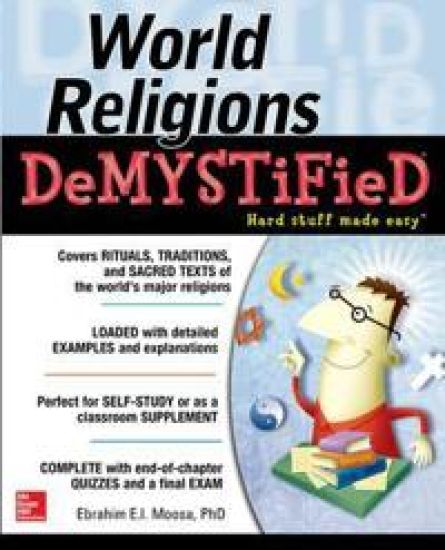
Navigate the world's belief systems with this faith-filled resource! Want to learn more about Judaism? Confused about Confucianism? This book is the answer to your prayers! World Religions DeMYSTiFieD is filled with the knowledge you need to ace a religion exam or satisfy your own curiosity. Written by a professor of religion, World ReligionsDeMYSTiFieD gives you a tour of belief systems found around the globe. You will learn about the world's major religions--Hinduism, Christianity, Judaism, Buddhism, Taoism, Confucianism, and Islam--as well as Earth-based religions and native traditions of Australia, Africa, and the Americas. After reading this book, you will have a healthy understanding of these faiths without being overwhelmed by mystifying jargon or concepts. This fast and easy guide features:Step-by-step guidance through the fundamentals of world religionsMajor rituals, celebrations, traditions, sacred texts, and art from each faithSelf-tests at the end of each chapter with complete answer explanationsA comprehensive test at the end of the book to check your knowledgePerfect for religion majors and the just-curious alike, World Religions DeMYSTiFieD is your path toenlightenment on this subject.
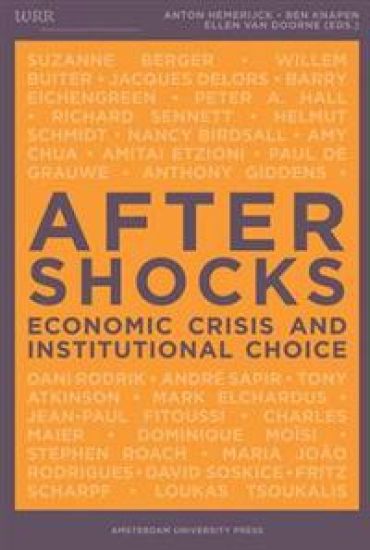
Aftershocks was written in the midst of the deepest economic crisis since the Great Depression. Although it would be premature to presume to identify the repercussions of the crisis, it is clear that it will have profound aftershock effects in the political, economic, and social spheres. The book contains essays based on semi-structured interviews with leading scholars, European politicians and representatives from the world of business. They reflect on the origins of the crisis as well as the possible social, economic, and political transformations it may engender.