Kirjojen hintavertailu – 12 903 725 kirjaa ja 27 kauppaa

Kirjailija

Edgar H. Schein

Kirjat ja teokset yhdessä paikassa: 31 kirjaa, julkaisuja vuosilta 1980–2025, suosituimpiin kuuluu Organisationspsykologi - Teori - Kritik - Praktik. Vertaile teosten hintoja ja tarkista saatavuus suomalaisista kirjakaupoista.

Nimi esiintyy myös muodoissa: Edgar H Schein

31 kirjaa

Kirjojen julkaisuvuodet: 1980–2025.

Helping: How to Offer, Give, and Receive Help

Helping: How to Offer, Give, and Receive Help

Edgar H. Schein

Berrett-Koehler
2011
nidottu

Halvin toimitettuna 28,00 €

Helping is a fundamental human relationship. From a mother feeding her infant to a friend or spouse helping to make something happen, to a group member playing his or her role to help the group to succeed, to a therapist helping a patient, to an organizational consultant or coach helping to improve individual, group or organizational functioning, helping is the basic relationship that moves things forward. Yet, paradoxically, we know relatively little about the social and psychological dynamics of that relationship. In this seminal book on the topic, corporate culture and organizational development guru Ed Schein analyzes the dynamics of helping relationships, explains why help is often not helpful, and shows what any would-be-helper must do to insure that help is actually provided. Many different words are used for helping assisting, aiding, advising, coaching, consulting, counseling, guiding, mentoring, supporting, teaching, and many more but they all have common dynamics and processes. Schein exposes and shows how to resolve the inequities and role ambiguities of helping relationships, describes the different roles that helpers can take once the relationship is balanced, and explains how to build a balanced relationship and how to intervene as that relationship develops, In this short but profound book Schein examines the social dynamics that are at play in helping relationships in order to better understand why offers of help are sometimes refused or resented, and how to make help more useful and effective.

DEC Is Dead, Long Live DEC

DEC Is Dead, Long Live DEC

Edgar H Schein

ReadHowYouWant
2010
pokkari
DEC Is Dead, Long Live DEC tells the 40-year story of the creation, demise, and enduring legacy of one of the pioneering companies of the computer age. Digital Equipment Corporation created the minicomputer, networking, the concept of distributed computing, speech recognition, and other major innovations. It was the number two computer maker behind IBM. Yet it ultimately failed as a business and was sold to Compaq Corporation. What happened? Edgar Schein consulted to DEC throughout its history and so had unparalleled access to all the major players, and an inside view of all the major events. He shows how the unique organizational culture established by DEC's founder, Ken Olsen, gave the company important competitive advantages in its early years, but later became a hindrance and ultimately led to the company's downfall. Schein, Kampas, DeLisi, and Sonduck explain in detail how a particular culture can become so embedded that an organization is unable to adapt to changing circumstances even though it sees the need very clearly. The essential elements of DEC's culture are still visible in many other organizations today, and most former employees are so positive about their days at DEC that they attempt to reproduce its culture in their current work situations. In the era of post-dot.com meltdown, raging debate about companies ''built to last'' vs. ''built to sell, '' and more entrepreneurial startups than ever, the rise and fall of DEC is the ultimate case study
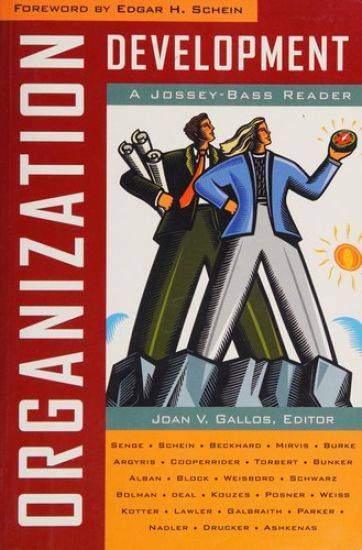
Organization Development

Organization Development

Edgar H. Schein

Jossey-Bass Inc.,U.S.
2006
nidottu
This is the third book in the Jossey-Bass Reader series, Organization Development: A Jossey-Bass Reader. This collection will introduce the key thinkers and contributors in organization development including Ed Lawler, Peter Senge, Chris Argyris, Richard Hackman, Jay Galbraith, Cooperrider, Rosabeth Moss Kanter, Bolman & Deal, Kouzes & Posner, and Ed Schein, among others. "Without reservations I recommend this volume to those students of organizational behavior who want an encyclopedia of OD to gain a perspective on the past, present, and future...." Jonathan D. Springer of the American Psychological Association.
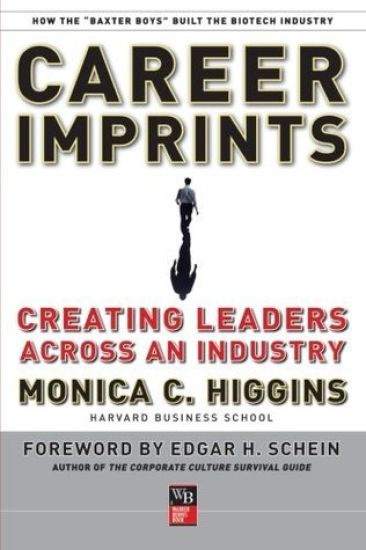
Career Imprints

Career Imprints

Monica C. Higgins; Edgar H. Schein

Jossey-Bass Inc.,U.S.
2005
nidottu
Based on her research of 800 biotechnology companies and 3,200 biotechnology executives, Harvard Business School professor Monica Higgins discovered that one firm–Baxter–was the breeding ground for today’s most successful biotechnology ventures. This phenomena of one organization spawning an industry has also been seen in the high-tech (Hewlett-Packard) and semiconductor industries (Fairchild). However, until now there has been no suitable explanation of why and how these organizations were able to create the next generation of industry leaders. Career Imprints shows why Baxter was so successful in spawning senior executives and offers an understanding of what it takes for an organization to produce leaders that will dominate an industry for years to come. In this important book, Higgins shows that an organization’s "career imprint"¾the result of company systems, structure, strategy, and culture¾that employees take with them throughout their careers is the key to creating great leaders. By understanding these factors, staff, human resource executives, and CEOs can analyze their own organization’s career imprint and develop leaders.
Strategic Pragmatism

Strategic Pragmatism

Edgar H. Schein; Lester Thurow

MIT Press
1996
pokkari
foreword by Lester Thurow Per capita income in Singapore has gone from $500 to more than $20,000 in a little over twenty-five years. Edgar Schein, a social psychologist with a long and celebrated research interest in organizational studies, examines the cultural history of the key intstitution that spawned this economic miracle. Through interviews and full access to Singapore's Economic Development Board (EDB), Schein shows how economic development was successfully promoted. He delves into the individual relationships and the overall structure that contributed to the EDB's effectiveness in propelling Singapore, one of Asia's "little dragons" into the modern era. In his foreword, Lester Thurrow locates Schein's organizational and case-specific account within a larger economic and comparative framework. Over a period of two years, Schein studied how the EDB was created, the kind of leadership it provided, the management structure it used, the human resource policies it pursued, and how it influenced other organizations within the Singapore government. Schein sat in on EDB meetings and extensively interviewed current and former members of the board, Singapore's leaders who created the board, and businesspeople who have dealt with the board. His book intertwines the perspective of the board's members and its investor clients in an analysis that uses both organization and cross-cultural theory. Although there are currently studies of comparable Japanese and Korean organizations, this is the first detailed analysis of the internal structure and functioning of the economic development body of Singapore, a key player in the Asian and world markets.
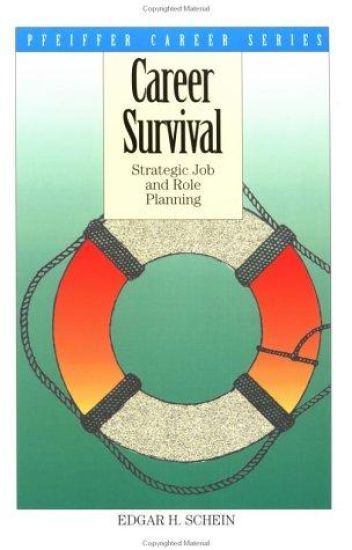
Career Survival

Career Survival

Edgar H. Schein

Pfeiffer Wiley
1994
nidottu
Forecast how jobs will change in the future and plan accordingly Career Survival shows you how to identify the key elements of an individual's job now and in the future and how to set appropriate priorities. Helps managers, employees, and human resource specialists answer such questions as: * What does the job currently involve? * How will the job itself change over the next few years? * How will the environment around the job change? * Do these changes require a different person to do the job? Career Survival helps organizations more accurately forecast their needs and helps individual employees effectively structure their priorities and future plans.
The Clinical Perspective in Fieldwork

The Clinical Perspective in Fieldwork

Edgar H. Schein

SAGE Publications Inc
1987
nidottu
Most writing on qualitative research deals with the role of the ethnographer in a given culture, organization, or some other setting. The ethnographer is an invisible recorder of the nature of this setting, unobtrusive and not affecting the daily activities in the place studied. But not all qualitative research purports to be so impartial and uninvolved. The clinical perspective, stemming from action research, is a very different animal. The clinician is usually a consultant brought in specifically to effect change in an organization. This kind of field researcher works under a very different set of technical and ethical restraints, restraints that differentiate this kind of research from traditional ethnography at almost every point in the process: from choosing a setting, to establishing the research agenda, gathering data, and reporting results. Edgar Schein, well known for his work as an experienced consultant and researcher in organizational settings, succinctly outlines in this essay the basics of a clinical perspective in field research, how it differs from other types of qualitative research and the inherent rewards and difficulties brought on by that perspective. "This is one of Schein's best efforts--and that's saying something! The book represents the very quintessence of what a clinical perspective is all about: empathy, understanding, humility, the fragility and significance of organizational life. Schein makes the clinical approach sound like an artform and for practitioners and applied scientists, Schein helps us braid science and art in an elegant way. I don't think there's a consultant, management expert, practitioner or applied scientist who would not benefit a lot from this book. It's also, as they say in the book trade, one helluva good read." --Warren Bennis, University of Southern California "Ed Schein has written an invaluable book for both scholars and practitioners who are involved in human systems intervention at the individual, group or organizational levels. He not only clearly delineates the clinical perspective and its differences from the ethnographic paradigm, but he also makes a case for the necessary exploration of clinical issues by all who research or consult to organizations." --Joanne Martin, Stanford University "The core of the work is a comparative analysis of the characteristics of the clinical and the research methods. This is a useful exercise. It draws together in one handy spot things that both clinicians and researchers need periodically to review. This monograph is compact and well written." --The Journal of Nervous and Mental Disease "Provide[s] numerous examples of good research that will help students better understand what it means to be a qualitative researcher and to use one's self as a research informant....[Schein] speaks personally and directly to the reader with a disarming candor and charm.... The considerations he gives to ethics and his criticisms of the limitations of informed consent should be read by all researchers of human behavior." --Qualitative Studies in Education
Organisationspsychologie

Organisationspsychologie

Edgar H. Schein

Gabler Verlag
1980
nidottu
Der Gegenstand der Organisationspsychologie ist noch keineswegs end­ gültig abgesteckt. Mit meiner 1965 erschienenen Erstausgabe wollte ich einerseits dazu beitragen, diesen zu definieren, und zum anderen eine Arbeitshilfe schaffen, die sowohl dem Praktiker wie dem Forscher von Nutzen sein konnte. Mein~ Absicht war, Mitgliedern von Orga­ nisationen Einblicke in die dynamischen Prozesse von Systemen, denen sie selbst angehören, zu vermitteln. Mit Genugtuung habe ich beobach­ tet, wie rasch sich Erforschung und Begriffsbildung der Organisations­ psychologie in den vergangenen sechs Jahren weiterentwickelt haben. Noch befriedigender war die Feststellung, daß Literatur über diesen Teilbereich der Psychologie sogar innerhalb von Organisationen auf Interesse stieß. Also nicht nur Studenten, sondern auch Laien, die sich bemühen, die Dynamik von Organisationen zu begreifen, haben ihre Bedeutung erfaßt. Vor allem die offene Aufnahme durch Studenten wie Laien hat mich in dem Beschluß bestärkt, das gesamte Material einer Revision zu unter­ ziehen. Wie schon in der ersten Auflage habe ich dabei bewußt und wohlüberlegt nur bestimmte Konzepte herausgegriffen und mich auf einige wenige Forschungsberichte zur Erläuterung dieser Konzepte be­ schränkt. Viele brauchbare Studien und etliche gerade in jüngerer Zeit entwickelte Theorien mußten auch in dieser überarbeitung ganz weg­ gelassen werden oder konnten nur am Rande erwähnt werden. Nur widerstrebend habe ich auch auf eine Diskussion der Theorienbildung und Erörterung methodischer Fragen verzichtet. Gerade im Bereich der Methodologie gibt es noch ungelöste Probleme, die in diesem Rahmen 5 bedauerlicherweise nur angedeutet werden können.