Kirjojen hintavertailu – 12 903 725 kirjaa ja 27 kauppaa

Kirjailija

Edgar Morin

Kirjat ja teokset yhdessä paikassa: 15 kirjaa, julkaisuja vuosilta 1998–2026, suosituimpiin kuuluu Beyond Black Swans: Inhabiting Indeterminacy. Vertaile teosten hintoja ja tarkista saatavuus suomalaisista kirjakaupoista.

15 kirjaa

Kirjojen julkaisuvuodet: 1998–2026.

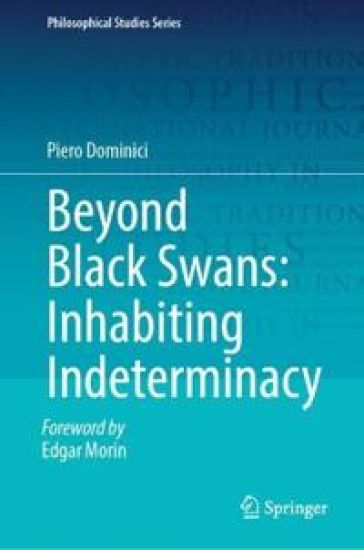
Beyond Black Swans: Inhabiting Indeterminacy

Beyond Black Swans: Inhabiting Indeterminacy

Piero Dominici; Edgar Morin

Springer Nature Switzerland AG
2026
sidottu
This book describes the urgent need of modern humanity to renew and reinforce an open attitude to the complexity of life, above all by embracing its intrinsic indeterminacy, rather than attempting futilely to control its evolution. Oblivious to this ever-more urgent necessity, seduced by the speed and virality of digital pattern recognition, computing, and artificial simulation of human thought, society has reverted to a linear, deterministic concept of reality, under the belief that everything can be measured and managed, and that error and predictability will soon be eliminated from our lives and organizations. Consequently, choices and responsibilities have been delegated to technology, artificial intelligence and algorithms, even in educational institutions, which are now preoccupied with teaching mere skills and know-how, thus committing the fatal error of confusing artificial, mechanical, complicated systems with living, complex, adaptive systems. This volume is intended not only for complexity/social scientists, philosophers and students, but to the curious from all wakes of life. It calls for learning to inhabit complexity, while recognizing and participating in its interdependent, interconnected, interactive systems of relationships. Dominici reveals the futility of endeavoring to control the uncontrollable or observe the unobservable, showing how self-organization and emergence, triggered from the smallest and most modest elements, impacts the entire system.

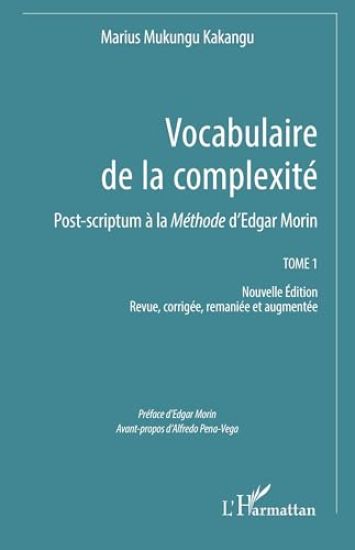
Vocabulaire de la complexité

Vocabulaire de la complexité

Marius Mukungu Kakangu; Edgar Morin; Alfredo Pena-Vega

Editions L'Harmattan
2025
pokkari
Ce Vocabulaire de la complexit , r dit , remani et enrichi, se veut une porte d'entr e (et de sortie) vers la lecture de La M thode d'Edgar Morin. Sans pr tendre en tre l'unique cl ni garantir une compr hension compl te, il a t con u dans un esprit didactique, proche d'un didacticiel. Il sert de r f rentiel, mais ne cherche ni remplacer, simplifier ou sch matiser La M thode, ni en proposer une synth se, car celle-ci ne peut tre synth tis e. Ce vocabulaire n'est pas un simple catalogue ni un guide au sens courant - souvent autoritaire ou simpliste. Ici, guider signifie plut t accompagner avec bienveillance, au sens tymologique de veiller sur . Ainsi, ce travail se veut une aide respectueuse pour naviguer dans la complexit de la pens e morinienne.
Lärdomar från mina 100 år

Lärdomar från mina 100 år

Edgar Morin; Bo Gustavsson

Bokförlaget Faethon
2023
sidottu
Edgar Morin föddes 1921 i Paris. Till sin hundraårsdag skrev han Lärdomar från mina 100 år som inte bara sammanfattar hans långa liv och de lärdomar han dragit, utan som också kommenterar de krig, konflikter och politiska rörelser, liksom det intellektuella arbete, som präglat hans liv. I Frankrike var boken en stor framgång och diskuterades intensivt. Det är ett unikt perspektiv på 1900-talet som i allra högsta grad också talar till vår egen tid. Bo Gustavsson har översatt och skrivit ett efterord.
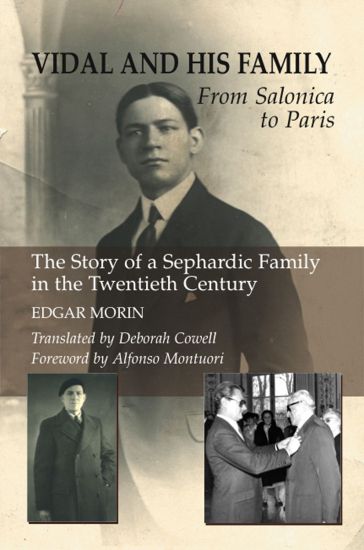
Vidal and His Family

Vidal and His Family

Edgar Morin

Sussex Academic Press
2009
nidottu
Edgar Morin, one of France's greatest living intellectuals, tells the story of his father, Vidal Nahoum, but also the story of Sephardic Jews, and of Europe. In this 'holographic history' Vidal's story, and that of his family, carries within it the flowering, decline, and death of Jewish culture in Spain, the passage from Empires to Nation States, the complex relations between Jews and Gentiles, between East and West, and, ultimately, the history of the twentieth century itself. Morin's work ranges from the great sweep of global historical events to the everyday details of individual lives, letters, feelings, reflections, and experiences. Vidal was born in 1894 in the Ottoman Empire's great Macedonian port. His great-grandfather came from Tuscany and spoke Italian. His mother tongue was fifteenth-century Spanish. He learned French and German as a child. When he was an adolescent, he dreamed of living in France; he was deported there as a prisoner, and then liberated by the French Prime Minister. He lived through the Balkan wars, the collapse of the Ottoman Empire, and two World Wars. Vidal cannot be isolated from his family. And as Edgar Morin explains, "this book also tells the stories of the men and women in his immediate family When, as his son, I inevitably come into his story... I describe him as objectively as possible. The reverence that inspired me did not call for a work of edification; it implied that I should attempt to write a truthful book. For this reason, the book is not in the least respectful, or at least not in the usual sense of the word. Vidal felt that loving someone meant being able to tease him. The author of these lines, who has inherited something of this trait, does not think it disrespectful to tease or make fun of the people he loves."
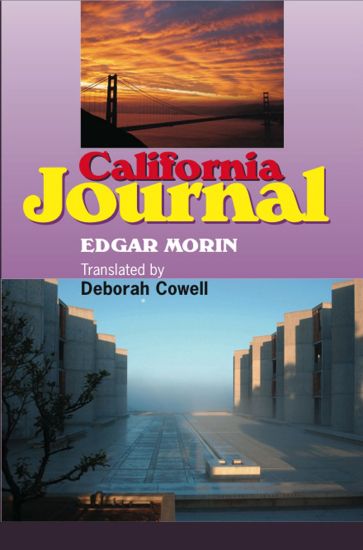
California Journal

California Journal

Edgar Morin

Sussex Academic Press
2008
nidottu
In 1969, California is not just the new Eldorado: it is the crucible where civilisation is accelerating, self-destructs, and is reborn. It's the probe of Spaceship Earth. The hippy phenomenon, communes, the ecological movement, great collective ceremonies like park-ins and rock concerts, the flourishing of sects ranging from mystics to Marxists, the experience of 'weed' and 'acid', are temporary images and elements of a search for a new truth, a new religion, a new society. Long before it became fashionable for European intellectuals to write about their voyages to the United States, Edgar Morin, one of France's leading intellectual figures and at that time known as a path-breaking and innovative sociologist and researcher of popular culture, recounts the story of his experiences in the cauldron of change that was California, including his encounters with some of the leading minds of that time. The book combines Morin's accounts of his experiences with his own search for answers to fundamental questions about the human condition. For a few months, the author had a profound feeling of being drawn into the heart of the 'great questions', played out personally and societally. The result is an engaging and prophetic work that has as much if not more to offer today than it did when it was first published in French.
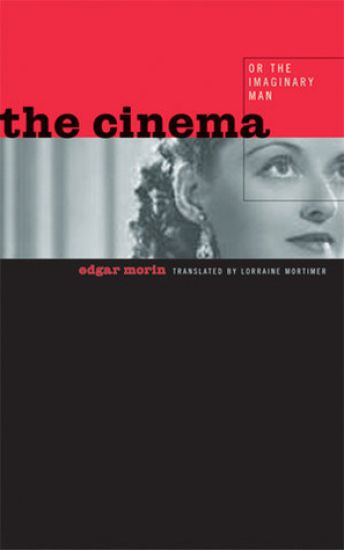
The Cinema, or The Imaginary Man

The Cinema, or The Imaginary Man

Edgar Morin

University of Minnesota Press
2005
nidottu
When The Cinema, or The Imaginary Man first appeared in 1956, the movies and the moviegoing experience were generally not regarded as worthy of serious scholarly consideration. Yet, French critic and social theorist Edgar Morin perceived in the cinema a complex phenomenon capable of illuminating fundamental truths about thought, imagination, and human nature - which allowed him to connect the mythic universe of gods and spirits present within the most primitive societies to the hyperreality emanating from the images projected on the screen. Now making its English-language debut, this audacious, provocative work draws on insights from poets, filmmakers, anthropologists, and philosophers to restore to the cinema the sense of magic first enjoyed at the dawn of the medium. Morin's inquiry follows two veins of investigation. The first focuses on the cinematic image as the nexus between the real and the imaginary; the second examines the cinema's re-creation of the archaic universe of doubles and ghosts and its power to possess, to bewitch, to nourish dreams, desires, and aspirations. "We experience the cinema in a state of double consciousness," Morin writes, "an astonishing phenomenon where the illusion of reality is inseparable from the awareness that it is really an illusion."
The Stars

The Stars

Edgar Morin; Lorraine Mortimer

University of Minnesota Press
2005
nidottu
Worshipped as heroes, treated as gods, movie stars are more than objects of admiration. A star's influence touches on every aspect of ordinary life, dictating taste in fashion, lifestyle, and desire. Edgar Morin's remarkable investigation into the cultural and social significance of the star system traces its evolution from the earliest days of the cinema - when stars like Chaplin, Garbo, and Valentino lived at a distance from their fans, far beyond all mortals, to the postwar era in which stars like Humphrey Bogart and Marilyn Monroe became familiar and familial, less unapproachable but more moving, and concludes with an analysis of the furious religious adulation surrounding the life and death of James Dean. Ultimately, Morin finds, stars are more than just creations of the movie studios; they serve as intermediaries between the real and the imaginary. Today, with the cult of fame more pervasive and influential than ever, The Stars remains a vibrant, vital, and surprising work.
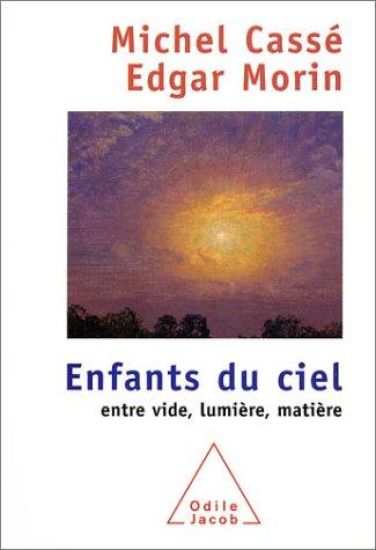
Children of the Sky: Between Nothingness, Light and Matter / Enfants du ciel: Entre vide, lumière, matière
What is the universe, which we regard as "ours" not only because we live in it but because it produced us? This book is in the form of a dialogue on cosmology between the astrophysicist Michel Cass and the philosopher Edgar Morin. It is a brilliant exercise, allying wide-ranging cultural erudition with scientific rigour. In their survey of revolutions in modern physics in the areas of emptiness and the invisible, chaos and order, time and history, the authors refer not only to scientists such as G del, Hubble and Prigogine, but also to ancient mythology (Genesis, Ameriedian religions), poetry (Shakespeare, Apollinaire) and philosophy (Heraclitus, Spinoza, Nietzsche). This book is a model of what an intimate, true meeting between science and philosophy should be. It is a profound work which revels in the joy of knowledge and restores us to the universe that is in all of us, as it celebrates the "anthropo-cosmos". Michel Cass is an astrophysicist at the Atomic Energy Commission and an associate research fellow at the Institut d? Astrophysique, in Paris. He is the author of numerous highly regarded works, including Du Vide et de la Cr ation and G n alogie de la Mati re. An internationally renowned writer and thinker known for his social and political commI'ment, Edgar Morin has held many prominent academic and research positions. His works ? particularly his magnum opus, La M thode have played a major role in contemporary thought.