

Kirjailija
Edith Wharton
Kirjat ja teokset yhdessä paikassa: 1 534 kirjaa, julkaisuja vuosilta 1913–2026, suosituimpiin kuuluu Box with four Summer Stories. Vertaile teosten hintoja ja tarkista saatavuus suomalaisista kirjakaupoista.
Nimi esiintyy myös muodoissa: Edith. Wharton
1 534 kirjaa
Kirjojen julkaisuvuodet: 1913–2026.


"Mr. Selden-what good luck " She came forward smiling, eager almost, in her resolve to intercept him. One or two persons, in brushing past them, lingered to look; for Miss Bart was a figure to arrest even the suburban traveller rushing to his last train. Selden had never seen her more radiant. Her vivid head, relieved against the dull tints of the crowd, made her more conspicuous than in a ball-room, and under her dark hat and veil she regained the girlish smoothness, the purity of tint, that she was beginning to lose after eleven years of late hours and indefatigable dancing. Was it really eleven years, Selden found himself wondering, and had she indeed reached the nine-and-twentieth birthday with which her rivals credited her? "What luck " she repeated. "How nice of you to come to my rescue " He responded joyfully that to do so was his mission in life, and asked what form the rescue was to take. "Oh, almost any-even to sitting on a bench and talking to me.

The Custom of the Country (Classic Edition)
Edith Wharton
Createspace Independent Publishing Platform
2017
nidottu
Ethan Frome (Special Edition)
Edith Wharton
Createspace Independent Publishing Platform
2017
nidottu
Set against the bleak winter landscape of New England, Ethan Frome is the story of a poor farmer, lonely and downtrodden, his wife Zeena, and her cousin, the enchanting Mattie Silver. In the playing out of this short novel's powerful and engrossing drama, Edith Wharton constructed her least characteristic and most celebrated book.
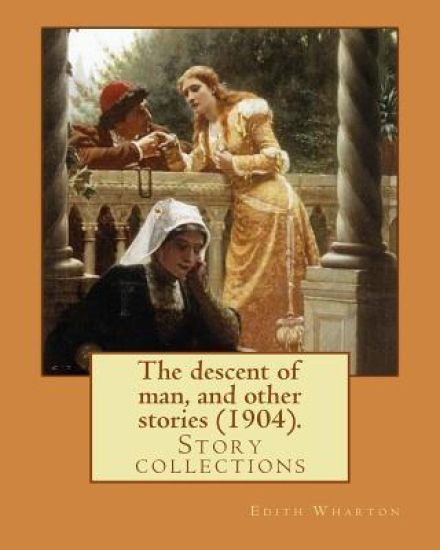
The descent of man, and other stories (1904). By: Edith Wharton: Story collections
Edith Wharton
Createspace Independent Publishing Platform
2017
nidottu
Ethan Frome is set in the fictional New England town of Starkfield, where a visiting engineer tells the story of his encounter with Ethan Frome, a man with a history of thwarted dreams and desires. The accumulated longing of Frome ends in an ironic turn of events. His initial impressions are based on his observations of Frome going about his mundane tasks in Starkfield, and something about him catches the eye and curiosity of the visitor, but no one in the town seems interested in revealing many details about the man or his history - or perhaps they are not able to.
Ethan Frome is set in the fictional New England town of Starkfield, where a visiting engineer tells the story of his encounter with Ethan Frome, a man with a history of thwarted dreams and desires. The accumulated longing of Frome ends in an ironic turn of events. His initial impressions are based on his observations of Frome going about his mundane tasks in Starkfield, and something about him catches the eye and curiosity of the visitor, but no one in the town seems interested in revealing many details about the man or his history - or perhaps they are not able to.
Ethan Frome is set in the fictional New England town of Starkfield, where a visiting engineer tells the story of his encounter with Ethan Frome, a man with a history of thwarted dreams and desires. The accumulated longing of Frome ends in an ironic turn of events. His initial impressions are based on his observations of Frome going about his mundane tasks in Starkfield, and something about him catches the eye and curiosity of the visitor, but no one in the town seems interested in revealing many details about the man or his history - or perhaps they are not able to.
Ethan Frome is set in the fictional New England town of Starkfield, where a visiting engineer tells the story of his encounter with Ethan Frome, a man with a history of thwarted dreams and desires. The accumulated longing of Frome ends in an ironic turn of events. His initial impressions are based on his observations of Frome going about his mundane tasks in Starkfield, and something about him catches the eye and curiosity of the visitor, but no one in the town seems interested in revealing many details about the man or his history - or perhaps they are not able to.
The House of Mirth
Edith Wharton
Macmillan Collector's Library
2017
sidottu
Halvin toimitettuna 17,90 €
In The House of Mirth, Edith Wharton gives us a witty and piercingly insightful dark satire about the privileged society of early twentieth-century New York. Part of the Macmillan Collector’s Library; a series of stunning, clothbound, pocket sized classics with gold foiled edges and ribbon markers. These beautiful books make perfect gifts or a treat for any book lover. This edition features an introduction by novelist Danuta Reah. This is a world that inspired the lavish costume drama The Gilded Age, written by Julian Fellowes, the creator of Downton Abbey. Lily Bart is twenty-nine, beautiful and charming. She has expensive tastes, loves to gamble and socializes with the wealthy upper-class families of New York. But her meagre finances are dwindling and her place in society is slipping away from her. Her only hope of security is to find a suitable husband. However, Lily has an independence of spirit that stands in the way of her committing to the available suitors. As her options diminish, friends become enemies and her situation grows increasingly perilous.

The Glimpses of the Moon (1922). By: Edith Wharton: Novel (World's classic's)
Edith Wharton
Createspace Independent Publishing Platform
2017
nidottu
Edith Wharton ( born Edith Newbold Jones; January 24, 1862 - August 11, 1937) was a Pulitzer Prize-winning American novelist, short story writer, and designer. She was nominated for the Nobel Prize in Literature in 1927, 1928 and 1930. Wharton combined her insider's view of America's privileged classes with a brilliant, natural wit to write humorous, incisive novels and short stories of social and psychological insight. She was well acquainted with many of her era's other literary and public figures, including Theodore Roosevelt. Edith Wharton was born Edith Newbold Jones to George Frederic Jones and Lucretia Stevens Rhinelander at their brownstone at 14 West Twenty-third Street in New York City. She had two much older brothers, Frederic Rhinelander, who was sixteen, and Henry Edward, who was eleven. She was baptized April 20, 1862, Easter Sunday, at Grace Church. To her friends and family she was known as "Pussy Jones". The saying "keeping up with the Joneses" is said to refer to her father's family. She was also related to the Rensselaer family, the most prestigious of the old patroon families. She had a lifelong lovely friendship with her Rhinelander niece, landscape architect Beatrix Farrand of Reef Point in Bar Harbor, Maine. Edith was born during the Civil War; she was three years old when the South surrendered. After the war, the family traveled extensively in Europe. From 1866 to 1872, the Jones family visited France, Italy, Germany, and Spain. During her travels, the young Edith became fluent in French, German, and Italian. At the age of ten, she suffered from typhoid fever while the family was at a spa in the Black Forest. After the family returned to the United States in 1872, they spent their winters in New York and their summers in Newport, Rhode Island. While in Europe, she was educated by tutors and governesses. She rejected the standards of fashion and etiquette that were expected of young girls at the time, intended to enable women to marry well and to be displayed at balls and parties. She thought these requirements were superficial and oppressive. Edith wanted more education than she received, so she read from her father's library and from the libraries of her father's friends. Her mother forbade her to read novels until she was married, and Edith complied with this command Edith began writing poetry and fiction as a young girl. She attempted to write a novel at age eleven. Her first publication was a translation of the German poem, "Was die Steine Erz hlen" ("What the Stones Tell") by Heinrich Karl Brugsch, which earned her $50. She was 15 at the time. Her family did not wish her name to appear in print because the names of upper class women of the time only appeared in print to announce birth, marriage, and death. Consequently, the poem was published under the name of a friend's father, E. A. Washburn. He was a cousin of Ralph Waldo Emerson and supported women's education. He played a pivotal role in Edith's efforts to educate herself, and he encouraged her ambition to write professionally. In 1877, at the age of 15, she secretly wrote a 30,000 word novella "Fast and Loose". In 1878 her father arranged for a collection of two dozen original poems and five translations, Verses, to be privately published. In 1880 she had five poems published anonymously in the Atlantic Monthly, then a revered literary magazine. Despite these early successes, she was not encouraged by her family nor her social circle, and though she continued to write, she did not publish anything again until her poem, "The Last Giustiniani", was published in Scribner's Magazine in October 1889. Edith was engaged to Henry Stevens in 1882 after a two-year courtship. The month the two were to marry, the engagement abruptly ended....
Ethan Frome (1911). By: Edith Wharton: Ethan Frome is a novel published in 1911 by the Pulitzer Prize-winning American author Edith Wharton.
Edith Wharton
Createspace Independent Publishing Platform
2017
nidottu
Ethan Frome is a novel published in 1911 by the Pulitzer Prize-winning American author Edith Wharton. It is set in the fictitious town of Starkfield, Massachusetts. The novel was adapted into a film, Ethan Frome, in 1993. Ethan Frome is set in the fictional New England town of Starkfield, where a visiting engineer tells the story of his encounter with Ethan Frome, a man with a history of thwarted dreams and desires. The accumulated longing of Frome ends in an ironic turn of events. His initial impressions are based on his observations of Frome going about his mundane tasks in Starkfield, and something about him catches the eye and curiosity of the visitor, but no one in the town seems interested in revealing many details about the man or his history - or perhaps they are not able to. The narrator ultimately finds himself in the position of staying overnight at Frome's house in order to escape a winter storm, and from there he observes Frome and his private circumstances, which he shares and which triggers other people in town to be more forthcoming with their own knowledge and impressions. 2] The novel is framed by the literary device of an extended flashback. The prologue, which is neither named as such nor numbered, opens with an unnamed male narrator spending a winter in Starkfield while in the area on business. He spots a limping, quiet man around the village, who is somehow compelling in his demeanor and carriage. This is Ethan Frome, who is a local fixture of the community, having been a lifelong resident. Frome is described as "the most striking figure in Starkfield", "the ruin of a man" with a "careless powerful look...in spite of a lameness checking each step like the jerk of a chain". Curious, the narrator sets out to learn about him. He learns that Frome's limp arose from having been injured in a "smash-up" twenty-four years before, but further details are not forthcoming, and the narrator fails to learn much more from Frome's fellow townspeople other than that Ethan's attempt at higher education decades before was thwarted by the sudden illness of his father following an injury, forcing his return to the farm to assist his parents, never to leave again. Because people seem not to wish to speak other than in vague and general terms about Frome's past, the narrator's curiosity grows, but he learns little more. Chance circumstances arise that allow the narrator to hire Frome as his driver for a week. A severe snowstorm during one of their journeys forces Frome to allow the narrator to shelter at his home one night. Just as the two are entering Frome's house, the prologue ends. We then embark on the "first" chapter (Chapter I), which takes place twenty-four years prior. The narration switches from the first-person narrator of the prologue to a limited third-person narrator.................. Edith Wharton ( born Edith Newbold Jones; January 24, 1862 - August 11, 1937) was a Pulitzer Prize-winning American novelist, short story writer, and designer. She was nominated for the Nobel Prize in Literature in 1927, 1928 and 1930. Wharton combined her insider's view of America's privileged classes with a brilliant, natural wit to write humorous, incisive novels and short stories of social and psychological insight. She was well acquainted with many of her era's other literary and public figures, including Theodore Roosevelt. Edith Wharton was born Edith Newbold Jones to George Frederic Jones and Lucretia Stevens Rhinelander at their brownstone at 14 West Twenty-third Street in New York City. She had two much older brothers, Frederic Rhinelander, who was sixteen, and Henry Edward, who was eleven. She was baptized April 20, 1862, Easter Sunday, at Grace Church. To her friends and family she was known as "Pussy Jones". The saying "keeping up with the Joneses" is said to refer to her father's family..................
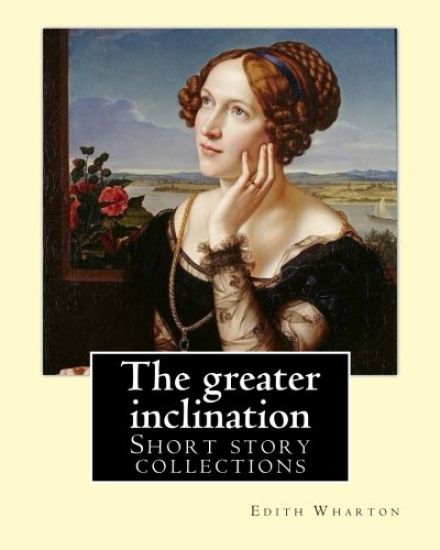
The greater inclination. By: Edith Wharton: Short story collections
Edith Wharton
Createspace Independent Publishing Platform
2017
nidottu
The muse's tragedy -- A journey -- The pelican -- Souls belated -- A coward -- The twilight of the god -- A cup of cold water -- The portrait Edith Wharton ( born Edith Newbold Jones; January 24, 1862 - August 11, 1937) was a Pulitzer Prize-winning American novelist, short story writer, and designer. She was nominated for the Nobel Prize in Literature in 1927, 1928 and 1930. Wharton combined her insider's view of America's privileged classes with a brilliant, natural wit to write humorous, incisive novels and short stories of social and psychological insight. She was well acquainted with many of her era's other literary and public figures, including Theodore Roosevelt. Edith Wharton was born Edith Newbold Jones to George Frederic Jones and Lucretia Stevens Rhinelander at their brownstone at 14 West Twenty-third Street in New York City. She had two much older brothers, Frederic Rhinelander, who was sixteen, and Henry Edward, who was eleven. She was baptized April 20, 1862, Easter Sunday, at Grace Church. To her friends and family she was known as "Pussy Jones". The saying "keeping up with the Joneses" is said to refer to her father's family. She was also related to the Rensselaer family, the most prestigious of the old patroon families. She had a lifelong lovely friendship with her Rhinelander niece, landscape architect Beatrix Farrand of Reef Point in Bar Harbor, Maine. Edith was born during the Civil War; she was three years old when the South surrendered. After the war, the family traveled extensively in Europe. From 1866 to 1872, the Jones family visited France, Italy, Germany, and Spain. During her travels, the young Edith became fluent in French, German, and Italian. At the age of ten, she suffered from typhoid fever while the family was at a spa in the Black Forest. After the family returned to the United States in 1872, they spent their winters in New York and their summers in Newport, Rhode Island. While in Europe, she was educated by tutors and governesses. She rejected the standards of fashion and etiquette that were expected of young girls at the time, intended to enable women to marry well and to be displayed at balls and parties. She thought these requirements were superficial and oppressive. Edith wanted more education than she received, so she read from her father's library and from the libraries of her father's friends. Her mother forbade her to read novels until she was married, and Edith complied with this command. Edith began writing poetry and fiction as a young girl. She attempted to write a novel at age eleven. Her first publication was a translation of the German poem, "Was die Steine Erz hlen" ("What the Stones Tell") by Heinrich Karl Brugsch, which earned her $50. She was 15 at the time. Her family did not wish her name to appear in print because the names of upper class women of the time only appeared in print to announce birth, marriage, and death. Consequently, the poem was published under the name of a friend's father, E. A. Washburn. He was a cousin of Ralph Waldo Emerson and supported women's education. He played a pivotal role in Edith's efforts to educate herself, and he encouraged her ambition to write professionally. In 1877, at the age of 15, she secretly wrote a 30,000 word novella "Fast and Loose". In 1878 her father arranged for a collection of two dozen original poems and five translations, Verses, to be privately published. In 1880 she had five poems published anonymously in the Atlantic Monthly, then a revered literary magazine. Despite these early successes, she was not encouraged by her family nor her social circle, and though she continued to write, she did not publish anything again until her poem, "The Last Giustiniani", was published in Scribner's Magazine in October 1889. Edith was engaged to Henry Stevens in 1882 after a two-year courtship. The month the two were to marry, the engagement abruptly ended. In 1885, at age 23, she married Edward (Teddy)...
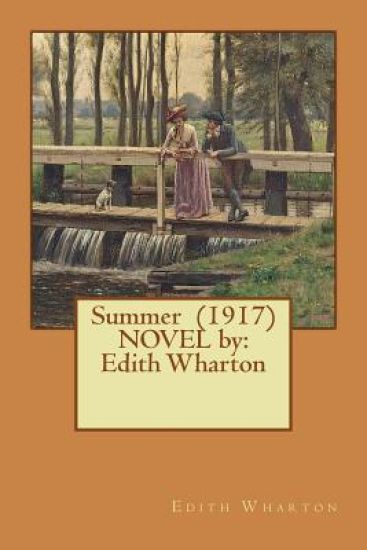
Summer (1917) NOVEL by: Edith Wharton
Edith Wharton
Createspace Independent Publishing Platform
2017
nidottu
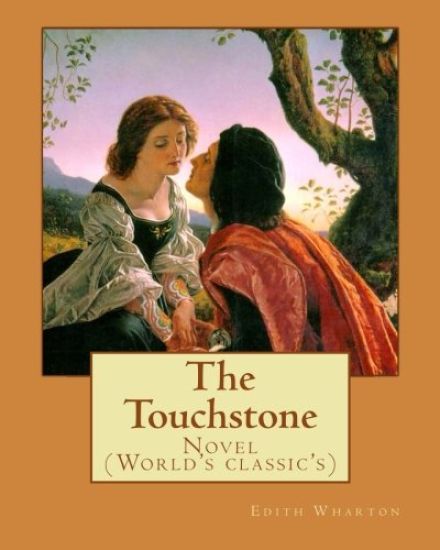
The Touchstone. By: Edith Wharton: Novel (World's classic's)
Edith Wharton
Createspace Independent Publishing Platform
2017
nidottu
Stephen Glennard betrays a former love, selling her letters to him so that he may raise the money to marry his beautiful fiancee. Plot summary: Stephen Glennard's career is falling apart and he desperately needs money so that he may marry his beautiful fiancee. He happens upon an advertisement in a London magazine promising the prospect of financial gain. Glennard was once pursued by Margaret Aubyn, a famous and recently deceased author, and he still has her passionate love letters to him. Glennard removes his name from the letters and sells them, making him a fortune and building a marriage based on the betrayal of another. However, his mounting shame and his guilty conscience ultimately force him to confess his betrayal to his wife. He fully expects (and even desires) that his confession will cause her to despise him. However, her wise and forgiving response opens a way for him to forgive himself and to make what limited amends he can make for his actions.... Edith Wharton ( born Edith Newbold Jones; January 24, 1862 - August 11, 1937) was a Pulitzer Prize-winning American novelist, short story writer, and designer. She was nominated for the Nobel Prize in Literature in 1927, 1928 and 1930. Wharton combined her insider's view of America's privileged classes with a brilliant, natural wit to write humorous, incisive novels and short stories of social and psychological insight. She was well acquainted with many of her era's other literary and public figures, including Theodore Roosevelt. Edith Wharton was born Edith Newbold Jones to George Frederic Jones and Lucretia Stevens Rhinelander at their brownstone at 14 West Twenty-third Street in New York City. She had two much older brothers, Frederic Rhinelander, who was sixteen, and Henry Edward, who was eleven. She was baptized April 20, 1862, Easter Sunday, at Grace Church. To her friends and family she was known as "Pussy Jones". The saying "keeping up with the Joneses" is said to refer to her father's family. She was also related to the Rensselaer family, the most prestigious of the old patroon families. She had a lifelong lovely friendship with her Rhinelander niece, landscape architect Beatrix Farrand of Reef Point in Bar Harbor, Maine. Edith was born during the Civil War; she was three years old when the South surrendered. After the war, the family traveled extensively in Europe. From 1866 to 1872, the Jones family visited France, Italy, Germany, and Spain. During her travels, the young Edith became fluent in French, German, and Italian. At the age of ten, she suffered from typhoid fever while the family was at a spa in the Black Forest. After the family returned to the United States in 1872, they spent their winters in New York and their summers in Newport, Rhode Island. While in Europe, she was educated by tutors and governesses. She rejected the standards of fashion and etiquette that were expected of young girls at the time, intended to enable women to marry well and to be displayed at balls and parties. She thought these requirements were superficial and oppressive. Edith wanted more education than she received, so she read from her father's library and from the libraries of her father's friends. Her mother forbade her to read novels until she was married, and Edith complied with this command.........