Kirjailija
Edmond Rostand
Kirjat ja teokset yhdessä paikassa: 197 kirjaa, julkaisuja vuosilta 1977–2026, suosituimpiin kuuluu Sarah Bernhardt. Vertaile teosten hintoja ja tarkista saatavuus suomalaisista kirjakaupoista.
197 kirjaa
Kirjojen julkaisuvuodet: 1977–2026.
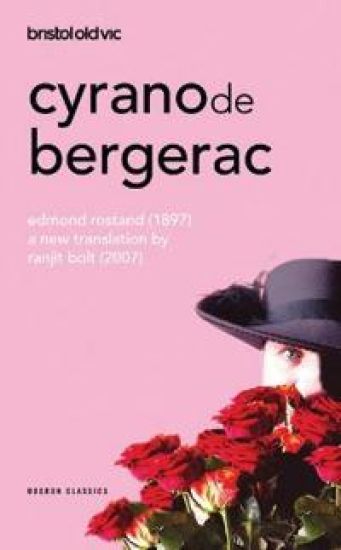
"Comic poet and dazzling swordsman, Cyrano is hopelessly in love with Roxane. But Roxane loves the dashing Christian. Cyrano, in a selfless act of love, woos Roxane on Christian's behalf, writing his love letters, feeding him his lines. Romance. Tragedy. Comedy. Excitement. A universal, actionpacked love story which has been a popular hit on the stage for over a century and the inspiration for countless films. This version of the classic by Ranjit Bolt opened at Bristol Old Vic in May 2007."
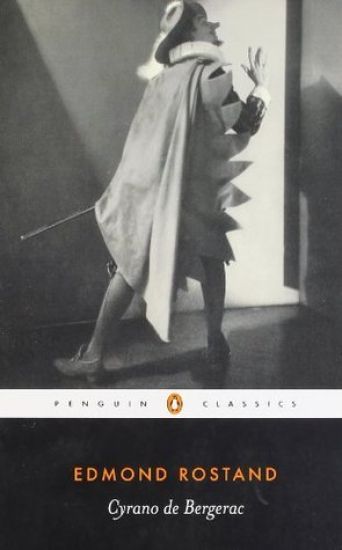
Poet and soldier, brawler and charmer, Cyrano de Bergerac is desperately in love with Roxane, the most beautiful woman in Paris. But there is one very large problem - he has a nose of stupendous size and believes she will never see past it to return his feelings. So when he discovers that the handsome but tongue-tied Christian is also pining for Roxane, generous Cyrano offers to help by writing exquisite declarations of love for the young man to woo her with. Will she ever recognize who she is really falling in love with? Set during the reign of Louis XIII, Rostand's Cyrano de Bergerac (1897) was one of the great theatrical successes of its time and remains as popular today for its dramatic power and, above all, for its good-natured, passionate and swashbuckling hero.
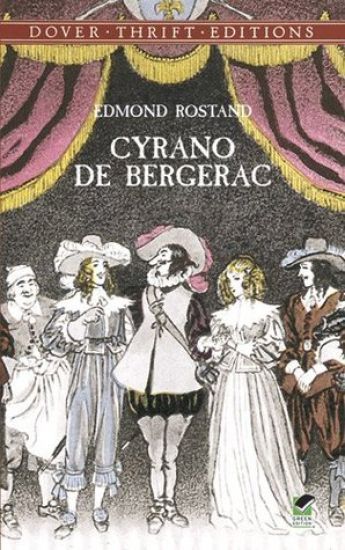
This is Edmond Rostand's immortal play in which chivalry and wit, bravery and love are forever captured in the timeless spirit of romance. Set in Louis XIII's reign, it is the moving and exciting drama of one of the finest swordsmen in France, gallant soldier, brilliant wit, tragic poet-lover with the face of a clown. Rostand's extraordinary lyric powers gave birth to a universal heroCyrano De Bergeracand ensured his own reputation as author of one of the best-loved plays in the literature of the stage. This translation, by the American poet Brian Hooker, is nearly as famous as the original play itself, and is generally considered to be one of the finest English verse translations ever written.
Cyrano de Bergerac struck a responsive chord when first performed in 1897. Its unashamed glorification of panache, the heroic individualism of a bygone age allied to an unimpeachable ethical code, flattered and soothed a country shaken by war and financial scandals, and low in self-esteem. With great empathy, the devout Rostand portrays a proud freethinker who, in a world where little can be cured and much has to be endured, is always equal to the situation, at least linguistically. This delicate balance between humour and pathos is an example of the rare genre of comedie heroique. The demanding role of Cyrano has proved an irresistible challenge to the monsters sacres of stage and screen, recently to the greatest of them all, Gerard Depardieu.
Edmond Rostand's Cyrano de Bergerac, an 'heroic comedy' of love and honour, has enjoyed various revivals in the cinema and on the stage, and undergoes yet another metamorphosis in this brilliant translation by Edwin Morgan. Made for the Communicado Theatre Company's production at the 1992 Edinburgh festival, it was a triumphant success with public and critics alike: it won a Fringe First award and also a special prize from the Hamada foundation, administered by the Scotsman. Morgan's Glasgow-based Scots version, with its verve and energy, reinvigorates rostand's classic with a sharp immediacy of both humour and pathos. There is a virtuousity of language that pleases the ear, but it is never allowed to override the emotional charge this famour story delivers.
Edmond Rostand's beloved classic, Cyrano de Bergerac, is an epic and heroic tale that has fascinated and enchanted generations. Not since 1938 has there been a more readable or stageable prose translation of this classic favourite. With a rich tapestry of gallant soldiers, starving poets, musketeers, marquises and bluestockings, Cyrano de Bergerac moves along with a fast-paced plot and a cast of delightful major and minor characters. At its heart is the chivalrous and intelligent Cyrano, masterful soldier, accomplished poet, ferocious orator, chivalrous lover ... and the possessor of an extraordinary nasal appendage Cast of 5 women and 12 men, plus many minor characters.
The nineteenth-century French classic about the swordsman-poet with the nose too large to be taken seriously, in an acclaimed English translation by Anthony Burgess. This translation of Edmond Rostand's play Cyrano de Bergerac was first performed by the Royal Shakespeare Company at the Barbican Theatre, London, in July 1983, with Derek Jacobi as Cyrano. Burgess's translation was subsequently used as the basis of the sub-titles for the 1990 film version of Cyrano de Bergerac starring Gérard Depardieu.
Cyrano De Bergerac
Edmond Rostand; Bryan (TRN) Hooker
Bantam Doubleday Dell Publishing Group
1990
pokkari
Halvin toimitettuna 13,00 €
This is Edmond Rostand's immortal play in which chivalry and wit, bravery and love are forever captured in the timeless spirit of romance. Set in Louis XIII's reign, it is the moving and exciting drama of one of the finest swordsmen in France, gallant soldier, brilliant wit, tragic poet-lover with the face of a clown. Rostand's extraordinary lyric powers gave birth to a universal hero--Cyrano De Bergerac--and ensured his own reputation as author of one of the best-loved plays in the literature of the stage. This translation, by the American poet Brian Hooker, is nearly as famous as the original play itself, and is generally considered to be one of the finest English verse translations ever written.
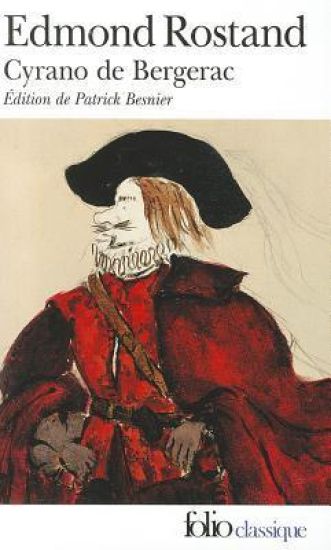
Somptueux divertissement poético-militaire, pièce historique qui rappelait à la fois Les Trois Mousquetaires et le monde des précieux, drame en vers d’une ahurissante virtuosité où parut revivre le meilleur de Ruy Blas, Cyrano conquit sans peine un public lassé du théâtre d’idées, qu’enflamma le patriotisme culturel de l’auteur. «Ainsi, il y a un chef-d’œuvre de plus au monde», écrivait Jules Renard le soir de la générale. Il faut sans doute en rabattre un peu, mais un peu seulement : bien que né dans le sérail de la plus bourgeoise des bourgeoisies, Cyrano demeure la plus grande réussite de théâtre populaire à ce jour connue et le dernier acte, avec son couvent et ses feuilles mortes, est aussi émouvant qu’un finale de Verdi.