Kirjojen hintavertailu – 12 867 157 kirjaa ja 27 kauppaa

Kirjailija

Edmund King

Kirjat ja teokset yhdessä paikassa: 12 kirjaa, julkaisuja vuosilta 2001–2027, suosituimpiin kuuluu England 1175–1425. Vertaile teosten hintoja ja tarkista saatavuus suomalaisista kirjakaupoista.

12 kirjaa

Kirjojen julkaisuvuodet: 2001–2027.

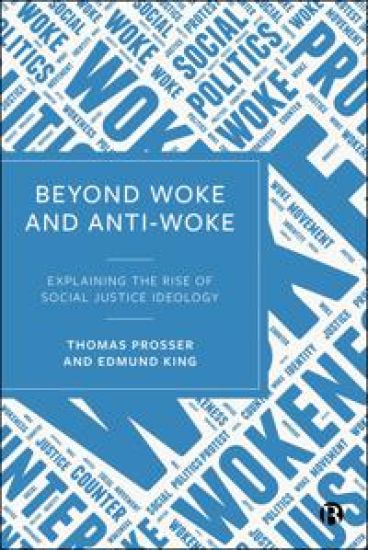
Beyond Woke and Anti-Woke

Beyond Woke and Anti-Woke

Thomas Prosser; Edmund King

Bristol University Press
2027
nidottu
Many rail against ‘woke’ ideology. Others dismiss the backlash as a rebranding of conservative concerns. Taking a third way, this book argues that social justice ideology centres identity and direct action and expands concepts of harm, distinguishing it from liberalism. Drawing on the latest datasets, the book offers a sober, evidence-based account of the ideology’s emergence. As women and minorities have gained visibility and new generations have come of age, progressive ideologies have shifted under pressure. Post-2008 economic crises weakened liberalism, giving social justice ideology mass appeal. Amid polarized debates over ‘woke’ culture, this is a vital resource for scholars and students seeking an objective study of social justice ideology beyond the usual culture-war framing.
England 1175–1425

England 1175–1425

Edmund King

Taylor & Francis
2026
Nidottu
During the years 1175–1425, English society developed in many ways. First published in 1979, England 1175–1425 offers an ideal introduction to the period, presenting as it does a view of a whole society that is derived from a study of economic, social, political, and administrative history. It argues that the later Middle Ages in England saw the creation of a single, integrated society, with a national economy and a national political consciousness, and it shows how this integration came about. The foundations of a unified community are seen in chapters on settlement, on lordship and on the world of ideas, while the development of this community is seen in chapters on political and social themes. The author describes how parliament became the political focus of the nation and stresses the importance of warfare and war taxation in this development. Original features of the book are the integration into a general survey of work on medieval archaeology, and a chapter on ideas which uses a wide range of material to present a picture of the attitudes which governed men’s lives. The Peasants’ Revolt of 1381 demonstrates especially clearly the argument that all classes of society shared similar ideas, and the episode is examined in detail. There is an emphasis throughout on quotations from original sources and these, together with the illustrative matter provide a clear picture of a society in a period of change.
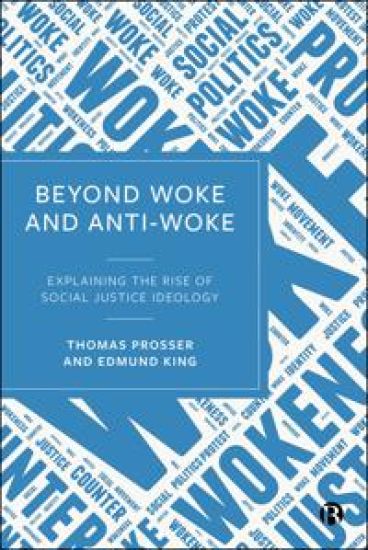
Beyond Woke and Anti-Woke

Beyond Woke and Anti-Woke

Thomas Prosser; Edmund King

Bristol University Press
2026
sidottu
Many rail against ‘woke’ ideology. Others dismiss the backlash as a rebranding of conservative concerns. Taking a third way, this book argues that social justice ideology centres identity and direct action and expands concepts of harm, distinguishing it from liberalism. Drawing on the latest datasets, the book offers a sober, evidence-based account of the ideology’s emergence. As women and minorities have gained visibility and new generations have come of age, progressive ideologies have shifted under pressure. Post-2008 economic crises weakened liberalism, giving social justice ideology mass appeal. Amid polarized debates over ‘woke’ culture, this is a vital resource for scholars and students seeking an objective study of social justice ideology beyond the usual culture-war framing.
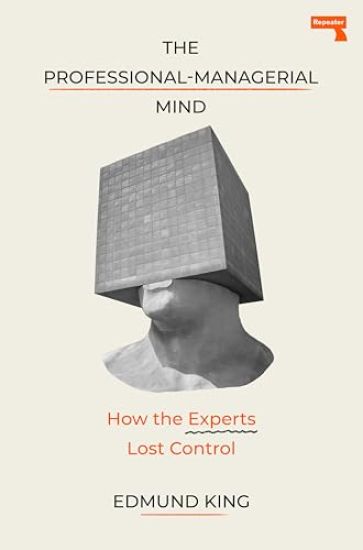
The Professional-Managerial Mind: Expert Sense-Making in a Senseless World
Explores the hyper-politicization of culture, the emergence of "audit culture," and the rise of activist managerialism in British institutions. Artistic and cultural preferences are increasingly viewed as political statements, with choices in books, films, and other media often seen as ideological signals. This reflects a growing entanglement of culture and politics, where artistic narratives are coded with deeper societal meanings. At the same time, arts and academic institutions are grappling with their histories of injustice, leading to the widespread adoption of equality, diversity, and inclusion (EDI) policies. Trigger warnings and harm reduction measures have become common in university curricula and museum practices, reflecting a broader focus on justice, inclusivity, and societal accountability. The legacy of neoliberal "audit culture," with its emphasis on efficiency and "value for money," has profoundly shaped institutional missions. However, austerity measures and precarious employment conditions have radicalized many within these institutions, driving a shift toward a new model of activist managerialism. This approach emphasizes moral accountability and positions institutions as leaders in addressing social issues, often reframing internal dissent as opportunities for reform and progress. Digital platforms, particularly "academic Twitter" and other online communities, play a crucial role in amplifying discourse and fostering global emotional synchronization. These platforms enable the rapid spread of shared perceptions of crisis and moral urgency, further shaping the narratives of academic and cultural institutions. In response, these institutions increasingly position themselves as critical agents of societal healing and reform, striving to address global challenges while navigating both internal and external pressures.

England 1175–1425

England 1175–1425

Edmund King

TAYLOR FRANCIS LTD
2025
sidottu
During the years 1175–1425, English society developed in many ways. First published in 1979, England 1175–1425 offers an ideal introduction to the period, presenting as it does a view of a whole society that is derived from a study of economic, social, political, and administrative history. It argues that the later Middle Ages in England saw the creation of a single, integrated society, with a national economy and a national political consciousness, and it shows how this integration came about. The foundations of a unified community are seen in chapters on settlement, on lordship and on the world of ideas, while the development of this community is seen in chapters on political and social themes. The author describes how parliament became the political focus of the nation and stresses the importance of warfare and war taxation in this development. Original features of the book are the integration into a general survey of work on medieval archaeology, and a chapter on ideas which uses a wide range of material to present a picture of the attitudes which governed men’s lives. The Peasants’ Revolt of 1381 demonstrates especially clearly the argument that all classes of society shared similar ideas, and the episode is examined in detail. There is an emphasis throughout on quotations from original sources and these, together with the illustrative matter provide a clear picture of a society in a period of change.
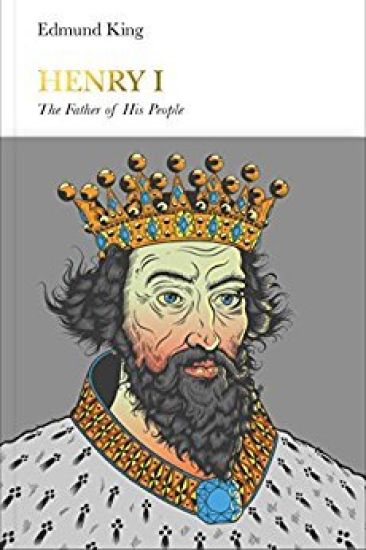
Henry I (Penguin Monarchs)

Henry I (Penguin Monarchs)

Edmund King

PENGUIN BOOKS LTD
2022
nidottu

Halvin toimitettuna 15,90 €

'To be a medieval king was a job of work ... This was a man who knew how to run a complex organization. He was England's CEO'The youngest of William the Conqueror's sons, Henry I came to unchallenged power only after two of his brothers died in strange hunting accidents and he had imprisoned the other. He was destined to become one of the greatest of all medieval monarchs, both through his own ruthlessness, and through his dynastic legacy. Edmund King's engrossing portrait shows a strikingly charismatic, intelligent and fortunate man, whose rule was looked back on as the real post-conquest founding of England as a new realm: wealthy, stable, bureaucratised and self-confident.
Henry I (Penguin Monarchs)

Henry I (Penguin Monarchs)

Edmund King

Allen Lane
2018
sidottu
The youngest of William the Conqueror's sons, Henry I (1100-35) was never meant to be king, but he was destined to become one of the greatest of all medieval monarchs, both through his own ruthlessness and intelligence and through the dynastic legacy of his daughter Matilda, who began the Plantagenet line that would rule England until 1485. A self-consciously diligent and thoughtful king, his rule was looked back on as the real post-invasion re-founding of England as a new realm, integrated into the continent, wealthy and stable. Edmund King's wonderful portrait of Henry shows him as a strikingly charismatic and thoughtful man. His life was dogged by a single great disaster, the death of his teenage heir William in the White Ship disaster. Despite astonishing numbers of illegitimate sons, Henry was now left with only a daughter. This fact would shape the rest of the 12th century and beyond.
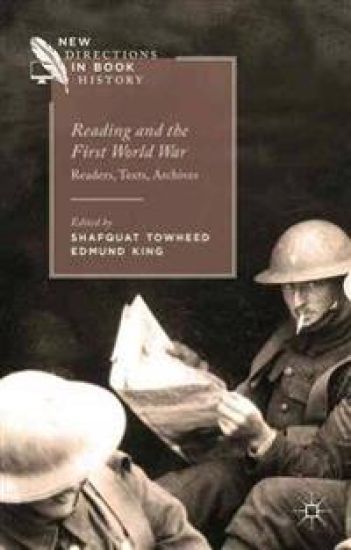
Reading and the First World War

Reading and the First World War

Shafquat Towheed; Edmund King

Palgrave Macmillan
2015
sidottu
Ranging from soldiers reading newspapers at the front to authors' responses to the war, this book sheds new light on the reading habits and preferences of men and women, combatants and civilians, during the First World War. This is the first study of the conflict from the perspective of readers.
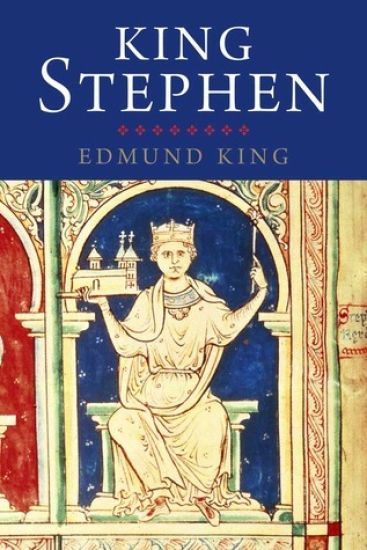
King Stephen

King Stephen

Edmund King

Yale University Press
2012
pokkari
From Yale's English Monarchs series, the most authoritative picture yet of King Stephen"King has written a masterpiece that reveals how a medieval political community can both consume and then reconstitute itself and offers readers a king emblematic of his truncated, troubled age."—Choice King Stephen's reign (1135–1154), with its “nineteen long winters” of civil war, made his name synonymous with failed leadership. After years of work on the sources, Edmund King shows with rare clarity the strengths and weaknesses of the monarch. Keeping Stephen at the forefront of his account, the author also chronicles the activities of key family members and associates whose loyal support sustained Stephen’s kingship. In 1135 the popular Stephen was elected king against the claims of the empress Matilda and her sons. But by 1153, Stephen had lost control over Normandy and other important regions, England had lost prestige, and the weakened king was forced to cede his family’s right to succession. A rich narrative covering the drama of a tumultuous reign, this book focuses well-deserved attention on a king who lost control of his destiny.
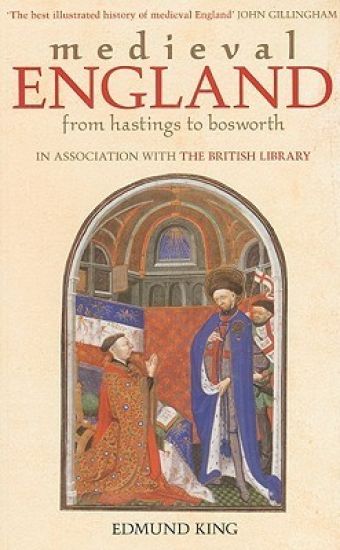
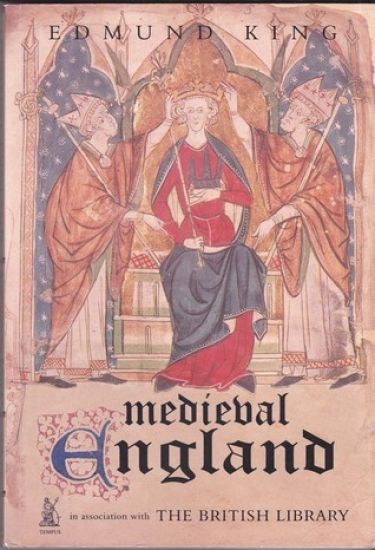
Medieval England

Medieval England

Edmund King

The History Press Ltd
2009
nidottu
Medieval England presents a broad panorama of the political and cultural development of English society from the Norman Conquest to the end of the Wars of the Roses. It is a story of change, progress, setback and consolidation, with England emerging as a wealthy and stable country, many of whose essential features were to remain unchanged until the industrial revolution. Edmund King traces his chronicle the lives of successive monarchs, the inescapable thread of that epoch. Yet the great nobles, knights and merchants meeting in parliament provided constraints which bound even the most powerful king, and a major theme of this book is the gradual emergence of a single political community of shared ideas embracing all ranks of society. Within this framework the author examines many other facets of medieval England, including everyday life, warfare and chivalry, religion and learning, agriculture and economic developments, the machinery of government, the administration of justice, art and architecture.
Medieval England

Medieval England

Edmund King

NPI Media Group
2005
nidottu
Medieval England presents in a broad panorama the political and cultural development of English society from the Norman Conquest to the end of the Wars of the Roses. It is a story of change, progress, setback and consolidation, with England emerging as a wealthy and stable country, many of whose essential features were to remain unchanged until the Industrial Revolution. Edmund King traces his chronicle through the lives of successive monarchs, the inescapable central thread of that epoch. The momentous events of the times are also recreated, from the compiling of the Domesday Book, through the wars with the Scots, the Welsh and the French, to the Peasants' Revolt and the disastrous Black Death. Medieval England makes full use of the wealth of our heritage from those times, castles, cathedrals, illuminated manuscripts and the flowering of the visual arts. The illustrations provide a pictorial anthology of the great and enduring achievements of the age, art and architecture alongside documents, coins and everyday artefacts.
Medieval England

Medieval England

Edmund King

NPI Media Group
2001
sidottu
A beautifully illustrated history of England. The general reader interested in medieval times will find this book instantly accessible. Published in association with The British Library.