Kirjojen hintavertailu – 12 903 725 kirjaa ja 27 kauppaa

Kirjailija

Edmund W. Gordon

Kirjat ja teokset yhdessä paikassa: 12 kirjaa, julkaisuja vuosilta 1981–2025, suosituimpiin kuuluu Pedagogical Imagination. Vertaile teosten hintoja ja tarkista saatavuus suomalaisista kirjakaupoista.

12 kirjaa

Kirjojen julkaisuvuodet: 1981–2025.

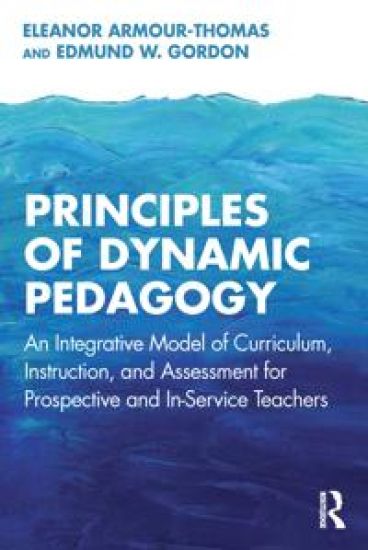
Principles of Dynamic Pedagogy

Principles of Dynamic Pedagogy

Eleanor Armour-Thomas; Edmund W. Gordon

TAYLOR FRANCIS LTD
2025
sidottu
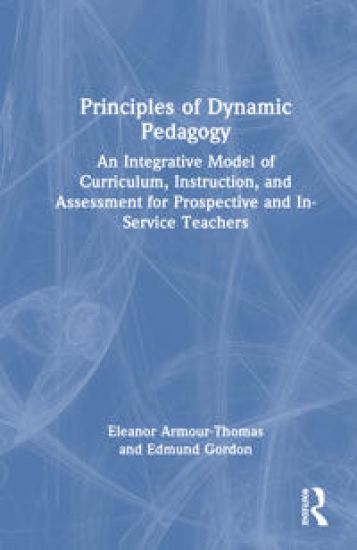
Principles of Dynamic Pedagogy reinvigorates teachers’ potential to cultivate meaningful growth in their students by leveraging a more reciprocal, interdependent relationship between curriculum, instruction, assessment, and learning. The latest findings from cognitive science, educational psychology and measurement, clinical practice, and socio-cultural studies offer today’s educators a unique opportunity to accommodate the strengths and challenges of diverse learners. How does this research synthesize into an iterative pedagogical process that fosters engaged, responsive students and facilitates their achievement of learning goals and objectives? Principles of Dynamic Pedagogy introduces students, faculty, and scholars of teacher education to the metacognitive competencies needed to ensure that students acquire, revisit, and explicitly comprehend their emerging knowledge and skills throughout the lessons of a curriculum unit. Driven by the conceptual and empirical foundations of the Dynamic Pedagogy model, this book will support current and future educators in consistently guiding their students to recognize, apply, and improve feedback on using metacognitive and cognitive processes for learning. Regardless of domain, teachers will be better prepared to manage their classrooms with a coherent approach to decision-making, adjustments to practice, monitoring and feedback, assessment design, and reflection.
Principles of Dynamic Pedagogy

Principles of Dynamic Pedagogy

Eleanor Armour-Thomas; Edmund W. Gordon

TAYLOR FRANCIS LTD
2025
nidottu
Principles of Dynamic Pedagogy reinvigorates teachers’ potential to cultivate meaningful growth in their students by leveraging a more reciprocal, interdependent relationship between curriculum, instruction, assessment, and learning. The latest findings from cognitive science, educational psychology and measurement, clinical practice, and socio-cultural studies offer today’s educators a unique opportunity to accommodate the strengths and challenges of diverse learners. How does this research synthesize into an iterative pedagogical process that fosters engaged, responsive students and facilitates their achievement of learning goals and objectives? Principles of Dynamic Pedagogy introduces students, faculty, and scholars of teacher education to the metacognitive competencies needed to ensure that students acquire, revisit, and explicitly comprehend their emerging knowledge and skills throughout the lessons of a curriculum unit. Driven by the conceptual and empirical foundations of the Dynamic Pedagogy model, this book will support current and future educators in consistently guiding their students to recognize, apply, and improve feedback on using metacognitive and cognitive processes for learning. Regardless of domain, teachers will be better prepared to manage their classrooms with a coherent approach to decision-making, adjustments to practice, monitoring and feedback, assessment design, and reflection.
STEM Education in Underserved Schools

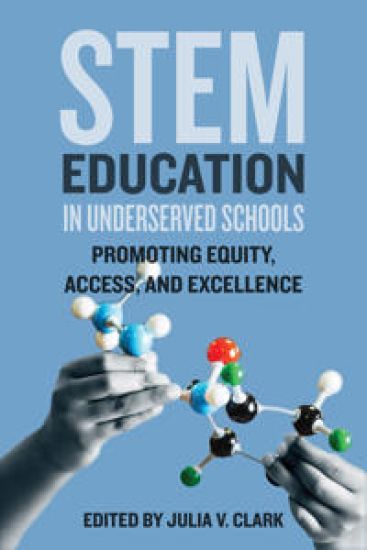
STEM Education in Underserved Schools

Edmund W. Gordon

Johns Hopkins University Press
2024
sidottu
Offers a model for increasing equity in STEM education at the K–12 level in the United States. In STEM Education in Underserved Schools, editor Julia V. Clark addresses an urgent national problem: the need to provide all students with a quality STEM education. Clark brings together a prestigious group of scholars to uncover the factors that impede equity and access in STEM education teaching and learning and provides research-based strategies to address these inequities. This contributed volume demonstrates that students of color and those from lower socioeconomic communities have less access to qualified science and mathematics teachers, less access to strong STEM curriculum, less access to resources, and fewer classroom opportunities than their peers at other schools. Identifying the challenges and best practices related to producing more equitable and inclusive routes to access STEM education and professions, contributors explain how to positively impact the trajectory of individuals from underrepresented groups in K–12 and pre-college programs and lay out a bold reenvisioning of STEM education. These essays aim to build knowledge and theory for how schools can promote coherent guidance for culturally responsive instruction by exploring the policies and practices of four nations—Finland, Singapore, Korea, and Australia—that have made noteworthy strides toward more equitable achievement in science and mathematics. Clark offers a powerful framework in STEM to capture the benefits of international collaborations that would embed American scientists and students in vibrant, globally collaborative networks. Through a deep analysis of successful programs elsewhere in the world and a uniquely international framework, Clark and these contributors present an innovative road map to equalize access to STEM education in the United States.
The Testing and Learning Revolution

The Testing and Learning Revolution

Kavitha Rajagopalan; Edmund W. Gordon

Palgrave Macmillan
2015
nidottu
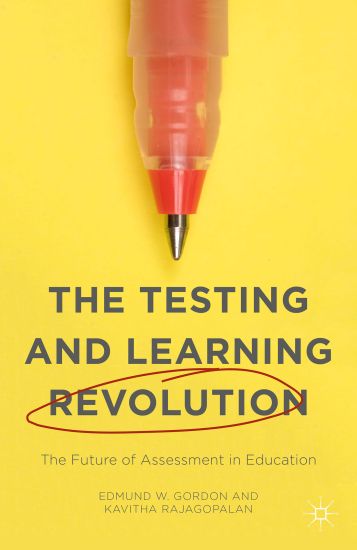
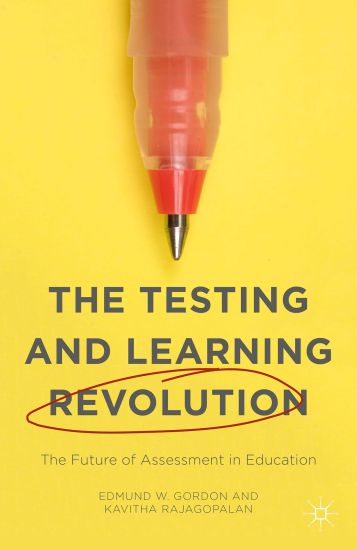
Gordon shows how we can use assessment to support teaching and develop students' competencies. Between 2011 and 2013, Gordon chaired an interdisciplinary commission of scholars and thinkers, who connected transformative research and ideas on learning, teaching, measurement, the nature of tests, intelligence, capability, technology, and policy.
The Testing and Learning Revolution

The Testing and Learning Revolution

Kavitha Rajagopalan; Edmund W. Gordon

Palgrave Macmillan
2015
sidottu
Gordon shows how we can use assessment to support teaching and develop students' competencies. Between 2011 and 2013, Gordon chaired an interdisciplinary commission of scholars and thinkers, who connected transformative research and ideas on learning, teaching, measurement, the nature of tests, intelligence, capability, technology, and policy.
Pedagogical Imagination

Pedagogical Imagination

Edmund W. Gordon

Third World Press,U.S.
2014
nidottu
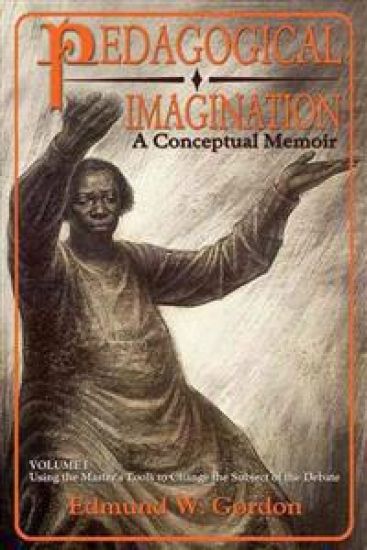
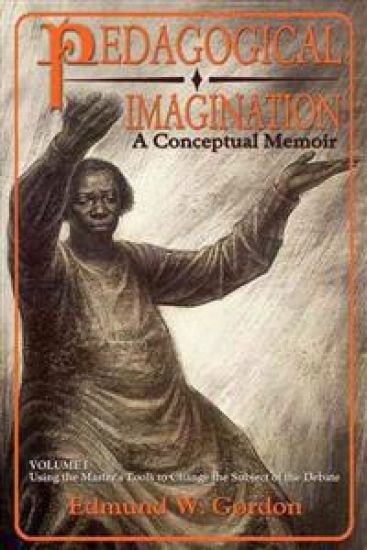
With essays concerned with the struggle to achieve equal educational opportunity through desegregation and the struggle for equality of educational achievement, Gordon uses logical analysis to exploit the potential of the dominant system's theories (""the master's tools"") to subvert that system's efforts at intellectual marginalization and oppression of low-income people of color. Edmund W. Gordon is the Richard March Hoe Professor of Psychology and Education Emeritus and Director, Emeritus of the Institute of Urban and Minority Education, at Teachers College, Columbia University. He is also the John M. Musser Professor of Psychology Emeritus at Yale University and has been the Senior Scholar-in-Residence at the College Board. The Educational Testing Service created the Edmund W. Gordon Chair in Evaluation, Research and Policy in 2004. The following year, Columbia University named its Harlem facility the Edmund W. Gordon Campus of Teachers College. Locally he and his wife, Dr. Susan G. Gordon, are the Co-Founders of the CEJJES Institute in Pomona.
Pedagogical Imagination

Pedagogical Imagination

Edmund W. Gordon

Third World Press,U.S.
2014
sidottu
With essays concerned with the struggle to achieve equal educational opportunity through desegregation and the struggle for equality of educational achievement, Gordon uses logical analysis to exploit the potential of the dominant system's theories (""the master's tools"") to subvert that system's efforts at intellectual marginalization and oppression of low-income people of color. Edmund W. Gordon is the Richard March Hoe Professor of Psychology and Education Emeritus and Director, Emeritus of the Institute of Urban and Minority Education, at Teachers College, Columbia University. He is also the John M. Musser Professor of Psychology Emeritus at Yale University and has been the Senior Scholar-in-Residence at the College Board. The Educational Testing Service created the Edmund W. Gordon Chair in Evaluation, Research and Policy in 2004. The following year, Columbia University named its Harlem facility the Edmund W. Gordon Campus of Teachers College. Locally he and his wife, Dr. Susan G. Gordon, are the Co-Founders of the CEJJES Institute in Pomona.
Pedagogical Imagination

Pedagogical Imagination

Edmund W. Gordon

Third World Press,U.S.
2014
sidottu
With essays concerned with the struggle to achieve equal educational opportunity through desegregation and the struggle for equality of educational achievement, Gordon uses logical analysis to exploit the potential of the dominant system's theories (the master's tools) to subvert that system's efforts at intellectual marginalization and oppression of low-income people of color. Edmund W. Gordon is the Richard March Hoe Professor of Psychology and Education Emeritus and Director, Emeritus of the Institute of Urban and Minority Education, at Teachers College, Columbia University. He is also the John M. Musser Professor of Psychology Emeritus at Yale University and has been the Senior Scholar-in-Residence at the College Board. The Educational Testing Service created the Edmund W. Gordon Chair in Evaluation, Research and Policy in 2004. The following year, Columbia University named its Harlem facility the Edmund W. Gordon Campus of Teachers College. Locally he and his wife, Dr. Susan G. Gordon, are the Co-Founders of the CEJJES Institute in Pomona.
Pedagogical Imagination

Pedagogical Imagination

Edmund W. Gordon

Third World Press,U.S.
2014
nidottu
With essays concerned with the struggle to achieve equal educational opportunity through desegregation and the struggle for equality of educational achievement, Gordon uses logical analysis to exploit the potential of the dominant system's theories (the master's tools) to subvert that system's efforts at intellectual marginalization and oppression of low-income people of color. Edmund W. Gordon is the Richard March Hoe Professor of Psychology and Education Emeritus and Director, Emeritus of the Institute of Urban and Minority Education, at Teachers College, Columbia University. He is also the John M. Musser Professor of Psychology Emeritus at Yale University and has been the Senior Scholar-in-Residence at the College Board. The Educational Testing Service created the Edmund W. Gordon Chair in Evaluation, Research and Policy in 2004. The following year, Columbia University named its Harlem facility the Edmund W. Gordon Campus of Teachers College. Locally he and his wife, Dr. Susan G. Gordon, are the Co-Founders of the CEJJES Institute in Pomona.
Affirmative Development

Affirmative Development

Edmund W. Gordon; Beatrice L. Bridglall

Rowman Littlefield Publishers
2006
sidottu
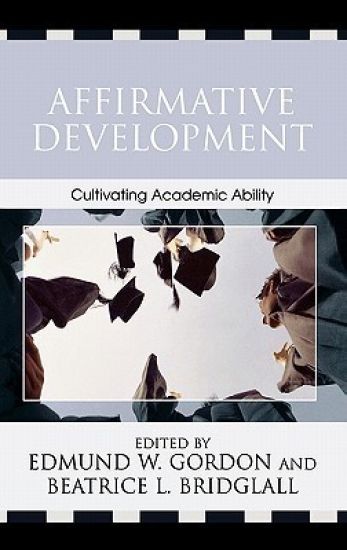
According to Gordon and Bridglall, the ability to learn is more of a developed human capacity than a fixed aptitude with which one is born. They argue that the emergence of academic ability is associated with exposure to specialized cultures that privilege the attitudes, knowledge, and skills that schools reward. Children who are born to and raised in these cultures tend to do well in school, while those who are not exposed to such cultures tend seldom rise to high levels of academic achievement. Through a collection of interesting essays, Affirmative Development: Cultivating Academic Ability attempts to address how we can deliberately develop academic ability in those children who are not raised under conditions that predispose them to develop high levels of academic ability.
Affirmative Development

Affirmative Development

Edmund W. Gordon; Beatrice L. Bridglall

Rowman Littlefield Publishers
2006
nidottu
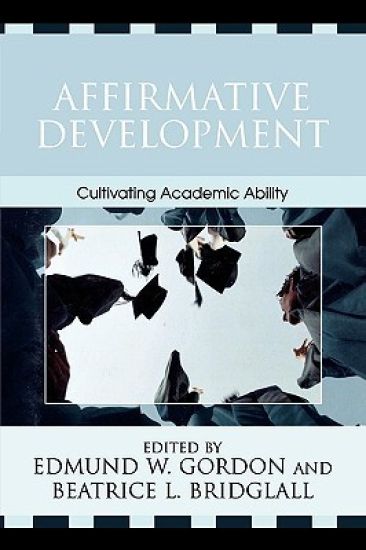
According to Gordon and Bridglall, the ability to learn is more of a developed human capacity than a fixed aptitude with which one is born. They argue that the emergence of academic ability is associated with exposure to specialized cultures that privilege the attitudes, knowledge, and skills that schools reward. Children who are born to and raised in these cultures tend to do well in school, while those who are not exposed to such cultures tend seldom rise to high levels of academic achievement. Through a collection of interesting essays, Affirmative Development: Cultivating Academic Ability attempts to address how we can deliberately develop academic ability in those children who are not raised under conditions that predispose them to develop high levels of academic ability.