Kirjojen hintavertailu – 12 859 829 kirjaa ja 27 kauppaa

Kirjailija

Edmund Wilson

Kirjat ja teokset yhdessä paikassa: 51 kirjaa, julkaisuja vuosilta 1961–2026, suosituimpiin kuuluu Wilson's Night Thoughts. Vertaile teosten hintoja ja tarkista saatavuus suomalaisista kirjakaupoista.

51 kirjaa

Kirjojen julkaisuvuodet: 1961–2026.

The Complete Works of Kate Chopin

The Complete Works of Kate Chopin

Kate Chopin; Edmund Wilson

Louisiana State University Press
2006
nidottu
In 1969, Per Seyersted gave the world the first collected works of Kate Chopin. Seyersted's presentation of Chopin's writings and biographical and bibliographical information led to the rediscovery and celebration of this turn-of-the-century author. Newsweek hailed the two-volume opus, ""In story after story and in all her novels, Kate Chopin's oracular feminism and prophetic psychology almost outweigh her estimable literary talents. Her revival is both interesting and timely."" Now for the first time, Seyersted's Complete Works is available in a single-volume paperback. It is the first and only paperback edition of Chopin's total oeuvre. Containing twenty poems, ninety-six stories, two novels, and thirteen essays, in short, everything Chopin wrote except several additional poems and three unfinished children's stories, as well as Seyersted's original revelatory introduction and Edmund Wilson's foreword, this anthology is both a historical and a literary achievement. It is ideal for anyone who wishes to explore the pleasures of reading this highly acclaimed author.
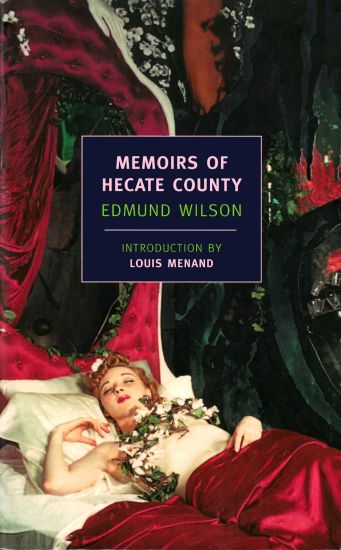
Memoirs of Hecate County

Memoirs of Hecate County

Edmund Wilson

The New York Review of Books, Inc
2004
pokkari
Hecate is the Greek goddess of sorcery, and Edmund Wilson's Hecate County is the bewitched center of the American Dream, a sleepy bedroom community where drinks flow endlessly and sexual fantasies fill the air. Memoirs of Hecate County, Wilson's favorite among his many books, is a set of interlinked stories combining the supernatural and the satirical, astute social observation and unusual personal detail. But the heart of the book, "The Princess with the Golden Hair," is a starkly realistic novella about New York City, its dance halls and speakeasies and slums. So sexually frank that for years Wilson's book was suppressed, this story is one of the great lost works of twentieth-century American literature: an astringent, comic, ultimately devastating exploration of lust and love, how they do and do not overlap.
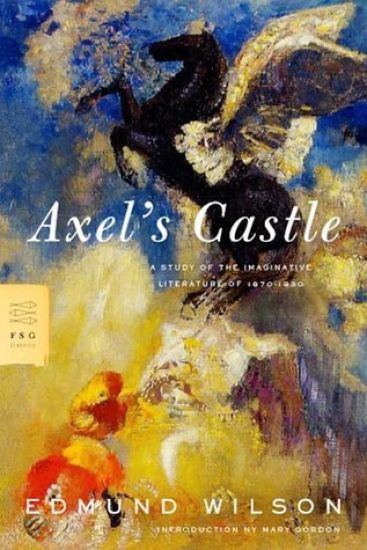
Axel's Castle: A Study of the Imaginative Literature of 1870-1930

Axel's Castle: A Study of the Imaginative Literature of 1870-1930

Edmund Wilson

Farrar, Straus and Giroux
2004
nidottu

Halvin toimitettuna 22,90 €

Published in 1931, Axel's Castle was Edmund Wilson's first book of literary criticism--a landmark book that explores the evolution of the French Symbolist movement and considers its influence on six major twentieth-century writers: William Butler Yeats, Paul Val ry, T. S. Eliot, Marcel Proust, James Joyce, and Gertrude Stein. As Alfred Kazin later wrote, "Wilson was an original, an extraordinary literary artist . . . He could turn any literary subject back into the personal drama it had been for the writer."
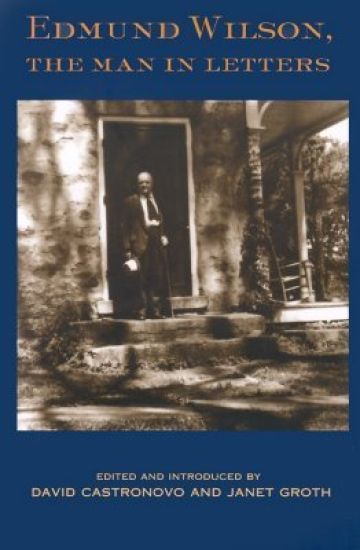
Edmund Wilson, the Man in Letters

Edmund Wilson, the Man in Letters

Edmund Wilson

Ohio University Press
2002
sidottu
Among the major writers of the Hemingway and Fitzgerald generation, Edmund Wilson defied categorization. He wrote essays, stories and novels, cultural criticism, and contemporary chronicles, as well as journals and thousands of letters about the literary life and his own private world. Here for the first time in print is Wilson's personal correspondence to his parents, lovers and wives, children, literary comrades, and friends from the different corners of his life. Various writers and thinkers—including Alfred Kazin, Vladimir Nabokov, and Isaiah Berlin—take their places alongside upstate New York neighbors in this gallery of letters that extends from the teens to the early 1970s. These letters complete the picture of Wilson the man, offering unguarded moments and flinty opinions that enrich our understanding of a complex and troubled personality. Four times married and many times in love; traveling through Depression America, the USSR, postwar Europe, the Middle East, and Haiti; and writing on a Balzacian scale, Wilson as a correspondent reveals the exhilaration and chaos of being himself. Arranged by correspondent and moving through the phases of his career, Edmund Wilson, the Man in Letters constitutes an exemplary autobiography cum cultural history. The writing itself is vintage Wilson—a blending of classical and conversational styles that stands as part of the modern American canon and is filled with the emotions and tastes of a master.
The Cold War and the Income Tax: A Protest

The Cold War and the Income Tax: A Protest

Edmund Wilson

Farrar, Strauss Giroux-3pl
2001
nidottu
"The truth is that the people of the United States are at the present time dominated and driven by two kinds of officially propagated fear: fear of the Soviet Union and fear of the income tax. These two terrors have been adjusted so as to complement one another and thus to keep the citizen of our free society under the strain of a double pressure from which he finds himself unable to escape -- like the man in the old Western story, who, chased into a narrow ravine by a buffalo, is confronted with a grizzly bear. If we fail to accept the tax, the Russian buffalo will butt and trample us, and if we try to defy the tax, the federal bear will crush us.""The 60,000 officials who are appointed to check on us taxpayers are checked on, themselves, it seems, by another group of agents set to watch them. And supplementing these officials -- since private citizens are paid by the Internal Revenue Service to report on other people's delinquencies, and their names of course are never revealed -- there is a whole host of amateur investigators... Does this kind of spying and delation differ much in its incitement to treachery from that which is encouraged in the Soviet Union?"
An Introduction to Particle Accelerators

An Introduction to Particle Accelerators

Edmund Wilson

Clarendon Press
2001
nidottu
This is an open access title. It is made available under a Creative Commons Attribution-Non Commercial-No Derivatives 4.0 International licence. It is available to read and download as a PDF version on the Oxford Academic platform. There are more than ten thousand particle accelerators in the world from the linear accelerators used for cancer therapy in modern hospitals to the giant 'atom-smashers' at international particle physics laboratories used to unlock the secrets of creation. Many scientists and engineers spend their lives designing, constructing, and operating these machines - yet few universities include the subject of particle accelerators in their curricula. The few courses that do exist and the summer schools run by the big accelerator laboratories lack a simple introduction which covers the essentials of the subject for the many who need to learn how these machines work. This book fills that gap and takes the reader through each of the aspects of a modern accelerator giving enough information to unlock the door to the subject but does not overload the understanding with mathematics. Anyone with a general interest in modern technology based on a fascinating variety of physics and engineering will find much of interest in this book.
An Introduction to Particle Accelerators

An Introduction to Particle Accelerators

Edmund Wilson

Oxford University Press
2001
sidottu
This is an open access title. It is made available under a Creative Commons Attribution-Non Commercial-No Derivatives 4.0 International licence. It is available to read and download as a PDF version on the Oxford Academic platform. There are more than ten thousand particle accelerators in the world from the linear accelerators used for cancer therapy in modern hospitals to the giant 'atom-smashers' at international particle physics laboratories used to unlock the secrets of creation. Many scientists and engineers spend their lives designing, constructing, and operating these machines - yet few universities include the subject of particle accelerators in their curricula. The few courses that do exist and the summer schools run by the big accelerator laboratories lack a simple introduction which covers the essentials of the subject for the many who need to learn how these machines work. This book fills that gap and takes the reader through each of the aspects of a modern accelerator giving enough information to unlock the door to the subject but does not overload the understanding with mathematics. Anyone with a general interest in modern technology based on a fascinating variety of physics and engineering will find much of interest in this book.
I Thought of Daisy

I Thought of Daisy

Edmund Wilson

University of Iowa Press
2001
nidottu
Originally published in 1929, this is the first of three novels by Edmund Wilson, written whilst balancing his ambitions as a novelist against a career in literary criticism. The two tie together here in a depiction of a young man struggling to find his American ideal in a young chorus girl.
A Piece of My Mind: Reflections at Sixty

A Piece of My Mind: Reflections at Sixty

Edmund Wilson

Farrar, Straus and Giroux
1999
nidottu
From the author of To the Finland Station comes a deeply personal and incisive memoir, A Piece of My Mind. Edmund Wilson, often considered to be the greatest American literary critic of the twentieth century, reflects back on life in his sixth decade with this insightful intellectual autobiography that covers topics ranging from Religion, War, the USA, Europe, Russia, Jews, Education, Science, Sex, and much more, all examined with his characteristic wit and intelligence.
Five Plays: Cyprian's Prayer, the Crime in the Whistler Room, This Room and This Gin and These Sandwiches, Beppo and Beth, the Little Blue Light
From the author of To the Finland Station and The Triple Thinkers comes a collection of five extraordinary plays. Collected together in one volume, these selected plays by Edmund Wilson includes such works as Cyprian's Prayer, The Crime in the Whispering Room, This Room and This Gin and These Sandwiches, Beppo and Beth, and The Little Blue Light.
The Little Blue Light: A Play in Three Acts

The Little Blue Light: A Play in Three Acts

Edmund Wilson

Farrar, Straus and Giroux
1999
nidottu
Little Blue Light: A Play in Three Acts from the leading literary critic of his generation, Edmund Wilson The characters in Little Blue Light include an old-fashioned newspaperman who has become editor of a literary magazine and is making his last stand for liberalism; his brilliant, egoistic wife, who is at once intensely ambitious and dissatisfied with everything she gets; a neurotic returned expatriate, who has found out how to exploit his neurosis by writing; the editor's twenty-six year-old secretary, who represents everything most admirable in the prep school and college tradition till he is subjected to the pressure of the contemporary world; and a mysterious moralizing gardener of indeterminate nationality. This horrifying satirical play is a study of American types and a comment on social tendencies. It has something of the author's Memoirs of Hecate County, something of the late George Orwell's 1984, and something of Charles Addams's New Yorker cartoons
The Higher Jazz

The Higher Jazz

Edmund Wilson

University of Iowa Press
1998
nidottu
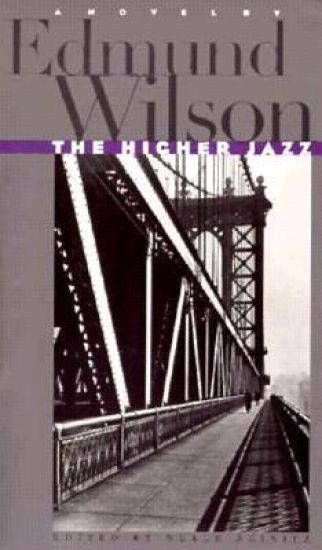
Edmund Wilson, the preeminent American literary critic of the first half of the twentieth century, often fretted that he was not taken seriously as a creative writer. In the course of a career that produced Axed Castle, To the Finland Station, and Patriotic Gore, among many other works of criticism and history, he published poems, plays, and two novels. Though he completed in draft this short novel, now entitled The Higher Jazz, it was never published. In mid-career, in 1939, Wilson planned a novel in three parts that would carry a man through fifteen years as a stockbroker, a Russian diplomat, and a writer. When he started on the first section of this book, set in the 1920s, it carried him away from his original project. His hero was instead transformed into a German American businessman who, aspiring to become a composer, seeks the spirit of America in music that combined the contemporary popular and the modern classical, in what Wilson called elsewhere the higher jazz. This portrayal of the 1920s provides a sense of the illusive glories of the Boom Era. It is filled with characters based on people Wilson knew well or had observed, such as Dorothy Parker, Robert Benchley, and the Fitzgerald circle, and composers as varied as Cole Porter and Charles Ives. Written at a turning point in his career, before he left contemporary literature and radical politics to focus on history, travel, and his own past, this novel reveals Wilson's second thoughts about the 1920s and his recognition of the aspirations and dilemmas of the artist in American society. Neale Reinitz has edited The Higher Jazz for the general reader. His introduction sets the novel in the historical context of Wilson'slife and writings, and his annotations explain the topical references and, more important, illustrate Wilson's method of composition.

From the Uncollected Edmund Wilson

From the Uncollected Edmund Wilson

Edmund Wilson

Ohio University Press
1995
sidottu
Many of Wilson's writings have been anthologized. But there is another body of work — over fifty fine essays on aspects of contemporary literature and ideas — that have been scattered in a variety of magazines, including The New Yorker, The New Republic, Vanity Fair, and The Nation. The editors, who recognize Wilson (1895-1972) as one of America's greatest men of letters of the twentieth century, also view his writing as a powerful antidote to late twentieth-century trends and fads and have collected his pieces here in the conviction that Wilson's writing is a permanently important model. Now a new generation of readers — as well as his loyal followers — will have access to this rich literary heritage in a single volume. The collection is organized chronologically and leads the reader through the journeyman writing at Hill School and Princeton, the essays on literary modernism and contemporary culture written in the 1920s, the socially-focused critiques of the 1930s, and the diverse assortment of book reviews of the late period. Across this full range of moods and literary styles. Wilson is a powerful spokesman for writers and a guardian of imagination and decency for the informed citizen.