Kirjailija
Eduardo Galeano
Kirjat ja teokset yhdessä paikassa: 38 kirjaa, julkaisuja vuosilta 1993–2023, suosituimpiin kuuluu Gölgede ve Güneste Futbol. Vertaile teosten hintoja ja tarkista saatavuus suomalaisista kirjakaupoista.
38 kirjaa
Kirjojen julkaisuvuodet: 1993–2023.
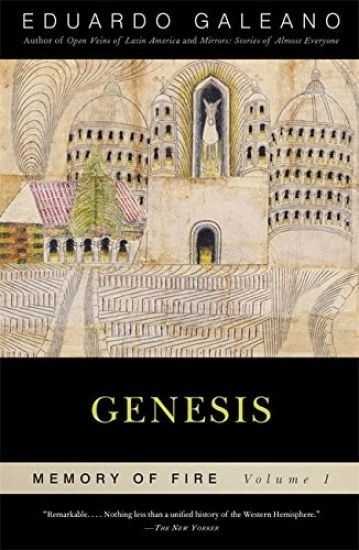
Genesis , the first volume in Eduardo Galeano's Memory of Fire trilogy, is both a meditation on the clashes between the Old World and the New and, in the author's words, an attempt to rescue the kidnapped memory of all America." It is a fierce, impassioned, and kaleidoscopic historical experience that takes us from the creation myths of the Makiritare Indians of the Yucatan to Columbus's first, joyous moments in the New World to the English capture of New York.
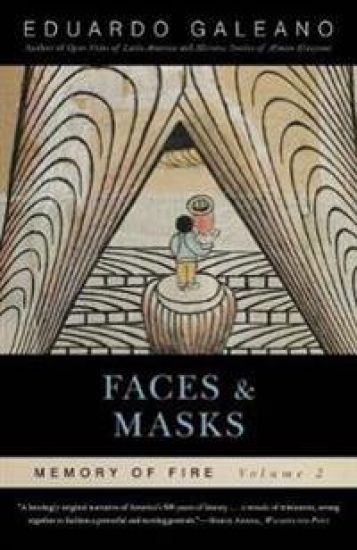
The second volume of Eduardo Galeano's Memory of Fire trilogy, Faces and Masks is an astonishing Latin American-eye view of the New World in the making. Here is the tangled, cataclysmic history of our hemisphere from the 1700s up to the dawn of our present century, told through characters as resonant and compelling as Simon Bolívar, Toussaint L'Ouverture, and Billy the Kid. With its brilliant and imaginative blend of journalism, scholarship, and political passion, Faces and Masks is a panoramic interpretation of the Americas no work of history has previously imagined.
Venas Abiertas de America Latina
Eduardo Galeano
Siglo XXI Ediciones
2009
pokkari
Halvin toimitettuna 34,50 €
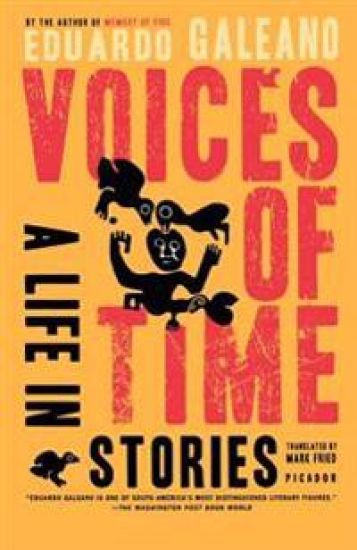
A striking mosaic of memories, observations, and legends that together reveal the author's own story and a grand, compassionate vision of life itself In this kaleidoscope of reflections, renowned South American author Eduardo Galeano ranges widely, from childhood to love, music, plants, fear, indignity, and indignation. In the signal style of his bestselling and much-admired Memory of Fire trilogy--brief fragments that build steadily into an organic whole--Galeano offers a rich, wry history of his life and times that is both calmly philosophical and fiercely political. Beginning with blue algae, the earliest of life forms, these 333 vignettes alight on the Galeano family's immigration to Uruguay in the early twentieth century, the fate of love letters intercepted by a military dictatorship, abuses by the rich and powerful, the latest military outrages, and the author's own encounters with all manner of living matter, including generals, bums, dissidents, soccer stars, ducks, and trees. Out of these meditations emerges neither anger nor bitterness, but a celebration of a blessed life in a harsh world. Poetic and passionate, scathing and lyrical, delivered with Galeano's inimitable mix of gentle comedy and fierce moral judgment, Voices of Time is a deeply personal statement from a great and beloved writer.
" Cuando el Mundial comenz , en la puerta de mi casa colgu un cartel que dec a: Cerrado por futbol. Cuando lo descolgu , un mes despu s, yo ya hab a jugado sesenta y cuatro partidos, cerveza en mano, sin moverme de mi sill n preferido. Esa proeza me dejo frito, los m sculos dolidos, la garganta rota; pero ya estoy sintiendo nostalgia." " Desde chico quise ser jugador de futbol. Y fui el mejor de los mejores, pero s lo en sue os, mientras dorm a. Al despertar, no bien caminaba un par de pasos y pateaba una piedrita en la vereda, ya confirmaba que el futbol no era lo m o. Estaba visto: yo no ten a m s remedio que probar alg n otro oficio. Intente varios, sin suerte, hasta que por fin empec a escribir." Este libro re ne todos los textos que Galeano escribi sobre futbol, la mayor a dispersos en su obra publicada, pero tambi n varios in ditos y verdaderos hallazgos, como la cr nica en la que, con s lo 23 a os, llama " traidor" al Che Guevara en persona por haber adquirido en Cuba la pasi n por el b isbol. Las p ginas proponen un recorrido por la historia del futbol, desde la poca en que un jugador recib a una vaca por cada gol hasta el tiempo de los jugadores multimillonarios agobiados por el xito, pasando por el relato de los diez futbolistas que se pintaron la cara de negro en solidaridad con su compa ero discriminado por la hinchada; tambi n hablan de Maradona, " el hombre que no pod a vivir sin la fama que no lo dejaba vivir", y de Zidane, que en su ltimo partido embisti a un rival y se retiro expulsado de un mundial mediocre. Eduardo Galeano cre a que el futbol expresaba " emociones colectivas", esas que generan " fiesta compartida o compartido naufragio, y existen sin dar explicaciones ni pedir disculpas" . De esas pasiones habla Cerrado por futbol.
It eloquently states the case that by saying no to a global system of greed, repression, and exploitation one says yes to the universal values of equality, freedom, and love. All of the thirty-four pieces that comprise this book affirm the elemental struggle of the forgotten and the dispossessed for simple human dignity. From vivid portraits of the "last emperor" Pu Yi, Pele, and Che Guevara to a defense of the political nature of the literary enterprise in Latin America to stinging critiques of the end-of-history thesis and the "celebrations" of Columbus's voyages of discovery (and conquest) to the genesis of Memory of Fire, the pieces in We Say No are united by Galeano's unique ability to blend stirring political commitment, a magical literary facility and a large historical imagination into a seamless web. The result is a volume indispensable to the growing legion of Galeano's American readers and to all concerned with the issues of peace and justice in the Americas and, indeed, in the entire post-Cold War world.
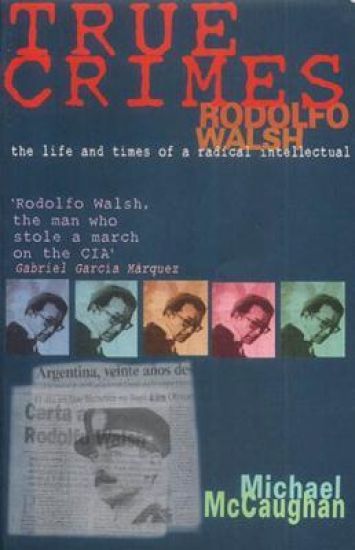
Rodolfo Walsh was a writer of crime novels, a tireless investigative journalist who uncovered real political crimes, an instant historian of a turbulent and violent era in Argentinian and Latin American politics. He was in Cuba in 1960, participating in setting up the first revolutionary press service in Latin America, "Prensa Latina", when a coded telex arrived in their offices by mistake. After sleepless nights and with one cryptography manual, Walsh deciphered the plans for the US invasion of Cuba being planned in Guatemala by the CIA. Walsh was active in the Montonero guerrilla in Argentina, co-ordinating information and intelligence work. In that capacity he made public the existence of ESMA, the Naval Mechanics School which was the main military torture centre. In his own name he wrote an Open Letter to the Military Junta, a year from the coup and a day before his death, denouncing the dirty war. He was gunned down in the streets of Buenos Aires by a military death squad. This is an account of Rudolfo Walsh's life. It includes extended excerpts from his varied writings.
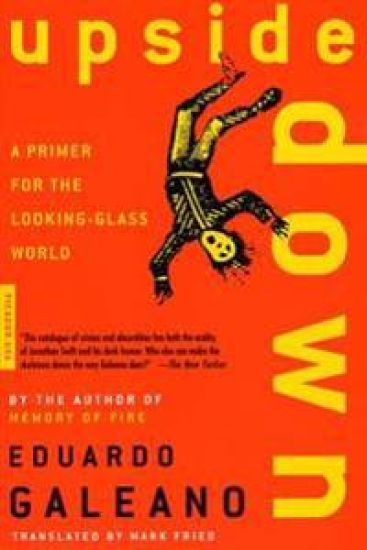
In a series of mock lesson plans and a "program of study" Galeano provides an eloquent, passionate, funny and shocking expose of First World privileges and assumptions. From a master class in "The Impunity of Power" to a seminar on "The Sacred Car"--with tips along the way on "How to Resist Useless Vices" and a declaration of the "The Right to Rave"--he surveys a world unevenly divided between abundance and deprivation, carnival and torture, power and helplessness. We have accepted a "reality" we should reject, he writes, one where poverty kills, people are hungry, machines are more precious than humans, and children work from dark to dark. In the North, we are fed on a diet of artificial need and all made the same by things we own; the South is the galley slave enabling our greed.
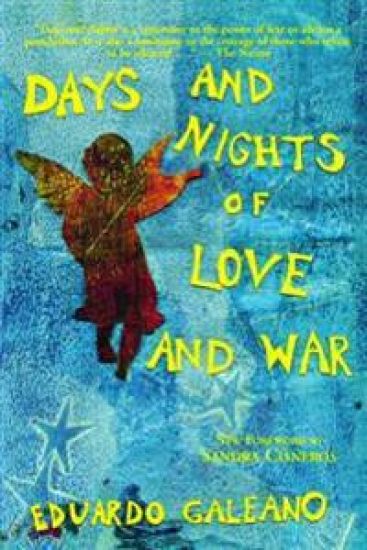
Days and Nights of Love and War
Eduardo Galeano
MONTHLY REVIEW PRESS
2000
nidottu
Halvin toimitettuna 27,00 €
Days and Nights of Love and War is the personal testimony of one of Latin America's foremost contemporary political writers. In this fascinating journal and eloquent history, Eduardo Galeano movingly records the lives of struggles of the Latin American people, under two decades of unimaginable violence and extreme repression. Alternating between reportage, personal vignettes, interviews, travelogues, and folklore, and richly conveyed with anger, sadness, irony, and occasional humor, Galeano pays loving tribute to the courage and determination of those who continued to believe in, and fight for, a more human existence. Originally published in Cuba, Days and Nights of Love and War won the Casa de las Am ricas prize (1978). The Lannan Foundation awarded the 1999 Cultural Prize for Freedom to Eduardo Galeano, in recognition of those "whose extraordinary and courageous work celebrates the human right to freedom of imagination, inquiry and expression."
This work is a personal testimony of one of Latin America's foremost political writers. The author records the lives and struggles of the people of Latin America. Alternating between reportage and folklore, he pays tribute to the courage of those who believed in a more human existence.
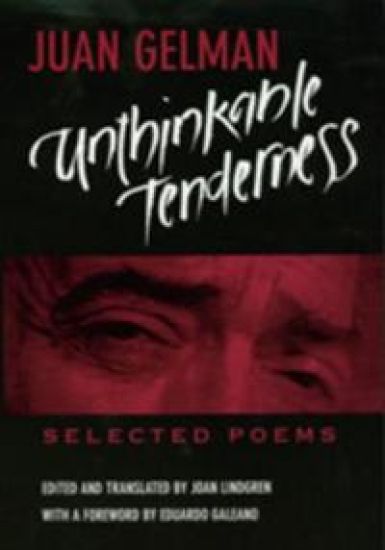
Juan Gelman is Argentina's leading poet, but his work has been almost unknown in the United States until now. In 2000, he received the Juan Rulfo Award, one most important literary awards in the Spanish-speaking world, and in 2007, he received the Cervantes Prize, the Spanish-speaking world's top literary prize. With this selection, chosen and superbly translated by Joan Lindgren, Gelman's lush and visceral poetry comes alive for an English-speaking readership. Gelman is a stark witness to the brutality of power, and his poems reflect his suffering at the hands of the Argentine military government (his son, daughter-in-law, and grandchild were "disappeared"). While political idealism infuses his writing, he is not a servant of ideology. Themes of family, exile, the tango, Argentina, and Gelman's Jewish heritage resonate throughout his poems, works that celebrate life while confronting heartache and loss. "Remembering their little bones when it rains/the companerosstomp on darkness/set forth from death/wander the tender night/I hear their voices like living faces" - from "Remembering Their Little Bones".
In Walking Words world-renowned author Eduardo Galeano draws on the folklore of rural and urban Latin America to discover and retell "the stories of ghouls and fools that Id like to write." These tales are beautifully illustrated by his collaborator, the Brazilian woodcut artist José Francisco Borges, and become testaments to the power of stories to make and remake and enchant the world.
The classic survey of Latin America's social and cultural history, with a new introduction by Isabel Allende Since its U. S. debut a quarter-century ago, this brilliant text has set a new standard for historical scholarship of Latin America. It is also an outstanding political economy, a social and cultural narrative of the highest quality, and perhaps the finest description of primitive capital accumulation since Marx. Rather than chronology, geography, or political successions, Eduardo Galeano has organized the various facets of Latin American history according to the patterns of five centuries of exploitation. Thus he is concerned with gold and silver, cacao and cotton, rubber and coffee, fruit, hides and wool, petroleum, iron, nickel, manganese, copper, aluminum ore, nitrates, and tin. These are the veins which he traces through the body of the entire continent, up to the Rio Grande and throughout the Caribbean, and all the way to their open ends where they empty into the coffers of wealth in the United States and Europe. Weaving fact and imagery into a rich tapestry, Galeano fuses scientific analysis with the passions of a plundered and suffering people. An immense gathering of materials is framed with a vigorous style that never falters in its command of themes. All readers interested in great historical, economic, political, and social writing will find a singular analytical achievement, and an overwhelming narrative that makes history speak, unforgettably. This classic is now further honored by Isabel Allende's inspiring introduction. Universally recognized as one of the most important writers of our time, Allende once again contributes her talents to literature, to political principles, and to enlightenment.

Open Veins of Latin America
Eduardo Galeano
Monthly Review Press,U.S.
1996
nidottu
Halvin toimitettuna 23,00 €
First published in 1973 as Las Venas Abiertas de AmTrica Latina by Siglo XXI Editores, Mexico, this analysis of the effects and causes of capitalist underdevelopment in Latin America presents a clear, passionate account of 500 years of Latin American history, written with drama, humor, and compassio
Eduardo Galeano's is considered a passionate literary voice. In "The Book of Embraces", he employs parable and paradox, anecdote and dream, and fragments of autobiography to construct a passionate, ironic and joyful world view. The world reveals itself in a multiplicity of voices; what emerges is a brief for love, friendship, courage, perseverance and imagination. Galeano also wrote "Memory of Fire".