Kirjojen hintavertailu – 12 903 725 kirjaa ja 27 kauppaa

Kirjailija

Eduardo Mendieta

Kirjat ja teokset yhdessä paikassa: 7 kirjaa, julkaisuja vuosilta 2002–2024, suosituimpiin kuuluu The Philosophical Animal. Vertaile teosten hintoja ja tarkista saatavuus suomalaisista kirjakaupoista.

7 kirjaa

Kirjojen julkaisuvuodet: 2002–2024.

The Philosophical Animal

The Philosophical Animal

Eduardo Mendieta

STATE UNIVERSITY OF NEW YORK PRESS
2024
pokkari
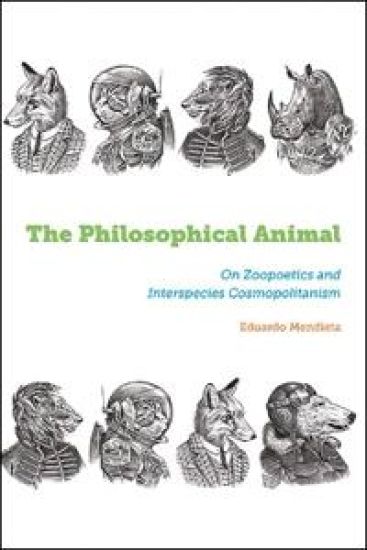
Argues that humans are animals that philosophize about their condition by fictionalizing other animals. Humans are animals who fictionalize other animals to asse their "humanness." We are philosophical animals who philosophize about our humanity by projecting images onto a mirror about other animals. Spanning literature, philosophy, and ethics, the thread uniting The Philosophical Animal is the bestiary and how it continues to inform our imaginings. Beginning with an exploration of animals and women in the literary work of Coetzee, famous for his book on the Lives of Animals, Eduardo Mendieta then dives into the genre of bestiaries in order to investigate the relation between humanity and animality. From there he approaches the works of Derrida and Habermas from the standpoint of genetic engineering and animal studies. While we have intensely modified many species genetically, we have not done this to ourselves. Why? Finally, Mendieta deals with the political and ethical implications suggested by this question before ending on an autobiographical note about growing up around so-called animals, and in particular horses. This book is freely available in an open access edition thanks to TOME (Toward an Open Monograph Ecosystem)-a collaboration of the Association of American Universities, the Association of University Presses, and the Association of Research Libraries-and the generous support of Penn State. Learn more at the TOME website, available at https://openmonographs.org.
The Philosophical Animal

The Philosophical Animal

Eduardo Mendieta

STATE UNIVERSITY OF NEW YORK PRESS
2024
sidottu
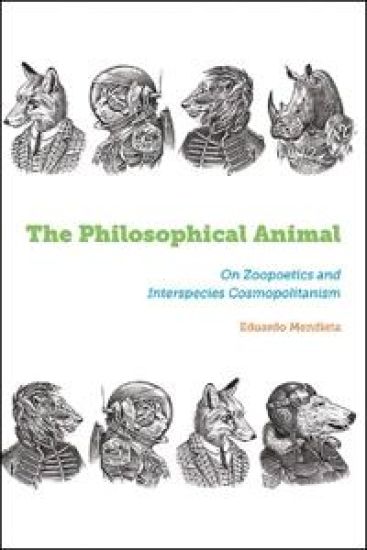
Argues that humans are animals that philosophize about their condition by fictionalizing other animals. Humans are animals who fictionalize other animals to asse their "humanness." We are philosophical animals who philosophize about our humanity by projecting images onto a mirror about other animals. Spanning literature, philosophy, and ethics, the thread uniting The Philosophical Animal is the bestiary and how it continues to inform our imaginings. Beginning with an exploration of animals and women in the literary work of Coetzee, famous for his book on the Lives of Animals, Eduardo Mendieta then dives into the genre of bestiaries in order to investigate the relation between humanity and animality. From there he approaches the works of Derrida and Habermas from the standpoint of genetic engineering and animal studies. While we have intensely modified many species genetically, we have not done this to ourselves. Why? Finally, Mendieta deals with the political and ethical implications suggested by this question before ending on an autobiographical note about growing up around so-called animals, and in particular horses. This book is freely available in an open access edition thanks to TOME (Toward an Open Monograph Ecosystem)-a collaboration of the Association of American Universities, the Association of University Presses, and the Association of Research Libraries-and the generous support of Penn State. Learn more at the TOME website, available at https://openmonographs.org.
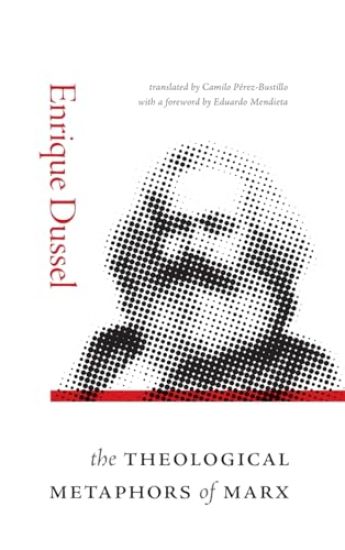
The Theological Metaphors of Marx

The Theological Metaphors of Marx

Enrique Dussel; Eduardo Mendieta

DUKE UNIVERSITY PRESS
2024
pokkari
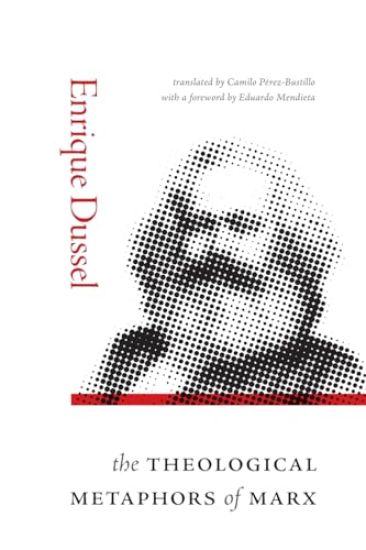
In The Theological Metaphors of Marx, Enrique Dussel provides a groundbreaking combination of Marxology, theology, and ethical theory. Dussel shows that Marx unveils the theology of capitalism in his critique of commodity fetishization. Capitalism constitutes an idolatry of the commodity that undergirds the capitalist expropriation of labor. Dussel examines Marx’s early writings on religion and fetishism and proceeds through what Dussel refers to as the four major drafts of Capital, ultimately situating Marx’s philosophical, economic, ethical, and historical insights in relation to the theological problems of his time. Dussel notes a shift in Marx’s underlying theological schema from a political critique of the state to an economic critique of the commodity fetish as the Devil, or anti-God, of modernity. Marx’s thought, impact, and influence cannot be fully understood without Dussel’s historic reinterpretation of the theological origins and implications of Marx’s critiques of political economy and politics.
The Theological Metaphors of Marx

The Theological Metaphors of Marx

Enrique Dussel; Eduardo Mendieta

DUKE UNIVERSITY PRESS
2024
sidottu
In The Theological Metaphors of Marx, Enrique Dussel provides a groundbreaking combination of Marxology, theology, and ethical theory. Dussel shows that Marx unveils the theology of capitalism in his critique of commodity fetishization. Capitalism constitutes an idolatry of the commodity that undergirds the capitalist expropriation of labor. Dussel examines Marx’s early writings on religion and fetishism and proceeds through what Dussel refers to as the four major drafts of Capital, ultimately situating Marx’s philosophical, economic, ethical, and historical insights in relation to the theological problems of his time. Dussel notes a shift in Marx’s underlying theological schema from a political critique of the state to an economic critique of the commodity fetish as the Devil, or anti-God, of modernity. Marx’s thought, impact, and influence cannot be fully understood without Dussel’s historic reinterpretation of the theological origins and implications of Marx’s critiques of political economy and politics.
Habermas and Religion

Habermas and Religion

Craig Calhoun; Eduardo Mendieta; Jonathan VanAntwerpen

Polity Press
2013
nidottu
To the surprise of many readers, Jürgen Habermas has recently made religion a major theme of his work. Emphasizing both religion's prominence in the contemporary public sphere and its potential contributions to critical thought, Habermas's engagement with religion has been controversial and exciting, putting much of his own work in fresh perspective and engaging key themes in philosophy, politics and social theory. Habermas argues that the once widely accepted hypothesis of progressive secularization fails to account for the multiple trajectories of modernization in the contemporary world. He calls attention to the contemporary significance of "postmetaphysical" thought and "postsecular" consciousness - even in Western societies that have embraced a rationalistic understanding of public reason. Habermas and Religion presents a series of original and sustained engagements with Habermas's writing on religion in the public sphere, featuring new work and critical reflections from leading philosophers, social and political theorists, and anthropologists. Contributors to the volume respond both to Habermas's ambitious and well-developed philosophical project and to his most recent work on religion. The book closes with an extended response from Habermas - itself a major statement from one of today's most important thinkers.
Habermas and Religion

Habermas and Religion

Craig Calhoun; Eduardo Mendieta; Jonathan VanAntwerpen

Polity Press
2013
sidottu
To the surprise of many readers, Jürgen Habermas has recently made religion a major theme of his work. Emphasizing both religion's prominence in the contemporary public sphere and its potential contributions to critical thought, Habermas's engagement with religion has been controversial and exciting, putting much of his own work in fresh perspective and engaging key themes in philosophy, politics and social theory. Habermas argues that the once widely accepted hypothesis of progressive secularization fails to account for the multiple trajectories of modernization in the contemporary world. He calls attention to the contemporary significance of "postmetaphysical" thought and "postsecular" consciousness - even in Western societies that have embraced a rationalistic understanding of public reason. Habermas and Religion presents a series of original and sustained engagements with Habermas's writing on religion in the public sphere, featuring new work and critical reflections from leading philosophers, social and political theorists, and anthropologists. Contributors to the volume respond both to Habermas's ambitious and well-developed philosophical project and to his most recent work on religion. The book closes with an extended response from Habermas - itself a major statement from one of today's most important thinkers.
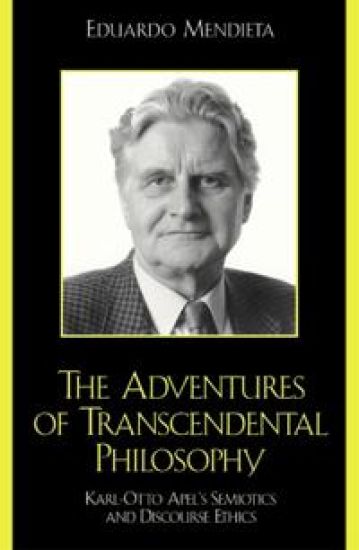
The Adventures of Transcendental Philosophy

The Adventures of Transcendental Philosophy

Eduardo Mendieta

Rowman Littlefield Publishers
2002
nidottu
Karl-Otto Apel is one of the most important German philosophers of the 20th century, and is finally coming to be recognized as such. However, his work is still poorly understood and inadequately treated throughout most of the world. In The Adventures of Transcendental Philosophy, critical theory scholar Eduardo Mendieta examines the philosophical origins of discourse ethics through the prism of Apel's thought. Mendieta finds that Apel fundamentally transformed German philosophy, which had become stagnant in the years before World War II, and deeply influenced later thinkers such as Jürgen Habermas. Apel's turn toward pragmatism and analytic philosophy helped him bring the concept of a linguistic paradigm shift to Germany.