Kirjojen hintavertailu – 12 903 724 kirjaa ja 27 kauppaa

Kirjailija

Edward Biddulph

Kirjat ja teokset yhdessä paikassa: 7 kirjaa, julkaisuja vuosilta 2010–2025, suosituimpiin kuuluu London Gateway. Vertaile teosten hintoja ja tarkista saatavuus suomalaisista kirjakaupoista.

7 kirjaa

Kirjojen julkaisuvuodet: 2010–2025.

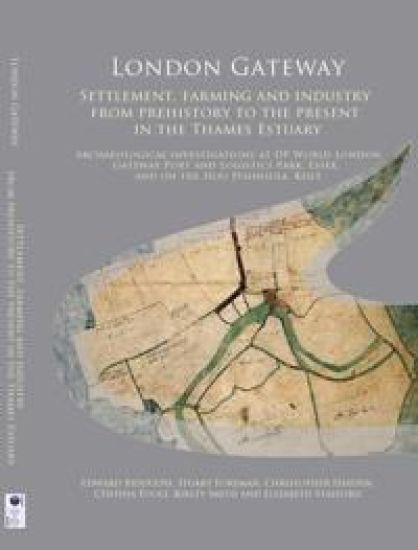
London Gateway

London Gateway

Edward Biddulph; Stuart Foreman; Christopher Hayden; Cynthia Poole; Kirsty Smith

OXFORD ARCHAEOLOGY
2022
sidottu
Archaeological investigations were carried out by Oxford Archaeology between 2008 and 2016 within DP World London Gateway Port and Logistics Park near Stanford-le-Hope in Essex and on the site of a compensatory wildlife habitat on the Hoo Peninsula in Kent. Some 40 sites were the subject of some form of archaeological assessment, and of these, 16 contained significant archaeological remains or were otherwise important to the understanding of the area. The combined evidence paints a picture of life on the edge of the Thames Estuary from early prehistory to the 20th century. The discoveries show how the area has attracted settlers, farmers and traders since prehistory. People came to the marshes in Mesolithic and Neolithic times, perhaps on a seasonal basis, to hunt, and gather plants and seafood. In the late Bronze Age, Iron Age and Roman periods, people trapped seawater to extract salt, a valuable commodity used for food preservation. In the medieval period, the marshland offered unrivalled pasture for the sheep and cattle belonging to upland farms on the gravel terraces. Over time, the marshes were drained to increase the pasture and the value of the farming estates. The creeks that snaked through the marshes were a means of communication and trade. A timber wharf, built in the 16th century, was recorded on the edge of one such creek. In modern times, the sparsely populated area proved an ideal location for the establishment of oil refineries and other industries, positioning London Gateway at the heart of British trade. The area has also inspired artists, writers and filmmakers. This volume joins two others - London Gateway: Maritime Archaeology in the Thames Estuary and London Gateway: Iron Age and Roman Salt Making in the Thames Estuary - that explore the archaeology and heritage of the London Gateway site.

The James Bond Lover's Guide to Britain

The James Bond Lover's Guide to Britain

Edward Biddulph

PEN SWORD BOOKS LTD
2025
nidottu
The fictional superspy James Bond is a cultural phenomenon, becoming since his first appearance in the novel Casino Royale in 1953 a character as recognizable around the world as Sherlock Holmes and Robin Hood. While we may associate James Bond with exotic locales, underwater adventures, and even outer space, there are many sites in Britain connected with the character. Locations used in the Bond films, places mentioned in the novels, buildings inhabited or visited by Bond’s creator, Ian Fleming: James Bond has left his mark across the country. This book takes you on a tour of Britain, from the Highlands of Scotland to the White Cliffs of Dover, from Wales to East Anglia, to discover iconic film locations, landmarks described in the novels, and places associated with Ian Fleming. This is the first guide that takes readers around Britain not only to explore the film settings but also the literary locations and places that had a profound impact on Ian Fleming’s writing. The generously illustrated book can be used as guide on Bond tours across the country, as well as a treasure trove of fascinating Bond facts.
In the Shadow of Corinium

In the Shadow of Corinium

Andrew Simmonds; Edward Biddulph; Ken Welsh

Oxford University School of Archaeology
2018
nidottu
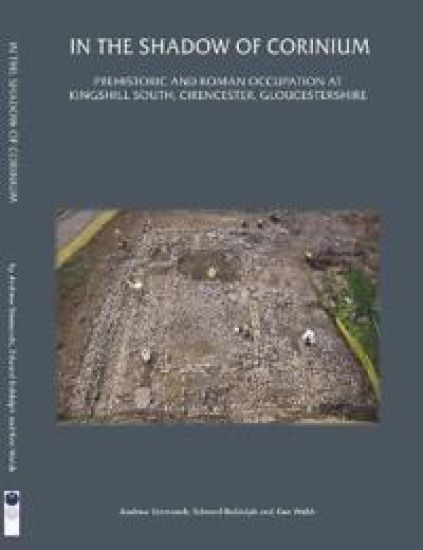
Excavations by Oxford Archaeology at Kingshill South on the eastern edge of Cirencester in Gloucestershire uncovered evidence for prehistoric and Roman activity. The earliest evidence comprised a pit dating to the late Neolithic period or early Bronze Age, and the site was also inhabited during the late Bronze Age or early Iron Age. There was a gap in activity until the late 1st century AD, when fields were laid out on the site's southern slope. Three buildings were recorded within the area of the excavation. Building 1 was a domestic, stone-footed building best described as a proto-villa. Building 2 was an aisled building with an apsidal end and is likely to have served an agricultural function. Both were constructed in the 2nd century AD. Building 3, dated to the late Roman period, is interpreted as a granary. The settlement was abandoned by the late 4th century AD. The site remained agricultural land until the establishment of Cirencester's eastern suburb in the 20th century. Grain, meat, and wool, among other goods, were produced at the Roman settlement, probably to supply the town of Corinium Dobunnorum. Evidence for craft activity, including pin-making, horn-working and smithing, was also recorded. Formal burials and disarticulated human bone were encountered across the settlement. Analysis of the bones revealed remarkable insights into the lives of the settlement's inhabitants. The habitual, possibly craft-related, activity performed by one young female adult required her to spend much of her time in a squatting position. One adult male had a facial disfigurement which had an impact not just on his daily life, but also the manner of his burial.
Horcott Quarry, Fairford and Arkell’s Land, Kempsford

Horcott Quarry, Fairford and Arkell’s Land, Kempsford

Chris Hayden; Rob Early; Edward Biddulph; Paul Booth; Anne Dodd; Alex Smith; Granville Laws; Ken Welsh

Oxford University School of Archaeology
2017
sidottu
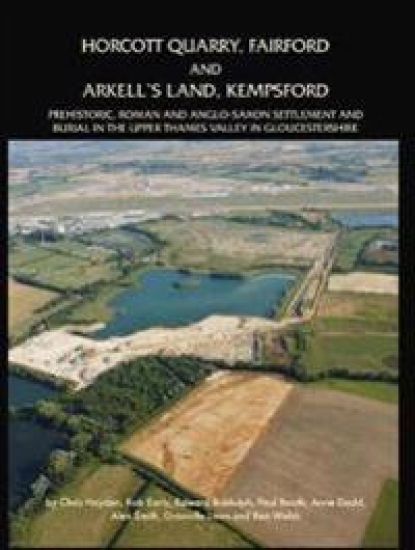
Excavations in advance of gravel quarrying in the Upper Thames Valley at Horcott Quarry, Fairford, and nearby Arkell’s Land, Kempsford, revealed contrasting pictures. At Horcott, on the second terrace, there was periodic activity from the early Mesolithic onwards. A major earlier Iron Age settlement contained roundhouses and at least 135 four-post structures, suggesting an exceptional focus on grain storage. An early–middle Roman farmstead incorporated a small stone-founded building, while from c AD 250–350 a large cemetery lay in an adjacent enclosure. Two further groups of burials were contemporary with a substantial Anglo-Saxon settlement including a timber hall and 33 sunken-featured buildings. By contrast, at Arkell’s Land, on the first gravel terrace, activity on a significant scale only began in the later 1st century AD. It comprised enclosures, field systems and trackways, with the most intensive settlement, as at Horcott, in the middle Roman period. The site was probably linked to an adjacent estate centre at Claydon Pike. There was no post-Roman occupation.
Licence to Cook

Licence to Cook

Edward Biddulph

Lulu.com
2010
pokkari
You know what James Bond drinks, but do you know what he eats? What is his favourite food? What is his favourite meal of the day? How does he like his steak? How does he take his coffee? This cookbook is full of exciting recipes inspired by the food described in Ian Fleming's novels. The recipes, devised by the author, are modern, but have a period twist. The cookbook is intended for anyone who wishes to recreate the flavour of James Bond's gastronomy. If you're preparing a romantic meal for two or planning a Bond-themed party, or if you're simply curious about the sorts of food Bond eats, this cookbook is for you. Eat like Bond throughout the day, breakfast, lunch and dinner.