Kirjojen hintavertailu – 12 903 724 kirjaa ja 27 kauppaa

Kirjailija

Edward Chancellor

Kirjat ja teokset yhdessä paikassa: 8 kirjaa, julkaisuja vuosilta 2000–2027, suosituimpiin kuuluu Marknaden : Kapital, stater och tankar om en fri värld. Vertaile teosten hintoja ja tarkista saatavuus suomalaisista kirjakaupoista.

8 kirjaa

Kirjojen julkaisuvuodet: 2000–2027.

Marknaden : Kapital, stater och tankar om en fri värld

Marknaden : Kapital, stater och tankar om en fri värld

David Abulafia; Ali Ansari; Richard Bratby; Mary Bridges; Caroline Burt; David Butterfield; Edward Chancellor; Marie Kawthar Daouda; Eloise Davies; Ulrike Franke; Francis J. Gavin; Magnus Henrekson; William Inboden; Shashank Joshi; Knut N. Kjaer; Kwasi Kwarteng; Charlie Laderman; Ian Leslie; Nicklas Berild Lundblad; Iain Martin; Jade McGlynn; Mario Pisani; Alina Polyakova; Sergey Radchenko; Mick Ryan; Paul Tucker; Rikard Westerberg; Adrian Wooldridge; David Wootton; Linda Yueh

Bokförlaget Stolpe
2026
sidottu
Från det romerska torget till digitala valutor – hur har marknaden utvecklats under historiens gång och hur kan den komma att se ut i framtiden? Denna antologi gör en djupdykning i marknadsutvecklingen och tittar närmare på marknaders avgörande roll i att utforma samtiden men tar också upp den brännande frågan om hur vi ska navigera mot en hållbar framtid. I tankeväckande essäer skrivna av internationella forskare, politiker och andra sakkunniga utforskas marknadens dynamik. Med utgångspunkt i de antika torgen och i det medeltida Europas marknader undersöker författarna hur tekniska framsteg, konsumentbeteende och geopolitisk strategi – till exempel den politik som utövades under Reagan-eran – har format nutida marknader. Slutligen tar boken upp de utmaningar för stabiliteten på marknaden som utgörs av auktoritära stater och AI. Boken finns även i engelsk utgåva, The Market.
The Making of a Permabear

The Making of a Permabear

Jeremy Grantham; Edward Chancellor

Atlantic Books
2026
sidottu

Halvin toimitettuna 28,40 €

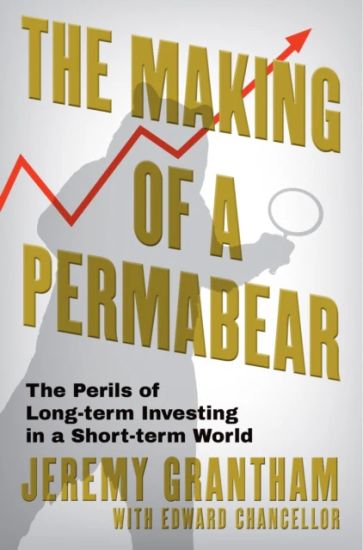
When Jeremy Grantham entered the investment business in the 1960s, he brought the thrifty Yorkshire values he had been raised with. While other money managers focused on blue chip stocks, he studied stock market history and constructed the first indices for small-cap and value stocks. Charting their ebb and flow, he saw the powerful force that would become central to his investment philosophy: mean reversion, 'the heartbreaking principle that good times always revert back to more boring, more ordinary times.' In the early 1970s Grantham launched one of the first S&P 500 index strategies. Soon after, he cofounded GMO, which became the first firm to use a computer for investment analysis. In the late 1990s he acquired notoriety as a 'permabear' for refusing to buy into dotcom mania. Clients left in droves, but he was vindicated when the bubble burst in 2000. Yet while his wealth grew, so did his alarm at the disastrous consequences of short-term thinking for both investors and for the planet, and he has directed nearly all his wealth to environmental protection. Written with the bestselling financial historian Edward Chancellor, The Making of a Permabear is replete with investment insights and provides a candid insider's tour of the booms and busts of the past half century.
The Price of Time

The Price of Time

Edward Chancellor

Black Cat
2022
sidottu

Halvin toimitettuna 27,20 €

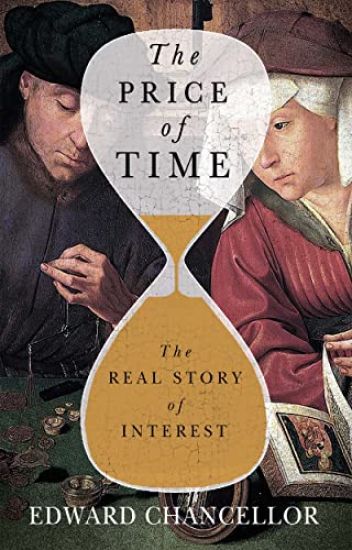
A comprehensive and profoundly relevant history of interest from one of the world's leading financial writers, The Price of Time explains our current global financial position and how we got here In the beginning was the loan, and the loan carried interest. For at least five millennia people have been borrowing and lending at interest. The practice wasn't always popular--in the ancient world, usury was generally viewed as exploitative, a potential path to debt bondage and slavery. Yet as capitalism became established from the late Middle Ages onwards, denunciations of interest were tempered because interest was a necessary reward for lenders to part with their capital. And interest performs many other vital functions: it encourages people to save; enables them to place a value on precious assets, such as houses and all manner of financial securities; and allows us to price risk. All economic and financial activities take place across time. Interest is often described as the "price of money," but it is better called the "price of time: " time is scarce, time has value, interest is the time value of money. Over the first two decades of the twenty-first century, interest rates have sunk lower than ever before. Easy money after the global financial crisis in 2007/2008 has produced several ill effects, including the appearance of multiple asset price bubbles, a reduction in productivity growth, discouraging savings and exacerbating inequality, and forcing yield starved investors to take on excessive risk. The financial world now finds itself caught between a rock and a hard place, and Edward Chancellor is here to tell us why. In this enriching volume, Chancellor explores the history of interest and its essential function in determining how capital is allocated and priced.
Om kapitalismen : perspektiv från Engelsbergsseminariet 2010

Om kapitalismen : perspektiv från Engelsbergsseminariet 2010

Gerard Baker; Erik Berglöf; Edward Chancellor; Rolf Ekéus; Kevin Hassett; Oliver Kamm; John Kay; Deidre McCloskey; Philip Mirowski; Joel Mokyr; Geoff Mulgan; Wolfgang Münchau; Johan Norberg; Avner Offer; Minxin Pei; Carlota Perez; Emma Rotschild; Donald Sassoon; Nathan Shachar; Robert Skidelsky; David Ståhl; Donald Winch

Bokförlaget Atlantis
2011
sidottu
Hur ser kapitalismens framtid ut? Kommer den framgångsrika variant av kapitalism från de senaste decennierna som vi kallar globalisering att fortsätta, eller kommer regionala och kanske till och med starka nationella krafter att vinna mark i ekonomiska frågor? Medverkande: Gerard Baker, Erik Berglöf, Edward Chancellor, Rolf Ekéus, Kevin Hassett, Oliver Kamm, John Kay, Deirdre McCloskey, Philip Mirowski, Joel Mokyr, Geoff Mulgan, Wolfgang Münchau, Johan Norberg, Avner Offer, Minxin Pei, Carlota Perez, Emma Rotschild, Donald Sassoon, Nathan Shachar, Robert Skidelsky, David Ståhl, Donald Winch.
Devil Take the Hindmost: A History of Financial Speculation
A lively, original, and challenging history of stock market speculation from the 17th century to present day. Is your investment in that new Internet stock a sign of stock market savvy or an act of peculiarly American speculative folly? How has the psychology of investing changed--and not changed--over the last five hundred years? In Devil Take the Hindmost, Edward Chancellor traces the origins of the speculative spirit back to ancient Rome and chronicles its revival in the modern world: from the tulip scandal of 1630s Holland, to "stockjobbing" in London's Exchange Alley, to the infamous South Sea Bubble of 1720, which prompted Sir Isaac Newton to comment, "I can calculate the motion of heavenly bodies, but not the madness of people." Here are brokers underwriting risks that included highway robbery and the "assurance of female chastity"; credit notes and lottery tickets circulating as money; wise and unwise investors from Alexander Pope and Benjamin Disraeli to Ivan Boesky and Hillary Rodham Clinton. From the Gilded Age to the Roaring Twenties, from the nineteenth century railway mania to the crash of 1929, from junk bonds and the Japanese bubble economy to the day-traders of the Information Era, Devil Take the Hindmost tells a fascinating story of human dreams and folly through the ages.