Kirjojen hintavertailu – 12 903 725 kirjaa ja 27 kauppaa
Kirjailija
Edward Feser
Kirjat ja teokset yhdessä paikassa: 14 kirjaa, julkaisuja vuosilta 2006–2024, suosituimpiin kuuluu By Man Shall His Blood be Shed. Vertaile teosten hintoja ja tarkista saatavuus suomalaisista kirjakaupoista.
Immortal Souls provides as ambitious and complete a defense of Aristotelian-Thomistic philosophical anthropology as is currently in print. Among the many topics covered are the reality and unity of the self, the immateriality of the intellect, the freedom of the will, the immortality of the soul, the critique of artificial intelligence, and the refutation of both Cartesian and materialist conceptions of human nature. Along the way, the main rival positions in contemporary philosophy and science are thoroughly engaged with and rebutted.
Planning Support Methods offers the only practical guide to the key methods of urban and regional planning. The authors apply and critically assess the most important methods for demographic and economic analysis and projection and land suitability analysis, providing an essential resource for practicing planners and planning students alike. For helpful tools from the author including Excel workbooks, visit https://planningsupport.org/tools/. For resources including PowerPoint presentations and supplemental readings, visit https://planningsupport.org/resources/.
Planning Support Methods offers the only practical guide to the key methods of urban and regional planning. The authors apply and critically assess the most important methods for demographic and economic analysis and projection and land suitability analysis, providing an essential resource for practicing planners and planning students alike. For helpful tools from the author including Excel workbooks, visit https://planningsupport.org/tools/. For resources including PowerPoint presentations and supplemental readings, visit https://planningsupport.org/resources/.
Five Proofs of the Existence of God provides a detailed, updated exposition and defense of five of the historically most important (but in recent years largely neglected) philosophical proofs of God's existence: the Aristotelian proof, the Neo-Platonic proof, the Augustinian proof, the Thomistic proof, and the Rationalist proof. This book also offers a detailed treatment of each of the key divine attributes -- unity, simplicity, eternity, omnipotence, omniscience, perfect goodness, and so forth -- showing that they must be possessed by the God whose existence is demonstrated by the proofs. Finally, it answers at length all of the objections that have been leveled against these proofs. This book offers as ambitious and complete a defense of traditional natural theology as is currently in print. Its aim is to vindicate the view of the greatest philosophers of the past -- thinkers like Aristotle, Plotinus, Augustine, Aquinas, Leibniz, and many others -- that the existence of God can be established with certainty by way of purely rational arguments. It thereby serves as a refutation both of atheism and of the fideism which gives aid and comfort to atheism.
The Catholic Church has in recent decades been associated with political efforts to eliminate the death penalty. It was not always so. This timely work reviews and explains the Catholic Tradition regarding the death penalty, demonstrating that it is not inherently evil and that it can be reserved as a just form of punishment in certain cases. Drawing upon a wealth of philosophical, scriptural, theological, and social scientific arguments, the authors explain the perennial teaching of the Church that capital punishment can in principle be legitimate--not only to protect society from immediate physical danger, but also to administer retributive justice and to deter capital crimes. The authors also show how some recent statements of Church leaders in opposition to the death penalty are prudential judgments rather than dogma. They reaffirm that Catholics may, in good conscience, disagree about the application of the death penalty. Some arguments against the death penalty falsely suggest that there has been a rupture in the Church's traditional teaching and thereby inadvertently cast doubt on the reliability of the Magisterium. Yet, as the authors demonstrate, the Church's traditional teaching is a safeguard to society, because the just use of the death penalty can be used to protect the lives of the innocent, inculcate a horror of murder, and affirm the dignity of human beings as free and rational creatures who must be held responsible for their actions. By Man Shall His Blood Be Shed challenges contemporary Catholics to engage with Scripture, Tradition, natural law, and the actual social scientific evidence in order to undertake a thoughtful analysis of the current debate about the death penalty.
Scholastic Metaphysics: A Contemporary Introduction provides an overview of Scholastic approaches to causation, substance, essence, modality, identity, persistence, teleology, and other issues in fundamental metaphysics. The book interacts heavily with the literature on these issues in contemporary analytic metaphysics, so as to facilitate the analytic reader's understanding of Scholastic ideas and the Scholastic reader's understanding of contemporary analytic philosophy. The Aristotelian theory of actuality and potentiality provides the organizing theme, and the crucial dependence of Scholastic metaphysics on this theory is demonstrated. The book is written from a Thomistic point of view, but Scotist and Suarezian positions are treated as well where they diverge from the Thomistic position.
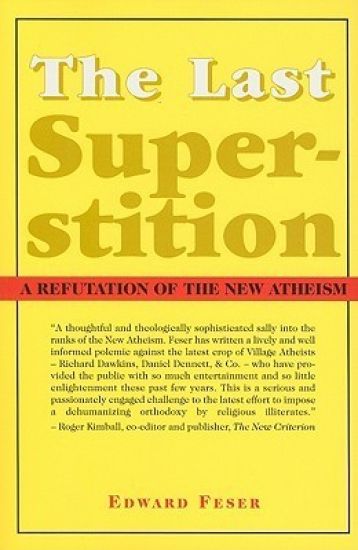
The central contention of the “New Atheism” of Richard Dawkins, Daniel Dennett, Sam Harris, and Christopher Hitchens is that there has for several centuries been a war between science and religion, that religion has been steadily losing that war, and that at this point in human history a completely secular scientific account of the world has been worked out in such thorough and convincing detail that there is no longer any reason why a rational and educated person should find the claims of any religion the least bit worthy of attention. But as Edward Feser argues inThe Last Superstition, in fact there is not, and never has been, any war between science and religion at all. There has instead been a conflict between two entirely philosophical conceptions of the natural order: on the one hand, the classical “teleological” vision of Plato, Aristotle, Augustine, and Aquinas, on which purpose or goal-directedness is as inherent a feature of the physical world as mass or electric charge; and the modern “mechanical” vision of Descartes, Hobbes, Locke, and Hume, according to which the physical world is comprised of nothing more than purposeless, meaningless particles in motion. As it happens, on the classical teleological picture, the existence of God, the immortality of the soul, and the natural-law conception of morality are rationally unavoidable. Modern atheism and secularism have thus always crucially depended for their rational credentials on the insinuation that the modern, mechanical picture of the world has somehow been established by science. Yet this modern “mechanical” picture has never been established by science, and cannot be, for it is not a scientific theory in the first place but merely a philosophical interpretation of science. Moreover, as Feser shows, the philosophical arguments in its favor given by the early modern philosophers were notable only for being surprisingly weak. The true reasons for its popularity were then, and are now, primarily political: It was a tool by which the intellectual foundations of ecclesiastical authority could be undermined and the way opened toward a new secular and liberal social order oriented toward commerce and technology. So as to further these political ends, it was simply stipulated, by fiat as it were, that no theory inconsistent with the mechanical picture of the world would be allowed to count as “scientific.” As the centuries have worn on and historical memory has dimmed, this act of dogmatic stipulation has falsely come to be remembered as a “discovery.” However, not only is this modern philosophical picture rationally unfounded, it is demonstrably false. For the “mechanical” conception of the natural world, when worked out consistently, absurdly entails that rationality, and indeed the human mind itself, are illusory. The so-called “scientific worldview” championed by the New Atheists thus inevitably undermines its own rational foundations; and into the bargain (and contrary to the moralistic posturing of the New Atheists) it undermines the foundations of any possible morality as well. By contrast, and as The Last Superstition demonstrates, the classical teleological picture of nature can be seen to find powerful confirmation in developments from contemporary philosophy, biology, and physics; moreover, morality and reason itself cannot possibly be made sense of apart from it. The teleological vision of the ancients and medievals is thereby rationally vindicated – and with it the religious worldview they based upon it.
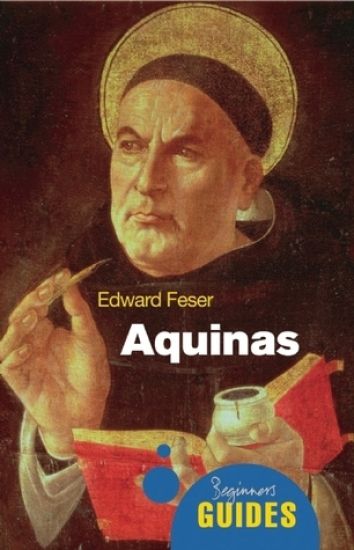
One of the most influential philosophers and theologians in the history of Western thought, St Thomas Aquinas established the foundations for much of modern philosophy of religion, and is infamous for his arguments for the existence of God. In this cogent and multifaceted introduction to the great Saint's work, Edward Feser argues that you cannot fully understand Aquinas' philosophy without his theology and vice-versa. Covering his thoughts on the soul, natural law, metaphysics, and the interaction of faith and reason, this will prove a indispensible resource for students, experts or the general reader.
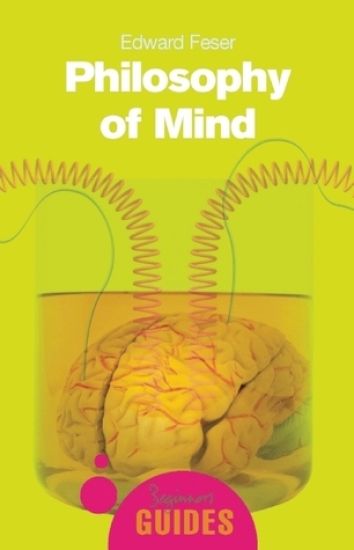
In this lively and entertaining introduction to the philosophy of mind, Edward Feser explores the questions central to the discipline; such as 'do computers think', and 'what is consciousness'; and gives an account of all the most important and significant attempts that have been made to answer them.