Kirjojen hintavertailu – 12 859 828 kirjaa ja 27 kauppaa

Kirjailija

Edward Glaeser

Kirjat ja teokset yhdessä paikassa: 9 kirjaa, julkaisuja vuosilta 2005–2026, suosituimpiin kuuluu The Economic Approach. Vertaile teosten hintoja ja tarkista saatavuus suomalaisista kirjakaupoista.

9 kirjaa

Kirjojen julkaisuvuodet: 2005–2026.

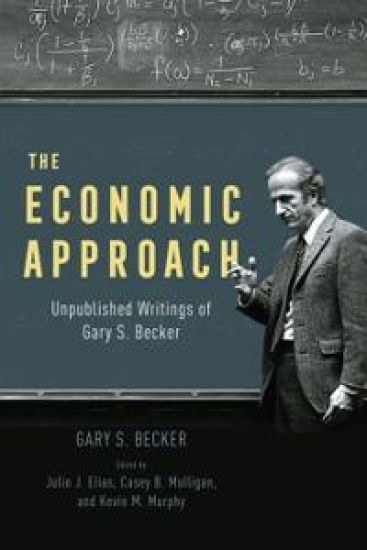
The Economic Approach

The Economic Approach

Gary S. Becker; Edward Glaeser

THE UNIVERSITY OF CHICAGO PRESS
2026
nidottu

Halvin toimitettuna 33,70 €

Now in paperback, a revealing collection from the intellectual titan whose work shaped the modern world. As an economist and public intellectual, Gary S. Becker was a giant. The recipient of a Nobel Prize, a John Bates Clark Medal, and a Presidential Medal of Freedom, Becker is widely regarded as the greatest microeconomist in history. After forty years at the University of Chicago, Becker left a slew of unpublished writings that used an economic approach to human behavior, analyzing such topics as preference formation, rational indoctrination, income inequality, drugs and addiction, and the economics of family. These papers unveil the process and personality—direct, critical, curious—that made him a beloved figure in his field and beyond. The Economic Approach examines these extant works as a capstone to the Becker oeuvre—not because the works are perfect, but because they offer an illuminating, instructive glimpse into the machinations of an economist who wasn’t motivated by publications. Here, and throughout his works, an inquisitive spirit remains remarkable and forever resonant.
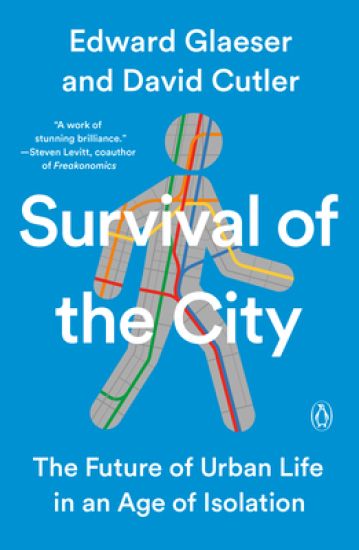
Survival of the City: The Future of Urban Life in an Age of Isolation
"Expansive and entertaining. . . . A] fast-paced and highly readable journey . . . the book serves as a useful tool in the effort to redefine the role of the city in an age of increasingly polarized politics, and reminds us that urban health is--as Fiorello La Guardia once remarked about cleaning the streets--not a Democratic or Republican issue." --New York Times Book Review One of our great urbanists and one of our great public health experts join forces to reckon with how cities are changing in the face of existential threats the pandemic has only accelerated Cities can make us sick. That's always been true--diseases spread more easily when more people are close to one another. And cities have been demonized as breeding grounds for vice and crime from Sodom and Gomorrah on. But cities have flourished nonetheless because they are humanity's greatest invention, indispensable engines for creativity, innovation, wealth, and civilization itself. But cities now stand at a crossroads. During the global COVID crisis, cities grew silent; the normal forms of socializing ground to a halt. How permanent are these changes? Advances in technology mean that many people can opt out of city life as never before. Will they? Are we on the brink of a post-urban world? City life will survive, but individual cities face terrible risks, argue Edward Glaeser and David Cutler, and a wave of urban failure would be absolutely disastrous. In terms of intimacy and inspiration, nothing can replace what cities offer. But great cities have always demanded great management, and our current crisis has exposed fearful gaps in our capacity for good governance. In America, Glaeser and Cutler argue, deep inequities in health care and education are a particular blight on the future of our cities; solving them will be the difference between our collective good health and a downward spiral to a much darker place.
Survival of the City: Living and Thriving in an Age of Isolation
One of our great urbanists and one of our great public health experts join forces to reckon with how cities are changing in the face of existential threats the pandemic has only accelerated Cities can make us sick. They always have--diseases spread more easily when more people are close to one another. And disease is hardly the only ill that accompanies urban density. Cities have been demonized as breeding grounds for vice and crime from Sodom and Gomorrah on. But cities have flourished nonetheless because they are humanity's greatest invention, indispensable engines for creativity, innovation, wealth, and connection, the loom on which the fabric of civilization is woven. But cities now stand at a crossroads. During the global COVID crisis, cities grew silent as people worked from home--if they could work at all. The normal forms of socializing ground to a halt. How permanent are these changes? Advances in digital technology mean that many people can opt out of city life as never before. Will they? Are we on the brink of a post-urban world? City life will survive but individual cities face terrible risks, argue Edward Glaeser and David Cutler, and a wave of urban failure would be absolutely disastrous. In terms of intimacy and inspiration, nothing can replace what cities offer. Great cities have always demanded great management, and our current crisis has exposed fearful gaps in our capacity for good governance. It is possible to drive a city into the ground, pandemic or not. Glaeser and Cutler examine the evolution that is already happening, and describe the possible futures that lie before us: What will distinguish the cities that will flourish from the ones that won't? In America, they argue, deep inequities in health care and education are a particular blight on the future of our cities; solving them will be the difference between our collective good health and a downward spiral to a much darker place.
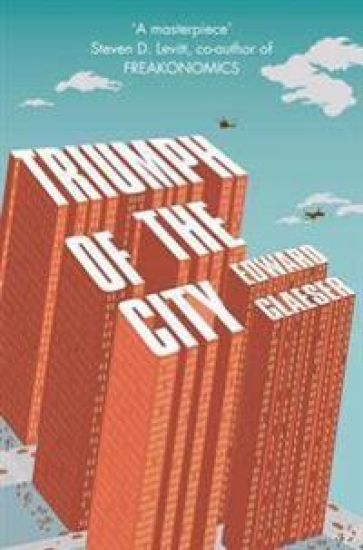
Triumph of the City

Triumph of the City

Edward Glaeser

Pan Books
2012
pokkari

Halvin toimitettuna 23,90 €

Understanding the modern city and the powerful forces within it is the life’s work of Harvard urban economist Edward Glaeser, who at forty is hailed as one of the world’s most exciting urban thinkers. Travelling from city to city, speaking to planners and politicians across the world, he uncovers questions large and small whose answers are both counterintuitive and deeply significant. Should New Orleans be rebuilt? Why can’t my nephew afford an apartment in New York? Is London the new financial capital of the world? Is my job headed to Bangalore? In Triumph of the City, Glaeser takes us around the world and into the mind of the modern city – from Mumbai to Paris to Rio to Detroit to Shanghai, and to any number of points in between – to reveal how cities think, why they behave in the manners that they do, and what wisdom they share with the people who inhabit them. 'A masterpiece' Steven D. Levitt, co-author of Freakonomics 'A brilliant read: persuasive and provocative' Time Out 'Replete with lightly borne learning, this is a tremendous book' Bryan Appleyard, Literary Review 'Fascinating' Sunday Telegraph 'Comprehensive, compelling and strongly recommended" Tim Harford, author of The Undercover Economist and Adapt 'A hymn to the city' Metro
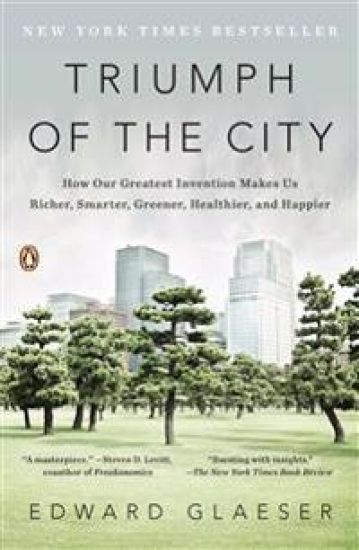
Triumph of the City: How Our Greatest Invention Makes Us Richer, Smarter, Greener, Healthier, and Happier
Shortlisted for the Financial Times and McKinsey Best Book of the Year Award in 2011 "A masterpiece." --Steven D. Levitt, coauthor of Freakonomics "Bursting with insights." --The New York Times Book Review A pioneering urban economist presents a myth-shattering look at the majesty and greatness of cities America is an urban nation, yet cities get a bad rap: they're dirty, poor, unhealthy, environmentally unfriendly . . . or are they? In this revelatory book, Edward Glaeser, a leading urban economist, declares that cities are actually the healthiest, greenest, and richest (in both cultural and economic terms) places to live. He travels through history and around the globe to reveal the hidden workings of cities and how they bring out the best in humankind. Using intrepid reportage, keen analysis, and cogent argument, Glaeser makes an urgent, eloquent case for the city's importance and splendor, offering inspiring proof that the city is humanity's greatest creation and our best hope for the future.
Fighting Poverty in the US and Europe

Fighting Poverty in the US and Europe

Alberto Alesina; Edward Glaeser

Oxford University Press
2005
nidottu
As events highlight deep divisions in attitudes between America and Europe, this is a very timely study of different approaches to the problems of domestic inequality and poverty. Based on careful and systematic analysis of national data, the authors describe just how much the two continents differ in their level of State engagement in the redistribution of income. Discussing various possible economic explanations for the difference, they cover different levels of pre-tax income, openness, and social mobility; they survey politico-historical differences such as the varying physical size of nations, their electoral and legal systems, and the character of their political parties, as well as their experiences of war; and they examine sociological explanations, which include different attitudes to the poor and notions of social responsibility. Most importantly, they address attitudes to race, calculating that attitudes to race explain half the observed difference in levels of public redistribution of income. This important and provocative analysis will captivate academic and serious lay readers in economics and welfare systems.