Kirjojen hintavertailu – 12 879 985 kirjaa ja 26 kauppaa

Kirjailija

Edward Grant

Kirjat ja teokset yhdessä paikassa: 10 kirjaa, julkaisuja vuosilta 1984–2018, suosituimpiin kuuluu Science and Religion, 400 B.C. to A.D. 1550. Vertaile teosten hintoja ja tarkista saatavuus suomalaisista kirjakaupoista.

10 kirjaa

Kirjojen julkaisuvuodet: 1984–2018.

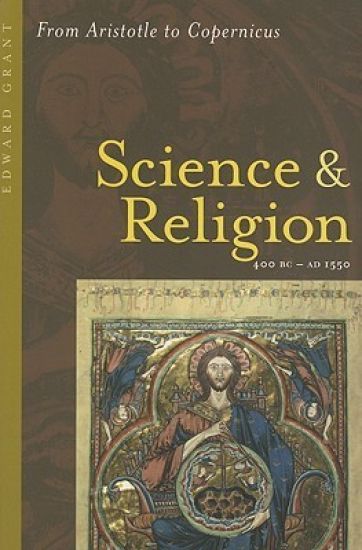
Science and Religion, 400 B.C. to A.D. 1550

Science and Religion, 400 B.C. to A.D. 1550

Edward Grant

Johns Hopkins University Press
2006
pokkari
Historian Edward Grant illuminates how today's scientific culture originated with the religious thinkers of the Middle Ages. In the early centuries of Christianity, Christians studied science and natural philosophy only to the extent that these subjects proved useful for a better understanding of the Christian faith, not to acquire knowledge for its own sake. However, with the influx of Greco-Arabic science and natural philosophy into Western Europe during the twelfth and thirteenth centuries, the Christian attitude toward science changed dramatically. Despite some tensions in the thirteenth century, the Church and its theologians became favorably disposed toward science and natural philosophy and used them extensively in their theological deliberations.
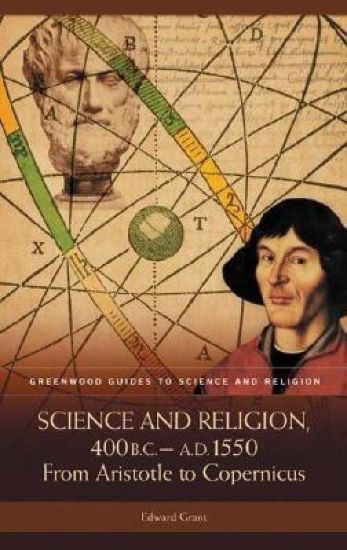
Science and Religion, 400 B.C. to A.D. 1550
Many people believe that during the Middle Ages, Christianity was actively hostile toward science (then known as natural philosophy) and impeded its progress. This comprehensive survey of science and religion during the period between the lives of Aristotle and Copernicus demonstrates how this was not the case. Medieval theologians were not hostile to learning natural philosophy, but embraced it. Had they had not done so, the science that developed during the Scientific Revolution would not—and could not—have occurred. Students and lay readers will learn how the roots of much of the scientific culture of today originated with the religious thinkers of the Middle Ages. Science and Religion, 400 B. C. to A. D. 1550 thoroughly covers the relationship between science and religion in the medieval period, and provides many resources for the student or lay reader. The book discusses how the influx of Greek and Arabic science in the 12th and 13th centuries— especially the works of Aristotle in logic and natural philosophy—dramatically changed how science was viewed in Western Europe. The volume demonstrates how medieval universities and their teachers disseminated a positive attitude toward rational inquiry and made it possible for Western Europe to become oriented toward science.
Planning Enforcement

Planning Enforcement

David Travers QC; Edward Grant; Emmaline Lambert

Wildy, Simmonds And Hill Publi
2015
pokkari
A comprehensive and practical guide to planning enforcement. This book provides a thorough guide helpful to Local Authorities and private sector practitioners on matters ranging from the decision to issue a notice through to proceedings under the Proceeds of Crime Act 2002 as well as dealing with the appeal system.
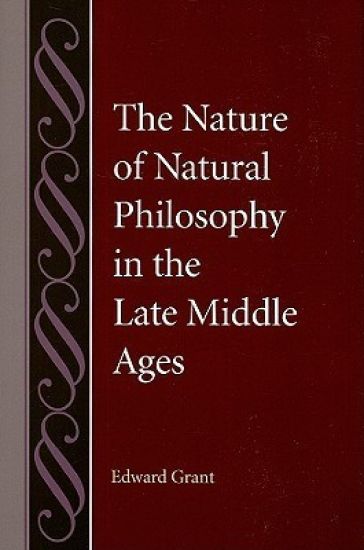
The Nature of Natural Philosophy in the Late Middle Ages

The Nature of Natural Philosophy in the Late Middle Ages

Edward Grant

The Catholic University of America Press
2010
sidottu
The period from 1200 to 1500 laid the intellectual and institutional foundations for the Scientific Revolution that would occur in the seventeenth century. During this time, the spirit of inquiry motivated natural philosophers more than did substantive content or arguments. Natural philosophers posed hundreds of questions about nature and weighed the pros and cons of each. In the process, they developed a philosophical approach to nature that may be characterized as 'probing and poking around' - they used their imaginations guided by reason. In this volume, distinguished scholar Edward Grant identifies the vital elements that contributed to the creation of a widespread interest in natural philosophy, which has been characterized as the 'Great Mother of the Sciences'. He discusses how natural philosophy emerged in Western Europe in the Middle Ages with Latin translations of Aristotle's treatises on natural philosophy in the twelfth and thirteenth centuries; with universities devoting arts curriculums to Aristotle's rationalistic natural philosophy; and, with Christian religious authorities coming to accept and even defend that philosophy. Medieval natural philosophers, contrary to a common perception, did not slavishly follow Aristotle. Grant shows that they quite frequently disagreed with Aristotle and proposed their own solutions to many problems he raised. They did this by rejecting many of Aristotle's explanations about real physical phenomena and replacing them with radically different interpretations. The product of many years of extensive research, the essays included in this volume offer a significant contribution to the nature of natural philosophy and its influence on the Scientific Revolution of the seventeenth century. This title uncovers how reason and imagination in the Middle Ages laid the foundations of modern science.
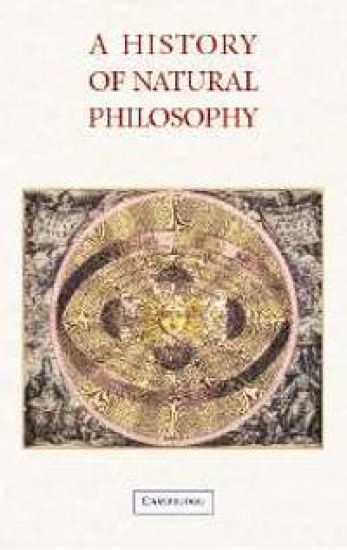
A History of Natural Philosophy

A History of Natural Philosophy

Edward Grant

Cambridge University Press
2007
sidottu
Natural philosophy encompassed all natural phenomena of the physical world. It sought to discover the physical causes of all natural effects and was little concerned with mathematics. By contrast, the exact mathematical sciences were narrowly confined to various computations that did not involve physical causes, functioning totally independently of natural philosophy. Although this began slowly to change in the late Middle Ages, a much more thoroughgoing union of natural philosophy and mathematics occurred in the seventeenth century and thereby made the Scientific Revolution possible. The title of Isaac Newton's great work, The Mathematical Principles of Natural Philosophy, perfectly reflects the new relationship. Natural philosophy became the 'Great Mother of the Sciences', which by the nineteenth century had nourished the manifold chemical, physical, and biological sciences to maturity, thus enabling them to leave the 'Great Mother' and emerge as the multiplicity of independent sciences we know today.
God and Reason in the Middle Ages

God and Reason in the Middle Ages

Edward Grant

Cambridge University Press
2001
sidottu
Between 1100 and 1600, the emphasis on reason in the learning and intellectual life of Western Europe became more pervasive and widespread than ever before in the history of human civilization. Of crucial significance was the invention of the university around 1200, within which reason was institutionalized and where it became a deeply embedded, permanent feature of Western thought and culture. It is therefore appropriate to speak of an Age of Reason in the Middle Ages, and to view it as a forerunner and herald of the Age of Reason that was to come in the seventeenth century. The object of this study is twofold: to describe how reason was manifested in the curriculum of medieval universities, especially in the subjects of logic, natural philosophy and theology; and to explain how the Middle Ages acquired an undeserved reputation as an age of superstition, barbarism, and unreason.
God and Reason in the Middle Ages

God and Reason in the Middle Ages

Edward Grant

Cambridge University Press
2001
pokkari
Between 1100 and 1600, the emphasis on reason in the learning and intellectual life of Western Europe became more pervasive and widespread than ever before in the history of human civilization. Of crucial significance was the invention of the university around 1200, within which reason was institutionalized and where it became a deeply embedded, permanent feature of Western thought and culture. It is therefore appropriate to speak of an Age of Reason in the Middle Ages, and to view it as a forerunner and herald of the Age of Reason that was to come in the seventeenth century. The object of this study is twofold: to describe how reason was manifested in the curriculum of medieval universities, especially in the subjects of logic, natural philosophy and theology; and to explain how the Middle Ages acquired an undeserved reputation as an age of superstition, barbarism, and unreason.