Kirjojen hintavertailu – 12 903 725 kirjaa ja 27 kauppaa

Kirjailija

Edward H. Spence

Kirjat ja teokset yhdessä paikassa: 9 kirjaa, julkaisuja vuosilta 2011–2025, suosituimpiin kuuluu Media Corruption in the Age of Information. Vertaile teosten hintoja ja tarkista saatavuus suomalaisista kirjakaupoista.

9 kirjaa

Kirjojen julkaisuvuodet: 2011–2025.

Wisdom in the Age of Intelligent Machines

Wisdom in the Age of Intelligent Machines

Edward H. Spence

Springer International Publishing AG
2025
sidottu
This book offers an innovative approach to evaluating information and knowledge and its relation to the good life, in the Age of Autonomous Intelligent Machines, through the concept of Wisdom. Wisdom is understood as a type of meta-information and meta-knowledge, which comprises epistemic, ethical, and eudaimonic features, and provides a direct conceptual and practical link between the concepts of information, intelligence, knowledge, the good life, and wellbeing. More generally, it provides a direct link between technology and in particular Information Communication Technology (ICT) and Artificial Intelligence (AI) technologies, the good life and wellbeing. As such, the concept of wisdom allows for a direct normative evaluation of the impact the dissemination of information through ICTs and AI technologies have on the wellbeing of individuals and society at large. It provides a theoretical rationale to demonstrate the important and relevant role that wisdom plays in the specific evaluation of information in the digital and technological age in which we now live. To that end, a methodological approach is used in this book to show how some different general types of practical manifestations of digital information and intelligence can be normatively evaluated (if they are good or bad for us) through the application of the concept of wisdom. Edward H. Spence draws from the Stoics to present a neo-Stoic account of wisdom, which he then then applies to the technologies in question.
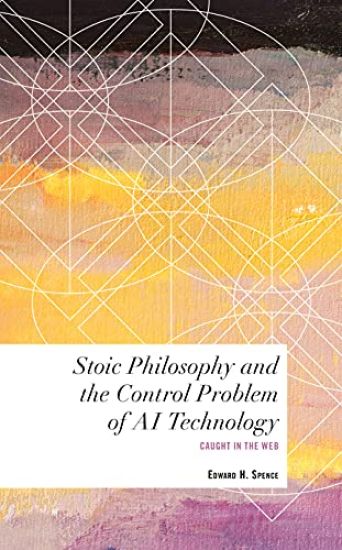
Stoic Philosophy and the Control Problem of AI Technology

Stoic Philosophy and the Control Problem of AI Technology

Edward H. Spence

BLOOMSBURY PUBLISHING PLC
2023
nidottu
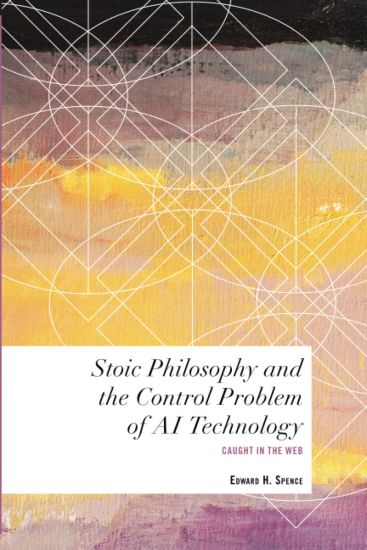
To what degree is technology in the form of products and processes capable of contributing human enhancement and wellbeing? In cases where the impact of a technology on society is not only very negligible but overall negative and harmful, what is technology good for? To answer these questions, Spence develops and applies a normative model based on rationalist and virtue ethics as well as stoic philosophy. Its primary purpose is to determine the essential conditions that any normative theory that seeks to assess the impact of technology on wellbeing must adequately address in order to be able to account for, explain and evaluate what contribution, if any, technology is capable of making to the attainment and enhancement of human wellbeing. Through developing this model, Spence offers a novel and important examination of the benefit of technology to our society as a whole.
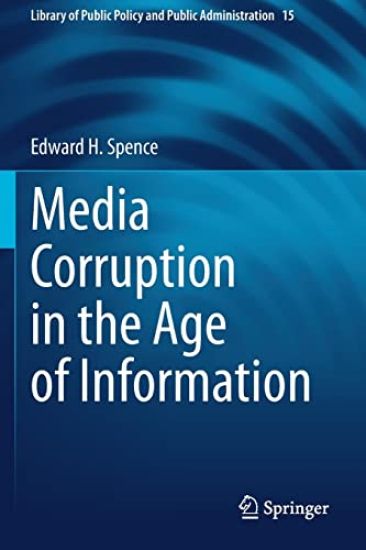
Media Corruption in the Age of Information

Media Corruption in the Age of Information

Edward H. Spence

Springer Nature Switzerland AG
2022
nidottu
This book provides an applied model of corruption to identify, analyse, and assess the ethics of major types of corruption in the media involving practices such as cash-for-comment, media release journalism, including video news releases (VNRs), fake news, deep fakes, and staged news. The book starts with a conceptual philosophical analysis of corruption in general, followed by an in-depth analysis of media corruption, across its various transformations, from the legacy media of the 4th Estate (e.g. The UK Guardian) to the digital media of the 5th Estate (e.g. Social Media and Wikileaks) to the Network Media of the 6th Estate (e.g. Facebook and Google), and provides key case studies as practical illustrations and contextualisation of those major types of media corruption. It explains how the conversion of the two forms of media communication, corporate and social digital communication, as expressed in the symbiotic relationship between the 4th Estate and the 5th Estate exposes andenables the reporting of corruption, signalling a major shift in the way the media itself can provide an effective means for anti-corruption measures against major practices of corruption that would have otherwise gone unnoticed.
Stoic Philosophy and the Control Problem of AI Technology

Stoic Philosophy and the Control Problem of AI Technology

Edward H. Spence

Rowman Littlefield International
2021
sidottu
To what degree is technology in the form of products and processes capable of contributing human enhancement and wellbeing? In cases where the impact of a technology on society is not only very negligible but overall negative and harmful, what is technology good for? To answer these questions, Spence develops and applies a normative model based on rationalist and virtue ethics as well as stoic philosophy. Its primary purpose is to determine the essential conditions that any normative theory that seeks to assess the impact of technology on wellbeing must adequately address in order to be able to account for, explain and evaluate what contribution, if any, technology is capable of making to the attainment and enhancement of human wellbeing. Through developing this model, Spence offers a novel and important examination of the benefit of technology to our society as a whole.
Media Corruption in the Age of Information

Media Corruption in the Age of Information

Edward H. Spence

Springer Nature Switzerland AG
2021
sidottu
This book provides an applied model of corruption to identify, analyse, and assess the ethics of major types of corruption in the media involving practices such as cash-for-comment, media release journalism, including video news releases (VNRs), fake news, deep fakes, and staged news. The book starts with a conceptual philosophical analysis of corruption in general, followed by an in-depth analysis of media corruption, across its various transformations, from the legacy media of the 4th Estate (e.g. The UK Guardian) to the digital media of the 5th Estate (e.g. Social Media and Wikileaks) to the Network Media of the 6th Estate (e.g. Facebook and Google), and provides key case studies as practical illustrations and contextualisation of those major types of media corruption. It explains how the conversion of the two forms of media communication, corporate and social digital communication, as expressed in the symbiotic relationship between the 4th Estate and the 5th Estate exposes andenables the reporting of corruption, signalling a major shift in the way the media itself can provide an effective means for anti-corruption measures against major practices of corruption that would have otherwise gone unnoticed.
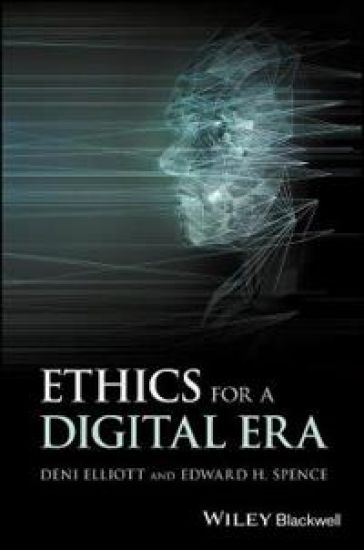
Ethics for a Digital Era

Ethics for a Digital Era

Deni Elliott; Edward H. Spence

John Wiley Sons Inc
2017
nidottu
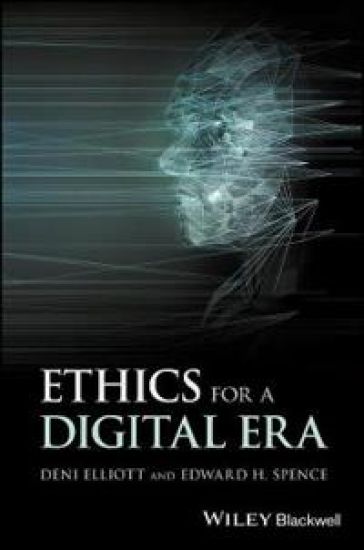
"Elliott and Spence have produced a tight, teachable, and timely primer on media ethics for users and creators of information in the digital age. Pitched at just the right depth of detail to provide a big picture contextualization of changing media practices grounded in concerns for democracy and the public good, the book explores and reflects the implications of the convergence of the Fourth and Fifth Estates with an open-access, hyper-linked architecture which invites self-reflective practice on the part of its users” Philip Gordon, Utah Valley University2019 PROSE Award Finalist in the Media & Cultural Studies category! The rapid and ongoing evolution of digital technologies has transformed the waythe world communicates and digests information. Fueled by a 24-hour news cycleand post-truth politics, media consumption and the technologies that drive ithave become more influential in shaping public opinion, and it has become more imperative than ever to examine their social and ethical consequences. Ethics for a Digital Era provides a penetrating analysis of the ethical issues that have emerged as the digital revolution progresses, including journalistic practices that impact on the truth, reliability, and trustworthiness of communicating information. The volume explores new methods and models for ethical inquiry in a digital world, and maps out guidelines for web-based news producers and users to conceptualize ethical issuesand analyze ethically questionable acts. In each of three thematic sections, Deni Elliott and Edward H. Spence reflect upon shifts in media ethics as contemporary mass communication combines traditional analog practices with new forms like blogs, vlogs, podcasts, and social media posts, and evolves into an interactive medium with users who both produce and consume the news. Later chapters apply a process of normative decision-making to some of the most important issues which arise in these interactions, and encourage users to bridge their own thinking between the virtual and physical worlds of information and its communication. Timely and thought-provoking, Ethics for a Digital Era is an invaluable resource for undergraduate and graduate students in media and mass communication, applied ethics, and journalism, as well as general readers interested in the ethical impact of their media consumption.
Ethics for a Digital Era

Ethics for a Digital Era

Deni Elliott; Edward H. Spence

John Wiley Sons Inc
2017
sidottu
"Elliott and Spence have produced a tight, teachable, and timely primer on media ethics for users and creators of information in the digital age. Pitched at just the right depth of detail to provide a big picture contextualization of changing media practices grounded in concerns for democracy and the public good, the book explores and reflects the implications of the convergence of the Fourth and Fifth Estates with an open-access, hyper-linked architecture which invites self-reflective practice on the part of its users” Philip Gordon, Utah Valley University2019 PROSE Award Finalist in the Media & Cultural Studies category! The rapid and ongoing evolution of digital technologies has transformed the waythe world communicates and digests information. Fueled by a 24-hour news cycleand post-truth politics, media consumption and the technologies that drive ithave become more influential in shaping public opinion, and it has become more imperative than ever to examine their social and ethical consequences. Ethics for a Digital Era provides a penetrating analysis of the ethical issues that have emerged as the digital revolution progresses, including journalistic practices that impact on the truth, reliability, and trustworthiness of communicating information. The volume explores new methods and models for ethical inquiry in a digital world, and maps out guidelines for web-based news producers and users to conceptualize ethical issuesand analyze ethically questionable acts. In each of three thematic sections, Deni Elliott and Edward H. Spence reflect upon shifts in media ethics as contemporary mass communication combines traditional analog practices with new forms like blogs, vlogs, podcasts, and social media posts, and evolves into an interactive medium with users who both produce and consume the news. Later chapters apply a process of normative decision-making to some of the most important issues which arise in these interactions, and encourage users to bridge their own thinking between the virtual and physical worlds of information and its communication. Timely and thought-provoking, Ethics for a Digital Era is an invaluable resource for undergraduate and graduate students in media and mass communication, applied ethics, and journalism, as well as general readers interested in the ethical impact of their media consumption.
Media, Markets, and Morals

Media, Markets, and Morals

Edward H. Spence; Andrew Alexandra; Aaron Quinn; Anne Dunn

Wiley-Blackwell (an imprint of John Wiley Sons Ltd)
2011
nidottu
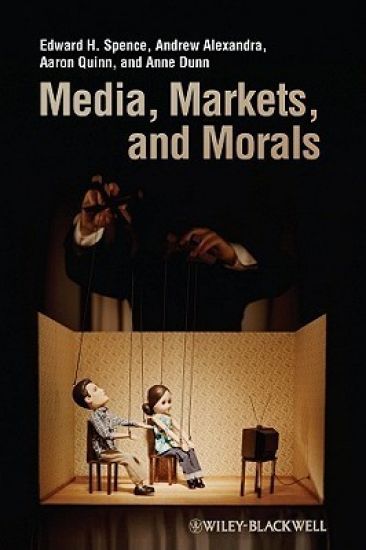
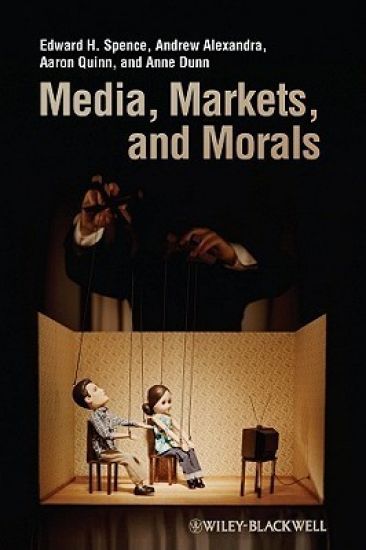
Media, Markets, and Morals provides an original ethical framework designed specifically for evaluating ethical issues in the media, including new media. The authors apply their account of the moral role of the media, in their dual capacity as information providers for the public good and as businesses run for profit, to specific morally problematic practices and question how ethical behavior can be promoted within the industry. Brings together experts in the fields of media studies and media ethics, information ethics, and professional ethicsOffers an original ethical framework designed specifically for evaluating ethical issues in the media, including new mediaBuilds upon and further develops an innovative theoretical model for examining and evaluating media corruption and methods of media anti-corruption previously developed by authors Spence and QuinnDiscloses and clarifies the inherent ethical nature of information and its communication to which the media as providers of information are necessarily committed
Media, Markets, and Morals

Media, Markets, and Morals

Edward H. Spence; Andrew Alexandra; Aaron Quinn; Anne Dunn

Wiley-Blackwell (an imprint of John Wiley Sons Ltd)
2011
sidottu
Media, Markets, and Morals provides an original ethical framework designed specifically for evaluating ethical issues in the media, including new media. The authors apply their account of the moral role of the media, in their dual capacity as information providers for the public good and as businesses run for profit, to specific morally problematic practices and question how ethical behavior can be promoted within the industry. Brings together experts in the fields of media studies and media ethics, information ethics, and professional ethicsOffers an original ethical framework designed specifically for evaluating ethical issues in the media, including new mediaBuilds upon and further develops an innovative theoretical model for examining and evaluating media corruption and methods of media anti-corruption previously developed by authors Spence and QuinnDiscloses and clarifies the inherent ethical nature of information and its communication to which the media as providers of information are necessarily committed