Kirjojen hintavertailu – 12 903 735 kirjaa ja 27 kauppaa

Kirjailija

Edward Herbert

Kirjat ja teokset yhdessä paikassa: 13 kirjaa, julkaisuja vuosilta 1968–2018, suosituimpiin kuuluu The Life of Edward Lord Herbert of Cherbury. Written by Himself. The Third Edition. Vertaile teosten hintoja ja tarkista saatavuus suomalaisista kirjakaupoista.

13 kirjaa

Kirjojen julkaisuvuodet: 1968–2018.

The Life of Edward Lord Herbert of Cherbury. Written by Himself. The Third Edition
The 18th century was a wealth of knowledge, exploration and rapidly growing technology and expanding record-keeping made possible by advances in the printing press. In its determination to preserve the century of revolution, Gale initiated a revolution of its own: digitization of epic proportions to preserve these invaluable works in the largest archive of its kind. Now for the first time these high-quality digital copies of original 18th century manuscripts are available in print, making them highly accessible to libraries, undergraduate students, and independent scholars. Rich in titles on English life and social history, this collection spans the world as it was known to eighteenth-century historians and explorers. Titles include a wealth of travel accounts and diaries, histories of nations from throughout the world, and maps and charts of a world that was still being discovered. Students of the War of American Independence will find fascinating accounts from the British side of conflict. ++++The below data was compiled from various identification fields in the bibliographic record of this title. This data is provided as an additional tool in helping to insure edition identification: ++++British LibraryT110829Edited by Horace Walpole. London: printed for J. Dodsley, 1778. 10],173, 1]p., plate: port.; 4
A Dialogue Between a Tutor and his Pupil. By Edward Lord Herbert, of Chirbury
The 18th century was a wealth of knowledge, exploration and rapidly growing technology and expanding record-keeping made possible by advances in the printing press. In its determination to preserve the century of revolution, Gale initiated a revolution of its own: digitization of epic proportions to preserve these invaluable works in the largest archive of its kind. Now for the first time these high-quality digital copies of original 18th century manuscripts are available in print, making them highly accessible to libraries, undergraduate students, and independent scholars. Western literary study flows out of eighteenth-century works by Alexander Pope, Daniel Defoe, Henry Fielding, Frances Burney, Denis Diderot, Johann Gottfried Herder, Johann Wolfgang von Goethe, and others. Experience the birth of the modern novel, or compare the development of language using dictionaries and grammar discourses. ++++The below data was compiled from various identification fields in the bibliographic record of this title. This data is provided as an additional tool in helping to insure edition identification: ++++British LibraryT149623With a half-title. London: printed for W. Bathoe, 1768. 8],272p.; 4
The Antient Religion of the Gentiles, and Causes of Their Errors Consider'd
The 18th century was a wealth of knowledge, exploration and rapidly growing technology and expanding record-keeping made possible by advances in the printing press. In its determination to preserve the century of revolution, Gale initiated a revolution of its own: digitization of epic proportions to preserve these invaluable works in the largest archive of its kind. Now for the first time these high-quality digital copies of original 18th century manuscripts are available in print, making them highly accessible to libraries, undergraduate students, and independent scholars. The Age of Enlightenment profoundly enriched religious and philosophical understanding and continues to influence present-day thinking. Works collected here include masterpieces by David Hume, Immanuel Kant, and Jean-Jacques Rousseau, as well as religious sermons and moral debates on the issues of the day, such as the slave trade. The Age of Reason saw conflict between Protestantism and Catholicism transformed into one between faith and logic -- a debate that continues in the twenty-first century.++++The below data was compiled from various identification fields in the bibliographic record of this title. This data is provided as an additional tool in helping to insure edition identification: ++++British LibraryT023186A reissue of the 1705 edition with a new titlepage. Pp. 337-352 omitted in pagination; text and register continuous. First published, posthumously, in 1663 as 'De religione gentilium'. London: printed for William Taylor, 1711. xiii, 3],336,353-388, 12]p.; 8
The Secrets of Q Central

The Secrets of Q Central

Paul Brown; Edward Herbert

The History Press Ltd
2014
nidottu
A quiet market town with no military presence was chosen as the secret communications centre for Britain as the country prepared for war with Germany in 1937. When hostilities began, ‘Q Central’ attracted a dozen other clandestine operations set up to defend the country or designed to confuse and undermine enemy morale. The headquarters of radar, RAF Group 60, also came to Leighton Buzzard to be hidden from German attack and to be close to the telephone and radio communications needed to run its vast chain of radar stations. These directed the defending fighters that saved the country in the Battle of Britain and then took the bombing war to Germany. Close by, for the same reasons of secrecy and safety, were the satellite stations of Bletchley Park, the now famous code-breaking centre; the Met Office at Dunstable, which gave the all clear for the D-Day landings; Black Ops units that set up false radio stations and wrote propaganda to confuse the enemy; and airfields used for dropping agents behind enemy lines. At Q Central itself was the largest telephone exchange in the world, with more than 1,000 teleprinters communicating with all the armed services in every theatre of war and directing the operations of the secret services. Now the restrictions of the Official Secrets Act have been lifted, enabling eight members of the Leighton Buzzard and District Archaeology and History Society to piece together this compelling story for the first time.
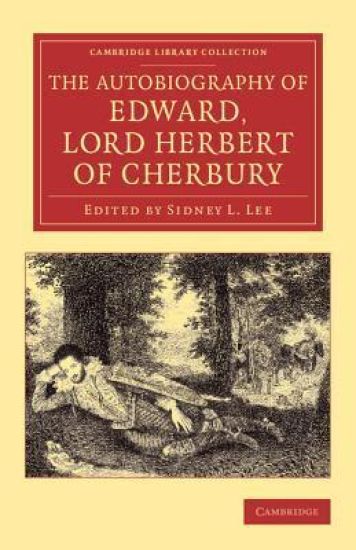
The Autobiography of Edward, Lord Herbert of Cherbury

The Autobiography of Edward, Lord Herbert of Cherbury

Edward Herbert

Cambridge University Press
2013
pokkari
Diplomat, philosopher and friend of John Donne and Ben Jonson, Edward Herbert (1582?–1648), first Baron Herbert of Cherbury, is best known for his philosophical treatise De veritate, examining the nature of truth. After Oxford and a period at court, he served as ambassador to France from 1619 to 1624. A reluctant Royalist, he surrendered the family seat, Montgomery Castle, to Parliament in 1644. His lively and amusing account of his adventures up to 1624 was first published by Horace Walpole in 1764 in an edition of only 200 copies. From the narrative we learn of Herbert's social triumphs in France and of his duels, affairs of the heart, views on education, and herbal remedies. Reissued here is the 1886 limited edition of 1,000 copies that was edited by the literary scholar Sidney Lee (1859–1926). Lee has completed Herbert's life story and offers an insightful introduction to the whole.