Kirjojen hintavertailu – 12 903 725 kirjaa ja 27 kauppaa
Kirjailija
Edward J. Blakely
Kirjat ja teokset yhdessä paikassa: 11 kirjaa, julkaisuja vuosilta 1997–2024, suosituimpiin kuuluu Fortress America. Vertaile teosten hintoja ja tarkista saatavuus suomalaisista kirjakaupoista.
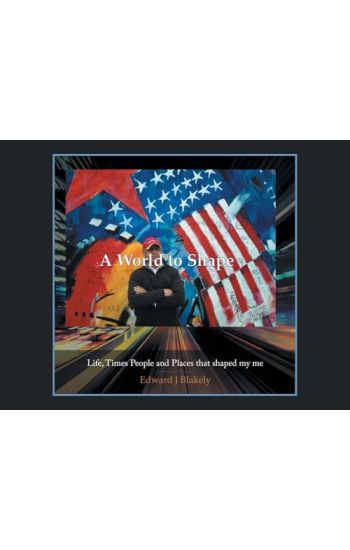
Edward James Blakely was born on April 21, 1938 San Bernardino, California to a modest African, Native American family. His life mirrors a racially and socially divided post World WarII America. Ed parents and grandparents along with his uncles and aunts were social & civil rights pioneers. His autobigrphy traces how he followed th journey of civil liberty across the United States. Ed carried his famil aspirations into the White House and leading cities and nations globally to become a world renowned and highly decorated urban planner and professor. This book contains his reflections as he shapes and is shaped by the world of his times.
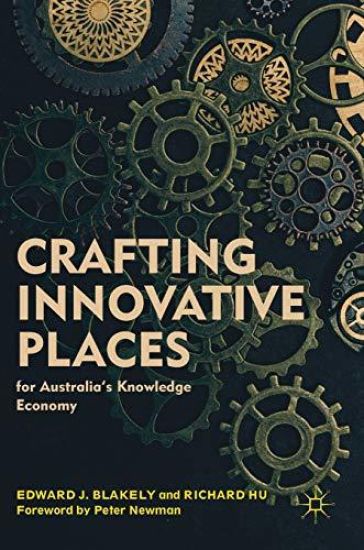
This book integrates planning, policy, economics, and urban design into an approach to crafting innovative places. Exploring new paradigms of innovative places under the framework of globalisation, urbanisation, and new technology, it argues against state-centric policies to innovation and focuses on how a globalized approach can shape innovative capacity and competitiveness. It notably situates the innovative place making paradigm in a broader context of globalisation, urbanisation, the knowledge economy and technological advancement, and employs an international perspective that includes a wide range of case studies from America, Europe, Asia, and Australia. Developing a co-design and co-creation paradigm that integrates governments, the private sector and the community into shared understanding and collaborative action in crafting innovative places, it discusses place-based innovation in Australian context to inform policy making and planning, and to contribute to policy debates onprograms of smart cities and communities.
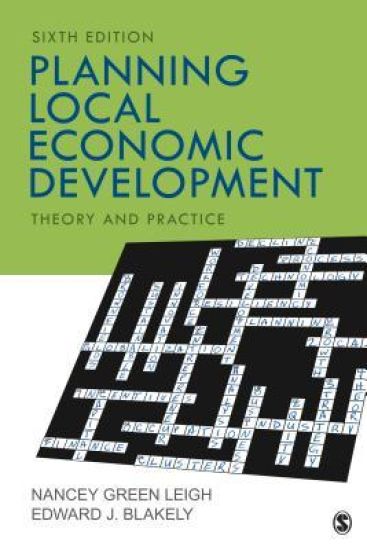
Written by authors with years of academic, regional, and city planning experience, this classic text has laid the foundation for practitioners and academics working in planning and policy development for generations. With deeper coverage of sustainability and resiliency, the new Sixth Edition explores the theories of local economic development while addressing the issues and opportunities faced by cities, towns, and local entities in crafting their economic destinies within the global economy. Nancey Green Leigh and Edward J. Blakely provide a thoroughly up-to-date exploration of planning processes, analytical techniques and data, and locality, business, and human resource development, as well as advanced technology and sustainable economic development strategies.
Edward J. Blakely has been called upon to help rebuild after some of the worst disasters in recent American history, from the San Francisco Bay Area's 1989 Loma Prieta earthquake to the September 11 attacks in New York. Yet none of these jobs compared to the challenges he faced in his appointment by New Orleans Mayor Ray Nagin as Director of the Office of Recovery and Development Administration following Hurricane Katrina. In Katrina's wake, New Orleans and the Gulf Coast suffered a disaster of enormous proportions. Millions of pounds of water crushed the basic infrastructure of the city. A land area six times the size of Manhattan was flooded, destroying 200,000 homes and leaving most of New Orleans under water for 57 days. No American city had sustained that amount of destruction since the Civil War. But beneath the statistics lies a deeper truth: New Orleans had been in trouble well before the first levee broke, plagued with a declining population, crumbling infrastructure, ineffective government, and a failed school system. Katrina only made these existing problems worse. To Blakely, the challenge was not only to repair physical damage but also to reshape a city with a broken economy and a racially divided, socially fractured community. My Storm is a firsthand account of a critical sixteen months in the post-Katrina recovery process. It tells the story of Blakely's endeavor to transform the shell of a cherished American city into a city that could not only survive but thrive. He considers the recovery effort's successes and failures, candidly assessing the challenges at hand and the work done-admitting that he sometimes stumbled, especially in managing press relations. For Blakely, the story of the post-Katrina recovery contains lessons for all current and would-be planners and policy makers. It is, perhaps, a cautionary tale.
Carl Anthony; Thomas Balsley; Timothy Beatley; Eugenie Birch; Edward J. Blakely; Colin M. Cathcart; Steven E. Clemants; Christopher A. De Sousa; Steven N. Handel
Four-fifths of Americans now live in the nation's sprawling metropolitan areas, and half of the world's population is now classified as ""urban."" As cities become the dominant living environment for humans, there is growing concern about how to make such places more habitable, more healthy and safe, more ecological, and more equitable - in short, more ""humane."" This book explores the prospects for a more humane metropolis through a series of essays and case studies that consider why and how urban places can be made greener and more amenable. Its point of departure is the legacy of William H. Whyte (1917-1999), one of America's most admired urban thinkers. From his eyrie high above Manhattan in the offices of the Rockefeller Brothers Fund, Whyte laid the foundation for today's ""smart growth"" and ""new urbanist"" movements with books, such as ""The Last Landscape"" (1968). His passion for improving the habitability of cities and suburbs is reflected in the diverse grass-roots urban design and regreening strategies discussed in this volume. Topics examined in this book include urban and regional greenspaces, urban ecological restoration, social equity, and green design. Some of the contributors are recognized academic experts, while others offer direct practical knowledge of particular problems and initiatives. The editor's introduction and epilogue set the individual chapters in a broader context and suggest how the strategies described, if widely replicated, may help create more humane urban environments.
"Gated communities are a new ""hot button"" in many North American cities. From Boston to Los Angeles and from Miami to Toronto citizens are taking sides in the debate over whether any neighborhood should be walled and gated, preventing intrusion or inspection by outsiders. This debate has intensified since the hard cover edition of this book was published in 1997. Since then the number of gated communities has risen dramatically. In fact, new homes in over 40 percent of planned developments are gated n the West, the South, and southeastern parts of the United States. Opposition to this phenomenon is growing too. In the small and relatively homogenous town of Worcester, Massachusetts, a band of college students from Brown University and the University of Chicago picketed the Wexford Village in November of 1998 waving placards that read ""Gates Divide."" These students are symbolic of a much larger wave of citizens asking questions about the need for and the social values of gates that divide one portion of a community from another."
Gated communities are a new "hot button" in many North American cities. From Boston to Los Angeles and from Miami to Toronto citizens are taking sides in the debate over whether any neighborhood should be walled and gated, preventing intrusion or inspection by outsiders. This debate has intensified since the hard cover edition of this book was published in 1997. Since then the number of gated communities has risen dramatically. In fact, new homes in over 40 percent of planned developments are gated n the West, the South, and southeastern parts of the United States. Opposition to this phenomenon is growing too. In the small and relatively homogenous town of Worcester, Massachusetts, a band of college students from Brown University and the University of Chicago picketed the Wexford Village in November of 1998 waving placards that read "Gates Divide." These students are symbolic of a much larger wave of citizens asking questions about the need for and the social values of gates that divide one portion of a community from another.