Kirjojen hintavertailu – 12 903 724 kirjaa ja 27 kauppaa

Kirjailija

Edward J. Marolda

Kirjat ja teokset yhdessä paikassa: 19 kirjaa, julkaisuja vuosilta 2001–2025, suosituimpiin kuuluu Combat at Close Quarters. Vertaile teosten hintoja ja tarkista saatavuus suomalaisista kirjakaupoista.

Nimi esiintyy myös muodoissa: Edward J Marolda

19 kirjaa

Kirjojen julkaisuvuodet: 2001–2025.

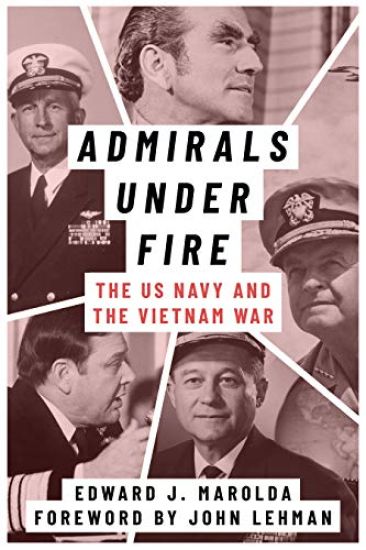
Admirals Under Fire

Admirals Under Fire

Edward J. Marolda; John Lehman

TEXAS A M UNIVERSITY PRESS
2025
nidottu
By now the world knows well the exploits of World War II admirals Ernest King, Chester Nimitz, and "Bull" Halsey. These brilliant strategists and combat commanders--backed by a powerful Allied coalition, a nation united, gifted civilian leaders, and abundant war-making resources--led U. S. and allied naval forces to victory against the Axis powers. Leadership during the Vietnam War was another story. The Vietnam War and its aftermath sorely tested the professional skill of four-star admirals Harry D. Felt, Ulysses S. Grant Sharp, Thomas H. Moorer, Elmo R. Zumwalt Jr., and James L. Holloway III. Unlike their World War II predecessors, these equally battle-tested leaders had to cope with a flawed American understanding of U. S. and Vietnamese Communist strengths and weaknesses, distrustful and ill-focused Washington leaders, an increasingly discontented American populace, and an ultimately failing war effort. Like millions of other Americans, these five admirals had to come to terms with America's first lost war, and what that loss meant for the future of the nation and the U. S. armed forces. The challenges were both internal and external. A destabilized U. S. Navy was troubled by racial discord, drug abuse, anti-war and anti-establishment sentiment, and a host of personnel and material ills. At the same time, increasingly serious global threats to US interests, such as the rise of Soviet nuclear-missile and naval power, were shaping confrontations on the postwar stage. Critical to the story is how these naval leaders managed their relationships with Presidents Kennedy, Johnson, Nixon, Ford, and Carter, and Secretaries of Defense McNamara, Laird, and Schlesinger. Based on prodigious research into many formerly classified sources, Edward J. Marolda relates in dramatic detail how America's top naval leaders tackled their responsibilities, their successes, and their failures. This is a story of dedication to duty, professionalism, and service by America's top admirals during a time of great national and international adversity.
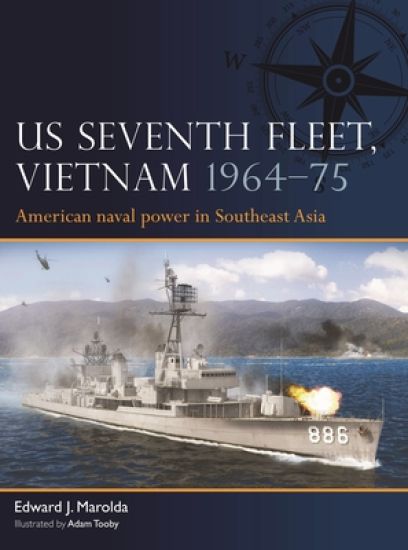
US Seventh Fleet, Vietnam 1964–75

US Seventh Fleet, Vietnam 1964–75

Edward J. Marolda

BLOOMSBURY PUBLISHING PLC
2023
nidottu
"This is a terrific history of the Seventh Fleet’s vital service to the United States in the Vietnam War... remarkably researched and interpreted"- Admiral Jonathan W. Greenert, Chief of Naval Operations, 2011–2015 and Commander Seventh Fleet, 2004–2006"Combines a crisp text by the leading authority on the subject, with well-chosen contemporary photographs, new maps, and excellent art work… an excellent introduction to a complex conflict, and the operational lessons learnt."- Professor Andrew Lambert, Laughton Professor of Naval History, King’s College LondonA superbly illustrated examination of how the US Navy's most powerful fleet fought the Vietnam War, covering all of its elements from aircraft carriers and heavy cruisers to minesweepers and oilers. The US Navy's Seventh Fleet was at the forefront of America's campaign in Vietnam for a decade, from the Gulf of Tonkin Incident that began it all to the final evacuation of South Vietnam. Its mission was highly strategic, and while its primary role was to provide carrier-based air power over North Vietnam – from Rolling Thunder through Linebacker – the fleet's operations were complex, sensitive, and varied, and required all the capabilities of the fleet. This book is the first overall examination of how US Navy's most powerful fleet fought and operated in Vietnam. Distilled from thousands of declassified secret documents by renowned US Navy specialist Dr Edward J. Marolda, it offers a unique new portrait of how the Seventh Fleet fought the Vietnam War, from the offensive strike power of naval aviation to the vital role of fleet logistics. As well as the carrier operations, he examines the surface combatant fleet's gunfire support role, and its raids against the North Vietnamese coast. Dr Marolda also looks at amphibious warfare, fleet air defense, search-and-rescue, and mining and interdiction operations. Illustrated throughout with archive photos, 3D diagrams and spectacular new artwork, and informed by never-before-translated official documents, publications, and personal accounts from North Vietnamese, Soviet, and Chinese sources, this is the real story behind the US Navy's Vietnam War.
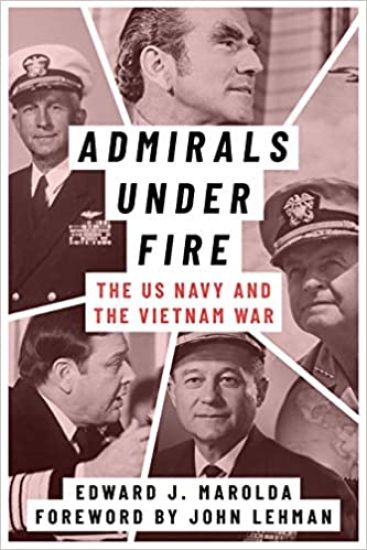
Admirals Under Fire

Admirals Under Fire

Edward J. Marolda; John Lehman

Texas Tech Press,U.S.
2021
sidottu
By now the world knows well the exploits of World War II admirals Ernest King, Chester Nimitz, and "Bull" Halsey. These brilliant strategists and combat commanders--backed by a powerful Allied coalition, a nation united, gifted civilian leaders, and abundant war-making resources--led U. S. and allied naval forces to victory against the Axis powers. Leadership during the Vietnam War was another story. The Vietnam War and its aftermath sorely tested the professional skill of four-star admirals Harry D. Felt, Ulysses S. Grant Sharp, Thomas H. Moorer, Elmo R. Zumwalt Jr., and James L. Holloway III. Unlike their World War II predecessors, these equally battle-tested leaders had to cope with a flawed American understanding of U. S. and Vietnamese Communist strengths and weaknesses, distrustful and ill-focused Washington leaders, an increasingly discontented American populace, and an ultimately failing war effort. Like millions of other Americans, these five admirals had to come to terms with America's first lost war, and what that loss meant for the future of the nation and the U. S. armed forces. The challenges were both internal and external. A destabilized U. S. Navy was troubled by racial discord, drug abuse, anti-war and anti-establishment sentiment, and a host of personnel and material ills. At the same time, increasingly serious global threats to US interests, such as the rise of Soviet nuclear-missile and naval power, were shaping confrontations on the postwar stage. Critical to the story is how these naval leaders managed their relationships with Presidents Kennedy, Johnson, Nixon, Ford, and Carter, and Secretaries of Defense McNamara, Laird, and Schlesinger. Based on prodigious research into many formerly classified sources, Edward J. Marolda relates in dramatic detail how America's top naval leaders tackled their responsibilities, their successes, and their failures. This is a story of dedication to duty, professionalism, and service by America's top admirals during a time of great national and international adversity.
Combat at Close Quarters

Combat at Close Quarters

Edward J. Marolda

Naval Institute Press
2018
sidottu
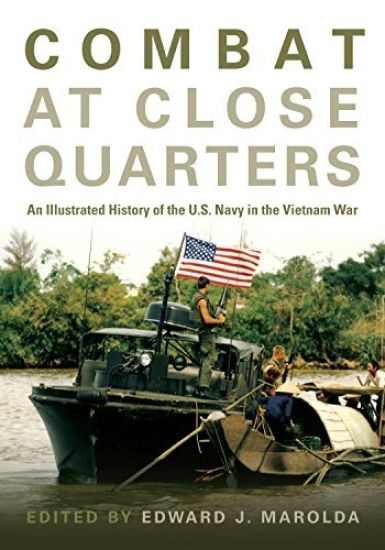
Combat at Close Quarters presents the work of five renowned historians who describe and interpret the U. S. Navy's major combat operations in Southeast Asia, including the Rolling Thunder and Linebacker strikes against North Vietnam, the river war in South Vietnam's Mekong Delta, and the intelligence campaign. The concise, eminently readable test is complemented with over 200 images drawn from Navy archives and private collections, detailed maps, and a select list of the most authoritative works on the subject. The chapters describe not only the actions of the warships, aircraft, and river vessels involved in one of America's longest wars but the professional skill,dedication, and courage of the Navy men and women who went in ""harm's way"" in Vietnam.
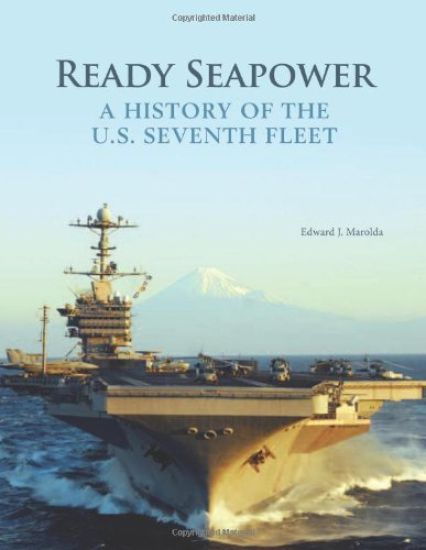
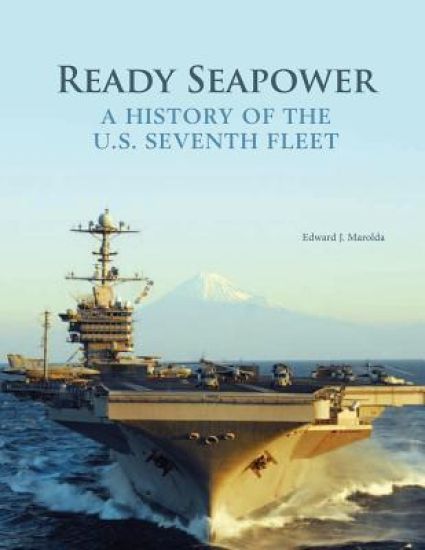
Ready Seapower: A History of the U.S. Seventh Fleet (Color)

Ready Seapower: A History of the U.S. Seventh Fleet (Color)

Edward J. Marolda; Department of the Navy

Createspace Independent Publishing Platform
2014
nidottu
U. S. interest in the Far East dates from the earliest years of the republic, when American merchant ships sailed across the vast Pacific to ply their trade in the ports of China, the Philippines, Indochina, and the East Indies. Warships of the U. S. Navy followed soon afterward to protect those commercial carriers and to promote American diplomatic interests in Asia. The U. S. Seventh Fleet, successor to the Asiatic Squadron and Asiatic Fleet of the 19th andearly 20th centuries, began making its own naval history in the early days of World War II. Uniqueamong the nation's naval forces, the fleet has taken part in all the major conflicts and most of the crises and confrontations of the last six decades. It has defended U. S. interests and worked with America's Asian alliances to deter aggressors and maintain peace and stability in the region. The fleet's Sailors have provided humanitarian assistance and disaster relief to numerous countries devastated by natural and man made disasters. The fleet's area of responsibility in the 21st century encompasses 48 million square miles ofthe Pacific and Indian oceans, an area holding half of the world's population, 35 nations, and manyof its most prosperous economies. Much of the world's energy resources and oceangoing tradepasses through waters guarded by the warships, aircraft, and men and women of the U. S. SeventhFleet, whose motto is appropriately-Ready Power for Peace.
Ready Seapower: A History of the U.S. Seventh Fleet (Black and White)

Ready Seapower: A History of the U.S. Seventh Fleet (Black and White)

Edward J. Marolda; Department of the Navy

Createspace Independent Publishing Platform
2014
nidottu
U. S. interest in the Far East dates from the earliest years of the republic, when American merchant ships sailed across the vast Pacific to ply their trade in the ports of China, the Philippines, Indochina, and the East Indies. Warships of the U. S. Navy followed soon afterward to protect those commercial carriers and to promote American diplomatic interests in Asia. The U. S. Seventh Fleet, successor to the Asiatic Squadron and Asiatic Fleet of the 19th andearly 20th centuries, began making its own naval history in the early days of World War II. Uniqueamong the nation's naval forces, the fleet has taken part in all the major conflicts and most of the crises and confrontations of the last six decades. It has defended U. S. interests and worked with America's Asian alliances to deter aggressors and maintain peace and stability in the region. The fleet's Sailors have provided humanitarian assistance and disaster relief to numerous countries devastated by natural and manmade disasters. The fleet's area of responsibility in the 21st century encompasses 48 million square miles ofthe Pacific and Indian oceans, an area holding half of the world's population, 35 nations, and manyof its most prosperous economies. Much of the world's energy resources and oceangoing tradepasses through waters guarded by the warships, aircraft, and men and women of the U. S. SeventhFleet, whose motto is appropriately-Ready Power for Peace.
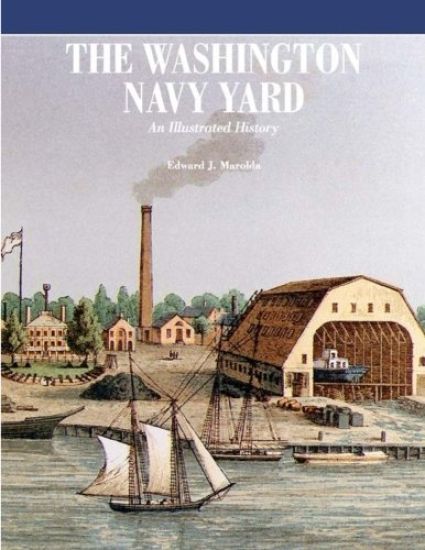
The Washington Navy Yard (Color)

The Washington Navy Yard (Color)

Edward J. Marolda; Department of the Navy

Createspace Independent Publishing Platform
2014
nidottu
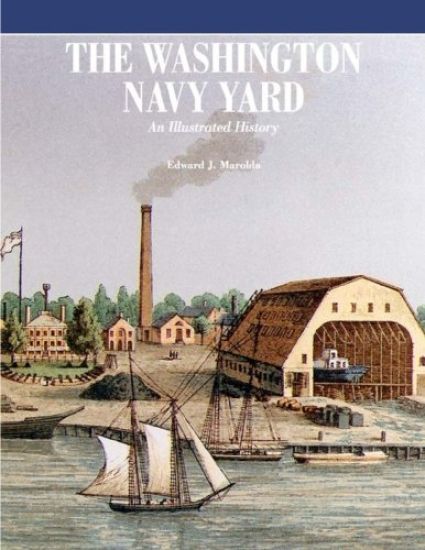
During much of the 19th and 20th centuries, the Washington Navy Yard was the most recognizable symbol of the United States Navy in the nation's capital. The shipyard built a number of the Navy's first warships and repaired, refitted, and provisioned most of the frigates, sloops, and other combatants of the fledgling naval service. The masts and rigging of USS Constitution were a common site on the banks of the AnacostiaRiver. Booming cannon became a routine sound insoutheast Washington during the mid-19th century as Commander John A. Dahlgren, "father of American naval ordnance," test-fired new guns for the fleet. The Naval Gun Factory's fire and smoke-belching blast furnaces, foundries, and mills gave birth to many of the fleet's weapons, from small boat howitzers to the enormous14-inch and 16-inch rifles that armed the navalrailway batteries in World War I and the Iowa-classbattleships in World War II and the Cold War. RearAdmiral David W. Taylor inaugurated a new era in ship development when he used scientific measurements in his Experimental Model Basin to test the properties of prototype hulls. Before and after World War I, the pioneers of naval aviation experimented in the Anacostia and navy yard facilities with various seaplane types, shipboard catapults, and other equipment that wouldsoon revolutionize warfare at sea.
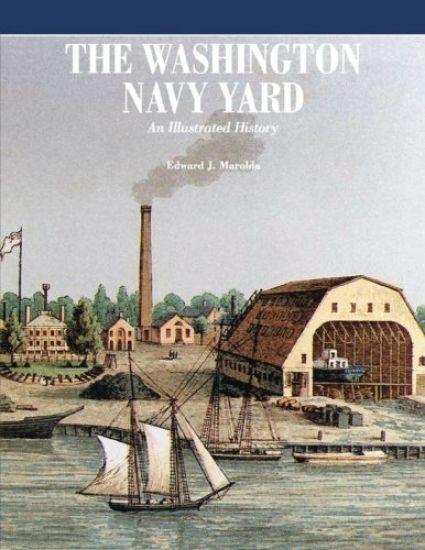
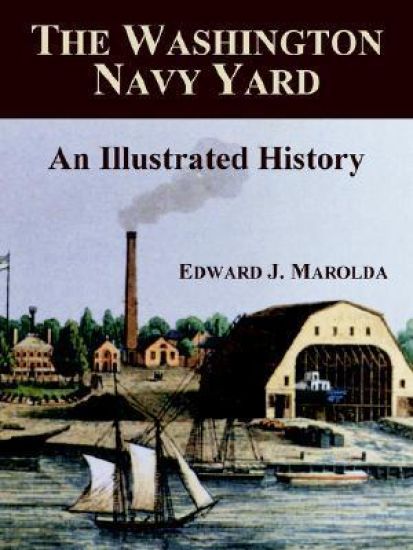
The Washington Navy Yard

The Washington Navy Yard

Edward J Marolda

University Press of the Pacific
2004
pokkari
Throughout its history, the yard has been associated with names like Washington, Jefferson, Lincoln, and Kennedy. Kings and queens have visited the yard; its waterfront has seen many historic moments; and some of our Navy's most senior and most notable officers have called it home. Such legendary ships as USS Constitution and USS Constellation sailed from its piers, and the 14-inch and 16-inch guns that armed our Navy's battleships during Word Wars I and II were built in its factories.