
Kirjailija
Edward J. Robinson
Kirjat ja teokset yhdessä paikassa: 6 kirjaa, julkaisuja vuosilta 2013–2023, suosituimpiin kuuluu Hard-Fighting Soldiers. Vertaile teosten hintoja ja tarkista saatavuus suomalaisista kirjakaupoista.
Nimi esiintyy myös muodoissa: Edward J Robinson
6 kirjaa
Kirjojen julkaisuvuodet: 2013–2023.
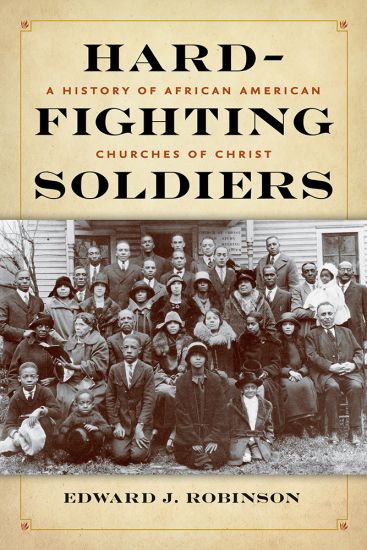
In the first full-length scholarly synthesis of the African American Churches of Christ, Edward J. Robinson provides a comprehensive look at the church’s improbable development against a backdrop of African American oppression. The journey begins with a lesser known preacher, F. F. Carson, in many ways a forerunner in the struggles and triumphs awaiting the preachers and lay people in the congregations to come. Robinson then builds on scholarship treating well-known figures, including Marshall Keeble and G. P. Bowser, to present a wide-ranging history of African American Churches of Christ from their beginnings—when enslaved people embraced the nascent Stone-Campbell Christian Movement even though founder Alexander Campbell himself favored slavery. The author moves on to examine how the churches grew under the leadership of S. R. Cassius, even as Jim Crow restrictions put extreme pressure on organizations of any kind among African Americans. Robinson's well-researched narrative treats not only the black male leaders of the church, but also women leaders, such as Annie C. Tuggle, as well as notable activities of the church, including music, education, and global evangelism, thus painting a complete picture of African American Churches of Christ. Through scholarship and compelling storytelling, Robinson tells the two-hundred-year tale of how "black believers survived and thrived on the discarded 'scraps' of America, forging their own identity, fashioning their own lofty ecclesiology and 'hard' theology, and creating their own papers, lectureships, liturgy, and congregations." A groundbreaking exploration by a seasoned scholar in American religion, Hard-Fighting Soldiers is sure to become the standard text for anyone researching the African American Churches of Christ.
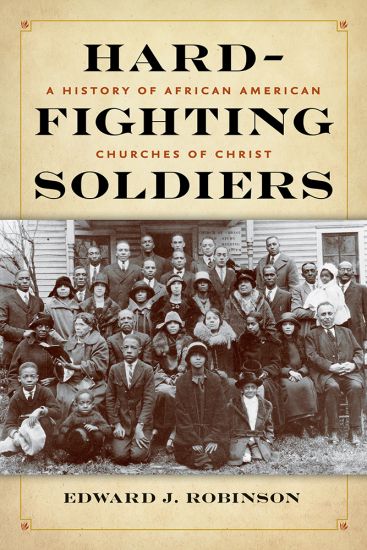
In the first full-length scholarly synthesis of the African American Churches of Christ, Edward J. Robinson provides a comprehensive look at the church’s improbable development against a backdrop of African American oppression. The journey begins with a lesser known preacher, F. F. Carson, in many ways a forerunner in the struggles and triumphs awaiting the preachers and lay people in the congregations to come. Robinson then builds on scholarship treating well-known figures, including Marshall Keeble and G. P. Bowser, to present a wide-ranging history of African American Churches of Christ from their beginnings—when enslaved people embraced the nascent Stone-Campbell Christian Movement even though founder Alexander Campbell himself favored slavery. The author moves on to examine how the churches grew under the leadership of S. R. Cassius, even as Jim Crow restrictions put extreme pressure on organizations of any kind among African Americans. Robinson’s well-researched narrative treats not only the black male leaders of the church, but also women leaders, such as Annie C. Tuggle, as well as notable activities of the church, including music, education, and global evangelism, thus painting a complete picture of African American Churches of Christ. Through scholarship and compelling storytelling, Robinson tells the two-hundred-year tale of how “black believers survived and thrived on the discarded ‘scraps’ of America, forging their own identity, fashioning their own lofty ecclesiology and ‘hard’ theology, and creating their own papers, lectureships, liturgy, and congregations.” A groundbreaking exploration by a seasoned scholar in American religion, Hard-Fighting Soldiers is sure to become the standard text for anyone researching the African American Churches of Christ.
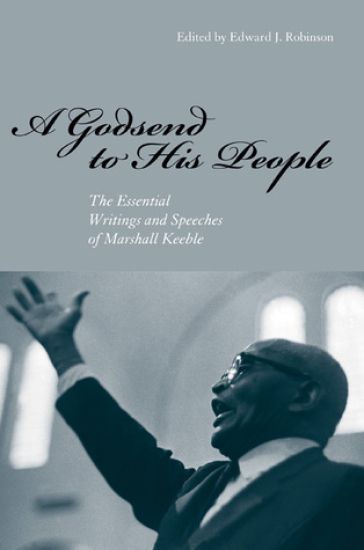
Marshall Keeble (1878-1968) stands as one of the Church of Christ's most influential and celebrated African American evangelists. His impact was felt throughout the South and well beyond as he helped establish over two hundred churches and baptized approximately forty thousand individuals during his nearly seventy years of ministry. His charismatic and dynamic speaking style earned him a devoted following. Despite his impact on the religious culture of the South, there has been scant information available about this extraordinary individual-until now. Edward J. Robinson brings to light over forty years of Keeble's writings. This collection shows the human side of Keeble, revealing his concern for the souls of his faithful followers and the pragmatic way in which he ran his ministry. The sermons and other writings give great insight into the struggles of a prominent African American trying to navigate his way through the challenges of conducting his ministry in the segregated world of the Jim Crow South. Robinson draws on a variety of sources in which Keeble was published, including the Gospel Advocate and the Christian Echo, as well as lectures Keeble gave to students at Abilene Christian College. Through these pages, the reader will learn more about this articulate, passionate, and intelligent man. A Godsend to His People is the first scholarly treatment of this evangelist and will appeal to those interested in the history of the Church of Christ and religious studies.
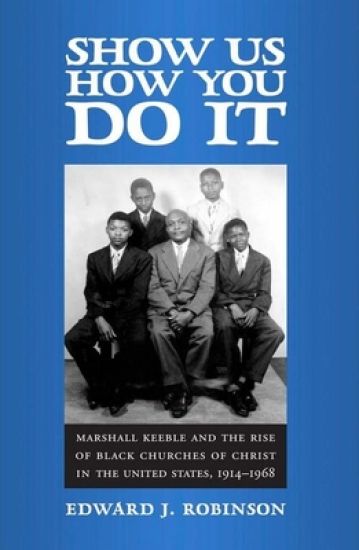
Marshall Keeble (1878–1968) was the premier evangelist in black Churches of Christ from 1931 until his death in 1968. Born and reared in middle Tennessee, Keeble came under the influence of Preston Taylor, Samuel Womack, and Alexander Campbell, as well as the social influence of Booker T. Washington. In 1914, Keeble committed himself to full-time evangelism and by the 1920s had established himself as a noteworthy preacher. By the time of his death, he reportedly had baptized 40,000 people and had established more than 200 congregations, some of which still flourish today. Show Us How You Do It is the first critical study of Keeble and his evangelical career. Based on primary sources, Edward Robinson reconstructs the life, public ministry, missionary activities, and the reception of Keeble among Churches of Christ. He also explores Keeble’s relationship with white businessmen and how he secured white support in establishing a large fellowship of African American Churches of Christ in the South. Show Us How You Do It details Keeble’s theology, ethos, and polemics toward other churches. Robinson demonstrates Keeble’s legacy in the labor of his African American co-workers and of the students who attended Nashville Christian Institute. Of the approximately 2.5 million members of the Churches of Christ in the U. S., an estimated 10 percent are African-Americans, and many in this fellowship can trace their affiliation to Keeble and to those whom he trained.
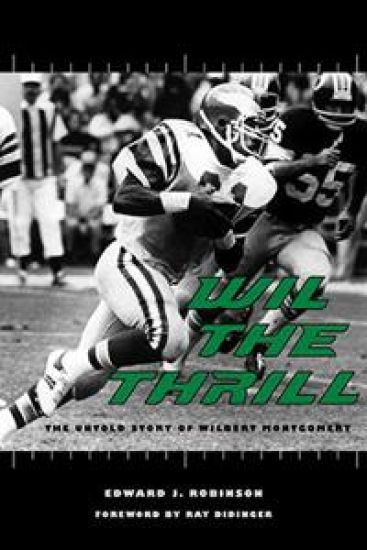
When Wilbert Montgomery earned his Super Bowl XLVII ring as running-backs coach for the Baltimore Ravens in 2013, he was no stranger to glory. In Philadelphia and elsewhere his legacy still looms large. Montgomery was the halfback whose touchdown on the second play from scrimmage and total 194 yards against a stout Cowboy defense helped spur the Eagles to the 1981 NFC title and Super Bowl XV. But perhaps even more enduring should be the story of how this shy but courageous athlete broke down barriers throughout his life, even before the his time in the NFL. Escaping an oppressive and impoverished environment in his home state of Mississippi in the early 1970s, he became one of the first African Americans to play for what was then Abilene Christian College, after its all-white coaching staff lured him away from the gridiron at historically black Jackson State College. Although leading ACC to a 1973 national title would help catapult Montgomery to a remarkable pro career, no one before has illuminated the complex interplay of race relations, sports, and religion in Montgomery's heroic accomplishments in West Texas and beyond.