Kirjojen hintavertailu – 12 859 819 kirjaa ja 27 kauppaa

Kirjailija

Edward Luce

Kirjat ja teokset yhdessä paikassa: 13 kirjaa, julkaisuja vuosilta 2008–2026, suosituimpiin kuuluu Om den amerikanska idén. Vertaile teosten hintoja ja tarkista saatavuus suomalaisista kirjakaupoista.

13 kirjaa

Kirjojen julkaisuvuodet: 2008–2026.

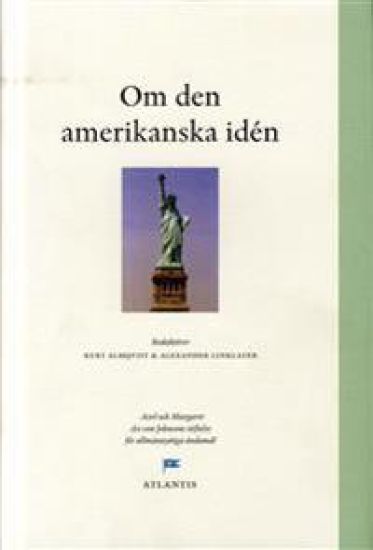
Om den amerikanska idén

Om den amerikanska idén

Peter Baldwin; Peter Beinart; Kathleenn Burk; James Carroll; David Ellwood; Godfrey Hodgson; Daniel Walker Howe; Oliver Kamm; Deepak Lal; Anatol Lieven; Edward Luce; Pauline Maier; Douglas Murray; Jong-Yil Ra; David Reynolds; Philippe Roger; Göran Rosenberg; robert J Shapiro; Anders Stephanson; Reinhold Wagnleitner; Alan Wolfe

Bokförlaget Atlantis
2010
sidottu
Hur uppstod idén om Amerika, hur har den omformats genom historien, vart är den på väg? Kring dessa och liknande frågor kretsade Engelsbergsseminariet 2009. Vilka är komponenterna i den amerikanska idén? Hur förvaltas de i dagens USA? Hur reagerar resten av världen på dem? Sker idag en övergång till en post-amerikansk värld? Vem kommer i så fall att ta över USA:s ledande ställning? Indien? Kina? Och vad skulle det innebära? Vilka tankefigurer skulle då komma att prägla världen? Eller har USA chansen att bli kvar som herre på täppan? Bevittnar vi början på slutet för idén om Amerika eller befinner vi oss bara i början av en amerikansk era? Bland bidragsgivarna märks Anatol Lieven, Deepak Lal, Jong-Yil Ra, Edward Luce och Alan Wolfe.

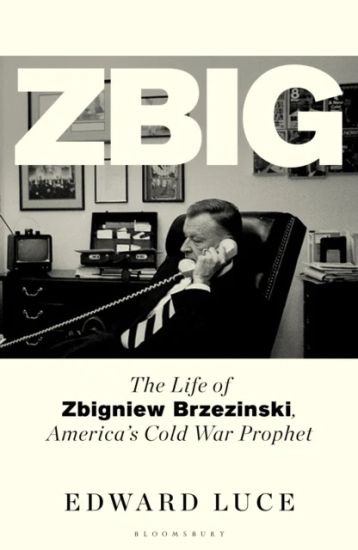
Zbig

Zbig

Edward Luce

BLOOMSBURY PUBLISHING PLC
2026
nidottu
'For anyone who wants to understand the history of America and the world, this is a useful and important book' ANNE APPLEBAUM 'A biographer of genius ... One of the sharpest political pens of our day' WILLIAM DALRYMPLE 'A towering achievement. A book which is founded on deep scholarship, yet so accessible and readable from the very beginning that it feels more like a historical detective story' RAGEH OMAAR Zbigniew Brzezinski was a political strategist who rose to prominence as an intellectual architect of US foreign policy during the Cold War. As National Security Advisor to President Jimmy Carter and a trusted advisor to US presidents from John F. Kennedy onwards, Brzezinski’s expertise helped shape global strategy at critical moments - most significantly as a key figure in the downfall of the Soviet Union. A Polish émigré who witnessed the devastation of his homeland during both Nazi and Soviet occupations, Brzezinski became one of the West’s foremost scholars of totalitarianism. His nuanced understanding of the importance of ‘speaking the enemy’s language’, coupled with his close friendship with Pope John Paul II was instrumental in preventing a Soviet invasion of Poland. While Nixon and Kissinger, his lifelong rival, famously opened China to the West in the early 1970s, it was Brzezinski and Carter who strengthened US-China relations, further shifting the global balance of power away from Moscow. Beyond the Cold War, Brzezinski continued to influence foreign policy, notably in shaping the nation’s response to the 9/11 attacks. Yet his legacy remains underreported, leaving gaps in our understanding of Cold War history and its aftermath. Edward Luce, celebrated columnist and political writer, restores Brzezinski’s rightful place in history. Through a sweeping narrative that spans much of the 20th century, Zbig offers a gripping account of Brzezinski’s life and, in doing so, narrates a compelling re-examination of the end of the Cold War.
A Curriculum for Plastic Surgery

A Curriculum for Plastic Surgery

Edward Luce

Springer International Publishing AG
2025
sidottu
This book offers a comprehensive curriculum on plastic surgery, centered on adult learning principles. The pedagogical structure includes a base of cognitive knowledge that consists of the entire spectrum of plastic surgery; reconstructive and aesthetic; a guide for an interactive discussion of each component of the knowledge base; a set of multiple-choice questions with a syllabus of explanation of correct and incorrect responses; and clinical cases to illustrate each element. Over one hundred modules constitute the curriculum, all of which are grouped into thirteen general categories. Each module includes a selected bibliography of relevant and contemporary readings, a discussion guide of broad questions and answers for a faculty member to drive an interactive discussion of the module, a set of multiple-choice questions for each module to serve as a short written quiz, and 1-3 cases that are utilized in a case-base conference to discuss the practical application of cognitive knowledge to problem-solving of a clinical scenario. Finally, a several-page review of the particular case provides an optimal approach to diagnosis and treatment. A Curriculum for Plastic Surgery provides an encyclopedic yet facile vehicle to deliver a comprehensive, contemporary, and interactive curriculum. The curriculum reflects the author’s four decade long career in academic practice and teaching within this field.
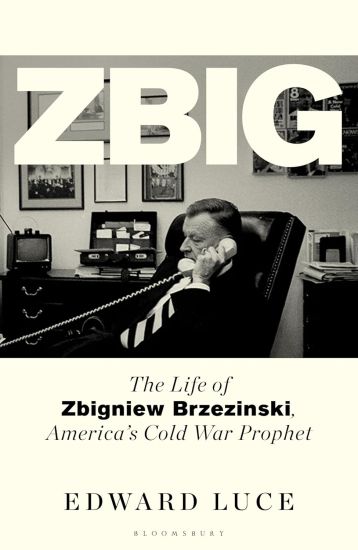
Zbig

Zbig

Edward Luce

BLOOMSBURY PUBLISHING PLC
2025
sidottu

Halvin toimitettuna 32,40 €

'For anyone who wants to understand the history of America and the world, this is a useful and important book' ANNE APPLEBAUM'A biographer of genius ... One of the sharpest political pens of our day' WILLIAM DALRYMPLE'A towering achievement. A book which is founded on deep scholarship, yet so accessible and readable from the very beginning that it feels more like a historical detective story' RAGEH OMAARZbigniew Brzezinski was a political strategist who rose to prominence as an intellectual architect of US foreign policy during the Cold War. As National Security Advisor to President Jimmy Carter and a trusted advisor to US presidents from John F. Kennedy onwards, Brzezinski’s expertise helped shape global strategy at critical moments - most significantly as a key figure in the downfall of the Soviet Union. A Polish émigré who witnessed the devastation of his homeland during both Nazi and Soviet occupations, Brzezinski became one of the West’s foremost scholars of totalitarianism. His nuanced understanding of the importance of ‘speaking the enemy’s language’, coupled with his close friendship with Pope John Paul II was instrumental in preventing a Soviet invasion of Poland. While Nixon and Kissinger, his lifelong rival, famously opened China to the West in the early 1970s, it was Brzezinski and Carter who strengthened US-China relations, further shifting the global balance of power away from Moscow. Beyond the Cold War, Brzezinski continued to influence foreign policy, notably in shaping the nation’s response to the 9/11 attacks. Yet his legacy remains underreported, leaving gaps in our understanding of Cold War history and its aftermath. Edward Luce, celebrated columnist and political writer, restores Brzezinski’s rightful place in history. Through a sweeping narrative that spans much of the 20th century, Zbig offers a gripping account of Brzezinski’s life and, in doing so, narrates a compelling re-examination of the end of the Cold War.
Zbig: The Life of Zbigniew Brzezinski, America's Great Power Prophet

Zbig: The Life of Zbigniew Brzezinski, America's Great Power Prophet

Edward Luce

Avid Reader Press / Simon Schuster
2025
sidottu

Halvin toimitettuna 30,50 €

NEW YORK TIMES BESTSELLER An intimate and masterful biography of Zbigniew Brzezinski--President Carter's national security advisor and one of America's leading geopolitical thinkers--from one of the finest columnists and political writers at work today. Zbigniew Brzezinski was a key architect of the Soviet Union's demise, which ended the Cold War. A child of Warsaw--the heart of central Europe's bloodlands--Brzezinski turned his fierce resentment at his homeland's razing by Nazi Germany and the Red Army into a lifelong quest for liberty. Born the year that Joseph Stalin consolidated power, and dying a few months into Donald Trump's first presidency, Brzezinski was shaped by and in turn shaped the global power struggles of the twentieth and early twenty-first centuries. As counsel to US presidents from John F. Kennedy to Barack Obama, and chief foreign policy figure of the late 1970s under Jimmy Carter, Brzezinski converted his acclaim as a Sovietologist into Washington power. With Henry Kissinger, his lifelong rival with whom he had a fraught on-off relationship, he personified the new breed of foreign-born scholar who thrived in America's "Cold War University"--and who ousted Washington's gentlemanly class of WASPs who had run US foreign policy for so long. Brzezinski's impact, aided by his unusual friendship with the Polish-born John Paul II, sprang from his knowledge of Moscow's "Achilles heel"--the fact that its nationalities, such as the Ukrainians, and satellite states, including Poland, yearned to shake off Moscow's grip. Neither a hawk nor a dove, Brzezinski was a biting critic of George W. Bush's Iraq War and an early endorser of Obama. Because he went against the DC grain of joining factions, and was on occasion willing to drop Democrats for Republicans, Brzezinski is something of history's orphan. His historic role has been greatly underweighted. In the almost cinematic arc of his life can be found the grand narrative of the American century and great power struggle that followed.
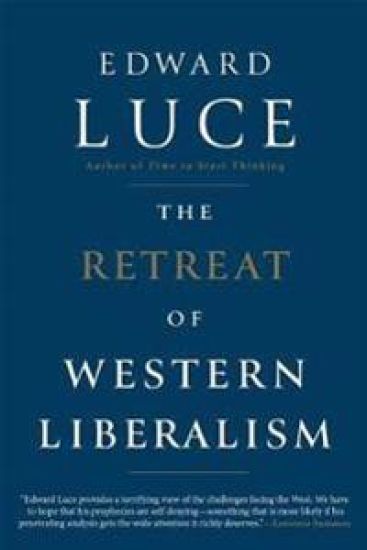
The Retreat of Western Liberalism

The Retreat of Western Liberalism

Edward Luce

Abacus
2018
pokkari

Halvin toimitettuna 18,50 €

'A panorama of the unravelling world order as riveting as any beach read' New Yorker'Read this book: in the three hours it takes you will get a new, bracing and brilliant understanding of the dangers we in the democratic West now face. Luce is one of the smartest journalists working today, and his perceptions are priceless' Jane Mayer, staff writer on the New Yorker'No one was more prescient about the economic malaise and popular resentment that has hit the United States than Ed Luce in his previous book, Time to Start Thinking. His new book, Retreat of Western Liberalism, broadens that picture to cover the Western world. It is a must read for anyone trying to make sense of the waves of populism and nationalism we face today' Liaquat AhamedIn his widely acclaimed book Time to Start Thinking, Financial Times columnist and commentator Edward Luce charted the course of American economic and geopolitical decline, proving to be a prescient voice on our current social and political turmoil. In The Retreat of Western Liberalism, Luce makes a larger statement about the weakening of western hegemony and the crisis of democratic liberalism - of which Donald Trump and his European counterparts are not the cause, but a symptom. Luce argues that we are on a menacing trajectory brought about by ignorance of what it took to build the West, arrogance towards society's losers, and complacency about our system's durability - attitudes that have been emerging since the fall of the Berlin Wall, treated by the West as an absolute triumph over the East. We cannot move forward without a clear diagnosis of what has gone wrong. Luce contrasts Western democratic and economic ideals, which rest on an assumption of linear progress, with more cyclical views of economic strength - symbolized by the nineteenth-century fall and present-day rise of the Chinese and Indian economies - and with the dawn of a new multipolar age. Combining on-the-ground reporting with intelligent synthesis of the vast literature already available, Luce offers a detailed projection of the consequences of the Trump administration and a forward-thinking analysis of what those who believe in enlightenment values must do to defend them from the multiple onslaughts they face in the coming years.
The Retreat of Western Liberalism
From Financial Times chief US columnist and commentator Edward Luce, The Retreat of Western Liberalism offers a sharp and insightful look at why the values the West has long championed are now in danger, with a new afterword for the paperback. Luce argues that today's the erosion of middle-class incomes has eaten away at liberal democratic consensus, resulting in today's crisis. We are continuing on a menacing trajectory brought about by ignorance of what it took to build the West, arrogance towards society's economic losers, and complacency about our system's durability--attitudes that have been emerging since the fall of the Berlin Wall. Unless the West can rekindle an economy that produces gains for the majority of its people, its political liberties may be doomed. The West's quasi-religious faith in the linear progression of history teaches us to take democracy for granted. Reality tells us something troublingly different. The most mortal threat to the Western idea of progress comes from within. Combining on-the-ground reporting with intelligent synthesis of the literature and economic analysis, Luce makes a powerful statement about the weakening of Western hegemony and gives a forward-thinking analysis of what those who believe in enlightenment values must do to defend them from the multiple onslaughts they face in the coming years.
The Retreat of Western Liberalism
"Insightful and harrowing . . . lucidly expounds on the erosion of the West's middle classes, the dysfunction among its political and economic elites and the consequences for America and the world."--Michiko Kakutani, New York Times In his widely acclaimed book Time to Start Thinking, Financial Times chief US columnist and commentator Edward Luce charted the course of America's relative decline, proving to be a prescient voice on our current social and political turmoil. In The Retreat of Western Liberalism, Luce makes a larger statement about the weakening of western hegemony and the crisis of liberal democracy--of which Donald Trump and his European counterparts are not the cause, but a terrifying symptom. Luce argues that we are on a menacing trajectory brought about by ignorance of what it took to build the West, arrogance towards society's economic losers, and complacency about our system's durability--attitudes that have been emerging since the fall of the Berlin Wall. We cannot move forward without a clear diagnosis of what has gone wrong. Unless the West can rekindle an economy that produces gains for the majority of its people, its political liberties may be doomed. The West's faith in history teaches us to take democracy for granted. Reality tells us something troublingly different. Combining on-the-ground reporting with intelligent synthesis of the literature and economic analysis, Luce offers a detailed projection of the consequences of the Trump administration, the rise of European populism, and a forward-thinking analysis of what those who believe in enlightenment values must do to defend them from the multiple onslaughts they face in the coming years.
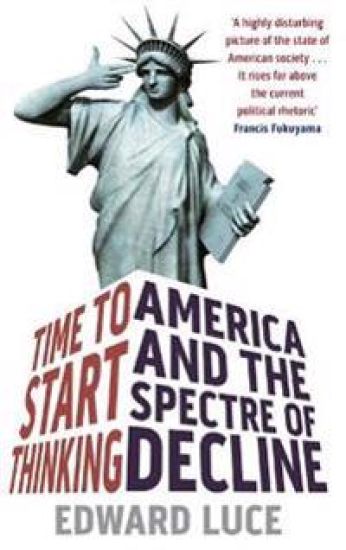
Time To Start Thinking

Time To Start Thinking

Edward Luce

Little, Brown Book Group
2013
pokkari
The age of American global dominance is over. This brilliant new book from one of the FT's most senior writers shows how it ended and where the US needs to turn to prevent the crisis from deepening further.
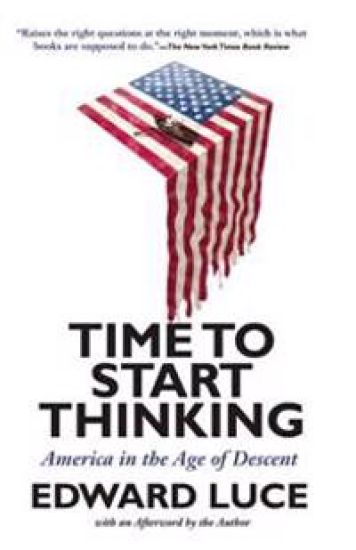
Time to Start Thinking

Time to Start Thinking

Edward Luce

Grove Press / Atlantic Monthly Press
2013
nidottu
"Gentlemen, we have run out of money. It is time to start thinking."-Sir Ernest Rutherford, winner of the Nobel Prize in Nuclear Physics Time to Start Thinking is a book destined to spark debate among liberals and conservatives alike. Drawing on his decades of exceptional journalism and his connections within Washington and around the world, Luce advances a carefully constructed and controversial argument, backed up by interviews with many of the key players in politics and business, that America is losing its pragmatism - and that the consequences of this may soon leave the country high and dry. Luce turns his attention to a number of different key issues that are set to affect America's position in the world order: the changing structure of the US economy, the continued polarization of American politics; the debilitating effect of the "permanent election campaign"; the challenges involved in the overhaul of the country's public education system; and the health-or sickliness-of American innovation in technology and business. His conclusion, "An Exceptional Challenge" looks at America's dwindling options in a world where the pace is increasingly being set elsewhere.
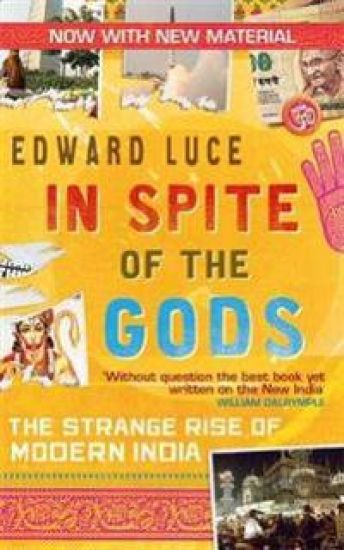
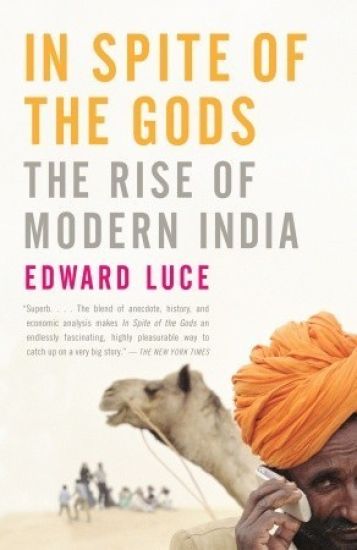
In Spite of the Gods: The Rise of Modern India
As the world's largest democracy and a rising international economic power, India has long been heralded for its great strides in technology and trade. Yet it is also plagued by poverty, illiteracy, unemployment, and a vast array of other social and economic issues. Here, noted journalist and former Financial Times South Asia bureau chief Edward Luce travels throughout India's many regions, cultures, and religious circles, investigating its fragile balance between tradition and modernity. From meetings with key political figures to fascinating encounters with religious pundits, economic gurus, and village laborers, In Spite of the Gods is a fascinating blend of analysis and reportage that comprehensively depicts the nuances of India's complex situation and its place in the world.