Kirjojen hintavertailu – 12 859 828 kirjaa ja 27 kauppaa

Kirjailija

Edward W Blyden

Kirjat ja teokset yhdessä paikassa: 6 kirjaa, julkaisuja vuosilta 2016–2021, suosituimpiin kuuluu African Life and Customs. Vertaile teosten hintoja ja tarkista saatavuus suomalaisista kirjakaupoista.

Nimi esiintyy myös muodoissa: Edward W. Blyden

6 kirjaa

Kirjojen julkaisuvuodet: 2016–2021.

African Life and Customs

African Life and Customs

Edward W Blyden

Lushena Books
2021
pokkari
Two parts in one volume. Full facsimile of the original edition, not reproduced with Optical Recognition Software. This work is a collection of Blyden's articles that examines the socioeconomic structure of African society. A native of St. Thomas, West Indies, Blyden (1832-1912) lived most of his life on the African continent. He was an accomplished educator, linguist, writer, and world traveler, who strongly defended the unique character of Africa and its people. In this work Blyden examined the culture of "pure" Africans-- those untouched by European and Asiatic influences. He identified the family as the basic unit in African society and polygamy as the foundation of African families. He described African social systems as cooperative; everyone worked for each other. No one went without work, food, or clothing. Blyden challenged white racial theorists who held Africans were inferior and whose arguments supported their preconceived ideas. He assumed Africans to be "distinct" rather than inferior, and he analyzed African culture within the context of African social experiences. As a writer, Blyden is regarded widely as the "father of Pan-Africanism". His major work, "Christianity, Islam and the Negro Race" (1887), promoted the idea that practicing Islam was more unifying and fulfilling for Africans than Christianity. He argues that the latter was introduced chiefly by European colonizers. He believed it had a demoralizing effect, although he continued to be a Christian. He thought Islam was more authentically African, as it had been brought to sub-Saharan areas by people from North Africa.
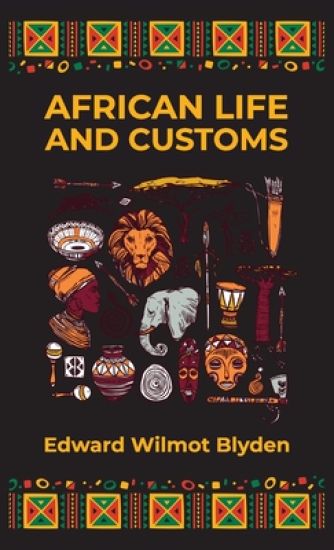
African Life and Customs Hardcover

African Life and Customs Hardcover

Edward W Blyden

LUSHENA BOOKS INC
2021
sidottu
Two parts in one volume. Full facsimile of the original edition, not reproduced with Optical Recognition Software. This work is a collection of Blyden's articles that examines the socioeconomic structure of African society. A native of St. Thomas, West Indies, Blyden (1832-1912) lived most of his life on the African continent. He was an accomplished educator, linguist, writer, and world traveler, who strongly defended the unique character of Africa and its people. In this work Blyden examined the culture of "pure" Africans-- those untouched by European and Asiatic influences. He identified the family as the basic unit in African society and polygamy as the foundation of African families. He described African social systems as cooperative; everyone worked for each other. No one went without work, food, or clothing. Blyden challenged white racial theorists who held Africans were inferior and whose arguments supported their preconceived ideas. He assumed Africans to be "distinct" rather than inferior, and he analyzed African culture within the context of African social experiences. As a writer, Blyden is regarded widely as the "father of Pan-Africanism". His major work, "Christianity, Islam and the Negro Race" (1887), promoted the idea that practicing Islam was more unifying and fulfilling for Africans than Christianity. He argues that the latter was introduced chiefly by European colonizers. He believed it had a demoralizing effect, although he continued to be a Christian. He thought Islam was more authentically African, as it had been brought to sub-Saharan areas by people from North Africa.
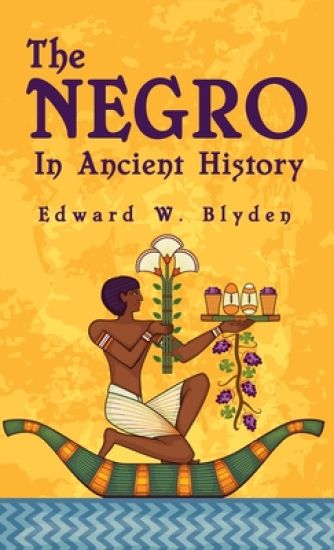
Negro In Ancient History Hardcover

Negro In Ancient History Hardcover

Edward W Blyden

LUSHENA BOOKS INC
2021
sidottu
Full facsimile of the original edition and not reproduced with Optical Recognition software. In 1869, Blyden published The Negro in Ancient History, a short 25-page work with the goal "that the eyes of the blacks may be opened to discern their true mission and destiny; that, making their escape from the house of bondage, they may betake themselves to their ancestral home, and assist in constructing a Christian African empire." Blyden argues that "as descendants of Ham had a share, as the most prominent actors on the scene, in the founding of cities and in the organization of government, so members of the same family, developed under different circumstances, will have an important part in the closing of the great drama Drawing the parallel between the slavery of the Israelites and African-Americans, Blyden writes: "When we notice the scornful indifference with which the Negro is spoken of by certain politicians in America, we fancy that the attitude of Pharaoh and the aristocratic Egyptians must have been precisely similar toward the Jews. We fancy we see one of the magicians in council, after the first visit of Moses demanding the release of the Israelites, rising up with indignation and pouring out a torrent of scornful invective such as any rabid anti-Negro politician might now indulge in." Blyden believed that Zionism was a model for what he called Ethiopianism, and that African Americans could return to Africa and redeem it. He believed political independence to be a prerequisite for economic independence and argued that Africans must counter the neo-colonial policies of former colonial powers.
The Negro In Ancient History

The Negro In Ancient History

Edward W Blyden

Lushena Books
2021
pokkari
Full facsimile of the original edition and not reproduced with Optical Recognition software. In 1869, Blyden published The Negro in Ancient History, a short 25-page work with the goal "that the eyes of the blacks may be opened to discern their true mission and destiny; that, making their escape from the house of bondage, they may betake themselves to their ancestral home, and assist in constructing a Christian African empire." Blyden argues that "as descendants of Ham had a share, as the most prominent actors on the scene, in the founding of cities and in the organization of government, so members of the same family, developed under different circumstances, will have an important part in the closing of the great drama Drawing the parallel between the slavery of the Israelites and African-Americans, Blyden writes: "When we notice the scornful indifference with which the Negro is spoken of by certain politicians in America, we fancy that the attitude of Pharaoh and the aristocratic Egyptians must have been precisely similar toward the Jews. We fancy we see one of the magicians in council, after the first visit of Moses demanding the release of the Israelites, rising up with indignation and pouring out a torrent of scornful invective such as any rabid anti-Negro politician might now indulge in." Blyden believed that Zionism was a model for what he called Ethiopianism, and that African Americans could return to Africa and redeem it. He believed political independence to be a prerequisite for economic independence and argued that Africans must counter the neo-colonial policies of former colonial powers.