Kirjojen hintavertailu – 12 903 725 kirjaa ja 27 kauppaa

Kirjailija

Edward Welch

Kirjat ja teokset yhdessä paikassa: 10 kirjaa, julkaisuja vuosilta 2013–2026, suosituimpiin kuuluu Wiesental Paket 1-12. Vertaile teosten hintoja ja tarkista saatavuus suomalaisista kirjakaupoista.

10 kirjaa

Kirjojen julkaisuvuodet: 2013–2026.

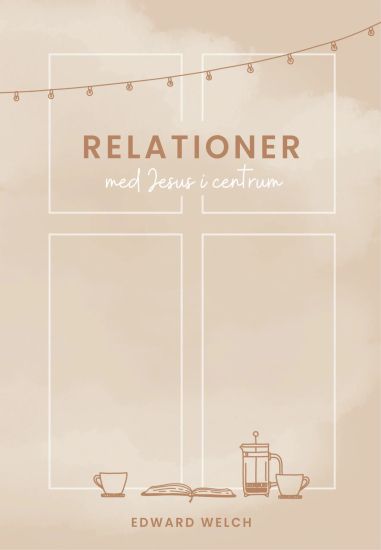
Relationer med Jesus i centrum
Relationer med Jesus i centrum av Edward Welch är en bibelförankrad och praktisk bok om hur evangeliet kan prägla våra relationer i församlingen och vardagen. Med åtta tydliga teman och diskussionsfrågor visar boken hur vanliga, behövande människor kan hjälpa varandra att följa Jesus.
Making Space in Post-War France
The decades after World War II saw France's look, feel and lived realities transformed by spatial planning and modernization. Am nagement du territoire was a technical and administrative project, but was also political, moral and philosophical, as well as creative and imaginative. It was driven by a powerful obsession with the future and a belief that spatial planning could create the future in the present. During the presidency of Charles de Gaulle (1958-69), it became a vehicle for reasserting France's place in the world after decolonization and expressing its grandeur as an advanced civilization. In Making Space in Post-war France, Edward Welch tracks the conceptual, ideological and discursive foundations of am nagement, mining an array of material from legislative texts to publicity brochures to investigate how visions of the future were articulated and inscribed on the ground as new towns, infrastructure and other expressions of modernity. He ranges across work by writers, filmmakers and photographers to explore how modernized landscapes and their effect on lived experience begin to permeate French culture during the 1970s and 80s, and how the legacies of spatial planning are negotiated politically, socially and culturally from the 1990s into the new millennium as the French state wrestles with the different pressures affecting its territory. Edward Welch is Carnegie Professor of French at the University of Aberdeen.
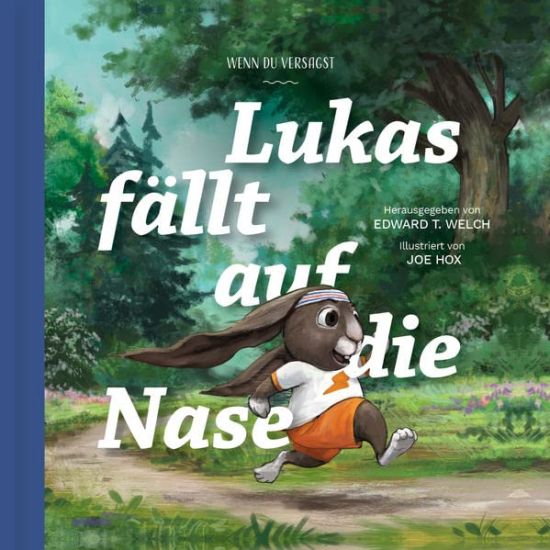
Buster's Ears Trip Him Up: When You Fail

Buster's Ears Trip Him Up: When You Fail

Edward T. Welch; Edward Welch

New Growth Press
2018
sidottu
Buster was sure he was the fastest bunny in the meadow. But during a race at summer camp, nothing goes as planned and Buster gets tripped up. After his epic fall, his older sister, Ivy, helps him see that failure is an opportunity to grow. As Buster remembers God's love, he is able to let go of others' opinions and accept that it's okay to try your best but not always be the best. Edited by Edward T. Welch, Buster's Ears Trip Him Up ends with a special section that guides parents in teaching children how the gospel of Jesus Christ comforts and sustains us through failure and turns our focus away from ourselves and toward others. Also included is a tear-out page of Back Pocket Bible Verses that will remind children and adults of God's love and help for those who get tripped up. A new series of hardback, illustrated children's books for three-to eight-year-olds--each centered on an animal family--bring gospel help and biblical counsel to families. The animal characters, colorful illustrations, and the real-life issues each animal family faces will captivate children. The first three books address anxiety, anger, and failure, bringing biblical help and hope to issues every child faces. The last page of each book contains information for parents on how God, in his Word, helps children apply biblical truth to specific issues. Together children and parents will be guided by the stories into meaningful conversations about living by faith in the details of everyday life.
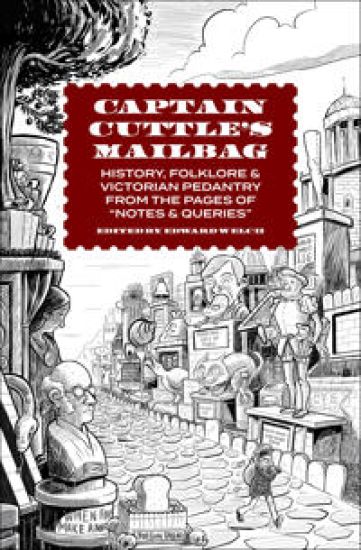
Captain Cuttle's Mailbag

Captain Cuttle's Mailbag

Edward Welch

Laboratory Books
2017
sidottu
How did the Honorable Miss E. St. Leger become a Freemason? Did Lord Byron meet a hippopotamus, or was it only a tapir? Whence the popular prejudice against redheads? These were among the topics discussed in the pages of Notes and Queries, a weekly magazine founded in London in 1849 as "a medium of inter-communication for literary men, artists, antiquaries, genealogists, etc." Its motto was "When found, make a note of"—a saying of Captain Cuttle, the hook-handed old salt of Dickens's Dombey and Son. Some subscribers to Notes and Queries contributed brief notes on curious facts they had uncovered; other sent in arcane queries to be answered. The result was rather like an erudite Internet discussion board, complete with its flame wars and trolls. This book anthologises the most interesting exchanges from the First Series of Notes and Queries (1849–55). Here, ordered by subject—with judicious footnotes, of course—are delightfully pedantic remarks on the daily life and amusements of olden times, the doings of faeries, revolting folk remedies, strange forgotten, poetry good and bad, and oddities of natural history, among many other things. Also included is a selection of advertisements from the magazine, for such products as Grosjean's Celebrated Trowsers, Rimmel's Toilet Vinegar (good for several purposes), and the Rev. Edmund Saul Dixon's treatise on Ornamental and Domestic Poultry: Their History and Management. Original drawings add an extra touch of humour throughout, and a lively introduction describes the history and workings of Notes and Queries. Full of useless information and Victorian fustiness, Captain Cuttle's Mailbag will fascinate trivia buffs and time travellers alike.

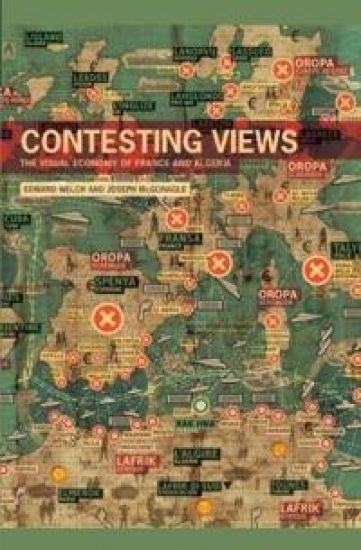
Contesting Views

Contesting Views

Edward Welch; Joseph McGonagle

Liverpool University Press
2013
sidottu
Fifty years after Algerian independence, the legacy of France's Algerian past, and the ongoing complexities of the Franco-Algerian relationship, remain a key preoccupation in both countries. A central role in shaping understanding of their shared past and present is played by visual culture. This study investigates how relations between France and Algeria have been represented and contested through visual means since the outbreak of the Algerian War in 1954. It probes the contours of colonial and postcolonial visual culture in both countries, highlighting the important roles played by still and moving images when Franco-Algerian relations are imagined. Analysing a wide range of images made on both sides of the Mediterranean – from colonial picture postcards of French Algeria to contemporary representations of postcolonial Algiers – this new book is the first to trace the circulation of, and connections between, a diverse range of images and media within this field of visual culture. It shows how the visual representation of Franco-Algerian links informs our understanding both of the lived experience of postcoloniality within Europe and the Maghreb, and of wider contemporary geopolitics.