Kirjojen hintavertailu – 12 859 828 kirjaa ja 27 kauppaa

Kirjailija

Edwin Abbott Abbott

Kirjat ja teokset yhdessä paikassa: 161 kirjaa, julkaisuja vuosilta 2002–2026, suosituimpiin kuuluu Johannine Grammar. Vertaile teosten hintoja ja tarkista saatavuus suomalaisista kirjakaupoista.

161 kirjaa

Kirjojen julkaisuvuodet: 2002–2026.

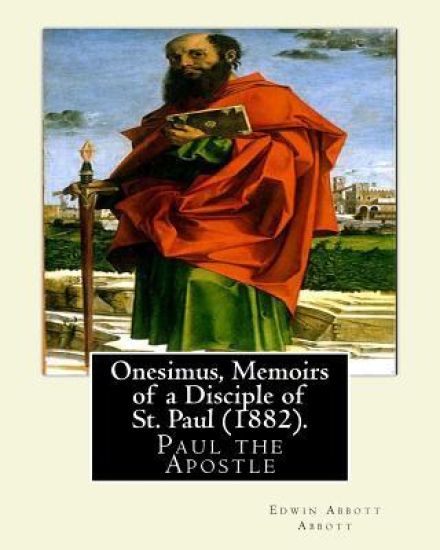
Onesimus, Memoirs of a Disciple of St. Paul (1882). By: Edwin Abbott Abbott: Paul the Apostle, commonly known as Saint Paul, and also known by his nat
Paul the Apostle, commonly known as Saint Paul, and also known by his native name Saul of Tarsuswas an apostle (though not one of the Twelve Apostles) who taught the gospel of the Christ to the first century world.. Edwin Abbott Abbott (20 December 1838 - 12 October 1926) was an English schoolmaster and theologian, best known as the author of the novella Flatland (1884). Edwin Abbott Abbott was the eldest son of Edwin Abbott (1808-1882), headmaster of the Philological School, Marylebone, and his wife, Jane Abbott (1806-1882). His parents were first cousins. He was educated at the City of London School and at St John's College, Cambridge, where he took the highest honours in classics, mathematics and theology, and became a fellow of his college. In particular, he was 1st Smith's prizeman in 1861. This seems to be an error by Venn: Colby's preface to Abbott's Flatland states that Abbott was 7th Senior Optime, Senior Classic and 1st Chancellor's Medallist in 1861; William Steadman Aldis was 1st Smith's Prizeman in 1861.] In 1862 he took orders. After holding masterships at King Edward's School, Birmingham, he succeeded G. F. Mortimer as headmaster of the City of London School in 1865 at the early age of twenty-six. Here he oversaw the education of future Prime Minister H. H. Asquith. He was Hulsean lecturer in 1876. He retired in 1889, and devoted himself to literary and theological pursuits. Abbott's liberal inclinations in theology were prominent both in his educational views and in his books. His Shakespearian Grammar (1870) is a permanent contribution to English philology. In 1885 he published a life of Francis Bacon. His theological writings include three anonymously published religious romances - Philochristus (1878), where he tried to raise interest in Gospels reading, Onesimus (1882), and Silanus the Christian (1908). More weighty contributions are the anonymous theological discussion The Kernel and the Husk (1886), Philomythus (1891), his book The Anglican Career of Cardinal Newman (1892), and his article "The Gospels" in the ninth edition of the Encyclop dia Britannica, embodying a critical view which caused considerable stir in the English theological world. He also wrote St Thomas of Canterbury, his Death and Miracles (1898), Johannine Vocabulary (1905), Johannine Grammar (1906). Abbott also wrote educational text books, one being "Via Latina: First Latin Book" which was published in 1898 and distributed around the world within the education system.
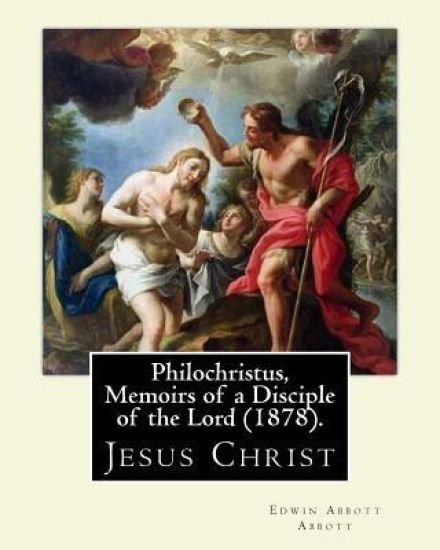
Philochristus, Memoirs of a Disciple of the Lord (1878). By: Edwin Abbott Abbott: Jesus Christ

Philochristus, Memoirs of a Disciple of the Lord (1878). By: Edwin Abbott Abbott: Jesus Christ

Edwin Abbott Abbott

Createspace Independent Publishing Platform
2016
nidottu
Edwin Abbott Abbott (20 December 1838 - 12 October 1926) was an English schoolmaster and theologian, best known as the author of the novella Flatland (1884). Edwin Abbott Abbott was the eldest son of Edwin Abbott (1808-1882), headmaster of the Philological School, Marylebone, and his wife, Jane Abbott (1806-1882). His parents were first cousins. He was educated at the City of London School and at St John's College, Cambridge, where he took the highest honours in classics, mathematics and theology, and became a fellow of his college. In particular, he was 1st Smith's prizeman in 1861. This seems to be an error by Venn: Colby's preface to Abbott's Flatland states that Abbott was 7th Senior Optime, Senior Classic and 1st Chancellor's Medallist in 1861; William Steadman Aldis was 1st Smith's Prizeman in 1861.] In 1862 he took orders. After holding masterships at King Edward's School, Birmingham, he succeeded G. F. Mortimer as headmaster of the City of London School in 1865 at the early age of twenty-six. Here he oversaw the education of future Prime Minister H. H. Asquith. He was Hulsean lecturer in 1876. He retired in 1889, and devoted himself to literary and theological pursuits. Abbott's liberal inclinations in theology were prominent both in his educational views and in his books. His Shakespearian Grammar (1870) is a permanent contribution to English philology. In 1885 he published a life of Francis Bacon. His theological writings include three anonymously published religious romances - Philochristus (1878), where he tried to raise interest in Gospels reading, Onesimus (1882), and Silanus the Christian (1908). More weighty contributions are the anonymous theological discussion The Kernel and the Husk (1886), Philomythus (1891), his book The Anglican Career of Cardinal Newman (1892), and his article "The Gospels" in the ninth edition of the Encyclop dia Britannica, embodying a critical view which caused considerable stir in the English theological world. He also wrote St Thomas of Canterbury, his Death and Miracles (1898), Johannine Vocabulary (1905), Johannine Grammar (1906). Abbott also wrote educational text books, one being "Via Latina: First Latin Book" which was published in 1898 and distributed around the world within the education system.
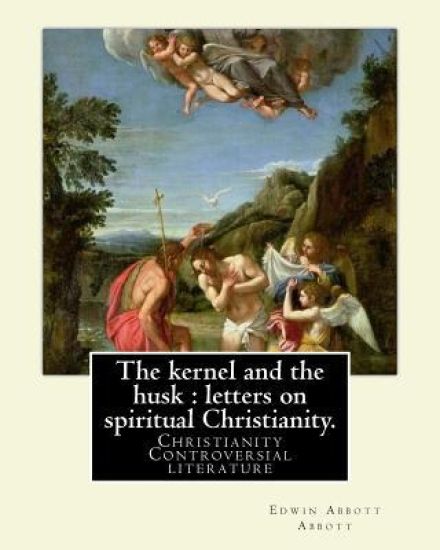
The kernel and the husk: letters on spiritual Christianity. By: Edwin Abbott Abbott: Christianity -- Controversial literature
Edwin Abbott Abbott (20 December 1838 - 12 October 1926) was an English schoolmaster and theologian, best known as the author of the novella Flatland (1884). Edwin Abbott Abbott was the eldest son of Edwin Abbott (1808-1882), headmaster of the Philological School, Marylebone, and his wife, Jane Abbott (1806-1882). His parents were first cousins. He was educated at the City of London School and at St John's College, Cambridge, where he took the highest honours in classics, mathematics and theology, and became a fellow of his college. In particular, he was 1st Smith's prizeman in 1861. This seems to be an error by Venn: Colby's preface to Abbott's Flatland states that Abbott was 7th Senior Optime, Senior Classic and 1st Chancellor's Medallist in 1861; William Steadman Aldis was 1st Smith's Prizeman in 1861.] In 1862 he took orders. After holding masterships at King Edward's School, Birmingham, he succeeded G. F. Mortimer as headmaster of the City of London School in 1865 at the early age of twenty-six. Here he oversaw the education of future Prime Minister H. H. Asquith. He was Hulsean lecturer in 1876. He retired in 1889, and devoted himself to literary and theological pursuits. Abbott's liberal inclinations in theology were prominent both in his educational views and in his books. His Shakespearian Grammar (1870) is a permanent contribution to English philology. In 1885 he published a life of Francis Bacon. His theological writings include three anonymously published religious romances - Philochristus (1878), where he tried to raise interest in Gospels reading, Onesimus (1882), and Silanus the Christian (1908). More weighty contributions are the anonymous theological discussion The Kernel and the Husk (1886), Philomythus (1891), his book The Anglican Career of Cardinal Newman (1892), and his article "The Gospels" in the ninth edition of the Encyclop dia Britannica, embodying a critical view which caused considerable stir in the English theological world. He also wrote St Thomas of Canterbury, his Death and Miracles (1898), Johannine Vocabulary (1905), Johannine Grammar (1906). Abbott also wrote educational text books, one being "Via Latina: First Latin Book" which was published in 1898 and distributed around the world within the education system.
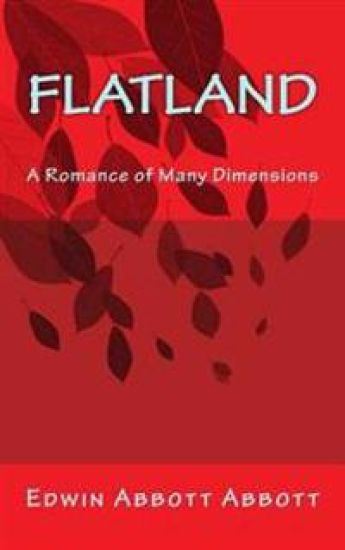
Flatland: A Romance of Many Dimensions

Flatland: A Romance of Many Dimensions

Edwin Abbott Abbott

Createspace Independent Publishing Platform
2016
nidottu
As a satire, Flatland offered pointed observations on the social hierarchy of Victorian culture. However, the novella's more enduring contribution is its examination of dimensions; in a foreword to one of the many publications of the novella, noted science writer Isaac Asimov described Flatland as "The best introduction one can find into the manner of perceiving dimensions." As such, the novella is still popular amongst mathematics, physics and computer science students.
Flatland

Flatland

Edwin Abbott Abbott

Createspace Independent Publishing Platform
2016
nidottu
Flatland est une all gorie crite en 1884, o l'auteur, Edwin Abbott Abbott, donne vie aux dimensions g om triques, le point, la ligne et les surfaces, avant d'en arriver faire d couvrir l'univers des volumes par un carr . Cette all gorie n'est pas sans rappeler la sortie de la caverne, voire le cheminement de Don Quichotte, l'hidalgo de Cervantes. Flatland sugg re galement l'existence de dimensions spatiales sup rieures aux trois dimensionnelles que nous connaissons.
Flatland

Flatland

Edwin Abbott Abbott

Princeton University Press
2015
pokkari
In 1884, Edwin Abbott Abbott wrote a mathematical adventure set in a two-dimensional plane world, populated by a hierarchical society of regular geometrical figures-who think and speak and have all too human emotions. Since then Flatland has fascinated generations of readers, becoming a perennial science-fiction favorite. By imagining the contact of beings from different dimensions, the author fully exploited the power of the analogy between the limitations of humans and those of his two-dimensional characters. A first-rate fictional guide to the concept of multiple dimensions of space, the book will also appeal to those who are interested in computer graphics. This field, which literally makes higher dimensions seeable, has aroused a new interest in visualization. We can now manipulate objects in four dimensions and observe their three-dimensional slices tumbling on the computer screen. But how do we interpret these images? In his introduction, Thomas Banchoff points out that there is no better way to begin exploring the problem of understanding higher-dimensional slicing phenomena than reading this classic novel of the Victorian era.
Johannine Grammar

Johannine Grammar

Edwin Abbott Abbott

Literary Licensing, LLC
2014
sidottu
Johannine Grammar is a comprehensive guide to the grammar and syntax of the Gospel of John, written by Edwin Abbott. The book provides a thorough analysis of the language used in the Gospel, including its vocabulary, grammar, and syntax. Abbott draws on his extensive knowledge of Greek and his expertise in biblical studies to offer a detailed examination of the text. The book is organized into chapters that cover different aspects of the Gospel's language, such as the use of particles, verbs, and prepositions. Each chapter includes numerous examples from the text, along with detailed explanations and analyses. Johannine Grammar is an essential resource for scholars and students of the New Testament who wish to deepen their understanding of the language and structure of the Gospel of John. This Is A New Release Of The Original 1906 Edition. This scarce antiquarian book is a facsimile reprint of the old original and may contain some imperfections such as library marks and notations. Because we believe this work is culturally important, we have made it available as part of our commitment for protecting, preserving, and promoting the world's literature in affordable, high quality, modern editions, that are true to their original work.
Flatland: A Romance of Many Dimensions

Flatland: A Romance of Many Dimensions

Edwin Abbott Abbott

Createspace Independent Publishing Platform
2014
nidottu
Flatland: A Romance of Many Dimensions is an 1884 satirical novella by the English schoolmaster Edwin Abbott Abbott. Writing pseudonymously as "A Square", the book used the fictional two-dimensional world of Flatland to offer pointed observations on the social hierarchy of Victorian culture. However, the novella's more enduring contribution is its examination of dimensions. Several films have been made from the story, including a feature film in 2007 called Flatland. Other efforts have been short or experimental films, including one narrated by Dudley Moore and the short films Flatland: The Movie and Flatland 2: Sphereland starring Martin Sheen and Kristen Bell.