Kirjojen hintavertailu – 12 859 818 kirjaa ja 27 kauppaa

Kirjailija

Edwin T. Arnold

Kirjat ja teokset yhdessä paikassa: 3 kirjaa, julkaisuja vuosilta 1996–2012, suosituimpiin kuuluu Journeyman. Vertaile teosten hintoja ja tarkista saatavuus suomalaisista kirjakaupoista.

3 kirjaa

Kirjojen julkaisuvuodet: 1996–2012.

Journeyman

Journeyman

Erskine Caldwell; Edwin T. Arnold

University of Georgia Press
1996
pokkari
Written immediately following Tobacco Road and God's Little Acre, this novel introduces one of Erskine Caldwell's most memorable characters: the philandering, murderous itinerant preacher, Semon Dye. Part allegory, part tall tale, and with a good measure of old frontier humor, Journeyman,/i> tells of a stranger, as devilish as he is divine, who mysteriously arrives in Rocky Comfort, Georgia, and, inside of a week, nearly tears the small community apart. Helping Rocky Comfort's citizens to rationalize their vices and weaknesses, Semon Dye then uses their flaws to his own advantage. Offering no forgiveness for their actions and no justification for his own, he confronts the people of Rocky Comfort with their own sins as he gambles, drinks, carouses, and fights along with them. Culminating in a tumultuous, ecstatic revival, Journeyman is filled with insights into human nature and the physical and emotional components of religious fervor. This volume reprints the complete text of Journeyman as it was first published, before the more widely circulated edition, expurgated in the aftermath of the legal battles waged against God's Little Acre, was released.
What Virtue There Is in Fire

What Virtue There Is in Fire

Edwin T. Arnold

University of Georgia Press
2012
pokkari
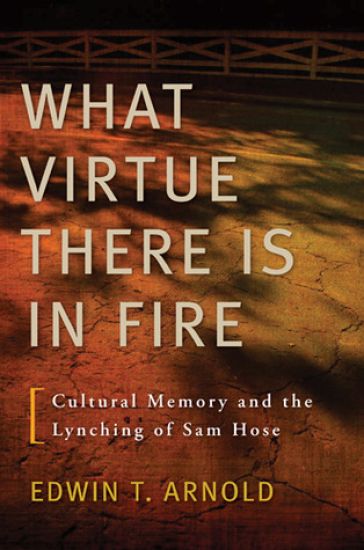
The 1899 lynching of Sam Hose in Newnan, Georgia, was one of the earliest and most gruesome events in a tragic chapter of U. S. history. Hose was a black laborer accused of killing Alfred Cranford, a white farmer, and raping his wife. The national media closely followed the manhunt and Hose’s capture. An armed mob intercepted Hose’s Atlanta-bound train and took the prisoner back to Newnan. There, in front of a large gathering on a Sunday afternoon, Hose was mutilated and set on fire. His body was dismembered and pieces of it were kept by souvenir hunters. Born and raised twenty miles from Newnan, Edwin T. Arnold was troubled and fascinated by the fact that this horrific chain of events had been largely shut out of local public memory. In "What Virtue There Is in Fire," Arnold offers the first in-depth examination of the lynching of Sam Hose. Arnold analyzes newspapers, letters, and speeches to understand reactions to this brutal incident, without trying to resolve the still-disputed facts of the crime. Firsthand accounts were often contradictory, and portrayals of Hose differed starkly—from "black beast" to innocent martyr. Arnold traces how different groups interpreted and co-opted the story for their own purposes through the years. Reflecting on recent efforts to remember the lynching of Sam Hose, Arnold offers the portrait of a place still trying to reconcile itself, a century later, to its painful past.
Reading Faulkner

Reading Faulkner

Edwin T. Arnold; Dawn Trouard

University Press of Mississippi
2011
nidottu
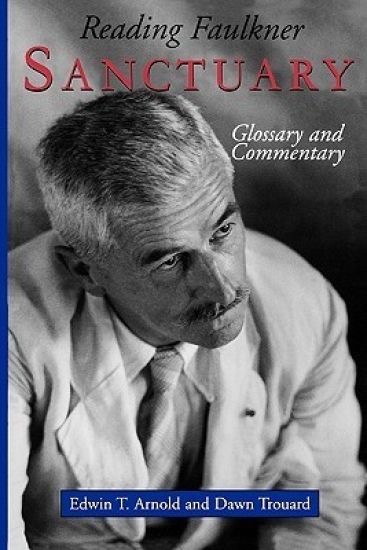
No other novel by William Faulkner has experienced the kind of dramatic critical re-evaluation that Sanctuary has received. Published in 1931, it seemed to many readers and critics in the thirties as a terrible misstep on Faulkner's part. It was a violent, vulgar, deliberately sensational work. Over the years, serious Faulkner critics have attempted to go beyond the initial shock of this nightmarish tale and to place it within the context of Faulkner's overall achievement. This volume offers a close examination and interpretation of Sanctuary. Here difficult words and cultural terms that might prove to be a problem for general readers are explained and keyed to page numbers in the definitive Faulkner text (Library of America and Vintage editions). The authors place the book in its historical context and connect it to Faulkner's other works. For students and teachers of Faulkner's fiction this handbook clears away some of the seemingly dissonant logic of the novel and brings coherence to Faulkner's provocative design.