Kirjojen hintavertailu – 12 859 828 kirjaa ja 27 kauppaa

Kirjailija

Egon Friedell

Kirjat ja teokset yhdessä paikassa: 139 kirjaa, julkaisuja vuosilta 1996–2026, suosituimpiin kuuluu A Cultural History of the Modern Age. Vertaile teosten hintoja ja tarkista saatavuus suomalaisista kirjakaupoista.

139 kirjaa

Kirjojen julkaisuvuodet: 1996–2026.

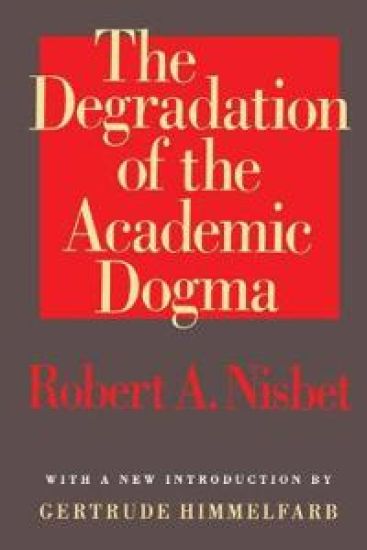
The Degradation of the Academic Dogma

The Degradation of the Academic Dogma

Egon Friedell; Robert Nisbet

Routledge
2018
sidottu
This is one of the most important books ever published about the American university. Robert Nisbet accuses universities of having betrayed themselves. Over the centuries they earned the respect of society by attempting to remain faithful to what he terms "the academic dogma," the pursuit of knowledge for its own sake. The measure of a university's greatness and of the stature of an individual scholar was determined not by the immediate usefulness of the work done, but by how much it contributed to scholarship, learning, and teaching. American universities abandoned this ideal, Nisbet charges, after World War II, welcoming onto their campuses academic entrepreneurs engaged in the "higher capitalism," the highly profitable sale of knowledge. This "reformation," says Nisbet, has resulted in the greatest change in the structure and values of the university that has occurred since their founding as guilds in the Middle Ages. And it may be responsible, for reasons he spells out in convincing detail, for their eventual demise as centers of learning. In her introduction, Gertrude Himmelfarb pays tribute to Robert Nisbet for his prescience in analyzing the reformation of the university in the postwar period. A second reformation, she says, has further undermined the academic dogma, first by applying the principles of affirmative action and multiculturalism to the curriculum as well as to student admissions and faculty hiring, and then by "deconstructing" the disciplines, thus subverting the ideas of truth, reason, and objectivity. The Degradation of the Academic Dogma is even more pertinent today than when it was first published a quarter of a century ago. For those concerned with the integrity of the university and of intellectual life, Robert Nisbet has once again proved himself a prophet and a mentor.
Die Reise mit der Zeitmaschine

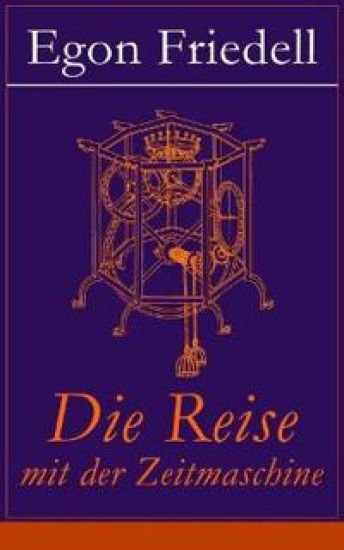
Die Reise mit der Zeitmaschine

Egon Friedell

E-Artnow
2018
pokkari
Egon Friedell (1878-1938) war ein sterreichischer Schriftsteller, Kulturphilosoph, Religionswissenschaftler, Historiker, Dramatiker, Theaterkritiker, Journalist, Schauspieler, Kabarettist und Conf rencier. Aus dem Buch: "Aber der Zeitreisende war durch die Abenteuer seiner Fahrt in die Zukunft mi trauisch und n chtern geworden. Er verwies auf die gro en Gefahren einer solchen Unternehmung. Zun chst sei es v llig unsicher, ob er nicht in eine Eisperiode gelangen und sogleich bei seiner Ankunft j mmerlich erfrieren w rde, denn die einzelnen Abschnitte des Jura lie en sich bei dem heutigen Stande der Wissenschaft nur mit einer Genauigkeit von zwei- bis dreimalhunderttausend Jahren berechnen. Also sei vielleicht das Turmzimmer seines Laboratoriums, in dem die Zeitmaschine steht, bei seiner Landung ein Eisblock und er mitten drin (Ich brauche wohl kaum daran zu erinnern, da sich die Zeitmaschine nur in der Fr hersp terdimension bewegt, der Ort, an dem sie sich befindet, aber stets der gleiche bleibt.) Ja, wer verb rge ihm, ob er berhaupt auf Festland tr fe? Wisse man denn auch nur ann hernd, wie die Gegend von Richmond in der Jurazeit ausgesehen habe? Vielleicht war sie ein Golfstrom, vierhundert Meter unter dem Meeresspiegel. Vielleicht aber auch das Kerngebiet eines aktiven Kraters."
A Cultural History of the Modern Age
This is the second volume of Friedell's monumental A Cultural History of the Modern Age. A key figure in the flowering of Viennese culture between the two world wars, this three volume work is considered his masterpiece. The centuries covered in this second volume mark the victory of the scientifi c mind: in nature-research, language-research, politics, economics, war, even morality, poetry, and religion. All systems of thought produced in this century, either begin with the scientifi c outlook as their foundation or regard it as their highest and fi nal goal. Friedell claims three main streams pervade the eighteenth century: Enlightenment, Revolution, and Classicism. In ordinary use, by "Enlightenment" we mean an extreme rationalistic tendency of which preliminary stages were noted in the seventeenth century. Th e term "Classicism", is well understood. Under the term "Revolution" Friedell includes all movements directed against what has been dominant and traditional. Th e aims of such movements were remodeling the state and society, banning all esthetic canons, and dethronement of reason by sentiment, all in the name of the "Return to Nature." Th e Enlightenment tendency might be seen as laying the ground for an age of revolution. Th is second volume continues Friedell's dramatic history of the driving forces of the twentieth century.
A Cultural History of the Modern Age
Volume three of A Cultural History of the Modern Age finishes a journey that begins with Descartes in the first volume and ends with Freud and the psychoanalytical movement in the third volume. Friedell describes the contents of these books as a series of performances, starting with the birth of the man of the Modern Age, followed by flowering of this epoch, and concludes with the death of the Modern Age. This huge landscape provides an intertwining of the material and the cultural, the civil and the military, from the high points of creative flowering in Europe to death and emptiness. The themes convey multiple messages: romanticism and liberalism opens the cultural scene, encased in a movement from The Congress of Vienna and its claims of peaceful co-existence to the Franco-German War. The final segment covers the period from Bismarck's generation to World War I. In each instance, the quotidian life of struggle, racial, religious, and social class is seen through the lens of the mighty figures of the period. The works of the period's great figures are shown in the new light of the human search for symbolism, the search for superman, the rise of individualism and decline of history as a source for knowledge. This third volume is painted in dark colors, a foreboding of the world that was to come, of political extremes, and intellectual exaggerations. The author looks forward to a postmodern Europe in which there is a faint glean of light from the other side. What actually appeared was the glare of Nazism and Communism, each claiming the future.
A Cultural History of the Modern Age
Historian, philosopher, critic, playwright, journalist, and actor, Egon Friedell was a key figure in the extraordinary flowering of Viennese culture between the two world wars. His masterpiece, A Cultural History of the Modern Age, demonstrates the intellectual universality that Friedell saw as guarantor of the continuity and regeneration of European civilization. Following a brilliant opening essay on cultural history and why it should be studied, the first volume begins with an analysis of the transformation of the Medieval mind as it evolved from the Black Death to the Thirty Years War. The emphasis is on the spiritual and cultural vortex of civilization, but Friedell never forgets the European roots in pestilence, death, and superstition that animate a contrary drive toward reason, refinement, intellectual curiosity, and scientific knowledge. While these values reached their apogee during the Renaissance, Friedell shows that each cultural victory is precarious, and Europe was always in danger of slipping back into barbarism. Friedell's historical vision embraces the whole of Western culture and its development. It is a consistent probing for the divine in the world's course and is, therefore, theology; it is research into the basic forces of the human soul and is, therefore, psychology; it is the most illuminating presentation of the forms of state and society and, therefore, is politics; the most varied collection of all art-creations and is, therefore, aesthetics. Thomas Mann regarded Friedell as one of the great stylists in the German language. Like the works of the great novelist, A Cultural History of the Modern Age offers a dramatic history of the last six centuries, showing the driving forces of each age. The new introduction provides a fascinating biographical sketch of Friedell and his cultural milieu and analyzes his place in intellectual history.